
Tiled roof decision · 9 min read
Repair or replace a tiled pitched roof? How to decide
How to decide whether a tiled pitched roof needs a repair, a patch to see it through, or a full replacement: what to look at, what the national cost guides say, and where the tipping point sits.
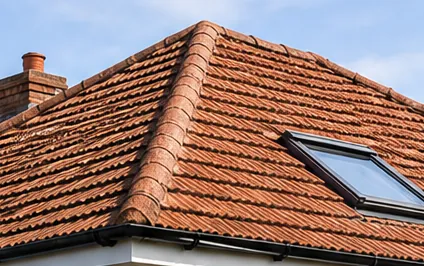
Every tiled roof reaches a point where someone has to say whether it is worth mending. The honest answer is rarely about the tiles you can see from the drive. It is about how far the trouble has spread, what state the timbers and underlay are in beneath, and how much patching it has already had.
A repair makes sense when the fault is confined to one spot and the structure around it is sound. A replacement makes sense when the same fault keeps coming back, or when the layers under the tiles have given up. In between sits the patch: a limited fix that buys time while you plan and save for the bigger job. Good advice names which of the three your roof needs, and why, and does not push you towards the dearest one.
This guide walks through the decision in the sequence a roofer follows on site. It uses published cost ranges from national guides, with the date of each, so that you can see how the money behaves as repairs pile up. Those are figures for the country as a whole, and your own roof will price differently. Our survey photographs show your own roof, and the quote that comes after is the figure to work from.
Start with how far the fault has spread
The first question is whether the problem is a point or a pattern, rather than the age of the roof. One slipped tile above the porch is a point. Tiles slipping in several places across a slope is a pattern, and a pattern says something is wrong with what holds the tiles, not with the tiles themselves.
From the ground you can often tell the difference. Look along the slope in low light for tiles that sit proud of their neighbours, for gaps, for a ridge line that is no longer straight, and for broken pieces in the gutter or on a flat roof below. Inside, a torch in the loft on a wet day will show damp patches on the underside of the felt, stains on rafters, or a chink of daylight showing through.
Points can be repaired
A single cracked tile, a short run of loose ridge, a lifted flashing at the chimney or a patch of torn felt at the eaves are all local faults. They can usually be put right from a roof ladder or a small scaffold tower, and the cost stays in repair territory.
Patterns need a closer look
When faults repeat, the cause is often underneath. Battens that have rotted lose their grip on the nails. Underlay that has perished stops sheltering the loft once a tile moves. A roof that has spread outwards pushes the tiles off their bearings. Our pages on slipped roof tiles and rotten roof battens describe how to tell these apart, and neither is something to guess at from the ground. Which of them applies decides whether the next step is a repair or a larger job.
When mending is the sound choice
A repair is the right answer when the roof's structure is sound and the fault is contained. That covers more jobs than many owners expect, and it is the answer we prefer to give where it is true, because we recommend the lightest job that cures the cause.
National guides give a sense of the scale. Checkatrade, in a roof repair guide updated in October 2026, prices repairs by covering: £90 to £120 per m² for concrete tile and £110 to £160 per m² for clay, all excluding VAT. In the same guide, mending ridge tiles or lead flashing each comes out at £50 to £70 per metre. Checkatrade lists natural slate repairs at £150 to £220 per m² in the same table.
Set against a re-roof, those numbers are small. Compare a re-roof: Checkatrade averages around £8,000 and gives about £12,000 for a three-bedroom semi, so even a sizeable repair is still a fraction of a replacement. If the roof has years in it and the cause is understood, paying for the repair is usually the sound choice.
Why a repair still needs the cause found
A repair that treats the symptom will fail again. A loose ridge that is re-bedded in mortar alone is held by the thing that BS 5534 stopped relying on in its 2014 revision, so a properly done ridge repair adds mechanical fixings. A flashing that keeps lifting may point to movement in the chimney. A tile that slipped because its nib was cracked needs more than a new tile pushed in beside it. Each of those is a small job done properly, and that is the standard a repair should meet.
Signs the roof is past repairing
Some roofs stop responding to repairs. The signs are usually structural, and they tend to appear together.
A sagging ridge or a belly in the slope means the timbers are moving or have weakened. Sagging has several common causes, and each points to a different fix. Battens that crumble when pressed, and tiles that lift away with no resistance from their nails, mean the layer that carries the covering has gone. Underlay that is torn, brittle or missing in patches leaves the loft exposed every time a tile moves, and water finds those gaps first.
Other signs are about the covering itself. Tiles that flake or crumble on the surface, rather than break cleanly, are finished. Broad bands of tiles that keep slipping suggest nail fixings that are failing across the roof. If you have had the same slope repaired more than once, the roof is telling you something, and it is worth asking what the earlier repairs actually fixed.
What age tells you, and what it does not
Age helps but does not decide. Marley expects concrete tiles to give around 60 years, a figure it stops short of guaranteeing. For clay, the Building Research Establishment's minimum is 60 years, according to Marley. An older peg-tile roof is a different matter, because that 60-year figure is described in building conservation writing as not a reliable guide for them. A well-kept old roof may outlast a badly fixed young one, and an old roof can still be sound if its timbers are. The survey, not the date on the house, gives the verdict.
The cost of repairing a roof that keeps needing repairs
Repairs look cheap one at a time. The trouble is that each one carries fixed costs: the visit, the access, and the risk of another leak while the next repair is arranged. Add three repairs over a few years and the total can reach into the cost of re-covering a slope, with nothing new to show for it.
Scaffolding is the clearest example. On a roof replacement, Checkatrade's scaffolding figure is £700 to £1,300, and for a repair that needs one it is a big share of the bill. If you pay for it for a repair now and again for a re-roof later, the same expense has been met twice. That is a sound reason to ask, at the survey, whether the roof is likely to need doing within the next few years, and to price the work with that in mind.
It also helps to think in terms of what each pound buys. A repair buys a sound fix to one fault, and nothing else. A replacement buys a new set of layers, the ridge and verges fixed to current standards, and a roof that no longer needs attention for a long time. Which of the two is better value depends on how much life the existing roof has left, and that is a question about the timbers and underlay as much as the tiles.
The in-between option
A patch is a legitimate third choice. It deals with the leak and the most urgent faults, keeps costs down, and gives you time to plan and save for the larger job. We will say so when that is the situation, with photographs that show what is being patched and why. Our guide to whether it is cheaper to repair or replace a roof looks at the money in more detail.
Replacing part of a roof, or all of it
Replacement does not always mean the whole roof. Where one slope has failed and the others are sound, re-covering only that slope may be the sensible job. Our page on replacing one side of a roof sets out the pros and cons, and the main one is matching: new tiles next to weathered ones stand out from the road for years, and on an older clay roof finding a close match takes effort.
The size of the job also decides how the rules apply. Under the Planning Portal's test, a building control application is usually avoidable only while under 25 per cent of the total building envelope and under 50 per cent of the roof are affected. Choosing a covering that is 15 per cent or more heavier brings approval in any area. Arun District Council's building control side treats re-covering as approval work, so check your job with its team.
What a good replacement includes
A replacement is the chance to put right what the old roof was missing. New underlay, new battens, and every single-lap tile held by at least one mechanical fixing, as one manufacturer puts it. Ridges and hips mechanically fixed as BS 5534 now expects, rather than bedded in mortar alone. Flashings dressed in lead around the chimney and abutments. Verges finished neatly so the edge looks right from the street. The aim is a roof that stays tight in a gale and looks finished when the scaffold comes down.
Our guide to the cost of a new pitched roof shows what a full replacement involves financially, with the national figures in one place.
How we reach a verdict on your roof
The method is simple. We get onto the roof, or look at it closely, and photograph what we find: the fault, the surrounding tiles, the ridge and verges, the flashings, and, where it can be reached, the underside of the covering from the loft. Those pictures arrive alongside the quote, giving you the same evidence we worked from.
Then comes a plain verdict. We say which of three routes your roof needs, repair, patch or replacement, and explain why in terms you can check against the photographs. If a repair is enough, we recommend it and say how long we would expect it to buy, as a judgement rather than a promise. If it is not enough, you hear that too, along with what is failing.
The quote follows in writing as one total price, with our prices good and fair. It states what is being done, which materials are being used and what the site looks like at the end: cleared, with the waste taken away.
What to have ready
Photographs from the ground, taken in daylight, help us judge how urgent the situation is. Note where any stains appear indoors, and whether they appear only after heavy rain or after a long wet spell. If you have a record of earlier repairs, bring it up. Tiles that were replaced before are often where the next problem starts. Photographs reach us through WhatsApp or the form on this page, or you can phone 01243 252373, and we will say what we need to see next. Our pitched roofing page explains the rest of the work.
Questions
Repair or replace questions
Can a tiled roof be patched and left for a few years?
Sometimes. A patch works when the fault is understood and the timbers and underlay beneath it are sound. It does not work as a delay for a roof that is sagging or has rotten battens. We say in the written quote which category your roof falls in, and show the photographs that support the verdict, so the decision is yours.
What should I photograph before I call a roofer?
Take wide shots of each slope from the ground in daylight, then close ones of any slipped tiles, gaps or a wavy ridge line. Inside, photograph stains on ceilings and, if you can reach it safely, the loft under the affected slope. Note when the leak appears. Never climb onto a tiled roof yourself to take pictures.
Does repairing a roof make a later re-roof cost more?
Not in itself. A sound repair costs you only what it costs. The sums change when you pay for access more than once, or when repeated repairs have used up money that would have covered much of a new covering. At the survey we can say if a re-roof looks likely soon and whether to hold off on non-urgent repairs.