
New pitched roof cost · 9 min read
How much does it cost to install a new pitched roof in the UK?
Typical UK prices for a new pitched roof in 2026, taken from named national cost guides, with the things that push a total up or down: roof shape, covering, access, insulation and VAT.
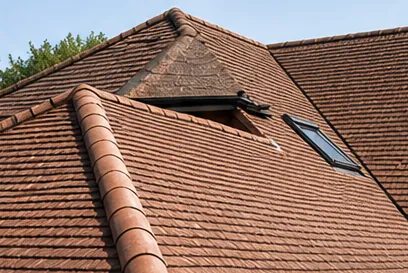
A new pitched roof is one of the largest single bills a house will ever hand you, and the first thing most owners want is a number. National cost guides do give one, but it is a wide one. Similar houses can land thousands of pounds apart, depending on shape, the covering you pick and how far a crew has to carry materials.
This guide sets out what the published figures say, names the guide and the date behind each one, and explains what moves a price in either direction. Every range here is a typical UK figure, a marker for scale rather than your own number. Some come with VAT and some without, so the guide says which wherever its source does.
A new pitched roof means stripping the old covering, looking at the timbers underneath, and building the roof back up from the eaves: underlay, battens, tiles or slates, then the ridge, hips and verges. The survey decides how much of that work your house needs, so the number to trust is the total on the quote that arrives after it. The sections below show what sits inside that total, so you can read it with some confidence when it arrives.
What national guides say a new pitched roof costs
The clearest ranges come from Checkatrade, whose guide, updated in October 2026, gives a UK average of around £8,000, with most roofs falling between £4,000 and £19,000, and around £12,000 for the usual three-bedroom semi.
That spread is not a contradiction. It takes in different slices of the market. A figure near the bottom tends to belong to a small, simple roof with easy access. A figure near the top belongs to a large or awkward roof, an expensive covering, or both. Neither can know whether your rafters are sound, whether the battens have rotted or whether the chimney wants new lead, and those findings are what shift a bill by the thousand.
What a new roof covers
When a guide says new pitched roof it normally means the whole slope is stripped and re-covered, which is a different job from a repair. The old tiles or slates come off, new underlay goes down, new battens (the thin timber strips that hold each course of tiles) are fixed, and the covering is laid again with fresh ridge and hip finishes. Whether any rafters, the main timbers rising from the wall plate to the ridge, need replacing is only known once the roof is open and someone can look at them properly.
Where only one slope has failed, the job may be smaller than these national figures assume. Our guide on whether to repair or replace a tiled roof shows how that call is made, and why a smaller job is sometimes the right answer for the house.
Hip or gable: how the shape of the roof changes the bill
Checkatrade splits its replacement figures by roof shape. The table below is from its October 2026 guide, and the figures are headed as plus VAT.
| Roof shape | Typical UK range |
|---|---|
| Hip roof | £9,250 to £18,000 |
| Gable roof | £7,000 to £16,250 |
| Flat roof, for comparison | £2,800 to £7,500 |
A gable roof has a vertical triangle of wall at each end, and the edge of the tiles over that wall is the verge. A hip roof slopes down on all four sides, so the ridge is shorter and a hip, the angled line running down each corner, needs its own cut tiles and its own capping. That is more careful work than a plain gable slope, and it is where the higher range comes from. A flat roof is a different build altogether, laid in sheets or membranes rather than tiles, and is shown only so you can see how far apart the shapes sit.
Shape is not the only thing that adds detail. Valleys, the inward-facing fold between two slopes, need lead or a purpose-made valley system. Dormers, chimneys and roof windows each need flashings dressed around them. A plain rectangle of tiles is quick to lay. A roof with a dormer, two valleys and a chimney is not.
Ridge work has its own rate. Checkatrade's figure for a dry ridge, where screws and clips hold the capping instead of a mortar bed, is around £800 on a semi-detached house. Since the 2014 revision of BS 5534, a ridge or hip tile gets a mechanical fixing as well as any mortar, so a sound new roof is built that way. Our guide to hip against gable roof cost goes further into the difference.
Slate, clay or concrete: what the covering sets
The covering is the largest material cost on the roof, and the choice runs from modest to expensive. Checkatrade prices natural slate at £160 to £210 per m², averaging £184 per m², in a table dated September 2026. The same table puts Spanish slate at £95 to £125 per m², and gives slate roofers a day rate of £280 to £360.
Clay and concrete tiles sit differently. The repair table in a separate Checkatrade guide shows concrete cheaper than clay per m², and clay cheaper than natural slate. A new roof tends to follow the same order, although the product matters: a handmade clay tile and a mass-made one are a long way apart, and so are two concrete ranges.
Lifespan belongs in the sum
A cheaper covering is not always the cheaper roof over the long run. Marley expects concrete tiles to last around 60 years, and is careful to say that figure promises nothing. For clay, Marley cites the Building Research Establishment as giving a minimum life expectancy of 60 years. CORC puts well-kept slate at 100 years or more. Treat all of these as ballparks, because a roof fixed badly will not reach them.
If you are weighing one tile against another, shape and weight matter as much as price. A heavier covering may bring a structural check, covered in a later section. Our guide to clay against concrete roof tiles compares the two for the way a house is built and where it stands, and what each does to the look of a street.
Whatever you choose, ask the roofer to name the tile, the underlay and the fixings behind the figure. Two quotes that read the same on the surface can describe quite different roofs.
Scaffolding, access and the highway licence
Nobody re-roofs a house safely without scaffolding, and it is easy to forget when you add up the figures. Checkatrade puts the scaffold for a roof replacement at £700 to £1,300. Its October 2026 scaffolding table works out at roughly £800 a month for a terrace, £875 for a two-storey semi, £1,000 for a detached bungalow and £1,200 for a detached house, while a chimney scaffold is about £660 a week.
Access is partly about the house and partly about the street. A terrace that opens straight onto the pavement puts the poles and boards over public ground, and section 169 of the Highways Act 1980 leaves the permission with the highway authority. Allow for the notice. West Sussex County Council asks for 10 working days' notice before erection and £266 for a month. In Hampshire, over the county line, the wait is ten clear working days from application, and the first two weeks of the licence cost £211.90.
A tight plot changes the sum in other ways. If the skip cannot sit on the drive, or materials must be carried by hand down a narrow passage, the crew spends longer on the same roof. A long drive, a steep bank or a roof above a conservatory all slow a job that looks simple from the road.
Check what each price leaves out
When you hold two prices side by side, find out whether scaffolding is inside each of them. A price without it is only part of the cost if the scaffold turns up later on the bill. Our guide to scaffolding for a roof replacement sets out how the licence and the hire period fit into a re-roof.
Building Regulations, insulation and the weight check
A re-roof can bring Building Regulations into the price. The Planning Portal sets two limits for work that normally needs no building control application: under 25 per cent of the total building envelope affected, and under 50 per cent of the roof. A whole new roof is past the second one. Arun District Council also lists re-covering roofs among the jobs on its building control approval page, so put your own job to its team.
Insulation is the usual extra. The limit for a new or replacement roof in Approved Document L, the Part L guidance on saving fuel and power, is a U-value of 0.15 W/(m²·K). Renovation rules begin once more than half of the roof surface is being renovated. That is the 2021 edition and its Table 4.2, in force until 24 March 2027, when the 2026 edition takes over and Table 3.2 repeats the figure. Putting insulation in while the roof is open costs less in access than adding it afterwards, though it does lift the quote.
A heavier covering
The Planning Portal lists a heavier covering as a further trigger: approval is needed where new tiles make the roof 15 per cent or more heavier, and it suggests checking with an engineer or surveyor first. Swapping a light slate for a heavy tile is the sort of change that raises the question.
Neither point is a reason to put off a roof that needs doing, only a reason to ask about them early. Our pages on insulation when re-roofing and re-roofing and Building Regulations go through each in turn, and where a job is notifiable we deal with the paperwork for you.
VAT, the written quote and how to compare prices
Tax comes last. The standard rate of VAT is 20 per cent, and Checkatrade heads its replacement table as plus VAT, so a £10,000 figure from that table becomes £12,000 once tax is added. Other guides do not say whether their ranges include it, which is one more reason to treat any national figure as a starting point.
A re-roof carries VAT at the standard rate. Whether any insulation inside the job qualifies for a lower rate turns on how the work is contracted, so we confirm the rate at quote stage rather than guess. Asking early matters here, because tax is the one part of the total that can move the figure by a four-figure sum on a large roof.
Ask each roofer whether the price they give includes VAT and the scaffold, and which tile, underlay and fixings it covers.
What you should receive
Expect survey photographs of your roof, followed by a written quote that states one figure for the whole job. We think the pricing is fair, and the photographs let you check what we saw for yourself, slope by slope. If the roof will hold with a repair, the quote says so and recommends the smaller job.
Useful questions for any roofer: what is being stripped, whether the timbers have been checked, which fixings are specified for the ridge and verges, how old tiles and waste leave the site, and what happens when decayed timber is found after stripping. Our pitched roofing page sets out the way we work, and the page on why roofing quotes vary explains why two fair quotes for one roof can still differ.
Questions
New roof price questions
Why is the national spread for a new pitched roof so wide?
It covers very different roofs. Checkatrade puts most re-roofs between £4,000 and £19,000, gives about £12,000 for a three-bedroom semi, and its shape table is headed plus VAT. Size, shape and tax treatment all move the number. Use it as a guide to scale, then rely on the written quote for your own house.
Will the government help pay for a new pitched roof?
Mostly no. The schemes currently on offer pay for insulation and heating work rather than a fresh roof covering. ECO4 ends on 31 December 2026, while installs under the Great British Insulation Scheme had to be complete by 31 March 2026. Households facing hardship or a disability can ask Arun District Council what support it runs. Check gov.uk before believing any offer of free roofing.
Does the price change much if the old tiles can be reused?
It can, but only when the tiles are sound. Reusing good ones saves buying new, though sorting, cleaning and relaying them takes time, and any broken ones still need matching replacements. On an older clay roof, matching can itself be the hard part. The survey tells you if reuse is realistic, and the quote is written to match.