
Fixing ridge tiles · 9 min read
How do you fix ridge tiles? The job step by step
The ridge tile repair job from first look to final sweep: how it is reached, what comes off, how the new bed and the fixings go on, when dry ridge makes more sense, and why this is not a job to try from a ladder.
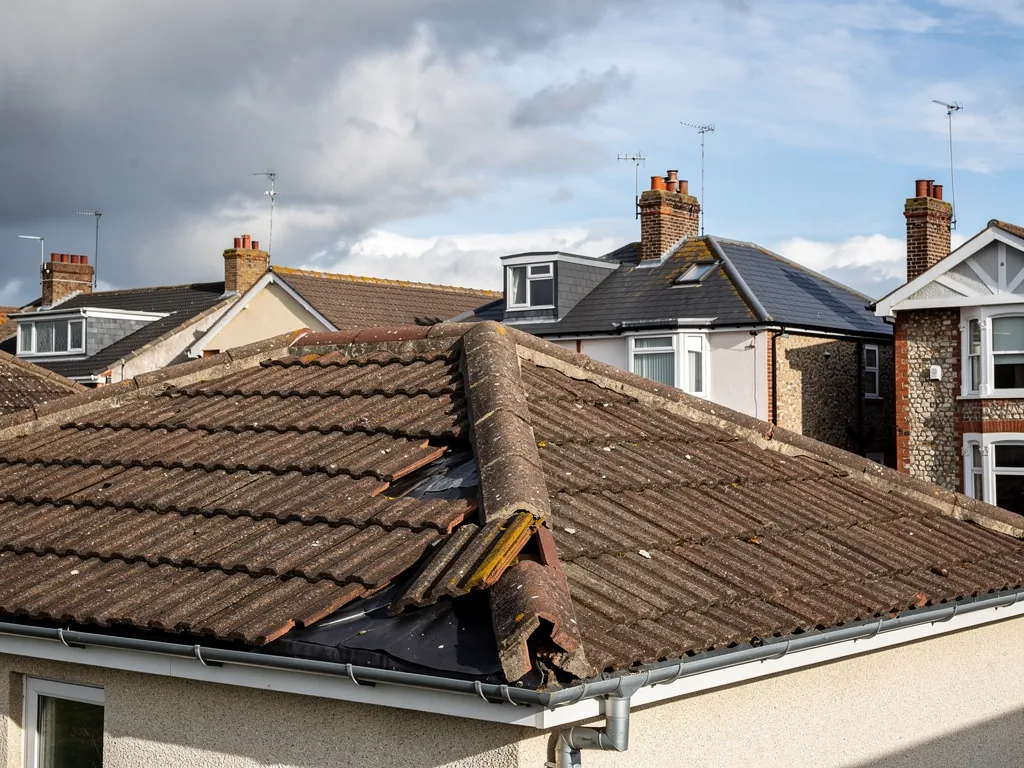
At the highest point of a pitched roof, where the two slopes meet, runs the ridge. A row of curved or angled tiles, the ridge tiles or capping, covers that join and keeps rain out of it. When those tiles loosen or the mortar underneath them breaks up, the job to fix them is a well-worn one, but it has a proper order and a few details that decide whether the repair lasts a winter or lasts a good many.
This guide walks through the work as a roofer does it. It starts with the decision to repair or rebuild, goes through access, stripping and rebedding, and explains the mechanical fixing that the current standard expects. It also covers the dry ridge alternative, the risks of doing it from a ladder yourself and the typical national costs.
A visit to your own roof beats any guide. The fault you can see from the garden is often the smaller part of what is going on up there, so the steps below describe what we would expect to find and how we would deal with it.
Decide first: patch, rebed or rebuild
Before anyone climbs a ladder, the job has to be sized. There are three possible outcomes, and the smallest one that will hold is the right one.
A patch suits a roof where the ridge is basically sound and a single tile or a short length of pointing has let go. The loose cap is lifted, the area is cleaned, and the tile is bedded back with a fixing. It is quick, and it holds as long as the neighbouring tiles are firm.
Rebedding means taking the ridge off in sections, clearing the old mortar and laying everything again on a fresh bed. It is the right answer when the mortar is cracked along its whole length, when several tiles rock under your hand or when a previous repair has left a patchwork of different mixes. The tiles are usually reused.
A rebuild goes further. If the capping is cracked, if the ridge board or the batten beneath has rotted or if the line has sagged, the work includes new timber and replacement tiles, and the ridge may be fitted with a dry system instead of mortar.
How the verdict is reached
The decision comes from close pictures of the ridge, taken close up from the roof itself, not guesses made at ground level. We look for hollow-sounding mortar, mortar missing from the ends, gaps at the joints and daylight under the capping. Pictures from the loft help too, because a damp ridge board or stained rafters show how long damp has been getting in. You get the photographs along with the verdict.
Our main page on ridge tile repairs sets out the full range of work, and the guide to the signs of loose ridge tiles helps you decide what to photograph first.
Getting up there safely
A ridge is the highest part of the roof, so access is part of the repair and often the biggest part of the bill. The options run from simple to heavy.
On a low bungalow, a ladder plus a roof ladder hooked over the apex can be enough. The roof ladder spreads the weight across the slope and gives the roofer something firm to stand on. For a two-storey house, a scaffold tower or a full scaffold along the eaves is more usual, and the gable ends may need cover too. A cherry picker reaches some ridges without any scaffold, if there is firm ground and space to set it up.
Work at height is the main hazard in roofing, so this is not a task to improvise. Tiles can be brittle and slippery, the pitch is steep, and the roofer carries tools, mortar and a bucket as well as their own weight. A ridge can look easy to reach from a ladder and still be a poor place to stand when you are pushing a loose tile.
What scaffolding adds
In Checkatrade's October 2026 scaffolding table a terrace is £800 a month, a detached house £1,200. A tower or roof ladders keep that cost down on a simple job, but the survey decides which is safe. Where scaffold stands on the public pavement it needs a highway licence, which takes notice.
When you ask for quotes, find out whether the access is included. Our guide to scaffolding for ridge tile repairs explains the methods and when each is used.
Stripping the old bed
Once the roofer is safely in position, the real work starts with taking the ridge apart in a controlled way.
The capping tiles are lifted one at a time and laid out in order, ideally on a tarpaulin or in a tray, so they can be put back in the same sequence. A ridge is a line of tiles that were cut and fitted to each other, and keeping them in order saves time and keeps the pattern even.
With the capping off, the old bed is chipped away from the top of the roof tiles on both sides. That includes the lumps of mortar that have dropped into the gap, which is where water collects. Everything is brushed and cleaned. A clean, slightly damp surface helps a fresh bed take hold, whereas dust and crumbs stop it bonding.
Now the structure underneath gets its first proper inspection. The ridge board or ridge batten, the timber that the tiles are fixed to, is checked for rot and movement. Underlay at the apex is checked for splits. The top row of roof tiles on each side is checked for cracks and slipped fixings. This is the point where the real size of the job shows itself, and where a quote based on the view from the garden can change.
What turns up under the mortar
Common finds are a cracked ridge tile that was hiding behind a crust of cement, a rusted nail that used to hold a cap in place and a bird's nest tucked into the gap. A bat roost or a live bird's nest is protected, so finding one pauses the work for advice. Sound capping is cleaned and kept, and cracked pieces are set aside to be replaced.
Rebedding and the mechanical fix
This is the step that decides how long the ridge lasts. A bed of mortar goes down the apex, and the capping is set into it, each tile bedded and pushed so it sits level and meets its neighbour with a tight joint. A mix of sand and cement is usual, and on an older roof a lime mix can suit better. The ends of each tile are filled so water cannot run along the inside of the ridge.
What makes the repair modern is that the mortar no longer carries the load alone. Marley's account of BS 5534 is blunt: mortar's tensile strength alone stopped being enough for ridge and hip capping, so bedded work should be fixed mechanically too. In practice that means a screw, clip or similar fixing through or over each cap into the batten or a ridge fixing system.
Some of the fixings are hidden in the mortar and some are visible. Either way, the aim is the same: the tile is held to the roof by metal as well as by the bed, so a crack in the mortar does not release it. Marley adds that following BS 5534 is not a legal requirement, and BSI cautions that some old roofs with reclaimed materials may not suit its recommendations.
Finishing the line
After the tiles are placed, the joints are pointed and the mortar is struck off cleanly. Any smears on the tiles are brushed away before they harden. The roofer then sights down the length of the ridge from one end to see that it runs level and straight. On a long ridge, small errors show from the road, so this check is worth the time.
The ends of the ridge are finished with end caps or gable tiles, depending on the roof.
The dry ridge alternative
A dry ridge removes the wet bed from the job. A continuous batten or rail is fixed along the apex, ridge tiles are clipped or screwed to it, and a flexible, ventilated roll closes the gap beneath so rain cannot blow in but air can still move.
The method is covered by BS 8612:2018, which BSI lists as current, published on 31 January 2018, for kits that hold ridge, hip and verge without mortar. Checkatrade puts a dry ridge at around £800 on a semi, and accepts that a simple re-ridge in mortar can undercut it at first. Those are national typical figures, and over the years the gap can narrow, so the choice rarely turns on price alone.
A dry ridge fits where the old bed keeps failing, where the tiles are modern and regular, and where the owner wants to avoid repointing in future. Mortar still has its place on older roofs where the traditional look matters or where the tile shape does not suit a kit. In those cases the tiles are bedded and mechanically fixed.
Which one for your roof
The survey tells you. A dry system needs a sound ridge batten and a fairly regular line, so if the timber is rotten it has to be repaired first. A bedded ridge needs a dry day and some patience while the mortar sets. Both are sensible when done properly, and the point of the verdict is to match the method to the roof rather than to push one over the other.
The sister guide on dry ridge systems describes the kits in more detail.
Costs, time and what to ask for
Most ridge repairs are done in a day or less, weather permitting, though a long ridge on a big detached house takes longer. The cost depends on the length, the access, the number of tiles that must be replaced and whether the timber needs attention.
Checkatrade's June 2026 repair table puts ridge tile repairs at £50 to £70 per metre, and notes that all its figures exclude VAT, which has to be added at 20 per cent. Its dry ridge guide, updated September 2026, gives around £800 for a full system on a semi. Both are national guide figures. Your own price follows the survey, written down as one total.
A few questions sort a good quote from a weak one. Does it say how the tiles will be fixed? Does it include scaffolding or other access? Is VAT in the figure? What happens to the old mortar and the waste? A roofer who is confident in the method will say so in the quote.
A word on doing it yourself
Re-bedding a ridge looks like a mortar job, and plenty of people consider it. The difficulty is the height, the angle and the fixings. Falls from roofs cause serious injuries, a bed laid without mechanical fixings is the sort of repair that falls apart in the next gale, and a poor job can hide a leak that does more damage inside.
Whatever route you take, photograph the ridge before and after. If the damage came from a storm, tell your insurer first, hold on to receipts for any stopgap work and file the photographs with them.
Questions
Fixing ridge tiles questions
How long does a ridge repair take?
A short length of ridge can be done in a morning. A full rebed on an ordinary house is often a day's work, once access is set up. Long ridges, rotten timber or tricky access push the time out. The survey gives a realistic idea before the work starts.
Can ridge tiles be fixed in the rain?
Not well. Mortar needs dry conditions to bed and set, and wet tiles are slippery and unsafe to work on. A dry ridge system tolerates more weather because it uses no wet bed, but the roof still has to be safe to stand on. Work is rearranged around the forecast.
Will new ridge tiles match the old ones?
Reusing the existing tiles keeps the match perfect, which is why sound capping is cleaned and put back. Where replacements are needed, the colour and profile are matched as closely as the market allows. Weathered clay and handmade tiles are the hardest to match exactly.