
Roof tile coatings · 9 min read
Roof coatings after cleaning: do they work?
A coating promises a fresh colour and slower regrowth. This guide weighs that against what it cannot fix, what it can hide and what it asks of you afterwards.
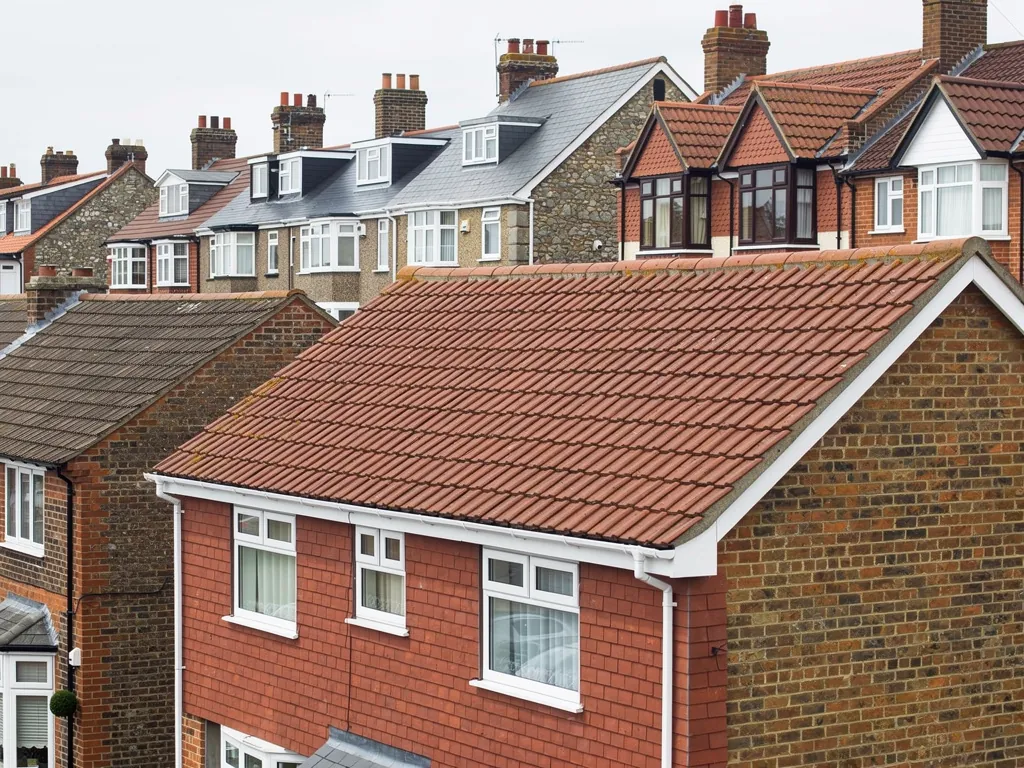
Once a roof has been cleaned, someone will suggest sealing it. A coating is a paint-like layer rolled or sprayed onto the tiles, usually in a colour chosen to match or refresh the original. The sales pitch is easy to follow: a tidy colour, a surface that sheds water, and a roof that stays cleaner for longer.
Some of that is fair. A sound roof with faded tiles can look noticeably better under a good coating, and a smooth finish gives growth less to hold. But a coating is cosmetic. It sits on top of the tile and does nothing for the fixings, the underlay or the flashings, and it is only as good as the surface it is put on.
So do coatings work? The answer is that they can, on the right roof, done properly, and that on the wrong roof they are an expensive way to hide a problem. This guide covers what the product is, what decides the result, the downsides that rarely make the brochure and the cheaper options to try first.
What a tile coating is and what it claims
A roof tile coating is a liquid finish that dries to form a film over the visible face of the tile. Products differ in their chemistry and in how thick the film is, and manufacturers describe them in different words: sealant, paint, restorer, protective finish. What they share is a promise to improve the look of the roof and to make the surface harder for moss and algae to settle on.
It helps to be clear what the product is not. It is not a repair. It does not secure a loose tile, close a crack or replace a worn nail. It is not a waterproofing system for the roof as a whole, because rain is kept out by the lapped covering, the underlay and the flashings, none of which the coating touches. Nor is it the biocide treatment that kills the growth. Our guide to soft washing and biocide treatment covers that step, which comes first.
Colour, finish and cost to the eye
The visible gain is colour, and colour is also where owners are most often let down. Whatever shade is chosen has to be judged on the roof, in daylight, against the walls and the neighbours, not from a small sample card. Tiles that have faded unevenly or been stained by years of runoff can be brought back to a single tone. Finishes range from matt to a slight sheen. A glossy look can seem out of place on an old roof, and a mismatch is awkward because it is difficult to reverse once the film has cured.
Why preparation decides the result
Almost every coating failure traces back to what lay underneath it. A film is only as sound as the surface it grips, and a poor surface is hard to spot once it has been covered over. A coating applied over live moss, algae or lichen is sealing the problem in. It must go onto a surface that has been cleaned, treated, left to dry and checked, and the order of those steps matters. That is why a coating should never be sold as an alternative to cleaning. It is a follow-up to it.
Drying takes time. A tile that is damp below the surface, or a roof in shade that never fully dries, is a poor base. Weather also matters on the day: the product has instructions about temperature and dryness, and the roofer has to follow them. If rain arrives before the film has set, it can mark or lift. Plan a coating for a settled spell, not a gap in a wet week.
Dead growth must be gone first
After a biocide treatment, the dead moss and algae loosen gradually as rain washes them off. Coating too early traps what has not yet fallen, and the result is a lumpy, stained finish. Our answer on whether moss comes back after a roof clean explains how long a clean roof can stay clean without any coating.
A conscientious roofer will therefore wait, inspect, brush off anything left and only then coat. If an offer promises a clean and a coating in a single visit on a heavily mossed roof, ask how the dead growth and the drying time are being dealt with, and ask to see that written down.
What a coating cannot do
The list of things a coating cannot do is longer than the brochures suggest. It cannot stop a leak that comes from a cracked tile, a slipped slate, a failed hip or a lifted flashing, and it should not be applied until those are mended. It cannot restore a tile that has lost its body. A tile that is flaking, crumbling or laminating will go on doing so underneath the film, and the film may peel away with it, taking the colour you paid for.
It cannot make an old covering last forever either. Marley expects concrete tiles to give around 60 years and says the figure is no warranty of longevity, and CORC puts well-kept slate at over 100 years. A coating may help a tile look its best through those years. It does not add to them in any way that a manufacturer has stated, and you should be wary of any such promise.
Tile warranties and paperwork
If the tiles are still under a manufacturer's warranty, ask the manufacturer whether coating them affects it before work is booked, and get the answer in writing. The same applies to any guarantee offered on the coating itself: read what it covers, who stands behind it and what it requires of you, such as repeat maintenance.
When a surveyor looks at the roof at a later sale, a coating can also raise the question of what is underneath. Keep the paperwork and the photographs from the day it was applied.
Appearance, grip and safety afterwards
A new film changes how the roof feels as well as how it looks. Many coatings become slippery when wet. A roof that has just been coated is a poorer place to work. That affects the next person who has to climb up to mend a ridge tile, clear a valley or fit an aerial, so make sure the access question is not forgotten. The people who work on the roof later may not know a coating is there.
The look also changes with time. Sun, salt air and rain age the film, and colours can chalk, fade or weather unevenly, particularly where one slope gets more sun than another. A roof with two different ages of finish can look odder than one that has simply weathered as a single piece.
Protected buildings and conservation areas
On a listed building, changing the colour or finish of the roof is not routine maintenance, and the consent question should be asked of the council before anything is applied. The wider planning test in section 55 of the Town and Country Planning Act 1990 is whether the work materially affects the external appearance of the building, and a new colour can do exactly that. In Bognor's conservation areas, where the council hopes to see original slate and clay tile kept, a coating that changes how the roof reads from the street deserves a conversation first. Put the question to Arun District Council, or to the National Park Authority if the house stands inside the Downs.
Our page on cleaning historic roofs covers the cleaning side of the same question.
The costs that do not appear in the brochure
A coating adds a second job to the first. There is the cost of the product and the labour of putting it on, plus the access that the extra day or two may need. Where scaffolding is needed on the pavement side, the highway authority wants a licence, and the longer the poles stay up the more that tends to cost. This guide leaves out a figure, because the sum turns on the roof and what the survey finds, and our written quote comes to one total.
Then comes the future cost. A film does not last for ever, and some roofs need recoating at intervals to keep the finish looking right. If you are thinking of selling, a neglected coating can look worse than the plain tile beneath. Sooner or later the tile has to be cleaned again, and removing an old film is a much bigger job than cleaning bare tile.
Comparing like with like
When you compare offers, set a clean on its own beside a clean with a coating, and ask what each one includes: the dead growth, the gutters, the drying time, the repair of defects and the removal of waste. Check whether VAT is in each price. The question of whether any of it is worth paying for is covered in our guide to whether getting your roof cleaned is worth it.
What we would try before a coating
There is a short list of cheaper steps that often work as well as a coating, and our advice is to work down it. Start with a proper clean and treatment. If growth returns, ask why. Shade from trees, a damp north-facing slope, a blocked gutter and overhanging branches all feed regrowth, and no film stops that. Cutting a branch back can do more than any product, and it costs very little, so it is the first thing to try when the shaded slope greens up again.
Next, repair what is wrong. A roof with cracked tiles and failing fixings needs mending before it is dressed up, and our survey photographs show you which tiles and which details concern us. If a repair is enough to hold the roof, that is the job we recommend.
When a coating does make sense
It makes sense on a sound roof whose tiles are firmly fixed and clean, whose colour has faded unevenly, and whose owner wants a uniform look and accepts the upkeep. It makes much less sense on a roof near the end of its life, where the money would be better spent on a replacement, or on a protected building without consent.
That is the plain verdict: many roofs do well without one, and some benefit from it. You will be told which group yours falls into, with photographs, before any figure is mentioned, and the price on paper is a single sum. For the wider picture of what we do on roofs that have turned green, see our roof cleaning and moss removal page.
Questions
Coating queries
Should a roof be coated straight after moss treatment?
Not straight away. Dead moss and algae need time to loosen and be washed off, and the tiles need to be dry. Coating too soon seals loose debris under the film. A sensible plan is to treat, wait, inspect and brush, and only then decide whether a coating is wanted.
Will a coating stop moss growing back for good?
No coating can promise that. A smooth finish may give growth less to hold, but shade, damp and debris in the gutters keep feeding regrowth. Fix the causes, and keep an eye on the north-facing slopes, which stay damp longest and green first.
Can I coat a roof with a leak or cracked tiles?
Mend the defects first. A coating does not seal a crack, and it can hide the fault until water shows up indoors. Have the roof surveyed, repair what needs repairing, and then ask whether a coating still looks worth the money.