
Soft washing · 9 min read
Soft washing and biocide treatment explained
How a soft wash differs from pressure washing, what the biocide in it does to moss, algae and lichen, why the roof can look patchy for some time, and the cases where we would choose another method.
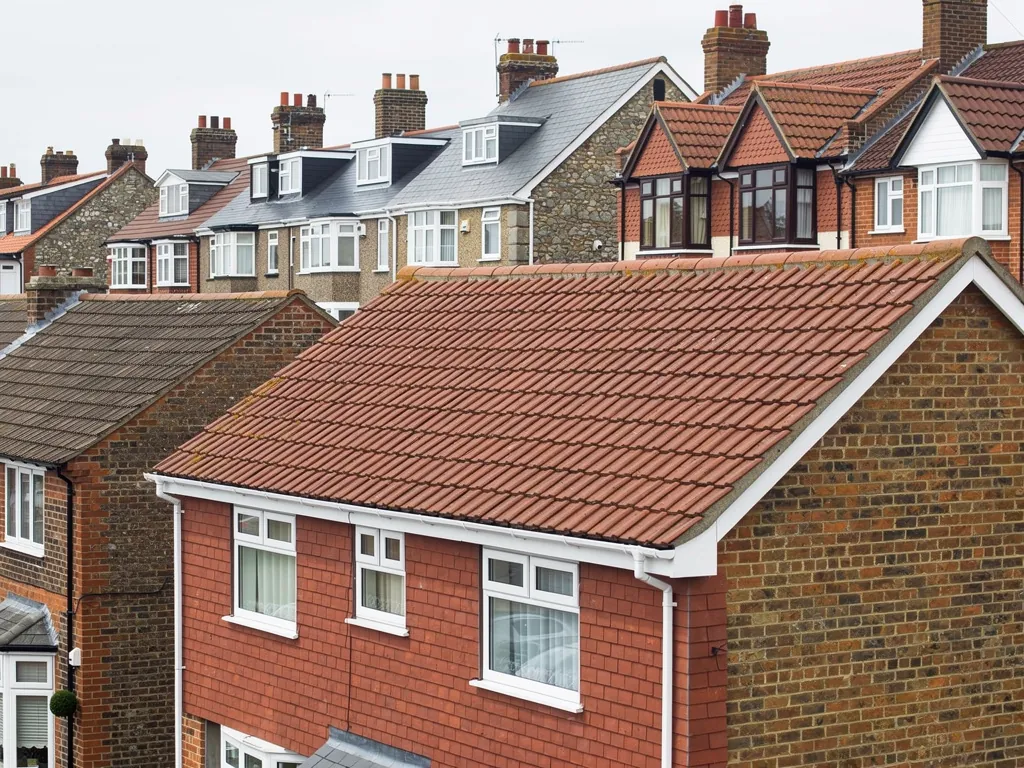
Soft washing is the method most roof cleaners now reach for on tiled and slated roofs, and the name makes it sound gentler than it sometimes is. The idea is simple. Instead of blasting growth off with a jet, the cleaner sprays a treatment onto the covering at low pressure, lets it work, and rinses lightly or leaves the weather to finish the job.
The treatment is a biocide, a product made to kill living growth. That is where the questions start. What is actually going onto your roof? Where does the run-off go, and what about the plants below? Why does the roof not look clean the day after? And is it right for every covering?
This guide answers those questions in the order a homeowner usually asks them. It explains the method, the waiting period, the care needed around gardens and drains, and the roofs where we would choose a different approach. It does not give a price, because the cost of a clean depends on the survey, and the written quote we send after the survey comes as a single sum.
What a soft wash actually involves
A soft wash is a low-pressure application. The operator mixes the treatment with water, sprays it over the slopes from a safe working position, and works across the roof in sections so that no area dries out before it has been wetted properly. Pressure is kept low on purpose: the aim is to carry the product into the moss, algae and lichen, not to scour the surface of the tile.
Because the product needs time on the surface to work, the job is paced by the chemistry and not by how quickly a jet can strip a slope. Compare that with pressure washing, where a fierce jet strips the growth off mechanically. A jet can drive water under laps, lift the surface of a tile and blow out the pointing under a ridge, which is why our guide to pressure washing roofs is cautious about it. The soft method relies on chemistry instead of force.
The usual order of work
Heavy moss is normally lifted by hand first, with a soft brush or a scraper, because a thick cushion of moss holds the product away from the tile underneath. Loose material is collected and bagged rather than swept down the slope. The treatment then goes on, covering the whole slope evenly, including the shaded side where growth is thickest.
After that, some roofers rinse the surface gently and others leave the treated roof untouched. Both are recognised practice. What matters is that the surface is wetted evenly, that nothing is forced under the tiles, and that the guttering gets emptied once the slopes are done, with the downpipes checked as well. The surface of an older tile can crumble if a roofer is heavy handed, so pace matters as much as product. Our answer on whether roof cleaning is safe for your tiles covers the same ground from the covering's point of view.
What the biocide does to moss, algae and lichen
A biocide treatment works on the living organism rather than the stain it leaves. Moss, algae and lichen are all living growth, and the product is chosen to kill them at the root or the cell, so the colony stops holding on. A pressure jet removes the visible growth and leaves live spores and fragments in the pores of the tile. A biocide goes after those as well, and that is the main reason the roof stays clean for longer.
The three growths are not the same, and the treatment is matched to what is there. Moss has a body you can lift off. Green algae and black streaks form a film. Lichen grips tightly and is the slowest to let go. Our guides to black streaks and green algae and to lichen on roof tiles describe how each one looks and why it grows where it does.
What to expect on the label
Every professional product comes with a manufacturer's label and a data sheet. They state what the product is for, how it is diluted, how it is applied and what precautions apply. You are entitled to ask which product will go on your roof, and a reasonable operator will name it without fuss. If the answer is vague, treat that as information about the rest of the job.
Keep a copy of the product name with your paperwork, so that you know what has been on the roof if you ever clean it again or sell the house. It also helps to know that a biocide is not a coating. It does not leave a film that seals the tile or changes its colour. Once the dead growth has gone, what you see is the tile itself. Our guide to roof coatings after cleaning looks at what happens when a customer wants more than that.
Why the roof does not look clean straight away
This is the point that surprises people most. After a soft wash the roof can look much the same the next morning, and in places it can look worse. Dead moss goes brown or black, and algae can turn a dull grey before it fades. The treatment has done its work on the organism, but the remains are still stuck to the tile.
The remains come away gradually. Rain and wind loosen them, and over the following weeks and months the roof lightens in patches, often from the top of the slope downwards as the run-off carries the debris with it. The pace depends on the weather, the thickness of the growth, the pitch and how much sun the slope gets. A shaded north-facing slope will be slower than a south-facing one. Our answers on how long a biocide takes to work and on how the roof looks straight after treatment go through the stages in more detail.
None of this is a reason to hurry the process with a jet wash afterwards. Blasting a treated roof in the first few weeks brings back every risk the soft method was chosen to avoid. Gutters can fill with loosened debris during this period, so a quick look after the first few storms is sensible. A patient owner gets the better result, and a roofer who explains the waiting period at the survey, rather than after the invoice, is doing the job properly.
Protecting the garden, the gutters and the drains
A roof is connected to a lot of other things. Whatever goes on the slope eventually runs into the gutter, down the downpipe and onto the ground, a soakaway or a drain. Careful operators plan for that before the first spray.
On the ground, plants, ponds, vegetable beds and pets' areas near the walls are covered or kept well wetted, and the owner is told what to keep clear of while the treatment is working. Cars and garden furniture close to the house are moved or sheeted. Windows and vents are checked, and the operator should say how long to keep them closed.
Gutters, downpipes and bagged waste
Moss and debris loosened from the roof end up in the gutters. If they are left there, they block the outlet and the next heavy rain overflows behind the fascia. Clearing the gutters is part of finishing a roof clean properly, and our guides to moss in gutters and downpipes and to whether gutter cleaning comes with a roof clean explain why the two jobs belong together.
The collected moss and sweepings are bagged and taken away with the other waste, not left on the lawn or washed into a surface water drain. That is the practical meaning of leaving a site cleared, and it is worth confirming when you compare what each roofer says they will do. The label on the product sets out any further precautions, and a good operator reads it before the day, not on it.
Where we would not soft wash a roof
Soft washing suits a sound, ordinary roof that has simply gone green. It is the wrong tool in several situations, and recognising them is part of the survey.
Fragile coverings come first. Old asbestos cement sheeting, the corrugated panels often found on garages and outbuildings, is brittle, and HSE guidance calls asbestos cement roofs always fragile. HSE's non-licensed work guidance deals with asbestos cement handled with care and not broken up, so a roof like that should be identified before anyone brushes, scrapes or sprays it. Our guide to whether a garage roof is asbestos explains how to tell.
Roofs that need repair first
A roof with slipped, cracked or missing tiles should be put right before it is wetted down. Water and product can run into the batten space through the gaps, and loose ridge tiles may shift under a roofer's weight. If the survey finds cracks, our answer on what to do when cleaning finds cracked tiles sets out the options.
The same applies where pointing has failed, where flashings have lifted or where an old felt underlay is showing at the eaves. Cleaning does not cure any of those, and sometimes it makes the symptom appear sooner, with a damp patch on a ceiling that was dry while the moss was acting as a sponge. Listed and very old roofs also call for a different, gentler approach, covered in our guide to cleaning historic roofs. The straight answer at the survey is sometimes that the roof needs a repair this year and a clean the year after.
Questions to ask before a soft wash is booked
A few plain questions will tell you most of what you need to know. Ask which product will be used and whether you can see its label. Ask how the growth is removed first, how the roof will be reached, and whether the gutters are included. Ask what happens if the survey turns up damage, and who decides what to do about it.
Access deserves a question of its own. Some roofs can be treated safely from a tower or a cherry picker, and some need a scaffold. Where scaffolding stands over the pavement, the highway authority requires a licence, which takes some days of notice. That lead time can decide when a clean is possible, so raise it early. Our answer on whether roof cleaning needs scaffolding explains when it does.
Whatever a roofer tells you, ask whether the price covers VAT, access, the gutters and the removal of waste before you set it beside another.
What we put in writing
Once we have surveyed, you receive pictures of your own slopes together with the written quote, which gives a single total. It sets out the method, the way the roof will be reached and what becomes of the waste, and it flags any defect the survey turned up that deserves a repair first. We would rather see your money go on a repair that holds than on a clean that hides a fault, and the figure we give is a good and fair one.
Many people ask whether a clean is worth paying for at all, and the honest answer depends on the roof. Our guide on whether getting your roof cleaned is worth it weighs that up, and the main roof cleaning and moss removal page explains how we carry out the work.
Questions
Soft washing queries
Is a soft wash safe for the plants and pets around the house?
It can be, provided the operator plans for it. Plants and ponds near the walls are covered or wetted, pets are kept clear while the product is working, and the manufacturer's label sets out the precautions. Ask which product is going on and what it says, then follow the advice for your own garden.
Do you rinse the roof afterwards, or leave the treatment to wash off?
Practice varies and both routes are used. The point is that the roof is wetted evenly, nothing is forced under the laps, and the gutters are cleared at the end. We decide at the survey, because a roof with old tiles or soft pointing suits a lighter touch than one with sound modern concrete.
Can a soft wash make a roof leak?
Not on a sound roof, because the water is applied at low pressure and runs down the slope as rain does. A roof that already has cracked tiles, lifted flashings or failed pointing can show a weakness once it is wet, which is why we survey first and repair what the survey finds before the clean.