
Roof flagged in a survey · 9 min read
The surveyor flagged the roof: what happens next
Your surveyor has marked the roof as a worry. Here is the order to take things in, what a roofer's own survey can settle, and the options you still have before you exchange.
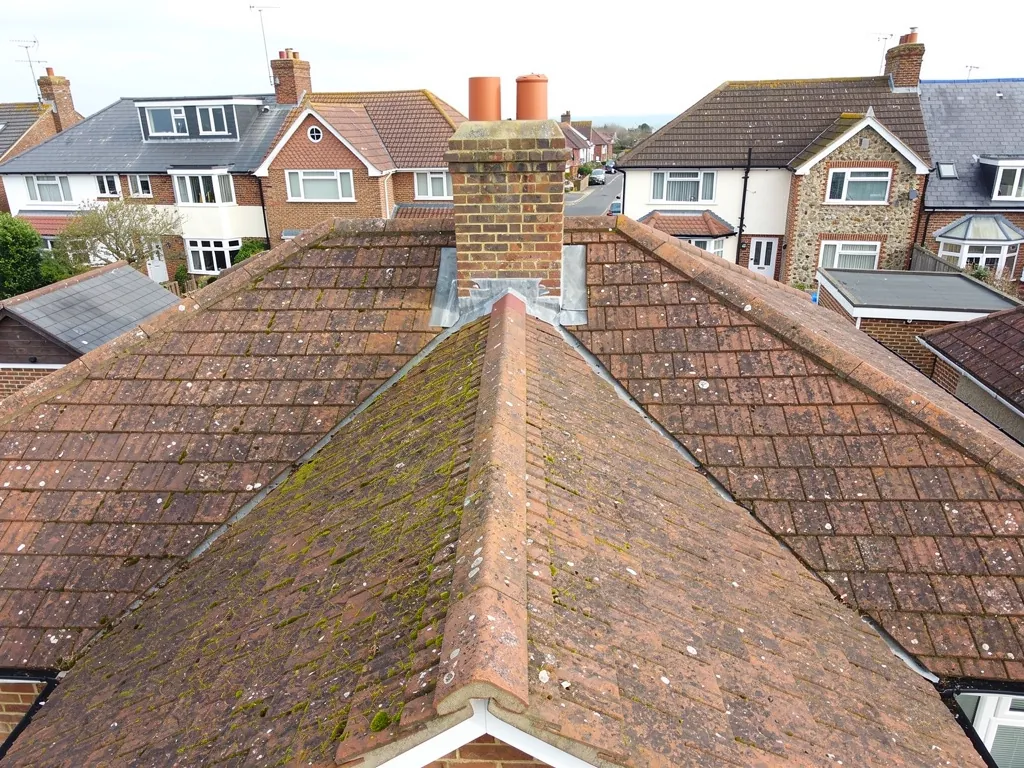
The report lands in your inbox and one line has a warning colour beside it: the roof. Nobody enjoys that moment when a house you have already pictured your furniture in suddenly comes with a question mark. The useful thing to know is that a flagged roof is a request for more information, not a sentence. Plenty of flagged roofs turn out to need a modest repair. Some need nothing at all. A few do need replacing, and the time to find out is before you sign.
This guide walks through the sequence. First, how to read the surveyor's wording. Then who to ask, what a roofer's survey should settle, what the work may cost, and which choices you have with the seller. We finish with the first winter in the house, when a roof that was tolerable in July gets its real test.
We are a roofer, so we will say plainly where our part begins and ends. We go up, take the photographs and then say what the roof itself needs: a proper fix, a stopgap, or a new covering. What you do with that verdict in the sale is a matter for you and your solicitor.
Reading the flag for what it is
A general survey of a whole house has a lot to cover. The roof is one item among many, and the person writing the report may only be able to see it from the street and through the loft hatch. When they mark it down, they are usually saying one of three things: they saw a fault, they saw signs of one, or they could not see enough to be sure.
Those three carry different weight. A named fault, such as slipped tiles on the rear slope or a cracked chimney flashing, is something a roofer can price. Signs of a fault, such as a damp stain on a rafter, need someone to trace the cause. A note that the roof could not be fully seen is the weakest of the three, and the cure is simply to have it seen.
What the wording is asking you to do
Phrases that recommend a further inspection by a roofer are an instruction to you, however politely they are phrased. They tell you the surveyor preferred not to guess. If the report also gives a time frame, such as repairs needed soon or monitor, take that seriously, but keep it in proportion: it describes the surveyor's view from a distance, not the result of a close look.
Keep the report to hand. Send the roofer the exact passage, not your summary of it. The wording tells them which slope, which feature and which concern to start with, and it saves time on site. Our answer on how a roof survey differs from a homebuyer survey explains why the two reports see different things.
The first week: your solicitor, the agent, the roofer
Start with your solicitor, because timing is the thing most likely to catch you out. Ask where you are in the process and how long you have before contracts are exchanged. Once you exchange, you are committed, and a roof problem found afterwards is yours. If time is short, tell the solicitor you want a roofer's visit first, so the date is not allowed to slip past you by accident.
Next, ask the estate agent for access. Sellers expect it, and a polite request that explains a roofer wants to look at one item usually gets a quick yes. Offer to send the roofer's name and the date. A visit that happens while the seller is out is often easier for everyone, provided someone can open the loft.
What to tell the roofer
Give them the address, the surveyor's wording, the age of the house if you know it, and the date by which you need an answer. Tell them whether the roof is flat, pitched or both, and whether there is a loft room. It also helps to mention a mortgage if you have one, since your lender may want to see what the roofer found. Check with your mortgage provider before assuming either way.
Ask what you will receive: photographs, a written note, a verdict, and a quote if work is needed. Our inspection comes with photographs of the roof, and the quote for any work reaches you in writing, with one total. Nothing obliges you to use us on the strength of the verdict.
What the roofer's survey should settle
A good survey closes the gaps that the homebuyer report left open. It should tell you which faults are real, which are urgent, and which can wait for a year or two. It should say how many years the covering may still give, and set out a plain choice between repair, patch and replace.
Age matters but should never decide it alone. Published lifespans are ranges, not promises. Marley expects concrete tiles to give around 60 years, a figure it says carries no warranty. CORC puts well-maintained slate at 100 years or more. Less gives torch-on felt 10 to 20 years, GRP 25 to 40 and EPDM 30 to 50. A roof within the range can still be fine, and one outside it can still have years in it.
The parts surveyors tend to flag
Roof flags in homebuyer reports usually land on a short list: slipped or cracked coverings, a ridge in poor condition, lead around a chimney, a flat-roofed extension or garage, gutters and fascias, and signs of damp in the loft. A roofer's survey takes each in turn. Our guide to what a roof survey includes sets out the full order.
Ask for something you can pass to your solicitor. A short written note with numbered photographs, naming each fault and what it needs, is easier to use in a conversation with the seller's side than a phone call. If the roofer thinks the roof needs nothing more than ordinary maintenance, a clear statement to that effect is just as valuable. It lets you go ahead with the purchase knowing the question was asked and answered.
Putting numbers on it
A verdict becomes useful once it has a price attached. The national guides give typical UK ranges, which you can use to sense-check any figure you are given. They are not a quote for this house, and the figure to rely on is whatever the quote says after someone has looked at the roof.
| Job | Typical UK range | Source and date |
|---|---|---|
| Tile or slate roof repair | £90 to £220 per m² | Checkatrade, June 2026 |
| Roof inspection | About £260, plus VAT | Checkatrade, September 2026 |
| Roof replacement | Around £8,000 on average, most between £4,000 and £19,000 | Checkatrade, October 2026 |
| Flat roof replacement | £2,800 to £7,500 | Checkatrade |
| Scaffold for a replacement | £700 to £1,300 | Checkatrade |
Checkatrade gives around £12,000 for replacing the roof on a three-bedroom semi, and heads its table as plus VAT, so the figures sit before tax. VAT at the standard 20 per cent changes any of these noticeably, so ask each firm whether its number includes it.
Repair or replace: the arithmetic
The sum is easiest to see on a roof that is part-worn, which is the usual case in a house with some years behind it. If the faults are local, such as some slates, a ridge and a flashing, the repair range applies and the roof carries on. If the covering is failing across a whole slope, repairs just move the cost around, and replacement is the honest answer. Our page on roofing costs and the guide to roof replacement cost go into the detail, and the cost of the survey itself is covered separately.
Your options with the seller
With a roofer's note in your hand you are no longer relying on a general report. That puts you in a position to choose. Broadly there are four routes, and your solicitor can tell you how each works in practice.
- Go ahead as planned, because the roofer found little or nothing to worry about.
- Ask the seller to put the work right before completion.
- Ask for a lower price that reflects the work, and do the repair yourself afterwards.
- Step back from the purchase if the roof is bigger than your budget allows.
The second route has a catch. A repair arranged by the seller is done on their timetable, by a roofer you did not choose, and the standard may not match what you would have asked for. If you take that route, ask for the roofer's invoice and details of the work, and have the roof looked at again before you complete.
The price route
The third route puts the work in your hands. It suits a buyer who wants a particular roofer or a particular finish and would rather control both. A written roofer's quote is the document that supports a request for a lower price, because it turns a worry into a figure the other side can respond to. It is a request, and the seller can say no.
Whichever you choose, think about what else might be hiding. A roof that has leaked can have wet insulation, stained ceilings and damaged timber below it, and none of those are covered by a roofer's quote for the roof itself. Ask the roofer to say what they saw in the loft, and tell your solicitor what the note says too, so any damp inside is not lost between the two reports.
Paperwork, listed roofs and the first winter
Once the roof has a verdict, look at the paperwork that goes with the house. If previous owners replaced the roof covering, the question is whether building control was involved. The Planning Portal sets the test for a normal application at under 25 per cent of the total building envelope and under 50 per cent of the roof, while the building control page at Arun District Council lists replacing roof coverings as work needing approval. Ask the seller what was done and whether anyone checked. A solid conservatory roof and a removed chimney breast both need Building Regulations approval too.
Older roofs and protected areas
A listed house needs listed building consent for works that would alter its special character, and the South Downs National Park Authority notes that ordinary maintenance and minor like-for-like repairs fall outside that. Conservation areas and Article 4 directions can change what is allowed without an application, so check with the council for the area before you commit to a particular repair.
HSE's rule of thumb for a house built or refurbished before 2000 is to assume asbestos is there, so if the roof has fibre cement sheets, take advice before anyone touches them.
Planning the work
Give yourself time. Some repairs can be done soon after you get the keys, but a replacement needs a survey, a quote, possibly a scaffold licence and a dry spell. Book early, because a leaking roof in January is a poor time to start looking for a roofer. Our roof repairs and roof inspections and surveys pages cover how we handle both, and our roof condition report guide shows what to ask for when you plan to sell on.
Questions
After a survey flags the roof
Should I pull out of the purchase if the survey flags the roof?
Not on the strength of the flag alone. It tells you to find out more, and a roofer's survey usually turns a vague worry into a proper repair, a stopgap or a new roof, with a price. Decide after you have that, and talk through the options with your solicitor before you exchange contracts.
Will my mortgage provider want to see the roofer's findings?
It may. Lenders differ, and some ask for further reports where a survey raises a concern. Ask your mortgage provider or broker before you assume either way, and keep the roofer's photographs and written note together with the survey so you can send them straight on if you are asked.
Can I use the roofer's quote to negotiate the price of the house?
You can ask. A written quote turns a general worry into a figure, which gives the seller something specific to respond to. Whether they reduce the price, repair the roof or refuse is up to them, and your solicitor can advise how to put the request and when.