
Winter repairs · 9 min read
Roof repairs in winter: what can and can't be done
A leak does not wait for spring, and neither should a roofer. Some repairs go ahead in winter without any loss of quality, others need dry conditions, and a sound temporary fix fills the gap.
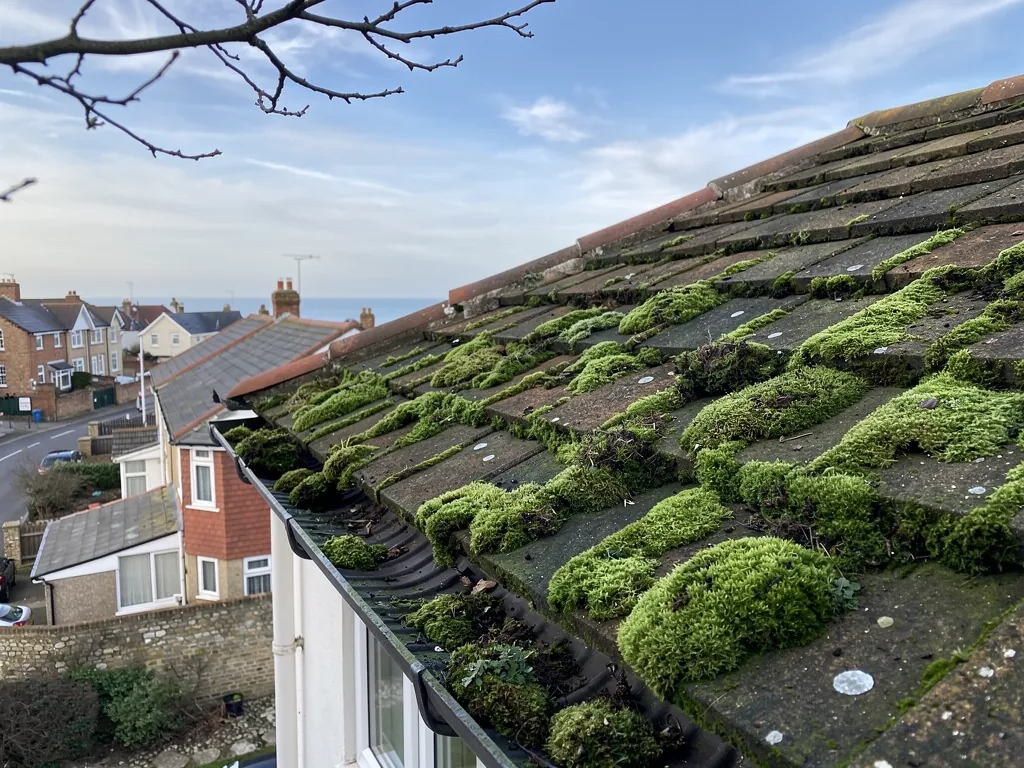
Winter is when roofs get found out. Gales lift tiles that have been loose for years, driving rain finds the lead that was already lifting, and a ceiling stain that was a faint ring in October becomes a drip in January. It is also the season when homeowners ask whether any work can sensibly be done, or whether everything has to wait until the weather turns.
Much turns on the job itself. A lot of repair work is perfectly safe and sound in poor weather: replacing slipped tiles, re-fixing a ridge, dressing lead, clearing gutters, and covering a hole so water stays out. Other jobs rely on materials that need to dry or cure, and doing them in a downpour is asking for a repair that fails. A good roofer tells you which is which, and does not pretend either way.
Below we separate what can be done now from what is better left, explain how a leaking roof is made safe in the meantime, and describe how to tell a true leak from the condensation that appears in cold lofts. When a roof is leaking, we start by making the house watertight.
Repairs that go ahead in cold, wet weather
Mechanical repairs are the least bothered by the season. Hooking a replacement slate into place, nailing a fresh tile onto a sound batten or screwing a ridge cap down to its fixing does not depend on anything setting. The materials are dry, the fixings are metal, and the work holds the moment it is finished. That is a large part of what roofers do after a gale.
Lead is much the same. A flashing that has lifted from a chimney can be re-dressed, and a failed soaker replaced, in damp conditions provided the surfaces can be kept clear of running water while the joint is made. The gutter side of the roof is also fair game: clearing leaves and silt from outlets in winter prevents overflow down the wall, which is often the real cause of a stain that looks like a roof leak.
Dry-fix details
Dry-fix ridge and verge systems suit the season for a plain reason. They hold with screws and clips rather than a wet mortar bed, and BS 8612:2018 is the standard that sets the tests for them. Under the 2014 revision of BS 5534, ridge and hip tiles are held down by a screw or clip as well as any mortar, which makes a mechanical fixing a normal part of a sound ridge repair in any month.
None of this means every winter job is easy. Short days, wind and wet footing slow the work, and a roofer should stop when the conditions make a ladder or a slope unsafe. What the weather limits is how much gets done in a day, not whether the result is sound.
Repairs better left for a dry spell
The jobs that suffer most are the ones that use materials which must dry, bond or set. Mortar pointing on a chimney stack, bedding for flaunching round the pots, coatings and paints for roofs, and wet-laid layers such as a fibreglass flat roof topcoat all depend on conditions being right on the day and for some time afterwards. Every manufacturer publishes a data sheet with its own limits, and a roofer working to one will not break them to save a day.
Flat roofs deserve a particular mention. A split felt roof or an old membrane can be given a temporary patch in winter to stop water entering, and that is worth doing. Re-covering the whole roof is another story, since the deck underneath has to be dry before anything goes over it. Sealing moisture under a new covering stores up a bigger problem for later.
A winter patch is a stopgap with a purpose: hold back the rain and give the timbers a chance to dry until the lasting repair is possible.
Choosing between the two is part of the straight answer we owe you. Where a patch will carry the roof to a dry period, the pictures show you the sound area around it. Where the covering is past patching, the pictures show that as well, and explain what a full replacement involves in our guide to roof replacement in winter.
A temporary fix should always be described as temporary on the quote. It buys time, it is not the finished repair, and a return visit for the permanent work is part of the plan.
When a gale or a storm does the damage
After a bad night of wind, the first job is to stop water coming in. That is rarely a roofing job in the usual sense. A tarpaulin battened across a stripped patch, loose tiles lifted off before they drop, or felt tacked over a gap can leave a house dry after a single visit, with the lasting repair kept for kinder weather.
Your own part comes before ours. Keep clear of the area, move belongings from under a ceiling that is bulging with water, and put a bucket down where it drips. Never go onto the roof yourself, and treat any slipped tile or hanging ridge piece as a falling hazard for people walking below. If a chimney or part of a wall looks damaged, the local authority's building control team can be told about dangerous structures.
Pictures and your insurer
If you may claim, tell the insurer early, get pictures of the damage before anything is shifted and hold on to receipts for emergency work. That advice comes from Which? and from the Institution of Structural Engineers alike, and it holds whoever you phone. When we make a roof safe we record what we find, and you get the images.
How a claim turns out is between you and your insurer, because it hangs on the policy terms and what caused the loss. Our guide to whether to call the roofer or the insurer first sets out the order in more detail.
Once the roof is safe, the sensible next step is a survey in daylight, ideally on a dry day, so the proper repair is based on what is there rather than on what a storm night suggested.
Telling a leak from winter condensation
Cold months bring a second kind of damp that is easy to mistake for a leak. Moist air from cooking, showers and breathing drifts up into the loft, touches the chilled timber and covering overhead and turns back into water. The result is drips, dark patches on rafters and a damp smell, with nothing wrong at all with the covering. Fixing tiles that were never the problem is a waste of money.
A few clues help. A leak usually follows rain and shows near a known weak point, such as a chimney, valley or vent pipe. Condensation follows cold, still, humid days, spreads over a wide area and is often worst on the north slope or round the eaves. Wet insulation with dry tiles above it points to moisture from inside the house.
Ventilation and the eaves
The fix for condensation is airflow. BS 5250 covers moisture control in buildings, and Marley's guidance drawn from it sets eaves openings for roofs lined with high-resistance underlay: 25 mm for pitches of 15 degrees or below, 10 mm above that. Loft insulation stuffed into the eaves can close the opening, so a gap that worked last year may be blocked now.
Our survey photographs include the loft side of the roof where we can reach it, because they tell the two problems apart. If condensation is the cause, the right advice may be to improve ventilation and not to touch the roof at all, and we would rather say that plainly. Our guide to loft condensation goes through the telltale signs.
Planning a winter repair around access and lead times
Weather is not the only thing that shapes winter work. Access and ordering take time too. If the repair needs poles standing on a footpath, a highway licence is needed first. West Sussex County Council wants at least 10 working days from application to erection; Hampshire County Council asks for ten clear days. On a planned repair that is simply a delay to schedule around.
It can sometimes be avoided for urgent work. Where a leak can be stopped by ladder, by tower or by lift, that comes first, and the scaffold and the full repair follow once the licence is granted and the forecast allows. A temporary cover can keep the rooms dry for the price of one short visit.
Materials and matching
Specialist coverings can take time to source. Matching clay tiles, handmade tiles or natural slate to an older roof may mean waiting for stock, and in a conservation area or on a listed building a close match is often expected. Ask early, so the permanent repair is not held up by a delivery.
Work in a conservation area or on a listed building can also need consent before anything starts. Like-for-like repairs often do not, but the rules differ from place to place, so check with the council's planning team. We explain what applies in our conservation area repairs guide.
The overall approach is to stop the damage now and do the finished work when it can be done well. A written quote after the survey gives one total price for the plan, so you know what is temporary, what is permanent and what each costs before you agree.
Getting through the wait for the repair
Most households are waiting for something: a survey slot, a licence, a dry day or a delivery. A little care in that gap limits the damage. Start with the inside of the house. Put containers under drips, lift rugs and furniture from the wet area, and open a window in the room if there is a risk of mould forming on damp plaster. A ceiling that bulges is a hazard, since water may be sitting above it, so keep people out from underneath and tell the roofer about it.
Next, check the loft if you can do so safely from the hatch. Look for daylight, wet insulation and dripping timber, and note where they are. Pictures of these with a date are the best briefing a roofer can have, and they help show where the water is entering.
Keep gutters and outlets moving
Blocked gutters push water back under the lowest course of tiles and down the wall. If you can clear a ground-floor outlet or downpipe safely, do. For anything higher up, wait for someone with proper access and do not lean a ladder on a plastic gutter.
One more point about the building's other occupants. Wildlife is a last point. The law shields bats and nesting birds, so a roofer who meets either in the roof space must adapt the job and take advice.
When you are ready, our roof repairs page explains how a repair job runs from first visit to clearing the site, and our guide on how long a roof repair takes sets out the time to expect.
Questions
Winter repair questions
Is it a bad idea to have a roof repaired in the cold?
No, provided the job suits the conditions. Tile, slate, ridge and lead repairs hold whatever the season. Work that depends on drying or curing, such as pointing, coatings and wet-laid flat roof layers, is better left for a dry spell, and a temporary cover holds the rain back meanwhile.
Should I cover a leaking roof myself with a tarpaulin?
Do not climb up to try. Falls from roofs and ladders are a real danger, and a tarpaulin in the wind can fly off and cause more damage. Manage the water indoors, keep clear of the area and call a roofer, who can fit a cover safely and take pictures for any claim.
Will a winter patch last until spring?
Often yes, where the covering around it is otherwise sound, but a patch is a stopgap and not a finished repair. We say on the quote which parts are temporary and what the permanent work involves. If the covering is giving up across the whole slope, patching will not help, and you will be told that.