
Part L and your new roof · 8 min read
Insulating when you re-roof: what Part L asks for
What Part L of the Building Regulations asks for when you replace a roof covering, which figures apply to roof windows and rooflights, and how to avoid insulation choices that cause trouble later.
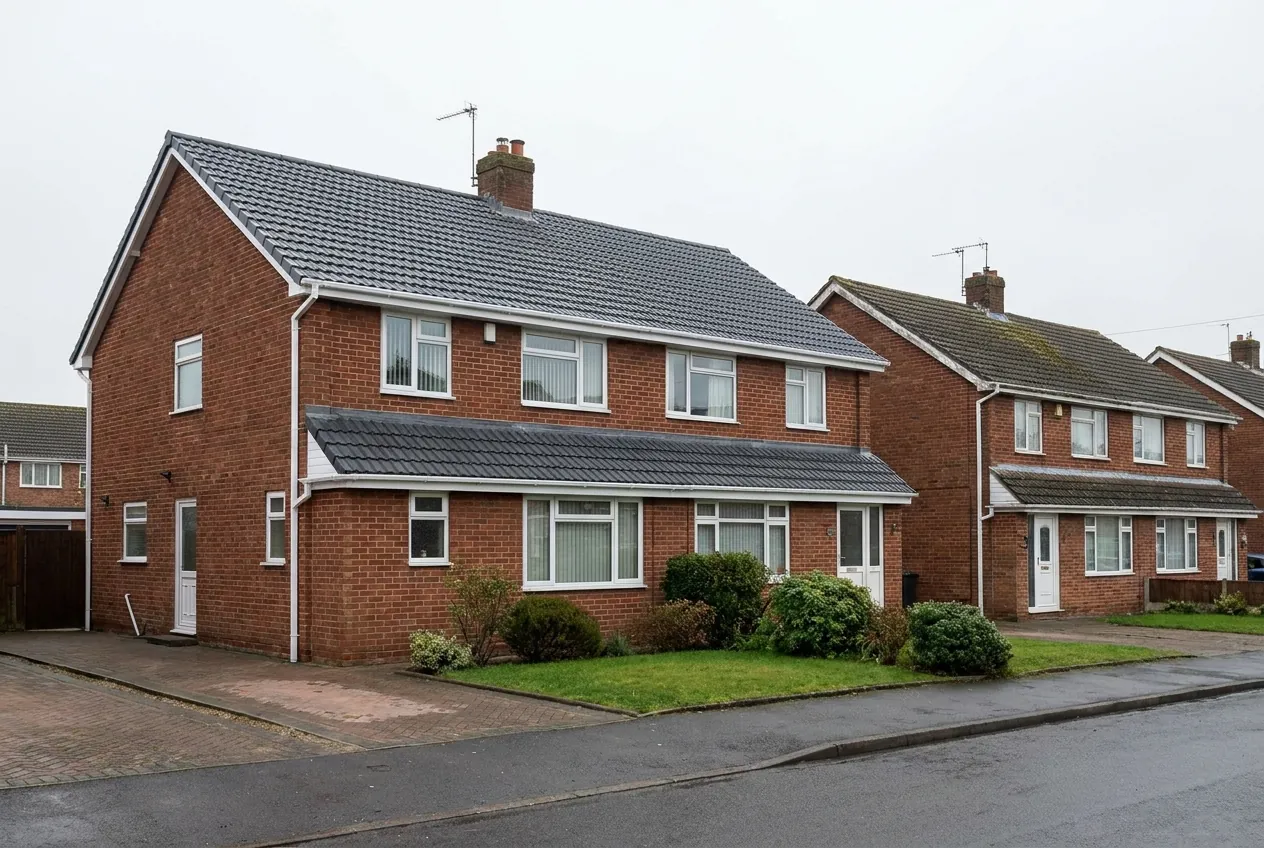
A new roof is the least costly moment you will ever have to improve the insulation above your head, because the covering is already off and the scaffold is already up. It is also a moment when the law can step in. Part L of the Building Regulations, the part dealing with saving fuel and power, can demand an upgrade when a big share of a roof is renovated.
The rule is easy to misread. It is not a blanket demand that every re-roof gets new insulation, and it is not a licence to skip the question. The answer turns on how much roof is affected, what already sits there and how the work is done. This guide sets out the tests as the regulations state them, the figures for roof windows and rooflights, and the traps that catch owners out: spray foam, blocked ventilation and a VAT assumption that may be wrong.
Your building control body, the council or a registered building control approver, decides how Part L applies to your job. Use this page to ask better questions. If you are still weighing up the whole project, our roof replacement and new roofs page is the place to start.
When re-roofing triggers a Part L upgrade
Approved Document L, Volume 1, covers dwellings. The 2021 edition, including the 2023 amendments, takes effect from 15 June 2022 for use in England. It sets two tests for existing buildings. A thermal element means a part of the structure, a roof for example, that separates the heated interior from the outside. Renovate over half the surface of one element and it must be upgraded. Renovate over a quarter of the external envelope's area and the whole job is treated as a major renovation.
For a pitched roof, stripping the covering and relaying it over the whole roof renovates the whole roof element, so the 50 per cent test is passed. A flat roof recovered with a fresh waterproof membrane is renovation too. A repair to a few tiles does not.
The numbers in the tables
Table 4.3 of the 2021 edition covers renovating an existing roof. The table sets a threshold of 0.35 W/(m²·K) and an improved value of 0.16. The Planning Portal says that re-roofing may require you to upgrade the thermal element and that an application is needed if the thermal insulation is not sufficient. Building control will confirm how the table bites on your house, since that hinges on the roof you have now.
The Planning Portal also gives the thresholds for building control applications, which are less than 25 per cent of the total building envelope and less than 50 per cent of the roof. Arun District Council's building control page also treats re-covering a pitched or a flat roof as work needing approval, which is a reason to ask the council or your approver early. Our guide to re-roofing and the Building Regulations covers the wider picture.
Roof windows and rooflights: the U-value limits
Where an element is new or replaces an old one in an existing home, separate limits apply, which differ from the renovation figures above. Table 4.2 of the 2021 edition gives a limiting U-value of 0.15 W/(m²·K) for a roof. A U-value records how readily heat passes through, so a lower number is better. On dormers, the roof figure takes in the roof parts of the windows.
Windows, roof windows included, must reach 1.4 W/(m²·K), or the Window Energy Rating Band B, as the floor. A rooflight has a different limit of 2.2. The document separates the two. A roof window sits flush with the slope around it. A rooflight is glazing set above the slope on a kerb or upstand, and where that upstand is built on site its U-value should be no worse than 0.35. If a window is being renewed as part of the job, ask which type is going in, since 1.4 and 2.2 are easily confused.
The figures change place in March 2027. The 2026 edition of Approved Document L takes effect on 24 March 2027 for ordinary building work, with a later date for higher-risk buildings. Its existing-dwellings table becomes Table 3.2, carrying the same values, and its renovation table is Table 3.3 with the same 0.35 and 0.16. Until that date, the 2021 edition applies, and transitional rules were not part of the sources we read, so building control should confirm which edition governs a job straddling the date.
Replacing a roof window during a re-roof
A replacement must be no worse than the element being replaced, and where you fit a new one, it needs to meet the limits above. Our guide to roof window Building Regulations goes through this.
Where the insulation goes and why ventilation matters
There are three common places for roof insulation, and each answers a different roof. With a cold roof, insulation lies at loft-floor level, between and over the ceiling joists, and the space above is kept cold and ventilated. In a warm roof, it sits at or above the rafters, so the loft space stays inside the thermal envelope. Between the rafters is the third option, usually where a room is in the roof. Which one suits your house depends on how the space is used and what the structure allows.
Whatever the choice, moisture needs a way out. BS 5250:2021, the moisture code, is listed by BSI as current but under review. Marley's guidance ties eaves ventilation to the underlay: a high-resistance type, which is not vapour-permeable, needs a continuous gap at the eaves, 25 mm on shallow pitches of 15 degrees or less and 10 mm on steeper roofs. Where the underlay is low-resistance and the ceiling well sealed, the normal eaves build may be enough, but only under conditions set by the maker and third-party testing.
Photograph the eaves gap and the insulation before the covering hides them, and keep the pictures with your building control paperwork.
The trap of stuffing the eaves
Thick insulation at the loft floor is sensible, yet packing it tight into the eaves can close the air path that keeps timbers dry. Use eaves ventilators or trays that hold the insulation back from the gap, and keep it clear. Blocked ventilation can show as condensation, damp patches on rafters and mould in the roof space, which is the same list of symptoms people take for a leak. Our page on the breathable roof membrane explains the underlay side.
Spray foam: what the surveyors say
Spray foam applied beneath the tiles is marketed as a fast route to insulation and an airtight seal. Think hard before agreeing to it, particularly on an old roof. The RICS consumer guide of March 2023 warns of dampness, including uncontrolled condensation, from insulation that is fitted badly. The guide urges owners to confirm with their mortgage provider that such products fit lender policy, and the guide notes that foam can influence a surveyor's opinion of value. The plain question to put to any foam installer is what happens to your mortgage and your next survey.
Lenders differ: in November 2024 a number refused to lend on a home with spray foam while others judged each case on its merits. The guide adds that taking foam out could damage the existing structure, and that a protected building such as a listed one is off limits until consent is in hand.
The Energy Saving Trust's guidance, updated 8 May 2026, advises against spraying foam over a leaking roof before the leak is mended, and rates the risk much lower with open-cell foam. A new roof is the moment to avoid that problem altogether: the leaks are fixed, the timbers are open for inspection and a different insulation can go in.
If foam is already there
Many owners meet the issue the other way round, with foam already under the roof and a buyer's surveyor asking questions. Our page on spray foam insulation removal explains how we assess it. Taking it out is not always the right call, and the survey decides.
Whatever you choose, tell your building control body what is being used, so that the record of the work shows the insulation as well as the covering.
VAT, grants and what the quote should say
Money questions come up at the same moment as the insulation ones, and two myths are common. The first is that insulation in a re-roof carries no VAT. In fact the standard rate of VAT is 20 per cent, and re-roofing is charged at that rate. HMRC's VAT Notice 708/6 zero-rates the installation of specified energy-saving materials from 1 May 2023 to 31 March 2027, with the reduced 5 per cent rate returning afterwards, and roof and loft insulation is named in its list. Whether the insulation within a larger job attracts the zero rate hinges on whether it forms a single supply with the rest. The written quote spells out how VAT applies to your job, and for a full re-roof the answer is seldom the hoped-for one.
The second myth is that a grant will pay. A grant for the roof itself is unlikely. No national scheme pays for re-covering a roof, and the schemes that exist fund insulation and heating measures. ECO4 runs until 31 December 2026, the Great British Insulation Scheme needed installations complete by 31 March 2026, while the Warm Homes Local Grant covers loft insulation for homes with an EPC of D to G and a household income usually of £36,000 a year or less.
Where to check
Arun District Council's Warmer Homes Scheme was listed as currently oversubscribed, on a page dated April 2024, so ask before relying on it. A low income or a disability is a reason to ask Arun what help it can point you to, and gov.uk is where to verify any scheme before paying an agent. A scheme page never guarantees eligibility, and nobody can promise it for you.
Setting quotes side by side, check that every one covers the insulation, the ventilation and VAT. Our guide to why roofing quotes vary shows how to read them, and our survey leads to a written quote showing one total for the work. Check with every roofer that the price takes in the building control application and the completion certificate. Keep the written quote, the building control paperwork and the insulation details together in one folder, because a buyer's solicitor will want them.
Questions
Part L and insulation questions
Does every new roof have to be insulated to a new standard?
No. The test looks at how much of the roof you renovate and what is already there. Renovating over half of the roof's surface triggers an upgrade of that element, and laying a fresh flat roof membrane is treated as renovation. Building control confirms how the table applies to your house.
Which edition of Approved Document L applies to my job?
Until 24 March 2027, the 2021 edition applies, and its tables are Table 4.2 and Table 4.3. From 24 March 2027 the 2026 edition takes over for most building work, with the existing-dwelling values in Table 3.2. If your work spans that date, ask your building control body which edition governs the job.
Can I add insulation later instead of during the re-roof?
You can, but access is harder and you may pay for scaffolding twice. Loft-floor insulation can usually be added at any time, while insulation above or between rafters is far easier with the covering off. If the Part L upgrade applies to your roof, it has to be dealt with as part of the re-roof.