
Cheaper than Velux · 9 min read
What is a cheaper alternative to Velux?
Where a roof window bill can genuinely come down, from the model you pick to the size, the access and the glazing, and the corners that cost more later if you cut them.
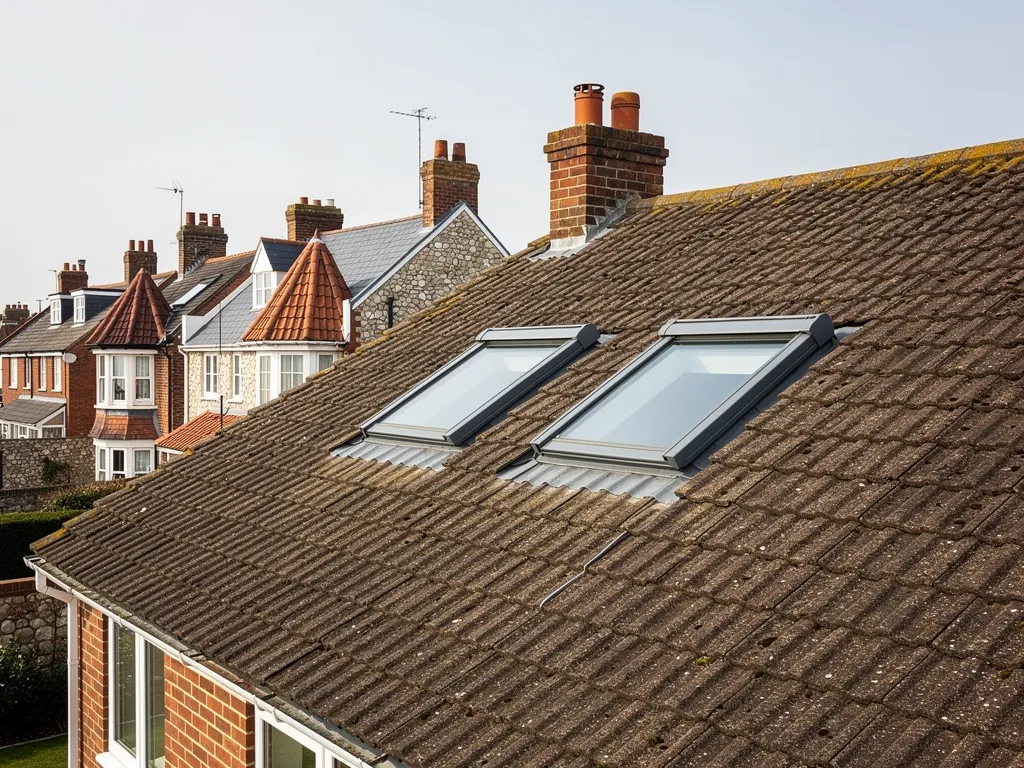
Velux is the name many people use for any roof window, much as they say hoover for a vacuum cleaner. So when someone searches for a cheaper alternative to Velux, they are usually asking one of two things. Is there another make of roof window that costs less? Or is there a way to get daylight into the loft, or the room below, for less money than a full opening window set in the slope?
Both are fair questions, and the answer to each is yes, with limits. Other manufacturers sell roof windows, and simpler products bring daylight in without an opening sash. But the price of the window itself is only part of the bill. A roof window has to be cut into the rafters, flashed against the weather, lined on the inside and, on a higher roof, reached by scaffold. Those parts hardly change from one brand to the next.
This guide covers where money can be saved without storing up a leak, what a cheaper choice must still meet under the Building Regulations, and where a saving is false. Each trade term is explained the first time it appears. Judge the job on the written figure that follows a survey of your roof, not on a brochure price.
What people mean by a cheaper alternative to Velux
There are three separate ideas hiding in the question, and it helps to pull them apart before you ask anyone for a price.
The first is a different make of roof window. A roof window is a glazed opening set into the slope, level with the tiles or slates around it. Several manufacturers make them, in sizes that overlap with the Velux range. Choosing another make can change the price of the unit, but it can also change the flashing kit, the trim, the spare parts and the way the window is fixed to the rafters.
The second is a different type of product. A fixed roof window does not open, so it has fewer moving parts. A rooflight is a glass unit raised on a frame above a flat roof, rather than set into a slope. A sun tunnel is a tube that carries daylight down from a small dome on the roof, and our guide to sun tunnels and tubular rooflights explains what they suit.
The third is doing less to the roof. A smaller window, one window instead of two, or a position that lines up with the existing rafter spacing all cut the work around the unit.
Keep those three apart when you collect prices. If one roofer prices a small fixed window and another prices a large opening one, the totals cannot be compared, however close they look. Write down the size, the type and the make beside each figure before you decide anything.
Where the real saving sits on a roof window job
When roofers talk about a cheaper job, they rarely mean a cheaper pane of glass. The saving sits in a few places, and some of them cost nothing in quality.
Size and standard dimensions
A roof window made in a standard size is easier to supply than one made to measure. Where the opening can be framed to suit a standard unit, you avoid a special order. Fitting a window between two existing rafters, instead of cutting one and adding a trimmer (a short timber that frames the new opening), also takes less carpentry. Ask which standard sizes would fit your rafter spacing before you set your heart on one.
Fixed or opening, manual or electric
An opening sash costs more than a fixed pane, and an electric motor costs more than a manual handle. If the room already has another window for fresh air, a fixed unit can bring in the light you want for less. Where a window will be out of reach, an opening one needs a pole or a motor, which is a reason to decide before the order goes in.
Doing the job in one visit
Scaffold is often the largest single cost on a window job. If two windows go in on the same elevation together, they share the scaffold and the visit. Fitting a pair at once is a real saving, which a second visit a year later cannot match. It is worth asking every roofer you speak to whether another window is likely to be wanted in the next few years, because the answer changes how the job is planned.
A different make of roof window: what to check
If you are weighing another manufacturer, treat it as a like-for-like comparison of specification, not of name. Ask for the same details on each: the size, whether it opens, the glazing, the U-value, the flashing kit for your roof covering and what the maker says about fitting.
The U-value rates how readily heat passes through a window, and a lower number is better. Table 4.2 of Approved Document L (2021) lets a roof window fitted new, or as a replacement, in an existing home lose no more than 1.4 W/m²K, or hold a Band B (or better) Window Energy Rating. That applies whichever name is on the frame. The same table gives 2.2 W/m²K for a rooflight. From 24 March 2027 the 2026 edition takes over, and its Table 3.2 holds the same values. Our answer on the U-value a new roof window needs covers this in more detail.
Then there is the flashing. A flashing is the weatherproof collar that joins a roof window to the covering around it. Kits are made for a specific window and a specific covering, such as plain tiles, interlocking tiles or slate. A kit that does not suit the covering is the commonest way a bargain turns into a leak. Ask what is supplied and who has fitted that combination before.
Spare parts matter over the years too. Before you buy, ask how you would get a new seal, a handle or a motor for that model in ten years, and whether the supplier is likely to still make it. A cheap unit that cannot be mended becomes a replacement job sooner than a dearer one that can.
Cheaper ways to bring daylight in without a roof window
If the aim is light rather than a view or an opening window, there are several simpler products worth knowing.
A fixed rooflight over a flat roof extension or garage is often a more straightforward fit than an opening roof window in a pitched slope, because the roof itself is easier to work on. It stands on an upstand, the short kerb wall the glass sits on. Approved Document L caps the heat loss of an upstand built on site at 0.35 W/m²K. Our guide to flat roof skylights compares fixed, opening and walk-on types.
A sun tunnel needs a much smaller hole in the roof and lights a landing, bathroom or hallway where a full window would not fit. It will not give you a view or much fresh air, so it suits a room that already has ventilation.
On the walls, a gable-end window might give more usable light than a roof window, but that is a different kind of building work. A dormer, a built-out structure with its own vertical window and extra headroom, is a larger job with its own planning limits. It is an addition to the house rather than a cheaper choice.
A roof window can also go in a slate roof. Working among slates is slower work than in concrete tiles, and the price will reflect it. In the end, the right fit is whichever product suits your roof and your needs, and in some houses that turns out to be a different product altogether. The survey is where we work that out, with photographs of your roof so the findings are plain to you.
Savings that cost more later
Some economies are false ones. They shave something off a quote and add it back, with interest, within a few winters.
The first is skimping on flashings. A flashing kit is a small part of the total price, and a leak at a roof window can stain a ceiling, soak insulation and rot a rafter before anyone notices. If one quote is much lower than another, find out whether the flashing and any leadwork are the missing piece.
The second is a window that falls short of the energy standard. A unit below the limiting U-value is no saving, because the work must still meet the Building Regulations. The Planning Portal puts the line at 25 per cent of the total building envelope (which counts roof windows and rooflights) and 50 per cent of the roof: under both, an application is not normally required. Arun District Council counts replacing a roof covering as work to be approved, so ask your building control body which applies to you.
The third is a hidden scaffold cost. Checkatrade's scaffold table (October 2026) puts a detached house at around £1,200 a month and a two-storey semi at around £875. Where the scaffold stands over the pavement, section 169 of the Highways Act 1980 requires a licence. Allow for that, because West Sussex County Council asks for at least 10 working days' notice. Before setting two prices side by side, find out if scaffold and VAT at the standard 20 per cent are inside each figure.
A fair comparison needs the same window, the same flashing, the same access and the same VAT position on every price.
How we price and fit a roof window
We start with the roof, not the brochure. On the survey we check the covering, the rafter spacing, what sits inside the room and how high the roof is, then say which windows suit it. If a smaller or fixed window would do what you need for less, we tell you, and the written quote arrives with pictures of your own roof.
The price is one total for the job, set after that survey. Good and fair pricing is our aim here, and the things that move the total are the window, the covering, the access and what we find in the roof structure.
Whatever make you choose, the details are the ones we take care over on any roof: the flashing dressed to suit the covering, the surrounding tiles or slates cut and fixed neatly, and the inside of the opening lined and finished. Where the window is on a listed building, in a conservation area or in the South Downs National Park, we explain what to check with the council before you order. Inside the Park, the South Downs National Park Authority or the district council handles applications, depending on the area, and we point you to the right one.
If you have already been quoted for a Velux and want a second view, send us the quote and the photographs. We compare the specification, not the name, and tell you whether the price looks reasonable for what is included. Our guide to what it costs to install a Velux roof window sets out what drives the total, and the skylights and roof windows page covers the work we do.
Questions
Cheaper roof window questions
Is a fixed roof window really cheaper than one that opens?
Usually the unit is, because there is no sash, hinge or handle to make. The saving is on the product and not on the fitting: the opening, flashing, scaffold and finishing inside are the same. A fixed window suits a stairwell or landing, but a bedroom may need an opening one for ventilation.
Do I need building control approval for a cheaper roof window?
The price of the window does not change the rule. Under the Planning Portal thresholds, small jobs below 25 per cent of the envelope and 50 per cent of the roof usually need no application, yet Arun counts re-covering as approval work. A new opening cut in the roof is a different matter from a like-for-like swap, so confirm with your building control body.
Can I save money by supplying the window myself?
You can, but check what the roofer will stand behind. A roof window and its flashing work as a pair, and a unit bought separately may arrive without the right kit for your covering. Ask the roofer to confirm the model, the kit and the size before you order, and keep the delivery note.