
Roof window installation cost · 9 min read
How much does it cost to install a Velux roof window?
What decides the price of fitting a Velux roof window: a swap or a new opening, the flashing and covering, scaffold and labour, the rules that apply, and how to compare two quotes.
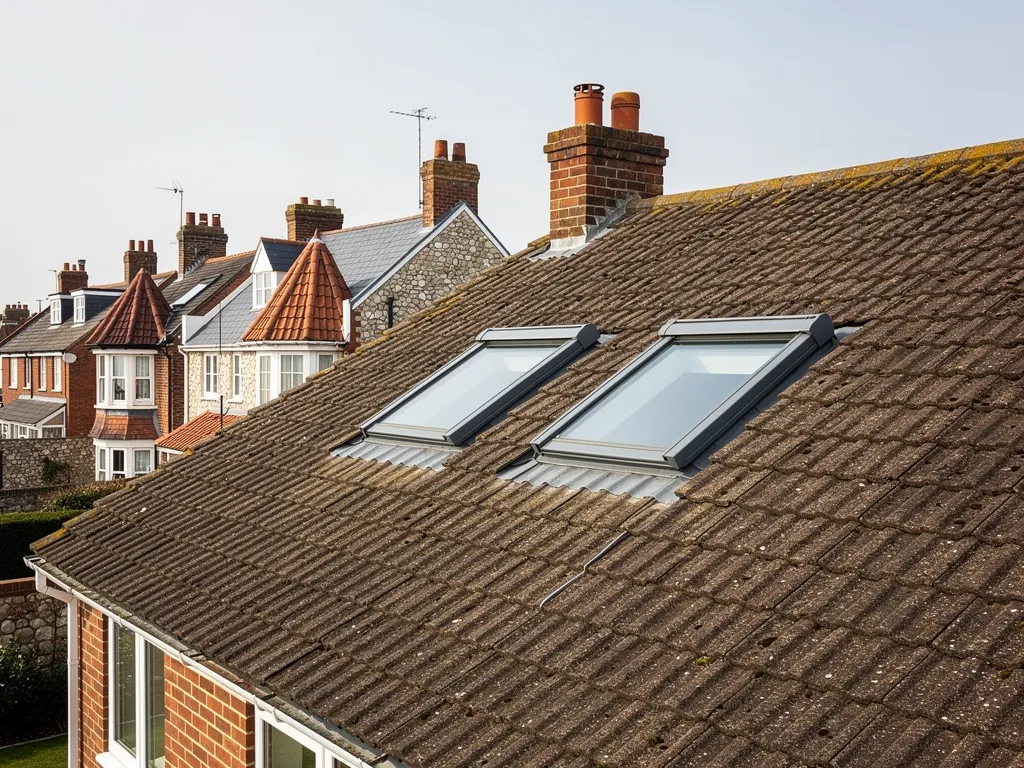
Ask what a roof window costs to fit and the honest reply is another question: is it replacing an old one, or is a hole being cut where there was none? The two jobs share a product and little else. Replacing an old unit in the opening it already has can be a short visit. A new window in an unbroken slope involves the structure of the roof, the covering around it and the finish inside the room.
That is why a single national price for installing a roof window misleads. The glazed unit is a fraction of the outlay, and what separates one quote from another is usually the labour, flashing, access and finishing around it. Each gets a section below, with the sourced figures that do exist for scaffold, labour and VAT, and the rules that can add work to a job.
It sits within our skylights and roof windows service. Everything here is a typical UK figure, not a price for your roof. A survey gives that.
Why one price rarely fits a roof window
Think of a roof window installation as four jobs sharing one visit. There is the unit, which varies in size, glazing and opening method. There is the weatherproofing, which means the flashing that seals the frame to the covering. There is the structure, which matters when the opening is new. And there is the finish inside, where the lining and plasterwork meet the ceiling or the sloping wall.
A like-for-like swap leaves most of that alone. The opening exists, the frame size is known and the flashing is replaced with a new set. A new opening adds everything else. Rafters have to be cut and framed, the covering has to be cut back and made good around the unit, and the room below has to be lined. Where there is a loft room already, the work happens above a living space, with all the dust control that implies.
Size matters less than people expect. A larger window needs a larger opening, more flashing and more lining, but the extra labour is small beside the difference between a swap and a new cut. Glazing choice matters too, because the Part L limits set a floor, and a unit with better glazing costs more.
Access sits on top of all of this, and so does VAT. For a house with a low eaves line and a window near the eaves, a ladder and a roof ladder may do. For a window high in a two-storey roof, the poles and boards may rival the labour bill. Those pieces are covered below.
Whichever make you choose, get the total in writing after the survey, along with a list of what it covers.
A swap or a new opening
If a roof window is being replaced, the existing frame tells you a lot. A unit of the same size fits the same opening, and the work is mostly removing the old unit, checking the surround for damp or rot, fitting the new frame and sealing it with a new flashing. Our guide to replacing a Velux window goes through that case.
Cutting a new opening is a different category. The slope is carrying load, and removing part of a rafter changes how that load travels. The Planning Portal lists structural alterations among the things that make a building control application necessary for roof work, so a new opening is not a job to treat casually. The cut rafters are normally supported by trimmers, short horizontal timbers fixed between the rafters either side of the opening, and the frame is made good around it.
What building control looks at
Besides the structure, a registered building control approver or the council's team will look at the thermal performance of the new window and the way a loft room is reached and escaped from. Under the 4.5 metre rule for means of escape, a loft room added to a two-storey house usually needs a protected stair. Our page on roof window building regulations covers what to ask.
If the window will light a loft conversion, do the roof work in the right order. Where the covering is old, it often makes sense to re-roof the slope first or at the same time, so the new flashing is not set into a covering that will soon be stripped. Ask at the survey whether the slope around the planned opening is sound enough to take new work.
Nothing here should put you off a roof window. It simply means working out which of the two jobs is yours before prices are compared.
Flashing, covering and the weather seal
When a roof window leaks, the fault is more often at the edge than in the glass. The junction between frame and covering is where water gets in. Each unit therefore goes in with a flashing set made for the covering around it: one pattern for plain tiles, another for interlocking tiles, another for slate, another for profiled sheet. A set chosen for the wrong covering, or a correct one fitted badly, is a weak point from the first wet day.
The covering also decides how much work the flashing takes. Slate is cut and dressed around the frame piece by piece. Plain tiles are cut at the sides. Interlocking tiles are trimmed to suit the profile of the flashing. Ask at the survey which kit your covering needs and who supplies it.
Lead and the details around the frame
Where a window sits close to a chimney, a valley or a hip, the flashing has to be dressed in lead or otherwise worked around the obstacle. Each lead thickness carries a code number, and Royston's cast-lead brochure restricts the thinnest, code 3, to soakers, so flashing around a frame starts at code 4. Our lead roofing hub covers the choices.
A window fitted into a roof that already leaks is a false economy. If the slope has slipped tiles, failed ridge or tired underlay, those faults need dealing with at the same visit, because the new frame will sit in the same wet roof. That may add to the total, though it also saves a second visit.
Then there is the finish inside. A window installed into a loft room needs an insulated lining and a clean reveal. Ask whether the quote includes internal finishing, or only the work outside, so that two prices cover the same job.
Scaffold, access and labour on a window job
Access can cost more than people expect, and national guides publish figures for it more readily than for the window itself. Checkatrade's scaffolding table (October 2026) lists around £800 a month for a terrace, £875 for a semi, £1,000 for a detached bungalow and £1,200 for a detached house, plus about £660 a week for scaffold at a chimney.
Not every window job needs a full scaffold. One unit close to the eaves of a low roof may be workable from a ladder. A window high up a taller house, or several in one slope, usually calls for a tower or a scaffold, because the crew needs a safe platform for cutting and carrying glass. The height of the roof, the pitch and what stands underneath all decide. Our roof repair without scaffolding page shows how that judgement is made for smaller jobs.
Scaffold over the footway falls under section 169 of the Highways Act 1980, so a licence is needed first. West Sussex needs at least 10 working days' notice and Hampshire needs ten clear working days. Build that wait into the date.
Labour
Checkatrade puts roofers at around £35 to £45 an hour, or £280 to £360 a day. A swap may take part of one day; a new opening takes longer because of the structural work and the finishing. A minimum charge on a small job is normal, because getting there, setting up and clearing away take the same effort whatever the size.
Compare prices on the same footing. Check whether each includes scaffold, the flashing kit, internal lining and VAT, and whether the licence is arranged or left to you.
Part L, planning and what the rules add
Rules do not usually change what a window costs, but they can change what it has to be, and which paperwork the job needs. Approved Document L (2021 edition), in Table 4.2, limits a roof window in an existing dwelling to 1.4 W/m²K unless it earns Band B for energy rating. Rooflights are limited to 2.2, with 0.35 for an upstand built on site. The 2026 edition, in force from 24 March 2027, carries the same values in Table 3.2.
Those two names are not interchangeable. A roof window is glazing that lies flush with the slope; a rooflight stands on a kerb above it. A quote that mixes the two terms is a prompt to ask which product is meant, because the performance limit differs.
Planning permission
Houses can usually take roof windows under permitted development, subject to conditions on how far the unit stands proud of the slope, where the highest point lies, and the glazing of any window facing the side. Flats are outside those rights, because the rules cover a dwellinghouse, which the legislation defines to exclude buildings containing flats.
Living in a conservation area, the National Park or a National Landscape does not by itself take the rights away, but an Article 4 direction can. Havant's Langstone direction is one example: it covers roof alterations on the highway side, naming roof light windows. A listed building needs listed building consent. Our skylight planning permission guide sets out the checks in full, and Arun's planning team can confirm the position at your address.
VAT, your rights and the written quote
VAT at the standard rate of 20 per cent applies to the installation. Some firms quote with it and some without, so find out which before you compare. A price that looks lower may simply leave it out, or leave out the scaffold.
The quote you receive from us is written, arrives once the survey is done and holds one total, with prices we think good and fair. Before that we photograph the roof around the planned window and report what the slope needs. If the covering is sound, the quote is for the window alone. If it is tired, you will hear that plainly, and the decision stays with you.
The Consumer Rights Act 2015 requires a service to be performed with reasonable care and skill. A contract signed at your home after a survey counts as made away from the trader's premises, which gives you 14 days to cancel under the Consumer Contracts Regulations. Work begins inside that window only if you ask for it in writing, and an urgent repair you request is treated differently. Read the paperwork before signing.
A cheaper alternative to the big names?
Other makers sell roof windows, and their units are priced differently from the best-known brand. The window is only one part of the total, and the installation steps are much the same whichever make you pick. Whatever the brand, it should meet the Part L limits and come with the right flashing for your covering. Ask for the make and model to be named on the quote.
Last, ask when the work can start and how long it will take. A scaffold licence adds days, and winter weather can add more. The date you are given should allow for both.
Questions
Roof window installation questions
Does fitting a roof window always need scaffold?
Not always. A lone window close to the eaves of a low roof may be workable from a ladder, while a window high up a taller house usually needs a tower or scaffold. Checkatrade's October 2026 table puts a detached house at around £1,200 a month. Ask at the survey which method suits your roof.
Is a new opening in the roof more work than replacing an old window?
Yes. A swap reuses an opening that already exists, while a new one means cutting and supporting rafters, cutting back the covering and lining the room. The Planning Portal lists structural alterations among the roof works that need a building control application, so check with the council or a registered building control approver.
Do I need building control approval to fit a roof window?
It depends on the job. A swap may fall under the Planning Portal limits of less than 25 per cent of the building envelope and less than 50 per cent of the roof, while a new opening alters the structure. Arun's building control page also lists re-covering roofs as work it approves. Ask the council before work starts.