
Leaking roof windows · 9 min read
Leaking roof window: flashings, seals and condensation
Water around a roof window has a handful of usual causes. Learn to separate the causes, cope while it drips, and see how each fault is mended, from re-dressed flashing to a new unit.
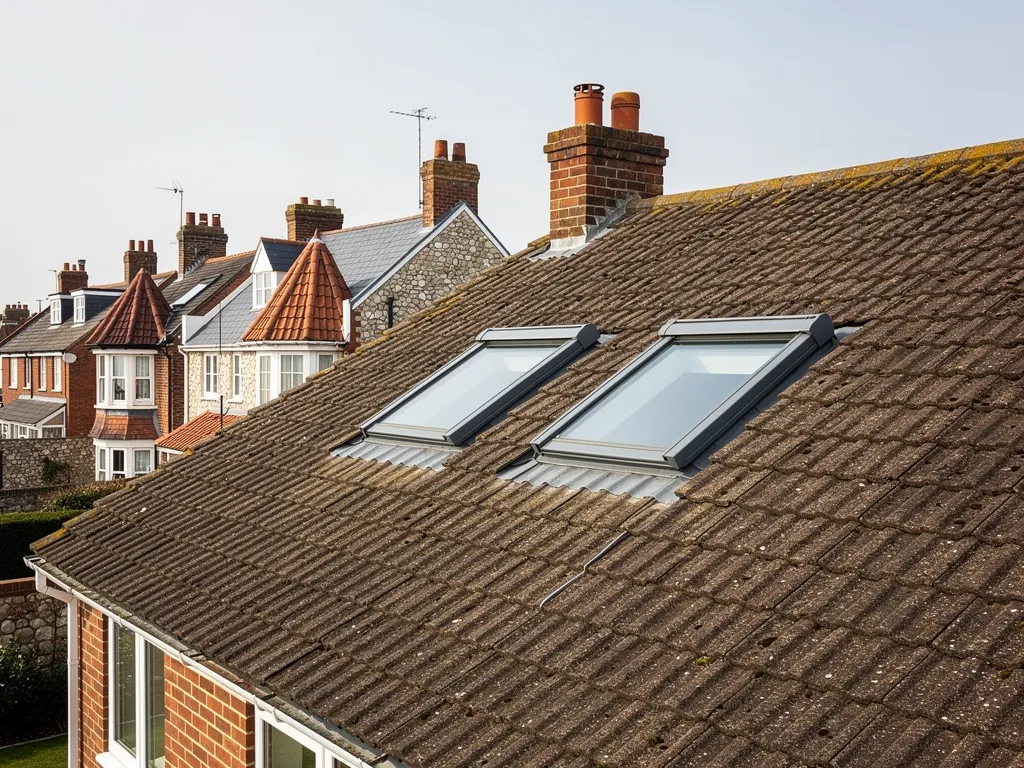
A damp patch beside a roof window, a drip on the sill or a brown ring spreading across the plasterboard is easy to spot and hard to trace. The window gets the blame because it is where the water shows. But the window glass is seldom the part that has failed.
Water that appears at a roof window has usually travelled to it. It can run in under the flashing, along the top of the frame, or down a rafter from a slipped tile higher up the slope. It can also come from inside the room as condensation, which looks like a leak on a cold morning and is not one.
Getting the diagnosis right matters because the fixes are so different. Condensation needs better ventilation, a failed flashing needs re-dressing or replacing, and a worn seal may need a new unit. Spend money on the wrong one and the stain comes back at the next heavy rain.
This guide takes the causes roughly from the likeliest to the least likely, shows how to check for yourself before anyone climbs the roof, covers the stop-gap measures, and sets out how each fault is put right. Roofing terms are explained when they first appear.
Leak or condensation? A quick check before you call
Condensation is the most common reason for wet glass and dripping sills, and it is also the least costly to deal with. It forms when warm, moist air inside the room touches a cold surface. A roof window is a cold surface, so it is often the first place the droplets appear, especially in a bathroom, a kitchen or a bedroom that is slept in with the door closed.
A few signs separate it from a leak:
- Condensation shows on cold, still mornings and fades by midday, while a leak follows rain.
- It forms on the room side of the glass and along the bottom of the frame, spread evenly rather than in one run.
- It appears on other cold surfaces too, such as the inside of other windows.
- The ceiling around the window stays dry, with no brown stain.
A leak behaves differently. It starts during or just after rain, often when the wind drives it, and it keeps coming for a while afterwards. The stain is local, and often has a tide mark. Water on the ceiling beside the window, or in the lining at the top or sides, is more likely to be a flashing problem.
Misting between the two panes of the glass is a third thing. It means the seal on the double-glazed unit has broken, and no amount of wiping or ventilation will clear it. Our answer on why a Velux window gets condensation goes through the ventilation side in more detail.
If you are unsure, note the time of each drip, the weather and the wind, and photograph the stain. A record like that helps a roofer more than any guess.
Flashings: the usual culprit
On most leaking roof windows the cause is the flashing, the weatherproof collar that joins the window to the covering. It has to carry water down and around the frame and out over the tiles or slates below. A gap anywhere in that path lets water run in beneath the covering, where it follows the timbers.
Flashings fail in several ways. The bottom apron can lift or tear where the covering has moved. The soakers along the sides (the thin pieces that tuck under the covering) can slip or corrode. Sealant that was used to fill a gap in place of a proper overlap hardens and cracks. And on older windows the original kit may simply not fit the covering that was laid later.
The way a window was fitted matters as much as the age of the kit. A kit made for plain tiles in a roof of interlocking tiles, or a flashing that was cut short to save time, will leak eventually, however new the window is. Our answer on what a Velux flashing kit is sets out the parts and why each piece has a job.
Lead as an alternative
Where a manufacturer's kit does not suit, a roofer can dress sheet lead around the unit instead. Royston's cast-lead brochure lists code 4, one rung up from the lightest grade, as suitable for flashings. A lead surround, correctly formed, lasts well: MyJobQuote (updated 22 September 2026) puts the life of lead flashing beyond 80 years. A repair costs less than a full replacement, and Checkatrade puts lead flashing repairs at £50 to £70 per metre (June 2026).
Sealant has a place, but not as the main defence. A bead of mastic over a failed flashing may stop a drip for a season. It is a temporary patch, and it can hide the real fault from the next person who looks.
Seals, glazing and the frame itself
When the flashing is sound, the window itself comes under suspicion. The rubber or foam seals between the sash and the frame harden with age, and a sash that no longer closes tightly lets wind-driven rain past the seal. You may see the seal cracked, flattened or pulling away from its channel.
Water can also enter at the corners of the frame. Where the joint between two pieces of the frame has opened, rain runs into the timber. In a wood frame this leads to rot, and a soft or flaking corner at the bottom of the window is the sign. Once the timber is wet through, repair stops being sensible and replacement is the answer.
The glazing unit can also fail at its own edge seal. Misting between the panes is the early sign. A cracked pane lets water straight in. Where the damage is limited to a pane, a seal or a motor, it may be possible to repair. Our answer on whether a broken Velux window can be repaired sets out what can and cannot be mended.
If the unit is old, parts may not be available. Weigh the cost of finding a seal for a model that is no longer made against a new unit with current energy performance. Under Approved Document L a replacement roof window has to meet 1.4 W/m²K, so the new window is likely to be better than the one it replaces.
Problems above and around the window
Sometimes the window and its flashing are fine, and the water is coming from somewhere else on the slope. Water running down a roof follows the rafters and the underlay, and a roof window sits across its path.
A cracked or slipped tile above the window sends water straight down onto the flashing, and the flashing may be asked to carry more than it was built for. A blocked gutter above can overflow onto the roof below. Where the underlay is torn or has gaps around the opening, water that gets past the covering finds the window frame as the easiest way down.
Moss and debris can pile against the upper edge of the flashing and hold water there. On a low pitch, water can back up under the covering in driving rain. In a roof with a valley or a chimney nearby, the wrong flashing there can send water towards the window.
Inside, check the loft. A torch on a dry afternoon shows damp timber, dark staining on the rafters around the opening and wet insulation. Mark where the wet starts, because the highest point of the stain is usually closer to the source than the lowest. Our guide on how to find a roof leak sets out the method.
Staying off the roof is the safe choice, because a wet roof window is slippery and the glass is not made to be walked on. A roofer can inspect using ladders or a tower and photograph what they find. Our survey pictures show the flashing, the covering and the timbers around the opening, so you see what we see.
What to do while it is leaking
A leaking window is a nuisance, but it can usually be managed safely until the repair is done. The aim is to limit the damage and keep a record.
- Catch the drips with a bowl or bucket and lay towels under it. Move furniture and bedding clear of the area.
- A ceiling that bulges with trapped water is best released on purpose: puncture it gently at its lowest point with a bucket underneath, rather than waiting for it to collapse.
- Switch off any lights or sockets near the wet area if the water has reached them.
- Take dated photographs of the stain, the window and any damage. Add notes of the weather at the time.
- Wipe the frame and ventilate the room to limit mould.
Many home insurance policies cover sudden damage such as a storm, but not wear and tear. Which? says to get in touch with the insurer early, hold on to receipts for any emergency repair you pay for, and keep damaged belongings unless they are a health risk. A leak from a worn flashing may be treated as maintenance, so ask your insurer what applies, and take any complaint on to the Financial Ombudsman Service, which is free to use.
If water is coming in heavily, or near electrics, treat it as urgent. We put leaks and storm damage first on our list: the first visit makes the roof safe with a temporary cover over the window or the damaged area, and the permanent repair is planned after. Our page on emergency roof repairs explains how that works.
Avoid a quick fix of sealant on the outside from a ladder. It can trap water and make the later repair harder.
How a leaking roof window is put right, and what it costs
The repair depends on the cause, and the survey is there to find it. The usual outcomes fall into three groups.
Re-dress or renew the flashing
If the flashing has lifted or slipped, it may be possible to lift the surrounding tiles, refit the pieces and relay the covering. If the kit is damaged or does not suit the covering, a new kit or a lead surround is fitted. This is the commonest repair and does not involve taking the window out.
Repair the covering or the underlay above
Where the leak starts higher up, the broken tile is replaced, the underlay is patched and the gutter is cleared. The window is left alone.
Replace the window
Once the frame has rotted, the glazing has gone or the seals are past saving, the unit is replaced. Our guide on replacing an old Velux window explains the swap.
Several things shape the price. Checkatrade puts roofers at around £280 to £360 a day (June 2026). Access counts too. Height changes the method: ladders for a low roof, a tower or scaffold higher up. The October 2026 Checkatrade scaffold table gives around £800 a month for a terrace; a detached house is £1,200. A licence is needed for scaffold over the pavement, issued by the highway authority. Standard-rate VAT of 20 per cent sits on top, so ask whether a price includes it.
We photograph the window, the covering and the loft timbers, tell you in plain terms which is wiser, repair or replacement, and the written quote carries a single price. The least work that cures the fault properly is what we propose. Our skylights and roof windows page covers the work we do.
Questions
Leaking roof window questions
Why does my roof window only leak in strong wind and rain?
Wind-driven rain is pushed sideways and upwards, so it finds gaps that ordinary rain misses: a worn seal, a lifted apron or a loose side soaker. A leak that appears only in some weather is a useful clue for the roofer, so note the wind and rain on each occasion and photograph the stain.
Can silicone sealant fix a leaking roof window?
It may quieten a drip for a spell, but it does not cure a failed flashing and it can trap water behind the bead. A sealed gap also hides the fault, which makes the proper repair harder. Treat sealant as a short-term measure at best, and have the flashing looked at.
Will the leak damage the roof timbers?
It can, if it goes on. Water running down a rafter or sitting against a frame leads to damp and, over time, rot. That is a reason to deal with a leak promptly and to check the loft side of the opening. The survey photographs show whether the timbers are sound.