
Slate origins · 9 min read
Welsh, Spanish or Brazilian slate: how natural slates compare
Welsh, Spanish and Brazilian slates are all natural stone, but price, matching and the specification differ. Here is what the origin tells you, what it does not, and what to have written into a quote.
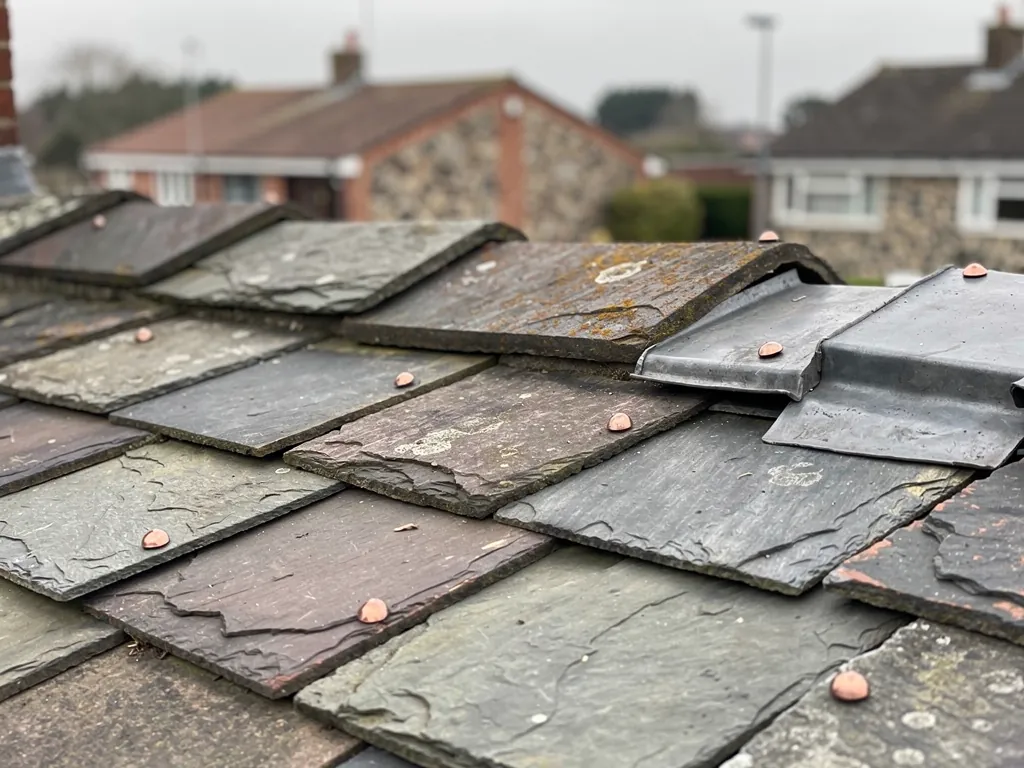
Quote for a new slate roof and sooner or later a name appears: Welsh, Spanish, sometimes Brazilian. It is usually followed by a price that looks very different from the one in the next envelope. The names are about where the stone was quarried, and people reasonably want to know whether that is the same as saying how good it is.
Put plainly, the country on the pallet starts the conversation and does not finish it. Slate from one quarry can be thin, flat and consistent, and slate from the same country can be none of those things. What decides how a roof performs is the individual slate you are sold: its size, its thickness, its grade, how it was cut and whether it has been tested. A name on a delivery note tells you very little unless it is attached to a data sheet.
This guide covers the pieces you can check. It sets out the price gap in the published guides, what to ask for before you agree, how to match an existing roof, and the pitch, headlap and fixing rules that every origin has to meet. It does not rank quarries, because a ranking would need evidence about specific stock that no general guide can give.
What the three origin names tell you
Welsh, Spanish and Brazilian slate are three supply routes into the same market. Wales is the British source, and Spain and Brazil send imported slate across the sea, which the price guides list as the cheaper route. The three names are shorthand for where the stone came out of the ground.
The names carry feelings all the same. British slate suggests tradition and the look of an older roof. Imported slate suggests a lower bill. Both ideas hold some truth, but they are impressions and not measurements, because any particular batch depends on the stone it was cut from and on how carefully it was sorted afterwards. Treat a country as the first line of a description and keep reading. The remaining lines are size, thickness, grade and test results, and a supplier should be glad to supply every one.
Grade matters more than the flag
Slate is sold in sizes, thicknesses and grades, and two slates from the same country can differ in all three. A supplier will state them on the data sheet for each product. The weight on your rafters, the way the courses lie and the headlap you can achieve all follow from those numbers, so they matter more to the roof than the flag on the delivery note.
So when a quote names an origin, the useful follow-up is the product: the quarry or supplier, the size and the thickness. We name them on the quote so that you can compare like with like, and we tell you plainly when a price is for a slate we would not choose for your roof.
What the published prices say about the gap
Checkatrade's slate pricing table, dated September 2026, gives a range of £160 to £210 per m² across natural slate roofs generally, averaging £184. Spanish slate sits lower in the same guide, at £95 to £125 per m². Slate roofers appear at £280 to £360 a day. Add VAT at the standard 20 per cent unless a quote says it is already included.
The guide does not break the higher band down by quarry, and it would be unwise to do so on the strength of a flag. Where a particular slate lands depends on its size, thickness and grade, on how far it travelled and on how much the supplier has in stock. Brazilian slate has no price of its own in the guides we quote, so we do not put a figure on it here. For your own roof, the price comes from the named product in the written quote.
Why the cheaper slate is not automatically the cheaper roof
The slate is only part of a roof bill. The labour of stripping, battening, laying the underlay and fixing every slate by hand is much the same whichever stone goes on, and so is the scaffold. Checkatrade's October 2026 table puts a month of scaffold around a two-storey semi at about £875. A cheaper slate saves money on the material only, which narrows its advantage on a large, complex roof, where cutting at hips and valleys takes the most time.
The sum changes if a cheaper slate lasts fewer years, so check that the lifespan you are being promised is attached to a stated product. Our guide to the cost of a new slate roof sets out the wider cost picture.
What to have named in writing before you agree
A good quote for slate leaves little to interpretation. Before you accept one, make sure the following are stated in words you can compare with another roofer's offer:
- The product: the quarry or supplier and the slate's name, not just the country.
- The size: length and width in millimetres, for example the 500 x 300 slate that Cupa Pizarras uses in its headlap table.
- The thickness and grade: as the supplier states them on the data sheet.
- The fixing: whether the slates are nailed or hooked, and what the nails and hooks are made of.
- The headlap: the overlap the roofer will lay to for your pitch and exposure.
- Spares: whether any spare slates from the same batch are left with you for future repairs.
The data sheet is the document that turns a name into a specification, and we ask a supplier for it whenever a particular slate is under consideration. If a supplier cannot produce one, treat the slate as an unknown. Likewise, if two quotes name different slates, they are not the same job at different prices, and the cheaper one is not necessarily better value.
Ask for a sample in daylight
Colour and finish vary between quarries and between batches, and a photograph on a supplier's website shows neither reliably. Ask to see a sample slate outdoors, dry and wet, against the brickwork and the sky. A grey that looks right on a showroom table can look flat or too blue on a roof over a stuccoed terrace.
Everything on that list goes into the paperwork that follows the survey, which gives one total price for the roof, with pictures of your own slopes alongside.
Matching slate already on the roof
If you are mending or extending a slate roof rather than re-covering it, the question changes from which origin is best to which origin looks the same. New slate beside weathered slate stands out, whatever its source, and the contrast can last for years. A mismatch in size or thickness shows as uneven courses, which the eye picks up from the pavement.
Sometimes the best match is not new slate at all. Reclaimed slates from a roof that has been stripped elsewhere come already weathered, in sizes that match older roofs, and sit comfortably among the originals. They cost time to source and sort, and their remaining life varies from slate to slate. Our answer on whether reclaimed slate is a good idea goes into the trade-offs.
Where the council has a view
In a conservation area the council's guidance may settle the question. The council's papers for The Steyne and Waterloo Square favour natural slate or plain clay tile coming back where inappropriate modern materials went on, and for Aldwick Road they ask for the original roofing to return after slate gave way to concrete interlocking tile. Both call for natural slate. What the council needs to see is a natural slate that suits the building, shown as a named product.
If you live in one of these streets, ask Arun's conservation officer about the proposed slate before ordering it. A named product and a sample give the officer something real to look at, which is faster than a general description. Our guide to slate roofs in conservation areas sets out the consent side.
Pitch, headlap and fixings: rules every slate has to meet
Whatever its origin, a slate is laid to the same standards. BS 5534 is the British Standard on slating and tiling, and BSI lists the 2014+A2:2018 version as current. Cupa Pizarras, a slate supplier, reads it as setting a floor of 20 degrees on pitch for natural slate, assuming a 500 mm slate in moderate exposure, and advises that hook fixings are kept for pitches of 25 degrees or more.
Headlap is the overlap between a slate and the course below the next, and it has to grow as the roof gets flatter or more exposed. Cupa's table gives 115 mm for a 500 x 300 slate at 20 degrees in sheltered or moderate exposure. A flatter roof, a longer slate or a more exposed site changes that figure, so it is worked out for each roof and not copied from the last one.
Exposure is a site matter
Wind and rain exposure depends on where the house stands. Wienerberger names the district, the height above sea level and how exposed the site is to wind among the inputs to a fixing specification, and Marley notes that the driving-rain map has four categories of exposure. We do not assign a category to a Bognor street from memory. The specification comes from the roof itself, and it is written down.
Marley adds that on pitches under 30 degrees the weather-facing slope can feel strong suction, which is why shallow roofs of any covering need particular care over fixings. That applies equally to Welsh, Spanish and Brazilian stone.
The details of nails against hooks have their own page: see our separate guide on nails or hooks and how slates are fixed.
Lifespan, flaking and how to judge quality
Published lifespans for natural slate are generous. On CORC's figures, well-kept slate can run to a century and beyond, and Checkatrade says stone slate can last for over a hundred years. None of these is a promise, and none is specific to a country of origin. They describe slate that was sound to begin with and looked after.
The way slate ages is where quality shows. Slate that stays flat and sound is what the long lifespans describe. Slate that starts to flake along its layers, which is called delamination, loses thickness and eventually fails. That is a good reason to buy a named, documented product rather than an anonymous pallet. Our answer on what causes slates to flake or delaminate explains the mechanism.
Judging a slate by hand
You do not need a laboratory to spot a poor slate. Look at the edges for chips and layers lifting. Check that the slates in a bundle are consistent in thickness. See whether the surface is flat or warped, since a warped slate leaves gaps under its neighbour. Ask the supplier whether the batch has been tested, and ask for the results, not a reassurance. A supplier who is confident in the stone will hand them over without fuss.
When we survey a roof for a re-slate we give you a plain verdict first. If your existing slates are sound, we recommend a repair and keep them. If the roof is spent, we name the replacement slate, record its specification and leave the choice to you. You get one written total price, and the site is left clear with the waste carted off. The wider work is described on our slate roofing page.
Questions
Questions on choosing slate by origin
Is Spanish slate acceptable on a house in a conservation area?
That is the council's decision, not ours. Arun's conservation papers for two Bognor areas ask for natural slate to return where original roofing was replaced, and they speak of the material, not a country. Take a named product and a sample to Arun's conservation officer before you order anything.
Can slates from two countries be mixed on one roof?
Avoid it on a single slope. Different quarries differ in colour, thickness and size, which shows as uneven courses and patchy tone. If a repair means mixing, use salvaged slates that match in size and age, or keep the new slates to a slope that is out of sight, and have the arrangement agreed in the quote.
How do I compare two quotes that name different slates?
Check that each names the product, size and thickness, then ask whether VAT and scaffolding are included. Two quotes for different slates are two different jobs, so the lower price only means something if the specifications match. We put the named slate and its fixing in our written quote so you can see what you are being offered.