
Selling with spray foam · 9 min read
Selling a house with spray foam insulation
Spray foam under the tiles can slow a sale. This guide covers what a buyer's surveyor sees, what lenders have said, and the choices open to you before the house goes on the market.
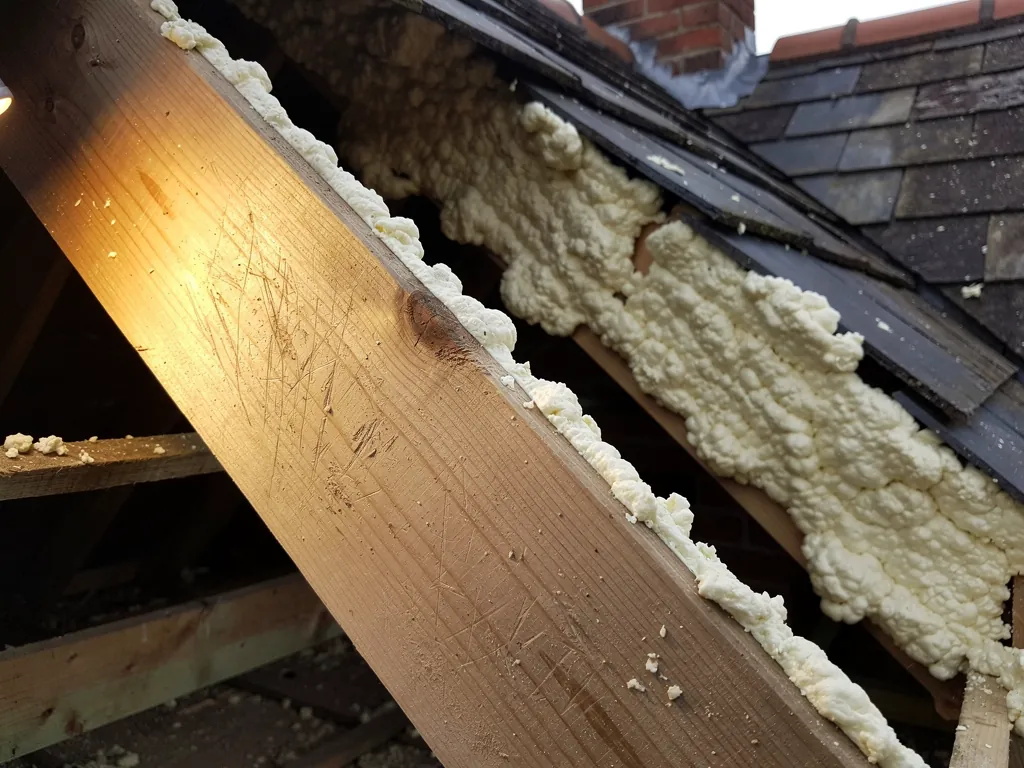
A sale tends to go quietly until somebody climbs into the loft. The buyer's surveyor puts a head through the hatch, finds the underside of the roof covered in a hard grey or yellow skin and writes a line in the report. From that moment the foam is a negotiating point, and sometimes a mortgage question as well.
None of that means the house cannot be sold. It means the buyer's side wants evidence, and the seller who has the evidence ready is in a much stronger position than the one who finds out about the foam from an email. Evidence here means photographs of the rafters, a written account of what has been checked, and in some cases a removal that exposes the timber for anyone to see.
What follows sets out the choices in order. It is general guidance on the roof side of a sale, not legal advice, and your conveyancer is the person to ask about what must be disclosed on the forms. It sits within our spray foam insulation removal service, where the roof work itself is explained.
What the buyer's surveyor sees in the loft
A surveyor inspecting a house for a buyer has a short list of things to confirm about the roof: that the covering is sound, that the structure is the right shape and has not moved, and that the timber is dry and healthy. A coat of foam sprayed under the tiles makes the last of those hard to confirm, because the rafters, the battens and the back of the felt are all hidden.
What gets written down is usually cautious. The report might say that the roof structure could not be fully inspected because of spray foam, that the foam may be concealing defects, and that a specialist opinion is advisable. That wording is not a finding of damage. It is a statement that the surveyor was unable to look, and buyers tend to respond to it with the same questions each time: is the timber sound, who fitted the foam, and will my lender accept it?
Why the inability to inspect matters
The RICS consumer guide to spray foam, dated March 2023, names foam as something that could weigh on a surveyor's professional opinion of value, and it also warns of dampness, such as uncontrolled condensation, from insulation put in badly. Those two statements together explain the surveyor's caution. A valuer has to price in the chance that the roof timbers need work, and if the foam prevents anyone from checking, the allowance can be generous.
The practical lesson is that the problem a seller faces is not usually the foam itself but the unanswered question underneath it. Our guide to the spray foam survey shows what an inspection of the loft looks at and why it can settle that question.
What lenders have said about foam
For many buyers the surveyor is not the real hurdle. The mortgage lender is. A lender instructs its own valuer, and that valuer's report decides whether the loan goes ahead and on what terms.
The position is not fixed, and it differs from one lender to the next. Reporting in Today's Conveyancer in November 2024 found that some lenders would not lend on properties where spray foam was installed, while others looked at each case on its merits. Put plainly, some lenders refuse such homes outright and others weigh each one separately. Policies since then may have changed in either direction, so a figure or a name from last year is not a safe basis for a plan.
What that means for a seller
You cannot know in advance which lender a buyer will use, or what that lender's valuer will want to see. What you can do is make the roof easy to assess. A buyer whose lender asks for proof that the timber is sound is far better placed if the seller can hand over dated photographs and a written report than if everyone has to start from nothing.
The RICS guide tells homeowners to ask their mortgage provider if its policy permits the product at all. The advice is aimed at owners considering foam, but it also hints at the lender's attitude, which is why a buyer's broker will often ask about it early in the process.
If you are selling and the buyer's lender has refused, the offer may fall through or be re-priced. Fixing the roof, with the foam taken off and the timber checked, is one of the few things that reopens the lender's door.
Choosing between leaving it, opening it up and removing it
A seller with foam in the roof has three realistic routes, and which suits you turns on the foam, the timber and the timetable.
The first is to leave the foam alone and provide evidence. That can work where the foam is open-cell, the roof has never leaked, and a competent person has been able to inspect the structure. The weakness is that a buyer's lender may still refuse, because the policy is about the foam rather than your particular roof.
The second is to open the foam up in selected places so the timber underneath can be probed and photographed. This gives a buyer's surveyor real information. It is less disruptive than full removal and it is sometimes enough, though the openings have to be made good and the sections left unopened remain a question mark.
The third route
The third is full removal. It gives the cleanest answer: bare rafters, a checked roof and a record that anyone can follow. It also costs the most and takes the longest, and it is not always needed. Our service page on spray foam removal describes how the work runs, and the written quote, which follows a survey, gives one total price for whichever route is chosen.
Our view on any of these is a plain one, given before a price. Our advice is always the smallest job that properly deals with the problem, and where leaving the foam in place with evidence is a reasonable course, that is the advice you get. The decision then rests on how the sale is going and how much time you have. A sale at an early stage can absorb a removal. A sale with an exchange date a fortnight away probably cannot, and the better course there is to discuss with your solicitor and the buyer how to handle the gap.
Telling the buyer, and when
Whether and how to mention foam on a sale is a matter for your conveyancer, who will advise on the property information forms and on what you must say about work done to the house. We are roofers, not solicitors, so we say only this: do not leave the buyer to discover foam on their own survey if you already know about it.
The reason is practical. A buyer who learns about the foam from a seller at the start has time to speak to a lender, take advice and reach a view. A buyer who learns about it in a report three weeks into the process has less time and, usually, less goodwill.
Who fitted it and what you hold
If you know who installed the foam, and when, say so. Dig out any invoice, any paperwork that came with the work, and any photographs from the time. A surveyor who is told that the foam is open-cell and was fitted on a dry, sound roof by a named firm has more to work with than one facing the unknown.
Listed buildings and protected buildings
The RICS guide says foam needs consent in advance where the building is listed or otherwise protected. Should yours be listed, or protected in another way, and the foam went in with no consent, raise that with your conveyancer early, because it can affect the sale in a way that goes beyond the lender.
None of this has to be dramatic. It is about handing a buyer a clear picture while there is still time to deal with the awkward parts.
How a removal fits around a sale
Removing foam before a sale takes planning, because a roof job has a start, a middle and a finish, and none of those depend on the buyer's timetable.
The first step is the survey. We go into the loft, photograph the foam and the rafters, and tell you whether the foam can come off from inside or whether the covering has to be lifted. The quote follows, as one total price. From there the dates depend on the route, and a strip of the covering needs scaffolding, which can call for a council licence, so lead times can stretch.
Doing it before listing or after an offer
Before listing is the easier time. The house is empty of the buyer's expectations, the roof can be photographed once it is finished, and the agent can mention a recent roof inspection in the particulars. After an offer, removal is still possible and is often what rescues a deal, but it has to be fitted around the buyer's survey and the lender's valuation, and the buyer may want to see the work done.
Some sellers prefer to agree a reduction and let the buyer deal with the foam after completion. That can suit a buyer with a cash purchase and a flexible lender, though it only works if the buyer is willing, and a lender who refuses to lend will not be moved by a price cut. It is a conversation to have with your agent and solicitor rather than a roofing decision.
What we can do from the roof side is make sure that whichever route you take, the facts are recorded. Our guide to whether spray foam damages roof timbers explains what we look for once the foam is off.
The paperwork that helps a sale
After the work, what the buyer's side wants is something they can read and a few pictures they can believe. A short list covers it.
Start with the written survey and quote from the roofer, which set out what was found before any work began. Add a set of dated photographs showing the foam before removal, the rafters once they were exposed, any timber that needed attention, and the finished loft. Include a short account of what was done to the felt and to the ventilation gaps at eaves and ridge, and what insulation, if any, was put back.
Keeping it in one place
Put it all in a single folder, on paper or as a file, and give a copy to your solicitor. The buyer's conveyancer can then pass it to their surveyor or lender without anyone waiting on you. A clear, dated record is not a guarantee that a lender will lend, but it turns an unanswered question into an answered one, and that is most of what a valuer wants.
If new insulation went in, say what it was and where. A quilt laid between and over the ceiling joists is easy for any inspector to see and understand, and it removes the worry about hidden timbers. Where the work was notifiable under the Building Regulations, your building control body can confirm what record exists.
Why we photograph everything
We photograph the loft as a matter of course, and the pictures come with the quote. That habit was not designed for sales, but it serves them well: a buyer's surveyor reading a photographic record of bare, dry rafters has what they need to move on.
A roof that has been checked and documented is a smaller worry for a buyer than one that nobody can see into. That, more than the removal itself, is what moves a sale forward.
Questions
Selling a foamed house: common questions
Will spray foam stop me selling my house?
It does not stop a sale, but it can slow one. A surveyor may be unable to inspect the roof timbers, and in November 2024 some lenders were declining foamed homes while others looked at each one individually. Evidence on the roof, or removal of the foam, keeps most conversations open.
Should I remove the foam before putting the house on the market?
It depends on the foam, the timber and how soon you want to sell. Removal gives the cleanest answer, though it costs the most. If the foam is sound and the roof can be inspected, evidence may be enough. A survey tells you which, and the written quote follows it.
Who do I ask about what to tell a buyer?
Your conveyancer or solicitor. They advise on the property forms and on what you must disclose. We can give you the roof facts in writing, with photographs, so that whatever you are asked, the answer is based on what is really in the loft.