
Foam and lending · 9 min read
Spray foam and mortgages: what lenders have said
Buying, selling or remortgaging a home with spray foam in the roof? This guide sets out what lenders have said in public, what valuers look for and what to check first.
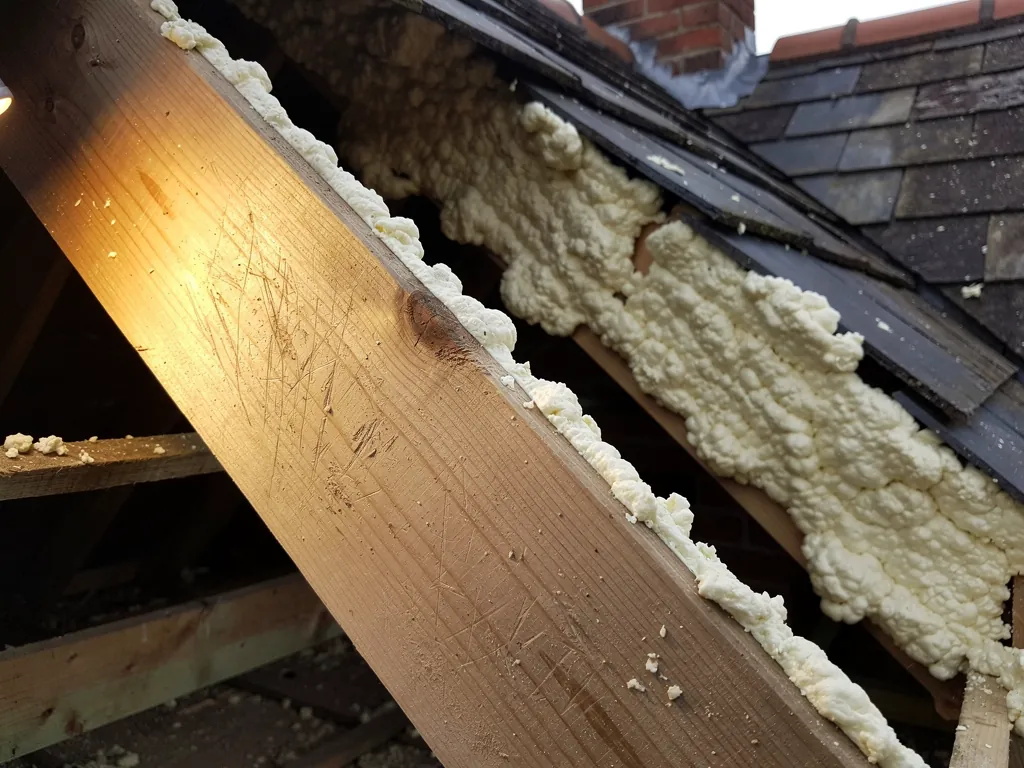
Few things unsettle a house sale like a surveyor's note about the loft. Spray foam is now one of the notes that does it. The foam may be perfectly sound, and the roof beneath it may be in good order, yet the valuer reports it and the lender wants to understand it before releasing money.
No single document tells you how your own lender will react. What exists is a handful of published statements, and these are worth reading closely rather than repeating as settled fact. This guide uses the RICS consumer guide on spray foam from March 2023 and a trade report on lenders from November 2024, and it keeps to what those say.
We are roofers, not mortgage advisers, and nothing here is financial advice. What we can do is explain what the foam is, what sits under it and what a roof inspection can show, because that evidence is what a valuer, a solicitor or a lender's underwriter eventually asks for. If foam has to come out, the spray foam insulation removal page describes the work.
What lenders have said in public
The clearest recent statement comes from Today's Conveyancer, which reported in November 2024 on lenders and spray foam. The report put the position as it stood in November 2024: a number of lenders were declining loans on homes where foam is present, and others assessed each home individually.
Two cautions go with that sentence. It is a snapshot from one month, not a standing rule, and lender policies are reviewed. It also describes a mixed picture: some refusing outright, others looking at the particular property. Anyone telling you that every lender will refuse, or that none will mind, is going further than the evidence goes.
Why would a lender hesitate at all? Lending is secured against the building. The lender wants a property whose roof structure can be inspected and whose value will hold. Foam against the rafters raises doubts on both counts, because the timbers behind it are hidden and because RICS has said the material can influence a valuation. The lender does not need to be sure the roof is bad. It only needs to be unable to be sure it is good. Over a long mortgage term that uncertainty is a cost to the bank, and it is the reason a hidden structure carries more weight with underwriters than the foam's thermal benefits do.
Why we keep naming the date
Anything written about lenders ages quickly. A bank that declined foamed homes a year ago may have written new guidance since, and one that looked case by case may have tightened up. Treat the November 2024 report as a reason to ask early, not as a forecast. A broker who deals with several lenders can often tell you quickly which ones are comfortable and which are not. The only answer that counts for your purchase is the one your own lender or broker gives you in writing.
How a valuer meets spray foam in a loft
The valuer is usually the first person to see the foam, and what they do next is set partly by the lender's instructions. RICS explains that foam in the roof can sway the surveyor's opinion of what the home is worth, and that a surveyor who comes across it can call for a separate specialist's report, and what that report says might change the opinion. The surveyor must also follow whatever instructions and policy the lender client provides.
Valuation is not the same thing as a building survey. A valuer is reporting to the lender on whether the property is adequate security for the loan. A homebuyer's own survey is a separate piece of work for the buyer. Foam can feature in either, and a note in one often prompts a request in the other.
When the foam itself counts against the home
RICS names two situations in which the valuation will reflect a problem directly: foam that has been applied incorrectly, and foam put into a listed home before consent was given. In the first, the question is how and where it was fitted, and whether ventilation and moisture control were planned. In the second, the issue is permission, since a listed building needs prior consent before foam goes in.
Roof spaces that cannot be seen are at the heart of it. If the rafters are covered, no one can confirm their condition from the loft hatch, and our guide to what a spray foam survey looks at explains how a roofer gets round that with an inspection from outside and from inside, with photographs the report can use.
The paperwork that answers a valuer's questions
Documents do more for a sale than reassurance does. RICS recommends that the installer gives the homeowner the contract, the design calculations, notes on what was done to the roof, the manufacturer's cover and an outside test certificate, such as one from BBA or Kiwa. It says that if you buy a property where foam is already present, you should make sure those papers are available, because they help with queries from the valuer, the lender and the legal representatives.
The same guide asks for records and photographs taken before, during and after the work: the state of the roof covering and structure, how ventilation was provided, moisture readings taken from the roof timbers and the humidity in the air. These may be needed later to prove the installation met its certification and to help when you sell or remortgage.
What a missing file tells everyone
When a vendor cannot produce any of this, the buyer's solicitor and the lender are left with a hidden roof structure and no evidence about how the foam was designed. That is the situation in which a specialist report is requested, and sometimes where a sale stalls.
- The installation contract and the name of the installer
- Any thermal and condensation calculations
- The manufacturer's warranty, and what it covers
- A BBA or Kiwa certificate, if one was issued
- Photographs of the roof space before and after
If you are the owner, start a folder now, even if the foam went in years ago. If a file does not exist, say so to your solicitor early rather than late.
If you are buying a home that has foam in the roof
A buyer who learns about foam from a survey is in a position to ask good questions. Your solicitor can ask the seller what was installed, when, by whom and under what paperwork. Your own surveyor can say whether they were able to see the roof structure at all. Your mortgage broker or lender can say, before you are committed, whether foam is acceptable to them and what evidence they want.
RICS suggests that independent expertise is best, from someone with no commercial tie to an installer or a maker. That matters because an installer asked whether their own work is fine has an obvious interest in the answer.
Questions to put to the seller
- Which type of foam was used, and over what part of the roof?
- Was ventilation planned, and who signed it off?
- Was the loft insulation at ceiling level taken out or left in place?
- Did the roof leak or need repair before the foam went on?
- Is there a warranty, and does it pass to a new owner?
If the answers are patchy, you can negotiate on the price, ask the seller to arrange a specialist inspection, or ask for the foam to be removed before exchange. Each route has a cost and a timescale, so weigh them against the date you hope to complete. A roofer can quote for the last of those, and a written price with photographs of the roof space gives everyone something solid to discuss. We do not predict what a lender will decide, because that is not ours to know.
If you already own the home and want to remortgage
Owners often assume that a loft insulated years ago is a closed matter. At remortgage, the lender may value again and the same questions come back. The sensible order is to ask the lender or broker first, before the valuation is booked, whether foam in the roof is something they will lend against and what they want to see.
It also helps to know what you have. Our answer on how to tell if your loft has spray foam covers the usual signs. Some owners do not realise a previous owner had the work done until the survey says so.
Why timing matters
Removal takes planning. The foam has to come off the timbers carefully so the structure beneath is not damaged, the roof may need repair, and new insulation has to be fitted. RICS notes that foam is a permanent fixing and that taking it off may harm the structure under it, which is why this is no weekend job. Leave time between deciding and applying, and allow for a survey first, so that the work is planned around what the timbers actually show.
A completion date should not hurry you into signing. Some owners are approached by cold callers who offer to remove or replace foam, using worry about lending as the lever. RICS says not to accept cold-call or unsolicited offers relating to spray foam. If someone has knocked on your door, take the details, then ask for a survey on your own terms with photographs and a written quote.
If you have a mortgage offer in progress and a deadline attached, tell the lender what you are doing, and keep a dated record of the steps you take.
Insurance, fire and the lender's other worries
Lenders also care about cover. A mortgage normally requires buildings insurance, and the RICS guide asks owners to check with their insurance provider whether the policy allows the installation of such products, because of the potential increased fire risk. The guide describes polyurethane foam as combustible and says that in a fire it will increase the likelihood and extent of damage to the property and to adjoining properties.
None of that means an insurer will refuse. It means the question is worth asking in writing, and the answer worth keeping with the other roof papers. If a policy renewal form asks about roof insulation, answer it accurately, and keep a copy of what you said. An insurer that later finds an undisclosed change may take a different view of a claim, so open dealing now is cheaper than a dispute later.
What a roofer can and cannot settle
We can tell you what is in the roof space, show it in photographs, say whether the timbers behind the foam appear sound once a section is opened, and advise on leaving it, taking some away or clearing it all. We cannot tell you what a lender will accept, and we will not say a removal guarantees a loan or a sale.
What removal can do is change the evidence. A roof with the foam taken off, timbers that can be inspected, and a record of their condition is easier for a valuer to report on than a roof where nobody can look. That is the practical benefit, and it is a modest one. Our quote is a single written total once the survey is done, and what moves the figure is covered in our guide to spray foam removal cost.
Questions
Foam and borrowing queries
Will every lender refuse a mortgage on a house with spray foam?
No. The November 2024 report found some lenders turning such homes down while others judged them one at a time. That was a snapshot from one date, so ask your own lender or broker what its policy is now, and ask for the answer in writing.
Does removing the foam guarantee I can sell or remortgage?
No roofer can promise that. Removal lets the roof timbers be inspected and recorded, which gives a valuer more to work with, but each lender and buyer decides for themselves. Find out what evidence they will take before you commit to a removal.
Who can give an independent opinion on foam in my roof?
RICS advises an independent expert with no commercial link to whoever fitted the foam or made it. A chartered surveyor can fill that role, and a roofer can open up the roof space and photograph the condition so the surveyor's report rests on what is really there.