
Roofers in Nyetimber
Windmill, parish church and harbour-edge roofs
Nyetimber sits in Pagham parish on the coastal plain beside the tidal harbour, with a Grade II windmill and a Grade I church nearby, so listed-building care sits beside everyday roof repairs.

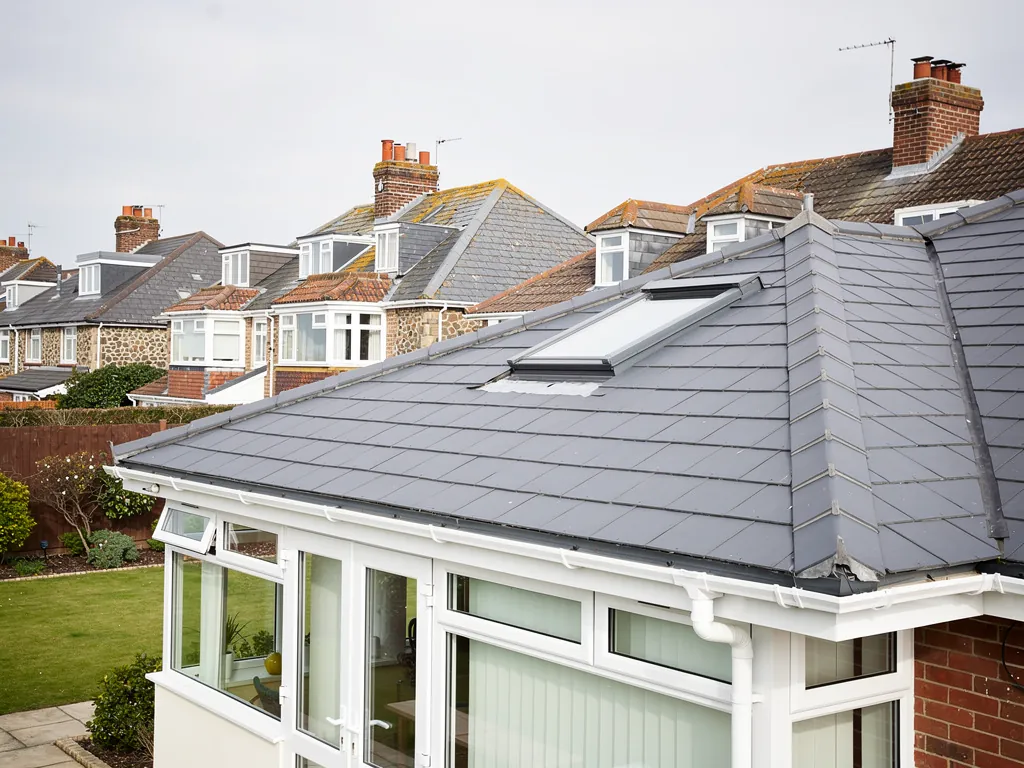
Nyetimber roofs
Listed landmarks beside Pagham Harbour
-
Nyetimber Windmill, Grade II
Nyetimber Windmill is a Grade II listed building, first listed on 15 January 1975. Work on a listed building that would affect its character needs listed building consent before a roofer starts.
-
St Thomas a Becket, Pagham
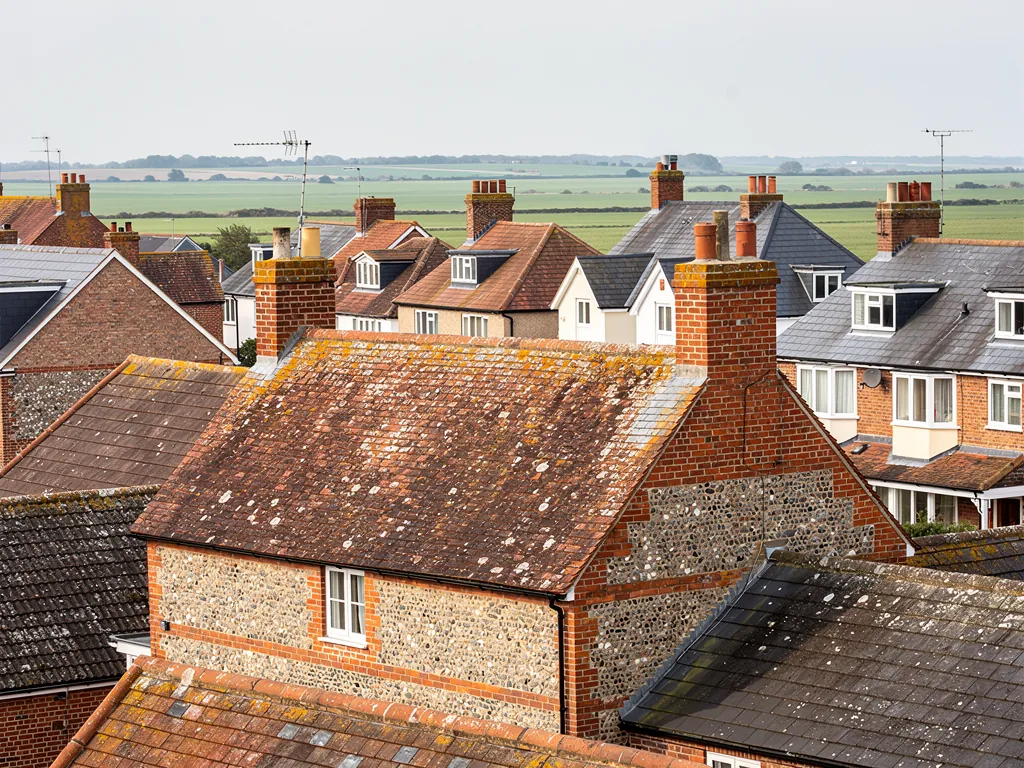
The Grade I parish church dates from the 13th century. Its walls are flint rubble with dressed stone, under a tiled roof. The building belongs to the Church of England, which means repair work is authorised through the faculty system.
-
Open ground beside the harbour
Nyetimber lies in Pagham parish on the coastal plain, beside the tidal lagoon of Pagham Harbour, in a parish that has lost land to the sea before. Roofs here meet open, wet and windy weather.
Map of Nyetimber, 3.7 road miles west of Bognor Regis, with the nearest towns we also cover.
Nyetimber beside Pagham Harbour
- Council
- Arun District Council
- County
- West Sussex County Council
- Conservation area
- None named for Nyetimber or Pagham among Arun's 29
- Article 4
- No direction found for Nyetimber on Arun's conservation areas page
- Listed landmark
- Nyetimber Windmill, Grade II, listed 15 January 1975
- Distance
- 3.7 road miles west of Bognor Regis, about 9 minutes by car
Nyetimber notes
Windmill, church and harbour-edge roofs
Nyetimber's listed landmarks and its harbour setting, and what they mean for anyone planning work on a roof.
Chapter 1: Nyetimber Windmill and listed building consent2806
Sheet 01 / 03Nyetimber Windmill is a Grade II listed building, first listed on 15 January 1975 under list entry 1027577. Listing is the reason the village deserves a careful word about roofs, even though no conservation area is named for it. Arun District Council's conservation areas page lists 29, and none carries the Nyetimber or Pagham name, yet a listed building has protection of its own that does not depend on a boundary line. The windmill is the visible reminder that one building in a lane can carry rules its neighbour does not.
Before work on a listed roof
- Read the list entry
- Ask the conservation officer
- Match slate, tile or lead
- Agree like-for-like in writing
1.1 What listing covers
The Planning (Listed Buildings and Conservation Areas) Act 1990 stops anyone altering a listed building in any way that touches its special historic or architectural character, unless the work has been authorised first. That reaches the whole building, inside and out, not just the face you see from the road. The roof is a big part of that character, so the covering, the ridge, the chimneys, the lead and even the gutter profile can all count. The list entry gives the date and the reasons for listing but seldom the detail of the roof, so a photographic record of what is there today is the sensible start, followed by a question to Arun's conservation officer before any quote is written.
1.2 Where repair ends and alteration begins
The South Downs National Park Authority's listed-building page treats ordinary maintenance, along with minor like-for-like repairs that put the existing roof back as it was, as outside consent. That is a useful yardstick, but Nyetimber is Arun's patch and Arun makes its own judgement, so ask the council. Swapping slate for concrete tile, changing a ridge detail or adding a roof window changes the look of the roof and falls on the other side of the line. Our slate roofing page explains how sound slates are lifted and reused, and our roof repairs page covers the smaller jobs.
1.3 Next door to a listed building
You do not need to own the listed building to feel the effect. A shared gutter, a joined ridge or a boundary wall can bring the neighbour's roof into your plans, and any work that touches a shared wall can raise party wall questions, so talk to the neighbour early. Scaffolding has to stand clear of the listed structure, and access is planned before the first quote goes out, so that nobody is leaning a ladder on old fabric. Where the neighbouring house is listed, tell your roofer at the first visit rather than at the end.
Chapter 2: A Grade I church and the faculty route2318
Sheet 02 / 03Pagham's church of St Thomas a Becket is Grade I listed, first listed on 5 June 1958 under list entry 1353902. The Victoria County History describes it as standing alone north-east of Pagham Harbour, its walls are flint rubble, the quoins and window surrounds are cut stone, and the roof is tiled. It dates from the 13th century and was drastically restored. Nyetimber sits in Pagham parish, and its parish church is a good example of how consent routes differ between buildings that look much the same from the lane.
Two consent routes for old buildings
Listed house or mill
Listed building consent from Arun District Council for works that affect its character.
Anglican church in use
A faculty from the Church of England, while planning permission still covers the exterior.
2.1 Why a church roof takes a different route
While a parish church is in regular use for Anglican worship, it sits under the ecclesiastical exemption: works to the listed building go through the Church of England's faculty system, not through listed building consent from the council. The exemption does not cover the planning side, so building work that changes the outside still needs planning permission. A house or a mill is different, because the council decides. A church that closes for worship loses the exemption, a redundant church held by the Churches Conservation Trust needs listed building consent, and a scheduled monument, even in a churchyard, needs scheduled monument consent. One route does not fit every old building in the parish.
2.2 Reading the age of clay tiles
Tiles are a common finish on an old building, and their age drives the repair-or-replace call. For clay tiles Marley gives a 60 year minimum, attributed to the Building Research Establishment, though a building-conservation article says the number cannot be trusted for old peg-tile roofs, where the outcome turns on the tile and how it is fixed. A roof can be sound in its tiles and tired in the nails, battens and underlay beneath. Before giving a verdict we raise a handful of tiles and photograph their undersides. You get the pictures along with the written quote, which lets you judge the condition yourself. Old clay tiles are often worth keeping and reusing, because new ones rarely match the colour and texture of weathered ones.
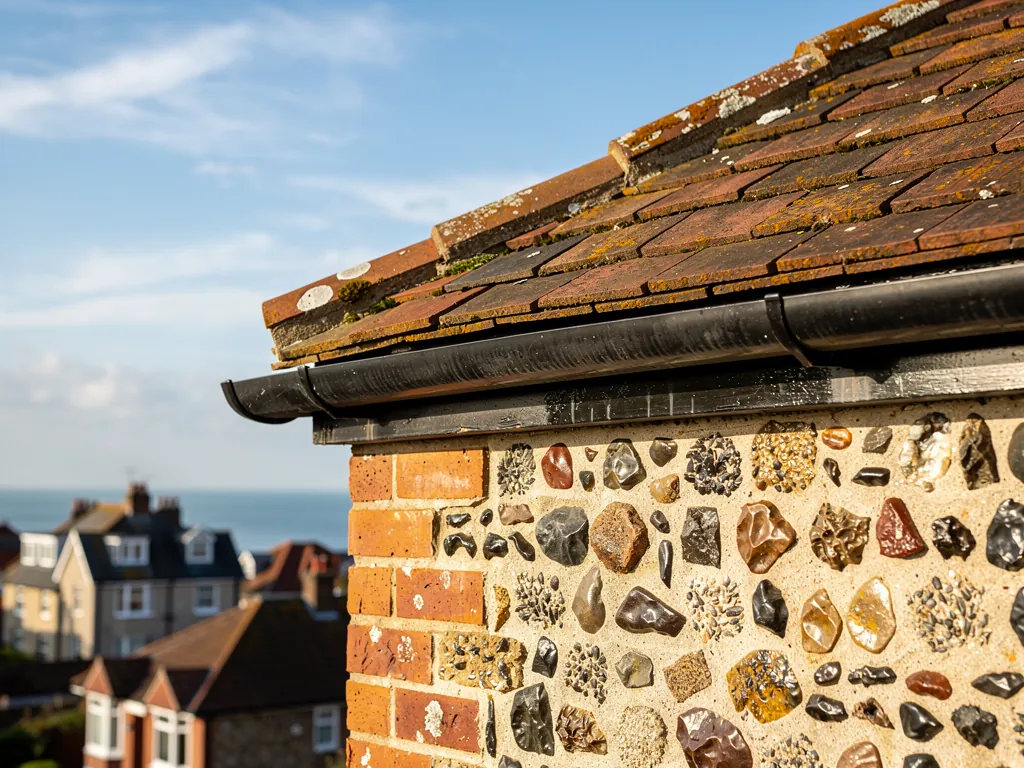
2.3 Flint rubble, dressed stone and the joints at the eaves
Dressed stone, also called ashlar, is squared and finely worked, and is used for corners and openings, while rubble means rougher flint laid in courses. Where a roof meets either kind of wall, the flashing is let into a joint and sealed, and a failing joint lets water in behind the lead. Our lead roofing and leadwork page describes how those details are formed.
Chapter 3: Open ground beside Pagham Harbour2013
Sheet 03 / 03The Victoria County History places Pagham parish on the coastal plain with the tidal lagoon of Pagham Harbour on its south side, and records that in 1697 some 2,100 acres were said to have been left derelict by the sea. That is old history, not a flood map, and it rates no road in Nyetimber. What it does tell you is that this is open ground beside water, where a roof meets the weather head on and the ridge, verges and eaves do the most work. A survey notes which slopes are the most exposed. The history does not describe the village's housing, so we read each roof as we find it rather than guessing an age. Looking at the timbers and tile backs tells you far more than a date would.
After a gale, in order
- 1Make safeKeep clear of anything loose and stay off the roof.
- 2Tell the insurerRing before you arrange any repair, and ask what they need.
- 3PhotographTake pictures of the damage from the ground and inside.
- 4Temporary coverKeep every receipt for a tarpaulin or emergency fix.
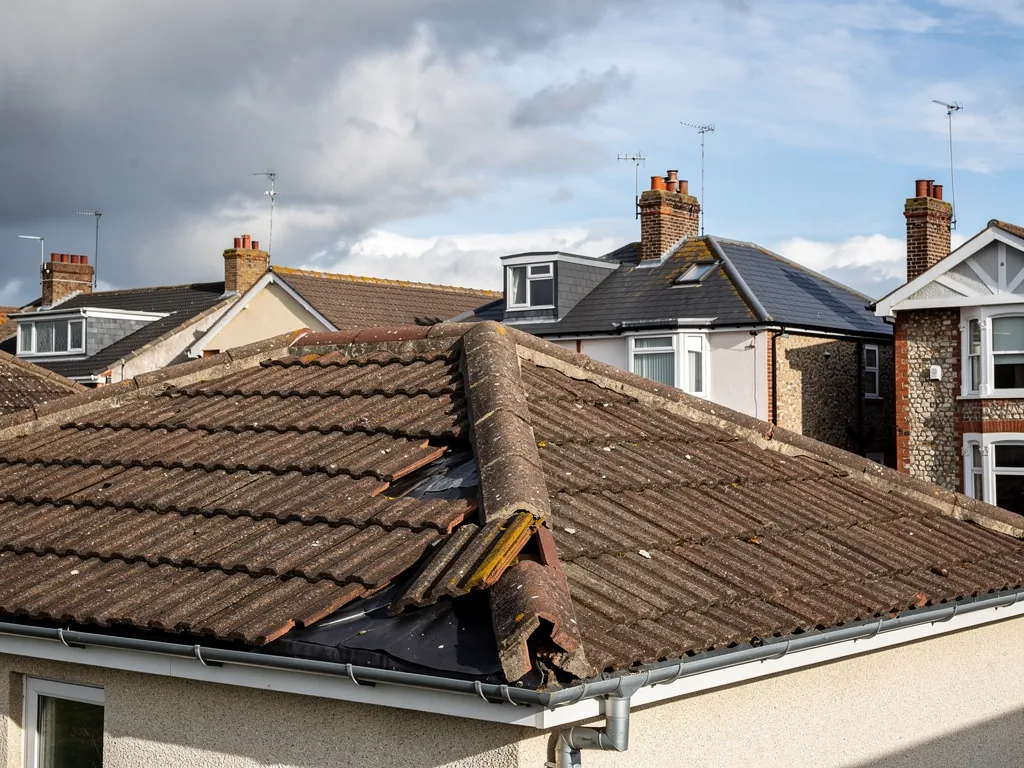
3.1 When a gale has moved the tiles
Make the house safe before anything else, and stay well away from loose material overhead. Then ring your insurer before arranging any repair, photograph what has happened, and hang on to the receipts for any temporary fix, which is the advice from Which? and from the Institution of Structural Engineers. A tarpaulin buys time and is not a repair. Do not climb a ladder in the wind to tie one on yourself. A leak or storm damage goes to the front of our list, and the first visit is about making the roof safe. Whether a policy pays is for the insurer to decide, and wear and tear can be excluded.
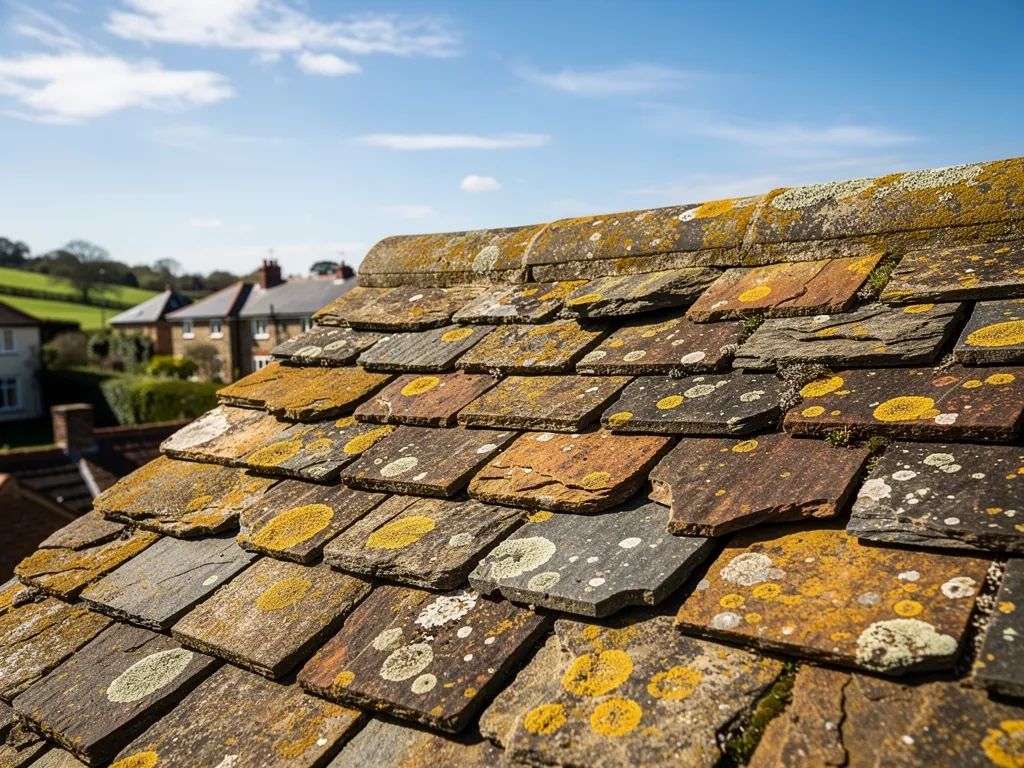
3.2 Moss, birds and bats on older slopes
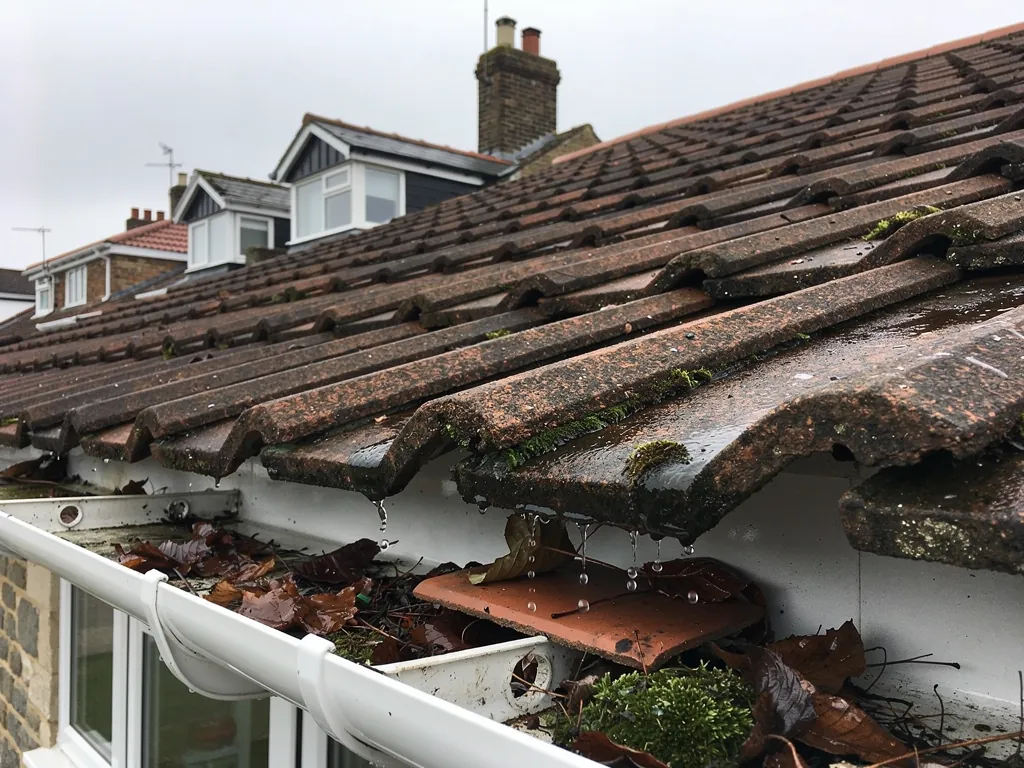
Moss holds water against the tiles and can block gutters, and cleaning it off tidies a roof without mending a failing one. The law protects bats as well as nesting birds, and GOV.UK lists re-roofing as work that can disturb bats, so mention any sightings under the eaves before we start. Moss can also hide loose or cracked tiles, so while it is being cleared a roofer checks what lies underneath. A survey that records where the gaps and the droppings are saves a stop halfway through a job.
3.3 A scaffold on the road outside
West Sussex County Council is the highway authority for Nyetimber's roads. Scaffolding that obstructs a road or pavement needs a licence under section 169 of the Highways Act 1980, which the highway authority issues. Expect to wait at least 10 working days between application and the scaffold going up, with a published fee of £266 for one month, and plan the start date around it. Check whether any quote includes the scaffolding and the VAT.
Every part of the roof, in Nyetimber
Frequently asked questions
Questions from the windmill to the harbour edge
Can a tired roof on a listed Nyetimber building be repaired like for like?
Often, yes. Repairs that match the existing covering and method are the safest route, and sound slates or tiles are reused where they can be. Before quoting we read the list entry, and anything that changes the look of the roof, such as a new covering or a roof window, may need listed building consent. Arun's conservation officer can tell you where your job falls before you commit, and a written quote that follows our survey means you will know the scope first.
Who gives consent for work on the roof of St Thomas a Becket?
Not Arun's listed building team: the ecclesiastical exemption applies, because the building is an Anglican parish church in regular use. Works are authorised through the Church of England's faculty system, while planning permission can still be needed where building work affects the outside. If the church ever closed for regular worship, the ordinary listed building controls would take over, and this is a question for the parish rather than for us.
What should I do first if a gale damages a roof near Pagham Harbour?
Keep yourself and your family clear of anything loose, and do not climb up. Photograph the damage from the ground, ring your insurer before arranging repairs and keep each receipt. A leak goes to the front of our list, and our first visit makes the roof safe, then we give you a plain verdict, backed by photographs, on whether a repair will hold or the slope needs replacing.
Does a Nyetimber roof job need a scaffold licence?
If the scaffold will obstruct the road or pavement, yes. West Sussex County Council licenses it under section 169 of the Highways Act 1980, and it is sensible to ask your roofer who makes the application. Allow a minimum of 10 working days from application to erection; a month on the highway costs £266 in licence fees. A scaffold standing wholly inside your own boundary does not obstruct the highway, so the licence is not the issue, although the firm will confirm that on site.
Nearby areas
Get a quote
Tell us about your roof
Describe what's happening and we'll call you back.
Loading the enquiry form. You can also call 01243 252373.