
Roofers in Rose Green
Harbour plain, flint church, windmill
Rose Green sits on the coastal plain north of Pagham Harbour, near Pagham's flint church and the listed Nyetimber Windmill, with no conservation area of its own to complicate a roof repair.
Rose Green roofs
Harbour, church and windmill on the roofline
-
Pagham Harbour's tidal edge
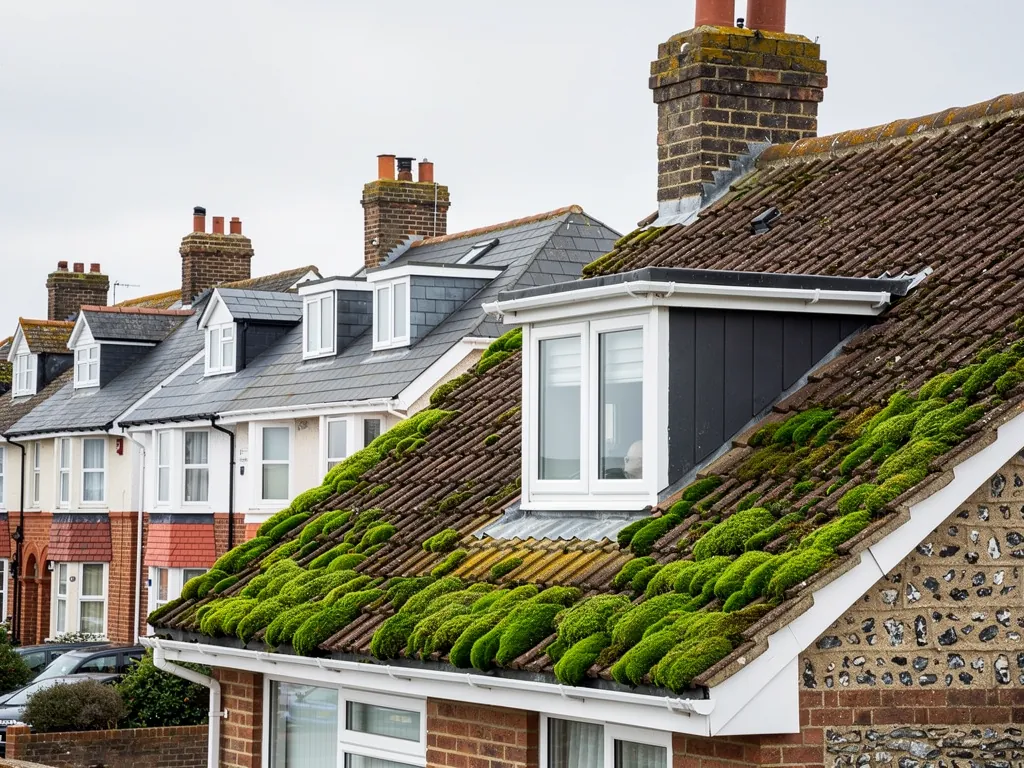
South of the parish lies the tidal lagoon of Pagham Harbour, and the Victoria County History records land being eaten away by the sea through the Middle Ages. It is context, not a hazard rating, but open water is never far.
-
Pagham's flint church
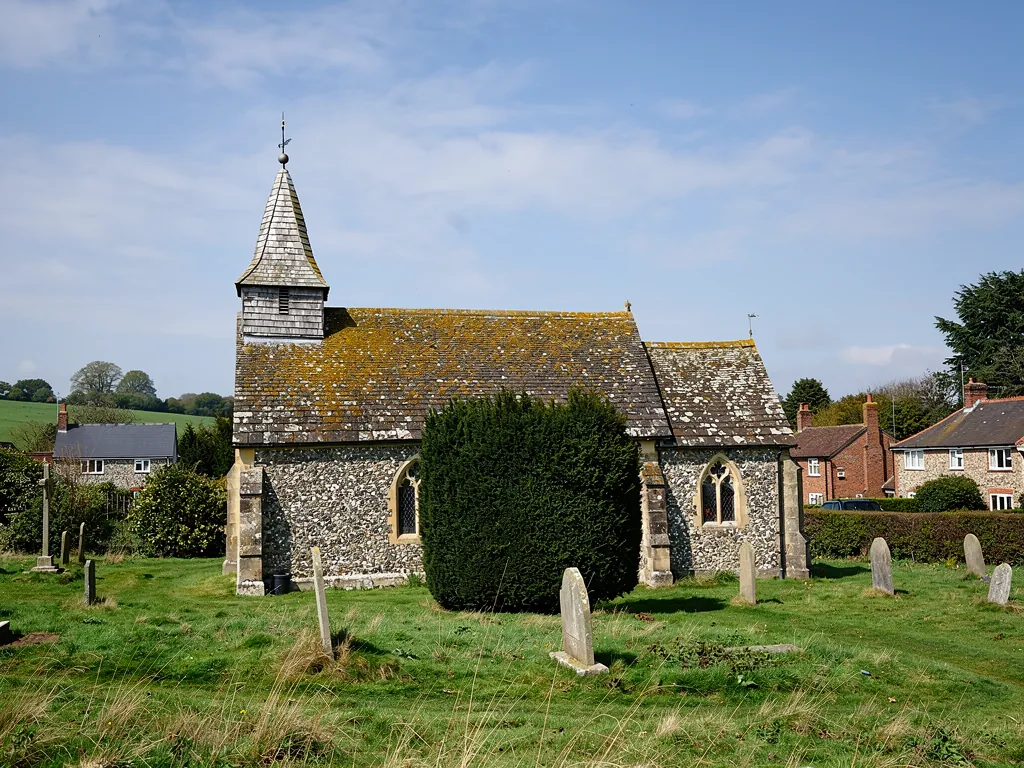
Pagham's parish church, St Thomas a Becket, holds Grade I status, and the Victoria County History gives it flint rubble walls with ashlar dressings, a tile roof and a shingled spire above it.
-
Nyetimber Windmill
Nyetimber Windmill has been listed Grade II since 15 January 1975. Altering the character of a listed structure needs consent, so we ask about listing before quoting for anywhere on the plain.
Map of Rose Green, 2.3 road miles west of Bognor Regis, with the nearest towns we also cover.
Rose Green on the plain
- Council
- Arun District Council
- County
- West Sussex County Council
- Conservation area
- None: Arun's 29 conservation areas do not include Rose Green or Pagham
- Article 4
- None recorded for Rose Green by Arun
- Listed landmarks
- Nyetimber Windmill, Grade II; Pagham church, Grade I
- Distance
- 2.3 road miles west of Bognor Regis, about 6 minutes by car
Plain and harbour
Open plain, listed neighbours, no conservation area
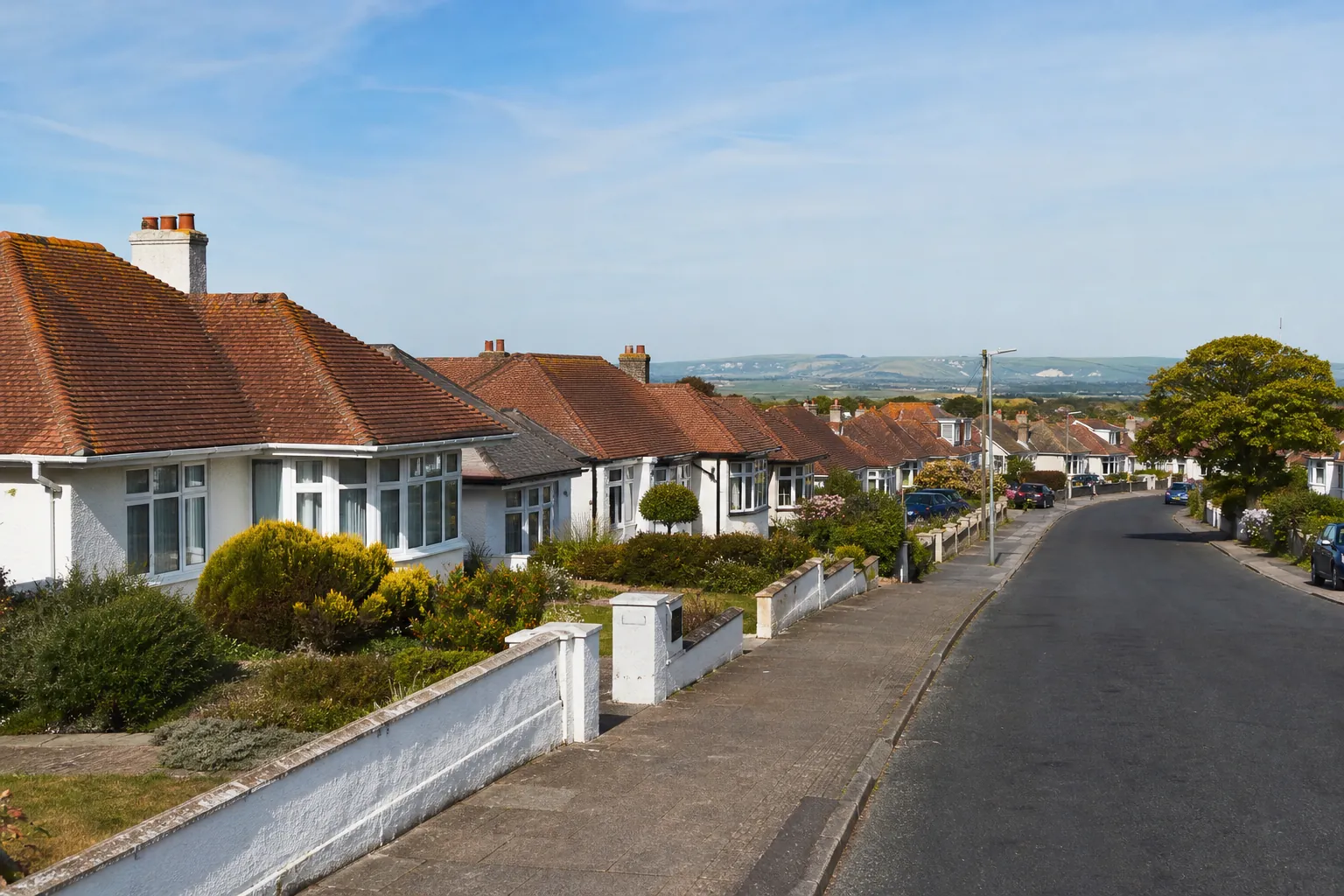
Rose Green is defined by its setting rather than one housing era, so the roof questions here are about exposure, age and consent.
Chapter 1: Open ground north of Pagham Harbour2135
Sheet 01 / 03Rose Green is in Aldwick parish today, and it lies within the old bounds of Pagham parish, which the Victoria County History says ran about five miles between the Bremere Rife and the Aldingbourne Rife. To the south lies Pagham Harbour, a tidal lagoon, and the same account records land being eaten away by the sea through the Middle Ages. That is history, not a rating. What it means for a roof is practical, and it starts at the edges, where wind finds a way under a covering first.
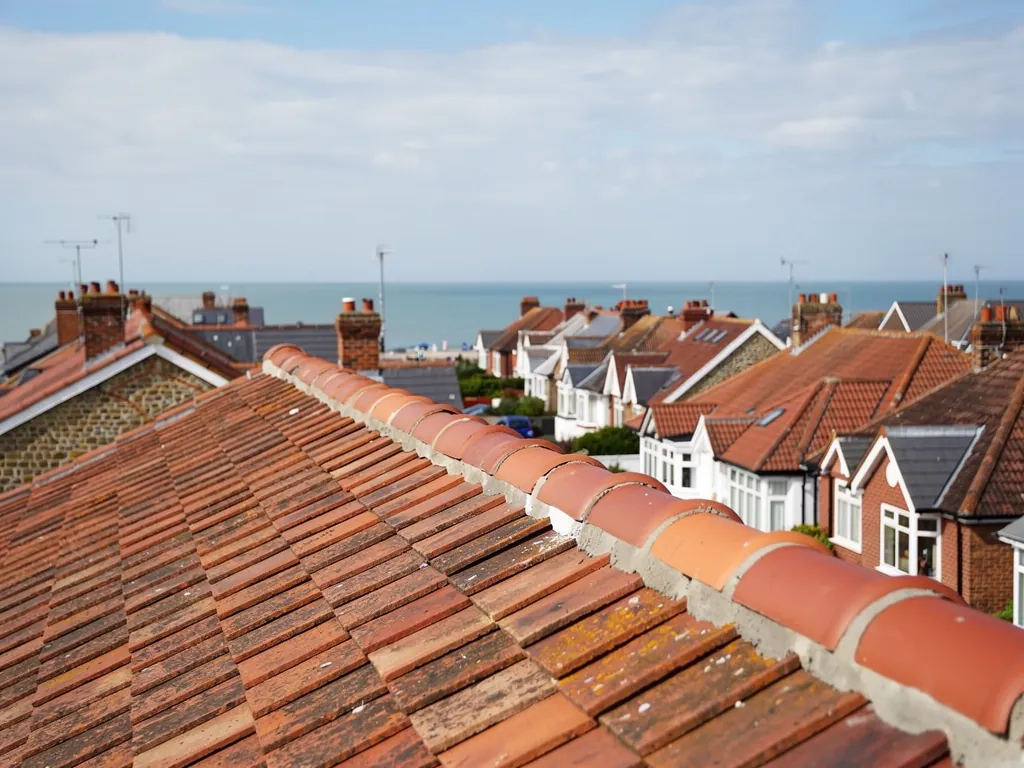
Bedded or dry-fixed ridge
Bedded and fixed
A mortar bed with mechanical fixings added, as BS 5534 now expects.
Dry-fixed
A clipped or screwed system tested to BS 8612, with no mortar bed to crack.
1.1 Reading wind exposure without a number
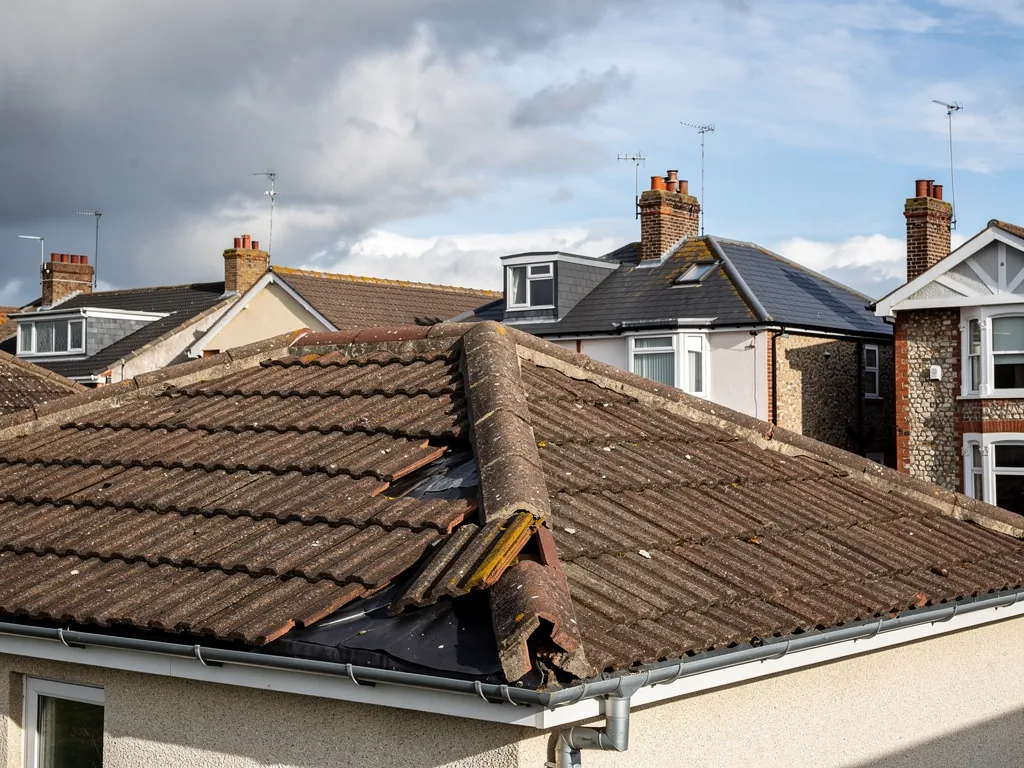
No two roofs see the same wind, and the manufacturers say as much. Wienerberger lists geographic location and altitude, together with local wind exposure, as inputs to a fixing specification, and Marley warns that a windward slope under 30 degrees can suffer severe suction. Flat ground with little cover is the sort of setting where those lines earn their place. So a survey here begins with how the roof is held down: whether each tile carries a mechanical fixing, whether the ridge and verge are fixed rather than only bedded, and whether anything has crept since the last gale. Close-up photographs cover each point, which leaves you able to check the verdict against what the roof looks like.
1.2 Ridge, hip and verge fixings
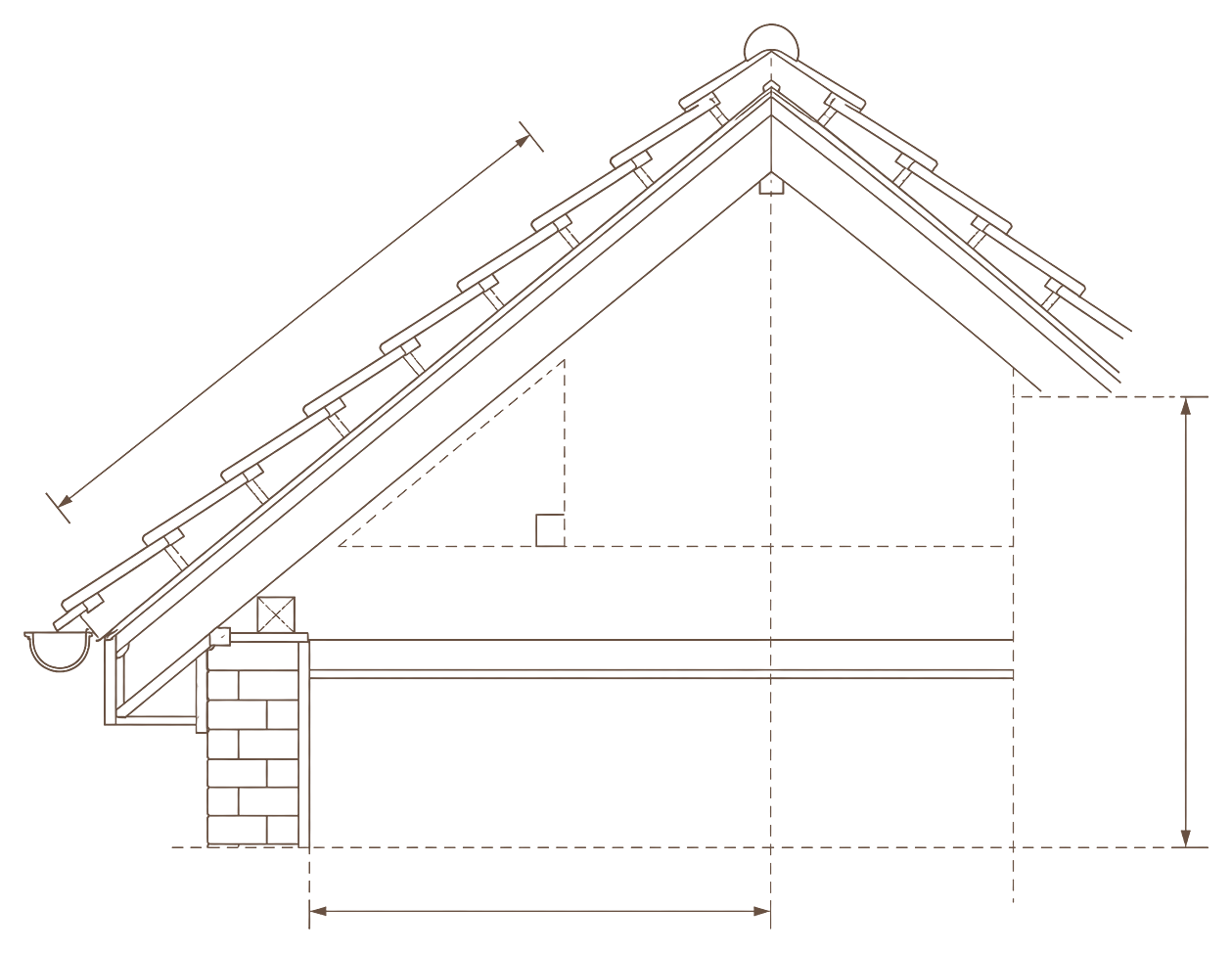
Along the crown of the roof runs the ridge. Along each outward corner where two slopes meet runs a hip, and at a gable end the roof stops at the verge. All three are capped, and all three catch the full force of a gale. The 2014 revision of BS 5534 stopped treating a mortar bed on its own as enough, so ridge and hip caps now also take a screw or clip. BS 8612:2018 covers dry-fix systems, which fasten the capping down with no mortar bed to crack. A roof with a wobbling ridge does not always need a new covering, because the ridge can often be lifted off and refixed the modern way. Our ridge tile repairs page sets out both methods.
1.3 Gutters, falls and outlets
Driving rain turns a small gutter fault into a wet wall, and an overflowing run soaks the brickwork and the fascia (the board the gutter is fixed to). Manufacturers give the fall for a gutter at roughly 1:600 to 1:350, depending on the system. Brett Martin's guidance is 1 mm for every 600 mm of length, with brackets no more than 900 mm apart, so a sagging run shows up against a straight edge. The outlet matters as much as the fall: leaves, moss and loose roofing grit collect there, and a blocked outlet puts water where it should never be.
Chapter 2: Age, covering and the repair-or-replace call2684
Sheet 02 / 03Because no single housing era is on record for Rose Green, we judge a roof by what is on it, not by a street's reputation. The covering, the age of the battens and underlay beneath it, and the condition of the lead decide whether the answer is a lasting mend, a temporary patch or a full re-cover. The survey photographs show you the evidence for whichever it is, and you choose with the same pictures we have.
How the survey reaches a verdict
- 1Ground checkWe look at the ridge, verge, gutters and chimney from the ground before any ladder goes up.
- 2Roof and loftClose photographs of every fault, with the underlay and battens seen from inside.
- 3VerdictA plain call on mending, patching or replacing, and the reason for it.
- 4Written quoteA single total for the work we advise, sent after the survey.
2.1 How long each covering is expected to last
Published lifespans are typical ranges, never promises. Marley puts concrete tile at around 60 years, with the caveat that this is no guarantee, and some guides give shorter figures, from 30 years. For clay tile Marley cites a minimum of 60 years, a figure that building conservation writers call unreliable for old peg tiles. Natural slate, if well maintained, can last 100 years or more, according to CORC. Among flat coverings GreenSpec gives EPDM an expected 20 to 30 years, while Less gives GRP 25 to 40 and torch-on felt 10 to 20, with a poor felt job failing in under ten. A guarantee on new work is a separate matter from how long the material itself lasts.
2.2 Where a patch ends and a re-roof begins
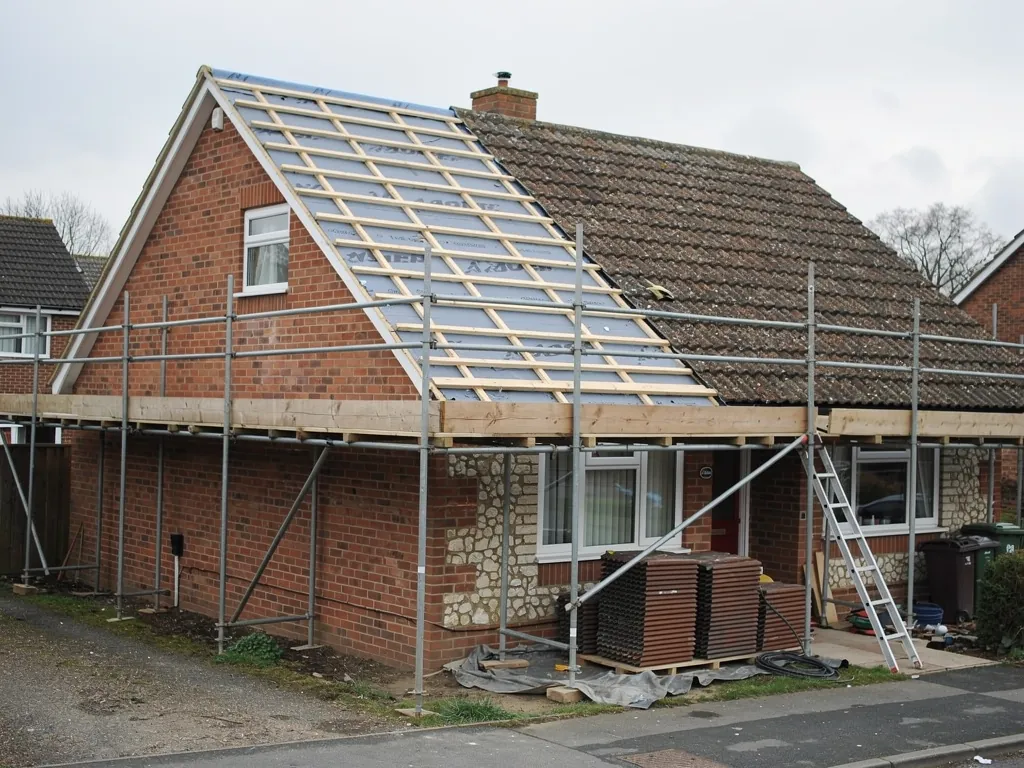
A patch suits damage that is local, on a roof whose battens, underlay and fixings are otherwise sound. A replacement suits failure that runs across a slope: nails gone, battens soft, tiles crumbling. For scale, Checkatrade's repair figures (table dated June 2026, before VAT) run from £90 to £120 per square metre for concrete tile, £110 to £160 for clay and £150 to £220 for natural slate. Its replacement guide puts the national average near £8,000, with typical jobs between £4,000 and £19,000. What a Rose Green roof costs is settled once the survey is done, in a single written total for the work we advise. Our roof repairs page shows the smaller jobs.
2.3 Flat roofs on extensions and garages
A house may carry a flat-roofed extension or garage whatever its age, and that is where ponding water shows up first. BS 6229:2025 sets a minimum finished fall of 1:80, and roofers design nearer 1:40 so the surface still drains. On a flat roof, laying a fresh waterproof membrane is renovation as far as Approved Document L is concerned, and that can bring insulation requirements with it. Our flat roofing page describes the coverings we lay.
Chapter 3: Listed neighbours, and no conservation area2623
Sheet 03 / 03Two listed structures stand close by: Nyetimber Windmill, Grade II since 15 January 1975, and Pagham's parish church of St Thomas a Becket, Grade I. The church is an Anglican building in regular use, so alterations to it go through the faculty system, with an exterior change still needing planning permission. Arun lists 29 conservation areas, and none is named for Rose Green or Pagham, while no Article 4 direction is recorded for Rose Green. An ordinary house here is not under those extra controls, though your own address and listing status decide what applies.
Before you commit to a roof here
- Search the heritage list by address
- Put your address to Arun
- Ask for survey photographs
- Confirm VAT on the quote
3.1 What no conservation area changes for a re-roof
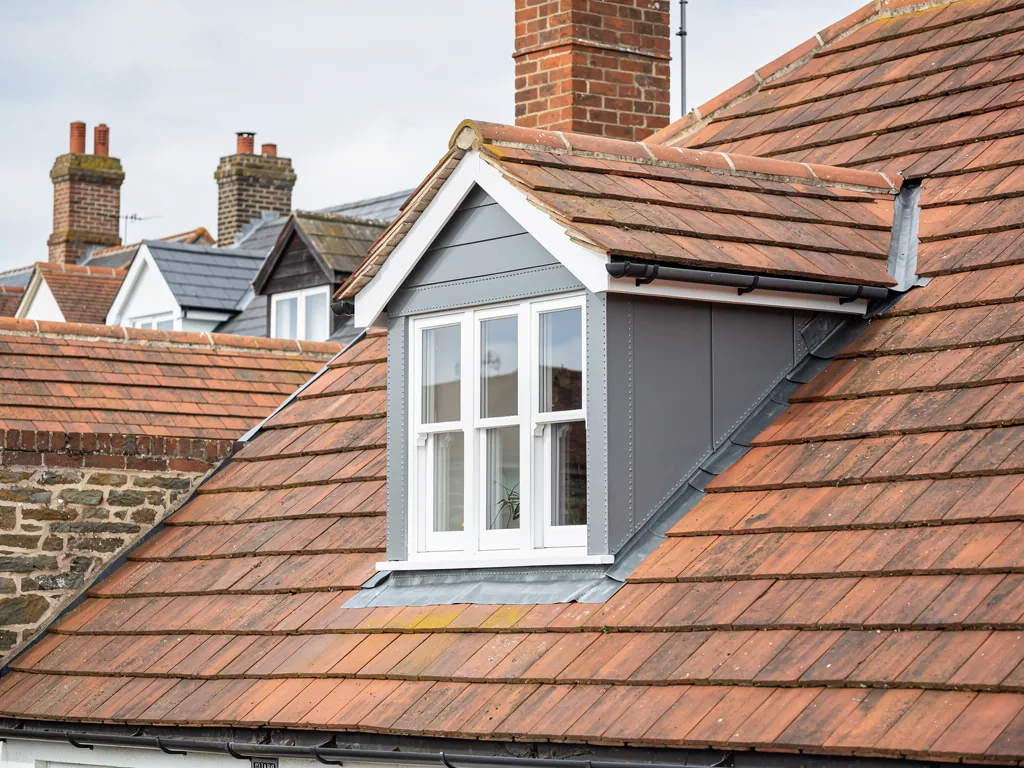
Covering a roof again in matching material normally sits outside planning control altogether, as the Town and Country Planning Act exempts works that leave the external appearance unchanged; a listed building or a direction would alter that. Building control follows its own rules. The Planning Portal sets two limits: under 25 per cent of the total building envelope affected and under 50 per cent of the roof. Arun's own page takes a cautious line on re-roofing, so ask its team or a registered building control approver to confirm for your job; where a notification is needed, we deal with it. A heavier new covering, roughly 15 per cent heavier than the old, also brings building control in, and the Planning Portal advises a structural check before work starts. If you are considering roof windows, read our skylight planning permission guide first.
3.2 Insulation and ventilation under the new covering
Approved Document L (the 2021 edition until 24 March 2027, when the 2026 edition takes over) asks for an upgrade where more than 50 per cent of a roof's surface is renovated. Its Table 4.3 (Table 3.3 in the 2026 edition) sets 0.35 as the threshold for an existing roof and 0.16 W/(m²·K) as the improved figure, while a new or replacement roof element is limited to 0.15. A well-insulated roof still needs air to move. Marley says a cold roof under a high-resistance underlay needs a ventilation gap along the eaves: 25 mm for pitches of 15 degrees or less and 10 mm for steeper ones. That detail is easy to lose when a roof is re-covered, so we plan it before the first batten goes down. What the survey shows on this point decides what the written quote says.
Roofing services across Rose Green
Frequently asked questions
Rose Green: ridges, harbour weather and listed neighbours
How can I tell whether the ridge on my Rose Green roof is held by more than mortar?
From the ground, look for cracked mortar, ridge caps sitting out of line or small gaps along the joint. Only a closer look from the roof shows whether a screw or clip sits under each cap. Since its 2014 revision, BS 5534 has not treated mortar alone as enough to hold ridge and hip tiles. We photograph the ridge close up and say whether it can be refixed or needs rebuilding, and why.
Is a roof close to Pagham Harbour at greater risk than one further inland?
Exposure depends on the individual site, not the postcode, so we do not rank roofs by distance from the water. Manufacturers say the fixing specification should take account of the location, the height of the site and its exposure to wind. We check what holds the covering down, how the pitch faces the weather and how the edges are finished, then recommend work to suit that roof, which may be as small as refixing a few tiles.
Does living near Nyetimber Windmill or Pagham church make my house listed?
No. Listing belongs to individual buildings, and a listed neighbour does not extend it. The windmill is Grade II and the church Grade I, but your own house counts as listed only when it features on the national register of listed buildings, the National Heritage List for England. Search by address. If it is there, listed building consent is needed for work that alters its character. The entry gets read first, because it records what the listing covers.
Can an old garage roof near Rose Green contain asbestos?
It can. The HSE advises treating any building constructed or refurbished before 2000 as asbestos-containing until a test shows otherwise. Cement-bound sheet that is lifted whole and handled carefully sits outside the HSE's licensing regime, but sheets that break up bring stricter rules, and the waste needs a consignment note. Please do not drill, scrub or sweep the sheets. Tell us about the garage and we will advise.
Nearby areas
Get a quote
Tell us about your roof
Describe what's happening and we'll call you back.
Loading the enquiry form. You can also call 01243 252373.