
Roofers in Sidlesham
Thatch, red clay tile and Quay slate
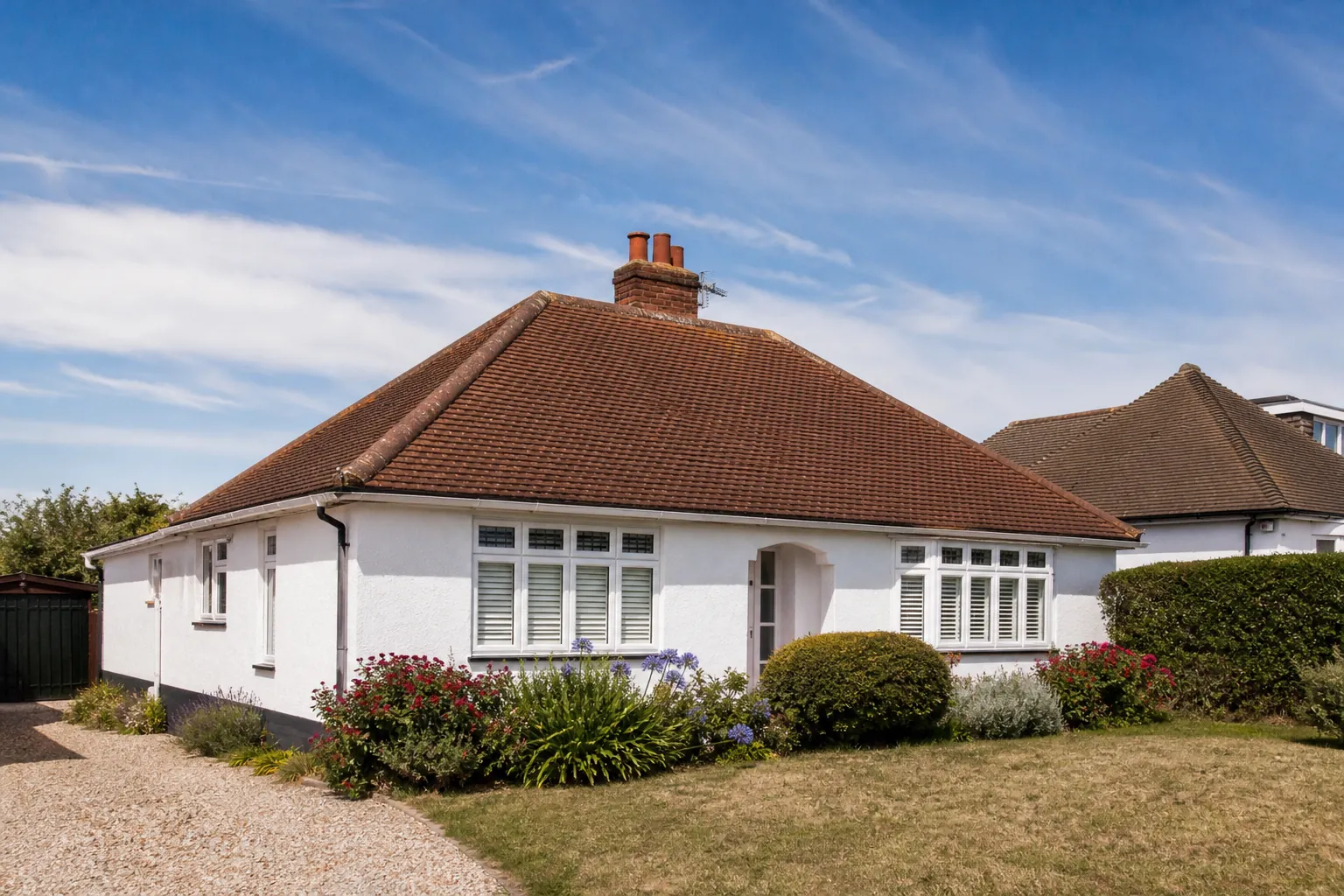
Sidlesham's roofs are thatch and local red clay tile around St Mary's, Welsh slate down at the Quay, and farm and smallholding buildings, all beside Pagham Harbour.

Sidlesham roofs
From St Mary's red tiles to the Quay's slate
-
Thatch over stone, flint and brick
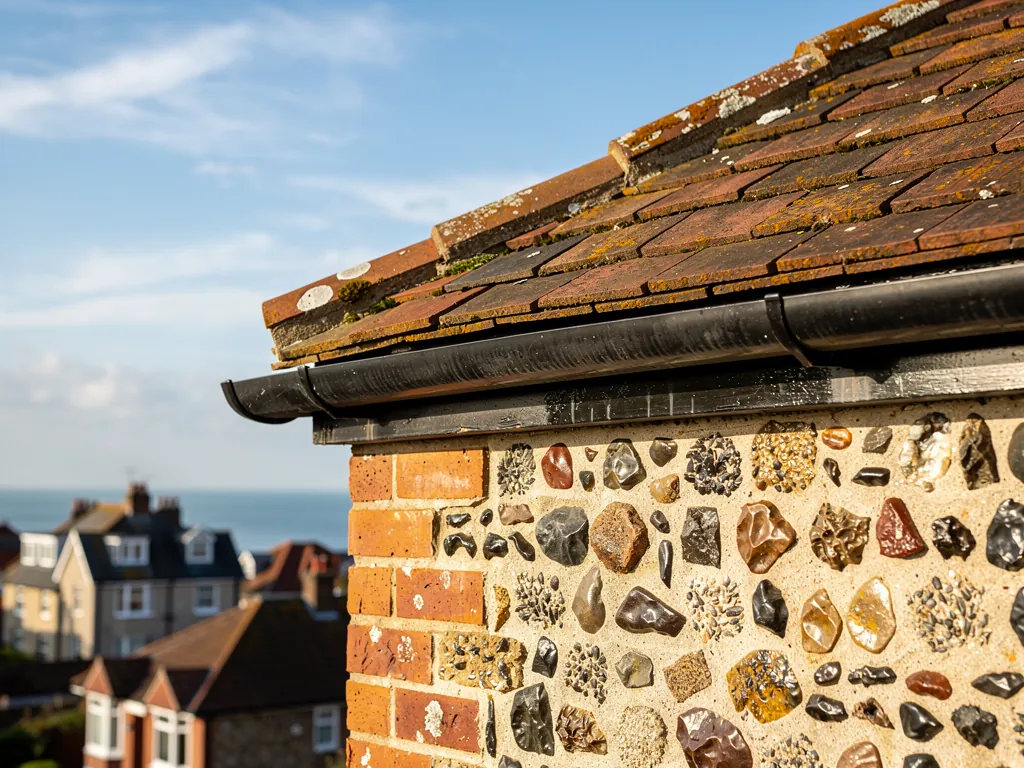
Thatched roofs are common in Sidlesham, according to the Victoria County History, with cottages walled in stone and flint rubble, colour-washed brick or cobbles. Tiled neighbours are repaired with that thatch in mind.
-
A thirteenth-century church under tile
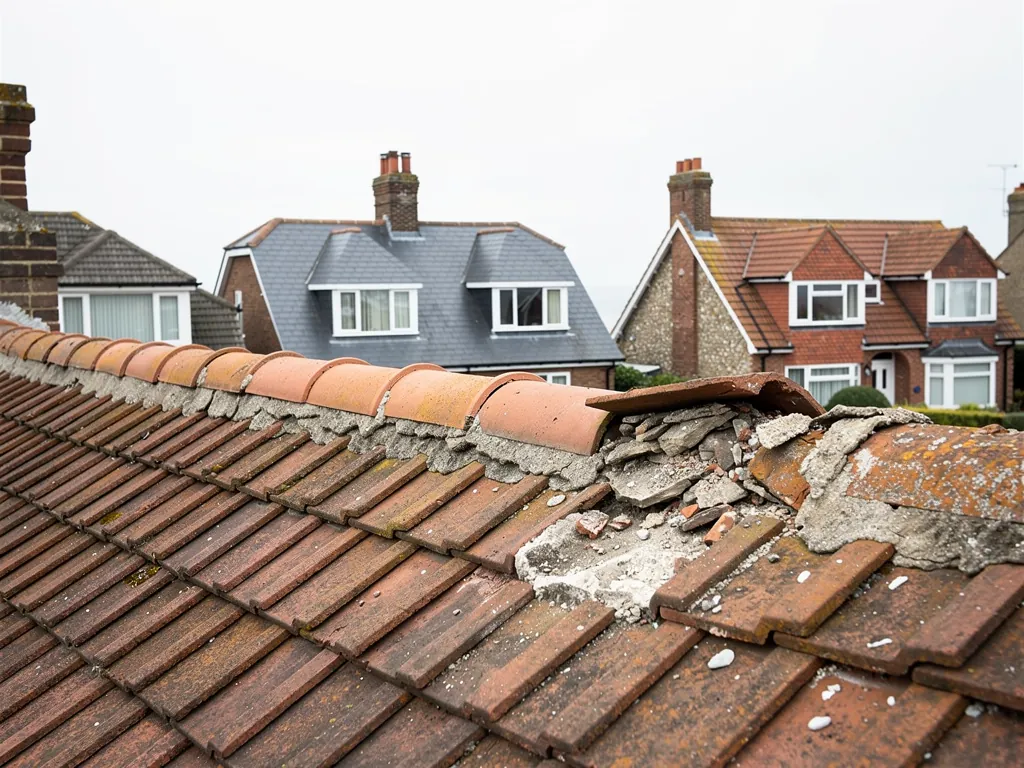
St Mary's Church dates back to the early 13th century, is listed Grade I and has clay-tiled pitched roofs. The history puts its main roof perhaps as early as the 13th century.
-
Slate at the Quay
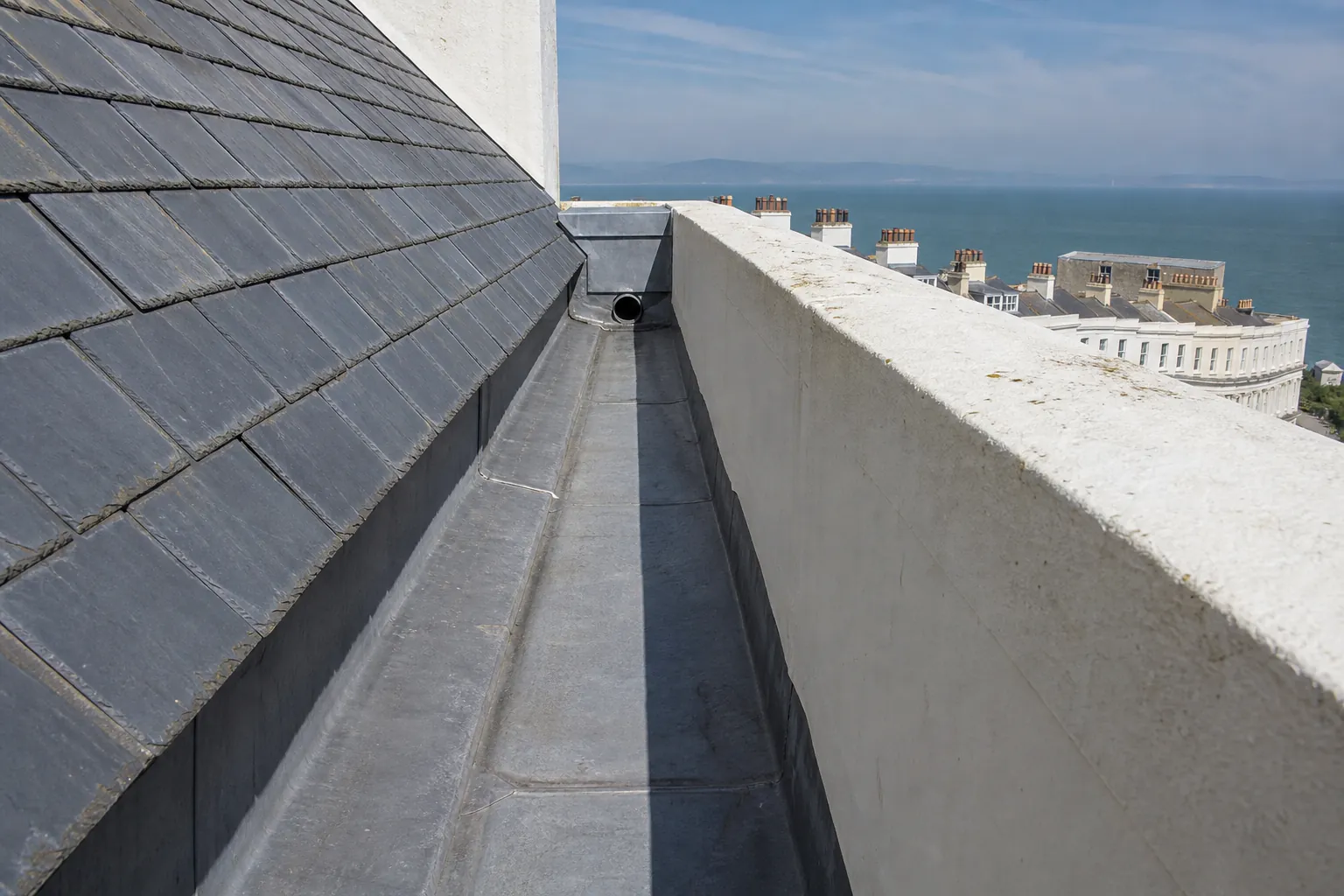
At Sidlesham Quay, Welsh slate arrived once the railways expanded in the mid-19th century. It sits among Caen stone, Bembridge limestone, flint and beach cobbles, near the site of a tide mill built in 1755.
Map of Sidlesham, 8.4 road miles west of Bognor Regis, with the nearest towns we also cover.
Two conservation areas by Pagham Harbour
- Council
- Chichester District Council
- County
- West Sussex County Council
- Conservation areas
- Sidlesham Church Conservation Area and Sidlesham Quay Conservation Area
- Listed landmark
- St Mary's Church, Grade I
- Setting
- On the Manhood Peninsula, beside Pagham Harbour
- Distance
- 8.4 road miles west of Bognor Regis, about 17 minutes by car
Sidlesham notes
Thatch, clay and slate by Pagham Harbour
A village with a church area, a quay and a farming past, and what each means for the roofs over it.
Chapter 1: Round St Mary's: thatch and local red clay2562
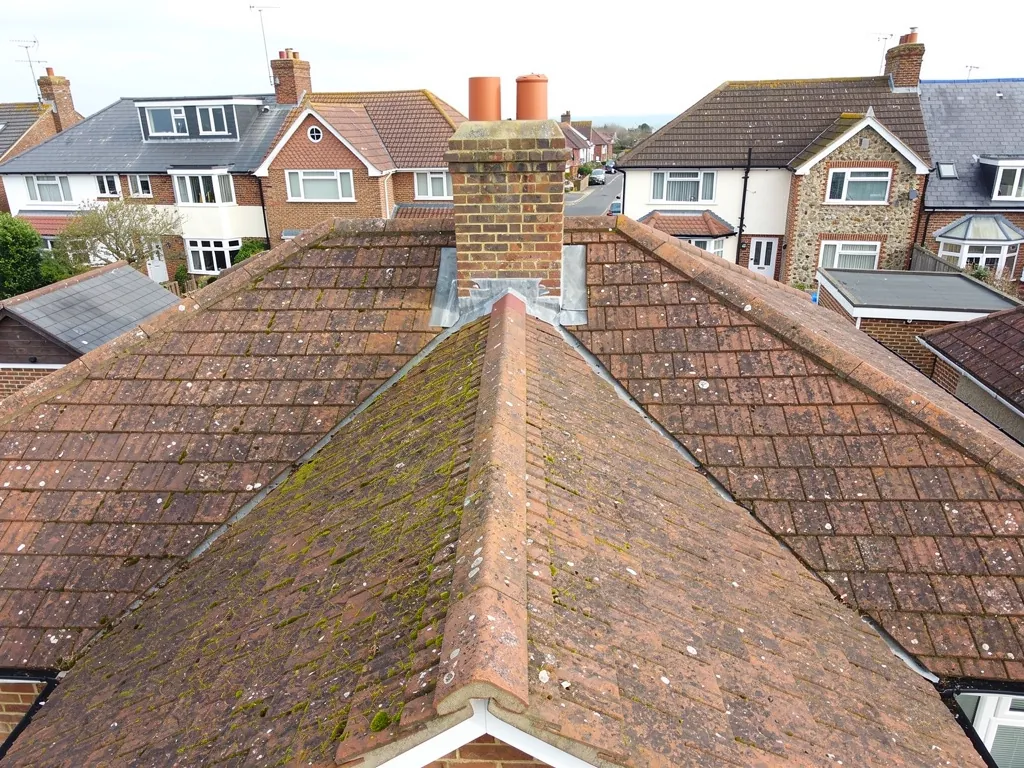
Sheet 01 / 03Chichester District Council's appraisal of the Sidlesham Church Conservation Area says thatch covers many of its roofs, and that local red clay provided the bricks and the roof tiles, with flint cobbles for the walling. Put together, that gives a roofscape of red tile, flint and stone walls and thatched eaves. St Mary's itself is listed Grade I and has clay-tiled pitched roofs. A pitched roof is one with two or more sloping faces, as opposed to a flat one. The tiles up there are not an anonymous product. They are local clay, and the sensible aim on any neighbouring repair is to match them in colour and in texture.
Before roof work round St Mary's
- Check which conservation area applies
- Look up the list entry
- Hold the new tile against the old
- Ask the planning team
1.1 Tile next to thatch
Thatching is a separate trade from ours. What a roofer contributes in a street like this is everything that is not straw. That means the lead where a slope meets a wall, the chimney stacks that rise through or beside thatch, plus the tiled roofs on the neighbouring houses. A chimney through a thatched roof wants a particular care, since the flashing and the thatch have to be dressed together. Should a ceiling stain trace back to the thatch, we will tell you, and a thatcher is the person to call about it. Our lead roofing and leadwork page describes the flashings, valleys and soakers we form for junctions like these.
1.2 Matching red clay and the consent question
Replacement clay tiles are not all the same colour. A batch that looks right on the pallet can look flat or too orange beside weathered neighbours, which is why we hold a tile against the roof in daylight before ordering. Under the tiles sit battens, the thin timbers each course hangs from, and on an old roof we check them as carefully as the tiles themselves. A listed house falls under the 1990 listed buildings legislation, which asks for consent before anything is done that would change how the building looks and feels. In a conservation area, put the question to Chichester District Council's planning officers before swapping in a different material. A church used for regular Anglican worship follows the faculty route instead, and the parish takes that forward.
1.3 Ridges and hips on old clay roofs
Capping tiles run along the top of the roof as the ridge, while a hip is an outer corner where two faces join and slope down together. On a clay roof of any age, these are the first places to look after a gale, because the tiles sit proud of the slope and take the full force of the wind. Since the 2014 revision of BS 5534, mortar by itself is no longer the accepted fixing, and screws or clips go in with it. BS 8612:2018 covers the mechanical alternative to bedding, systems fixed dry along ridge, hip and verge. On a roof with a lot of character, we tell you which method suits the tiles in front of us.
Chapter 2: Quay slate, Caen stone and a vanished tide mill2867
Sheet 02 / 03Sidlesham Quay is a different corner of the parish from the church area, and its roofs show it. The council's appraisal of the Quay Conservation Area records that Welsh slate arrived after the railways expanded in the mid-19th century, and it sits alongside Caen stone, Bembridge limestone, flint and beach cobbles. In 1755 Woodruffe Drinkwater built a great tide mill on Pagham Harbour here, and it was put out of action by the reclamation of the harbour in 1876. A slate roof dating from the railway age has passed a century. That is old but not finished, because slate itself can outlast the nails holding it on.
Two coverings, two parts of Sidlesham
Red clay tile at the church
Local clay, matched by colour and texture, refixed singly when tiles slip.
Welsh slate at the Quay
Thin and hard-wearing, held by nails that often fail before the slate does.
2.1 Slate: repair, relay or replace
The covering is rarely the part that fails first. CORC says well-maintained slate can last 100 years or more, but the fixings underneath rust, the felt or underlay perishes, and the lead around the chimneys wears out. To save a slipped slate, a roofer fits a tingle: a narrow metal strap that grips it from beneath. When nails have failed across a slope, we strip that slope, sort the good slates, renew the underlay and battens and lay the good slates back, adding new slates to make up the number. Cupa Pizarras says BS 5534 indicates a minimum pitch of 20 degrees for natural slate, a 500 mm slate in a moderate exposure, and adds that hook fixings should not be used below 25 degrees. Our slate roofing page sets out the three options and how the survey chooses between them.
2.2 Lead beside soft stone
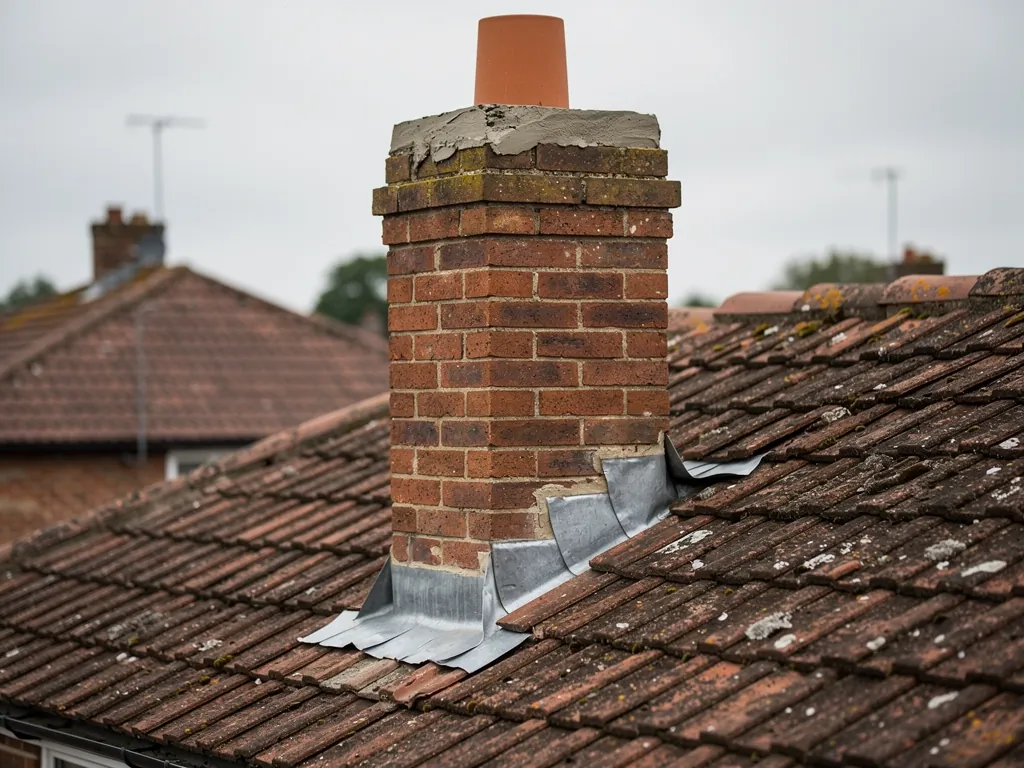
Caen stone is soft, and Bembridge limestone weathers too, so a flashing at the Quay is tucked into a mortar joint and never into the stone itself. Royston Lead's brochure lists code 3 at 1.32 mm as suitable for soakers only, and code 6 at 2.65 mm among the grades for flashings, gutters and parapets. A soaker is a folded lead tab slipped beneath the slates where they butt a wall or a chimney. When ageing lead has split or lifted, a patch often buys only a season, and a new flashing dressed properly to the wall is the better answer. We show you the split in a photograph, close up, so the decision is yours.
2.3 What slate costs, as published
Checkatrade's slate guide gives a typical UK range of £160 to £210 per square metre for slate roofing, averaging £184. That is a national figure. The real number is set by the covering, the access and the size of the slope, and your written quote arrives after the survey. Slate roofers are quoted at £280 to £360 a day in the same guide.
Chapter 3: Smallholdings, outbuildings and harbour weather2867
Sheet 03 / 03In 1935 the Land Settlement Association bought Keynor Farm and other land in the parish to set up smallholdings with greenhouses and piggeries. Holdings like those leave a scatter of outbuildings, sheds and later extensions, and some may since have been put to use as stores, workshops or garages. They share a sort of problem: a roof built for a single purpose, repaired in a hurry and now carrying something more valuable than animals. Surveys of buildings like this start with what the roof is made of, because that decides how it can be worked on.
How we survey a farm-era outbuilding
- 1Identify the sheetWe note whether the covering is metal, felt, tile or fibre cement.
- 2Check the frameWe look at the rafters and purlins before judging the covering.
- 3Photograph the faultsEvery failed joint and slipped fixing is photographed from the roof.
- 4Quote the totalYour written quote arrives after the survey, as one total.
3.1 Fibre cement and old farm roofs
The HSE's rule of thumb is simple: if a building dates from before 2000, or was refurbished before then, treat it as containing asbestos until someone has checked. Removing asbestos cement sheets in one piece, with care, counts as non-licensed work. If the material is badly damaged or breaks up, the job turns into notifiable non-licensed work. Fibre cement roofing is always fragile, so no one should walk on it. The waste goes in a double-wrapped, labelled load, and a contractor completes the consignment note as the producer. We raise all this at the survey, before a quote is written. If the building is a garage, our garage roof replacement page explains the options.
3.2 Felt, sheet and flat outbuilding roofs
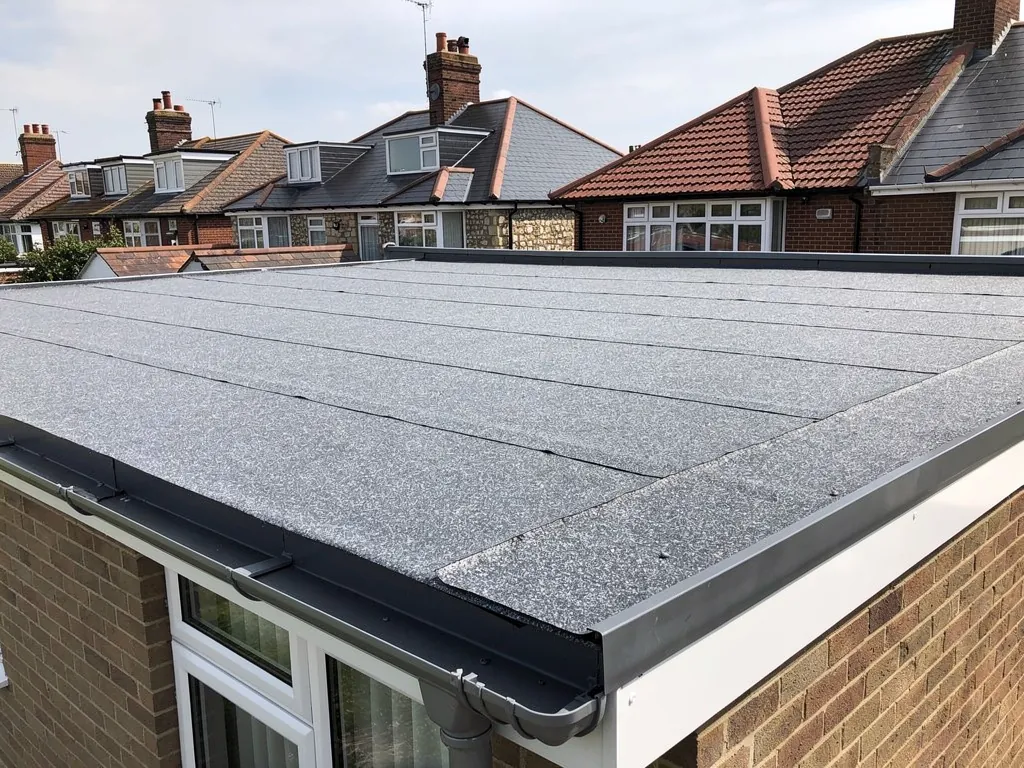
A shed, workshop or garage roof from those years is often felt over boards. Less puts torch-on felt at 10 to 20 years, with a good job reaching 20 and a poor one failing sooner. A worn felt can sometimes be patched, but where the boards beneath have softened, new boards and a fresh covering set to a drainage fall make the sounder repair. BS 6229:2025 keeps a minimum finished fall of 1:80.
3.3 Open ground beside Pagham Harbour
Pagham Harbour lies close by, and its reclamation in 1876 was what put the tide mill out of action. Near open water a roof meets gales and driving rain with very little in the way. The ridge, the verges and the eaves are where we look first, because a fixing that was adequate in a sheltered spot may not be in an exposed one. Marley flags a risk of heavy uplift on the windward face where the pitch is below 30 degrees. Photographs of your own roof back up our verdict on whether it needs refixing, repairing or replacing.
Roofing jobs we take on in Sidlesham
Frequently asked questions
Questions from Sidlesham church to the Quay
Can a Welsh slate roof near Sidlesham Quay be mended without stripping it?
Frequently, yes. If the slates are sound and the problem is a few slipped ones or worn lead at the chimney, we replace those and clip the loose ones with tingles. Where fixings have given up across an entire slope, it needs lifting and laying again, with the sound slates put back. The survey photographs show which of the two yours is, before any price.
Do I have to use red clay tile when repairing a roof round St Mary's?
Not by law in every case, but the council's appraisal for the Church Conservation Area describes local red clay as the traditional roofing, so a close match is the sensible aim. If the house is listed, any work changing its character needs listed building consent first. Put your address to Chichester District Council's planners before you order a different tile.
Is re-roofing a Sidlesham Quay house in the conservation area a planning matter?
Putting back the same covering usually falls outside planning control, with exceptions for listed buildings and for any Article 4 direction. Chichester District Council is the authority, so ask its planning team about your house. Building control is separate: the Planning Portal says an application is not normally needed while the work affects less than 25 per cent of the building envelope and less than 50 per cent of the roof.
Is it safe to re-roof an old piggery or greenhouse outbuilding left from the smallholdings?
It depends on the sheets. The HSE says to assume asbestos in buildings from before 2000 until a check proves otherwise, and fibre cement roofs are fragile. We identify the covering at the survey, tell you what that means for the work and the waste, and write one total price once that is clear. Never walk on an old sheet roof yourself.
Nearby areas
Get a quote
Tell us about your roof
Describe what's happening and we'll call you back.
Loading the enquiry form. You can also call 01243 252373.