
Chimneys and heritage rules · 9 min read
Chimneys in conservation areas and on listed buildings
Repairing a chimney like for like is often simple, but taking one down or rebuilding it differently can need consent. Here is how the rules split between conservation areas and listed buildings.
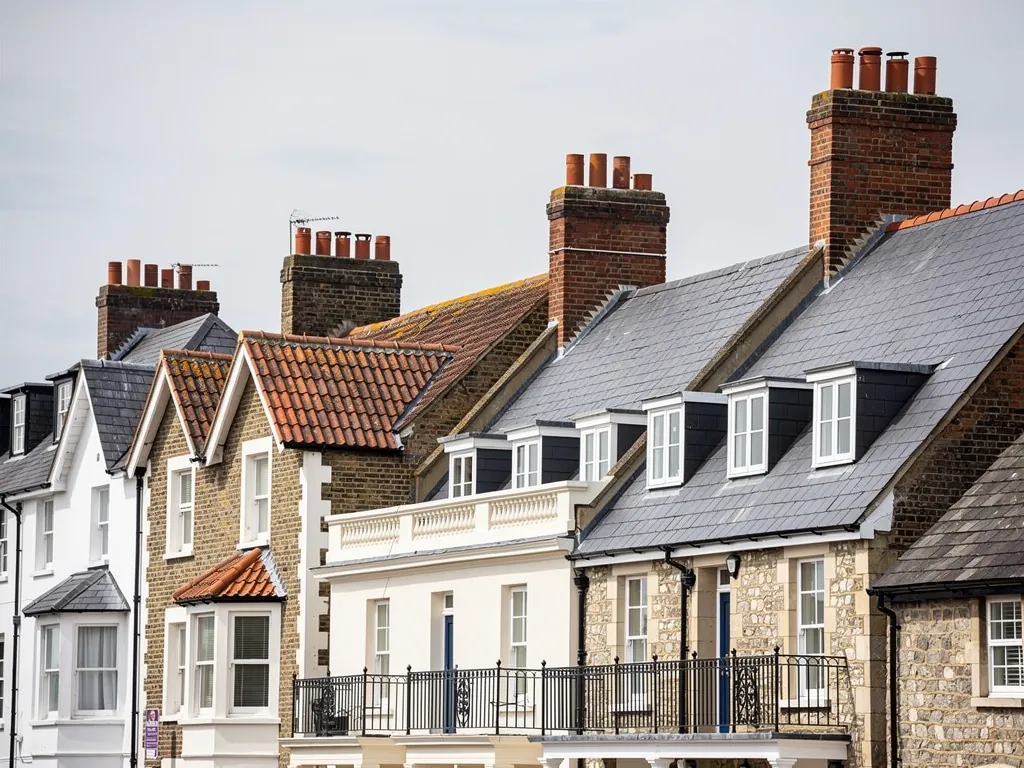
Walk along an older street on this coast and the chimneys do much of the work of defining it. Arun District Council's guidance for two Bognor neighbourhoods, The Steyne and Waterloo Square and Aldwick Road, calls chimneys important features on the skyline. That is why councils take an interest in what happens to a chimney stack.
The rules are not the same everywhere, and they are not a single rule. A listed building is controlled under one law. A conservation area is controlled under another, and what applies there turns on whether an Article 4 direction has taken extra freedoms away. Add the South Downs, Chichester Harbour and a patchwork of councils, and a question like "can I take this stack down?" collects several different answers.
This guide pulls them apart. It is general information, not legal advice, and the body that confirms your case is the planning team at your own council. Our part is practical: we climb up, photograph the fault, describe what the stack needs in writing and give one total price, so you arrive at the council with the facts in hand.
Repair, alteration and removal are three different questions
Almost every worry about chimneys and heritage rules comes down to which of three jobs you have in mind.
Repair. Mending what is already there, in the same materials and the same form: repointing, swapping a cracked pot for a matching one, renewing lead, re-forming the mortar bed under a pot. Planning law has a basic test for this. Under section 55 of the Town and Country Planning Act 1990, work that does not materially affect how a building looks from outside is not counted as development at all, so a faithful repair rarely raises a planning question. The listed-building and Article 4 caveats further down are where that comfortable answer can stop holding.
Alteration. Changing how the stack looks: a different pot, a lower stack, render over exposed brick, a new cap. The appearance has moved, and in a protected setting that is where councils begin to care.
Removal. Taking the stack, or part of it, away. This is the job most likely to need consent in a conservation area or on a listed building, and in a few places it is singled out by name. Removal also brings Building Regulations into play whenever a chimney breast is involved, which our guide to taking a stack down covers.
Before you decide anything, establish two facts about your home. Is it listed? Does it sit in a conservation area, or inside an Article 4 direction? Your council's planning team can answer both.
A third fact can change the picture again: whether the house lies in the South Downs National Park or the Chichester Harbour National Landscape. A later section shows who decides in each place.
Listed buildings: what counts as repair and what needs consent
Listing protects a building as a whole, inside and out, and the chimneys are part of it. Section 7 of the Planning (Listed Buildings and Conservation Areas) Act 1990 bars demolition, alteration or extension of a listed building in any way that would affect its special architectural or historic character unless the works are authorised. The authorisation is listed building consent, applied for through the local planning authority.
The South Downs National Park Authority states the repair side clearly: routine maintenance and minor like-for-like repairs carried out in place do not need listed building consent. For a chimney, that points at the jobs most often needed, such as replacing a few eroded bricks, repointing with a suitable mortar or renewing flashing in matching lead.
It also points at the jobs beyond the line. A stack rebuilt in different bricks, a taller or shorter stack, pots swapped for another design and a stack removed all alter the building's character, and these are the ones to put to the council first. Carrying out work that needs consent without it is an offence under the Act, so ask before the scaffold goes up.
Two practical points follow. First, the description of the work matters. A roofer who has examined the stack can set down exactly what needs doing and how much of it is straightforward repair, which gives a conservation officer something concrete to respond to. Second, matching takes time. Reclaimed bricks or handmade pots may be what the council expects to see, and the survey is the moment to find that out rather than halfway through.
For roofs as a whole on listed buildings, our guide to re-roofing a listed building covers the wider picture.
Conservation areas: where Article 4 changes the answer
A conservation area covers a neighbourhood, not one building. Portsmouth City Council puts the position plainly: many changes to doors, windows, roofs, chimneys and boundary walls stay permitted development inside conservation areas, which means they can go ahead without planning permission, although some areas also carry extra restrictions known as Article 4 directions.
That sentence is the heart of this section. Standing in a conservation area does not stop you repairing a chimney. An Article 4 direction adds the extra layer: government guidance describes it as a power for a council to take specified permitted development rights away within a set boundary, so what needs no application on the next street may need one on yours.
Whether a direction reaches chimneys depends on its wording, and the wording differs. Where the records spell out what a direction removes, this is the position:
- In Bognor and Aldwick, Arun District Council's directions cover houses in multiple occupation, plus verges and front-garden hard surfaces at Craigweil House. Neither takes away a roof or chimney right.
- Parts of Old Portsmouth and Southsea carry directions that list chimney stacks, whether they are taken down or altered.
- Havant Borough Council's Langstone direction covers demolishing any stack visible from the public road.
For Chichester District Council's directions, ask the council directly, because their coverage is not something we can state. Talk to your own council first if the job is larger than a like-for-like repair, and read our guide to Bognor Regis conservation areas and roofs for the local list.
Bognor Regis, Aldwick and Felpham: the local picture
Bognor has several conservation areas, designated at different times. The first designation in the town centre, covering The Steyne and Waterloo Square, was made in August 1979 and enlarged in July 1994. Aldwick Road followed in July 1994, the Railway Station area in September 1994, and the Upper Bognor Road and Mead Lane area around Hotham Park in June 1993, extended that August. Felpham village came in February 1985, North Bersted in February 1975 and Craigweil House at Aldwick in April 2009. Arun reports 29 conservation areas across its district.
The buildings explain the attention paid to chimneys. The council's guidance describes The Steyne as modest terraces from the 1820s and Aldwick Road as imposing terraces from the early 19th century, Victorian and Edwardian periods, built in stucco, slate and flint. Its advice for the seafront terraces is to restore original roofing materials, and it points out that in many cases slate was replaced by modern concrete interlocking tiles, which detract from the street. Felpham's appraisal describes the village roofs as orange and red clay.
Arun's own records show no Article 4 direction removing roof or chimney rights in these areas, so a like-for-like chimney repair there is not normally something that needs an application. The guidance still sets the yardstick for any change of appearance, so we would not propose a different pot, a shortened stack or removal without asking first.
The council's conservation officer can be emailed at conservation.officer@arun.gov.uk, and inside the South Downs the park authority is the body responsible for conservation areas.
Chichester, the Downs and Chichester Harbour: who decides
West of Bognor the picture shifts. Chichester is a city with its own conservation areas, and villages like Bosham and Fishbourne have a character of their own. The district council's planning team is the place to ask about them, including whether any Article 4 direction touches chimneys on your road.
The South Downs National Park
Houses in Midhurst, Petworth and the downland villages may sit inside the Park, and who decides depends on the district. In the Arun, Horsham, Adur and Worthing parts, the National Park Authority deals with planning itself. In the Chichester, East Hampshire and Winchester parts, the district council takes applications on its behalf. Building control stays with the district council wherever you are.
Chichester Harbour
The Chichester Harbour National Landscape, which carried the older designation of area of outstanding natural beauty until 2023, was designated on 4 February 1964. It takes in the shoreline and its villages. Being inside it is one more reason to phone the planning officers before you change how a stack looks.
Portsmouth and Havant
Towards Portsmouth and Havant the directions are better documented, as the earlier section showed: Old Portsmouth, Castle Road in Southsea and Langstone all have directions that name chimneys. If your house stands near any of them, put a chimney alteration or removal to the council first.
The pattern is the same all along the coast. Like-for-like repair is usually the easy route, and anything that changes how the stack looks deserves a call to the right planning team before work begins.
Churches, chapels and other protected buildings
Places of worship follow their own consent routes, and chimneys on church halls, vestries and old chapels can fall under them. Where an Anglican parish church remains in regular worship, listed building control does not apply, and the faculty system takes its place. Catholic and Methodist churches in use are also outside the state system, each with its own denominational procedure. A Baptist church qualifies only where a named trust corporation holds the building, and a United Reformed Church only where it sits on the specified trusts. Unitarian, Quaker and other faiths do not benefit, so their buildings need listed building consent.
Redundant churches differ again. Buildings vested in the Churches Conservation Trust are covered by the secular controls, and other exempt denominations lose the exemption once worship stops. A scheduled monument, even one in a churchyard, needs scheduled monument consent, which no ecclesiastical exemption replaces. Even an exempt denomination may still need planning permission for exterior development on a listed place of worship. Hence the value of one call to the council before you commission anything.
If you look after a church, hall or similar building, the route turns on which denomination owns it, how it is listed and what it is used for. The first call is to whoever manages consents for your body, or to the council.
What we do on a protected building
Wherever consent is a possibility, we survey the stack, photograph the fault and describe the work in terms the council can follow. The verdict comes before the price: repair, patch or replace, and the reasoning behind it. A repair that will hold is also the easiest route through any consent system. A written quote follows the survey, and it carries one total price. We work within what the council or its conservation officer allows, and nothing that needs consent starts before you have it.
For the money side of a typical stack job, see what chimney repairs cost.
Questions
Heritage chimney questions
Can I repoint my chimney in a conservation area without asking the council?
Repointing that matches what is there seldom changes a building's appearance in any material way, so planning permission is rarely the issue. Check first whether an Article 4 direction covers your street, whether the house is listed, and whether it falls in the South Downs or Chichester Harbour. If in doubt, ask your council's planning team.
Do I need consent to take down a leaning chimney on a listed house?
Probably, because removal changes the character of the building and listed building consent covers alteration and demolition. If the stack is dangerous, make the ground below safe first and contact the council's conservation officer promptly. A rebuild to match, rather than removal, may be the route the council prefers.
Who do I contact about a chimney in the South Downs National Park?
It depends where the house is. In the Arun, Horsham, Adur and Worthing parts, the Park Authority decides. In the Chichester, East Hampshire and Winchester parts, your district council takes the application on the Park's behalf. Either way, the district or borough council deals with building control.