
Conservation area roofs · 9 min read
Roof work in Bognor Regis conservation areas: The Steyne, Aldwick Road and more
Several of Bognor's best known streets sit in conservation areas. This guide lists them, with their dates, and explains what that means when a roof needs work.
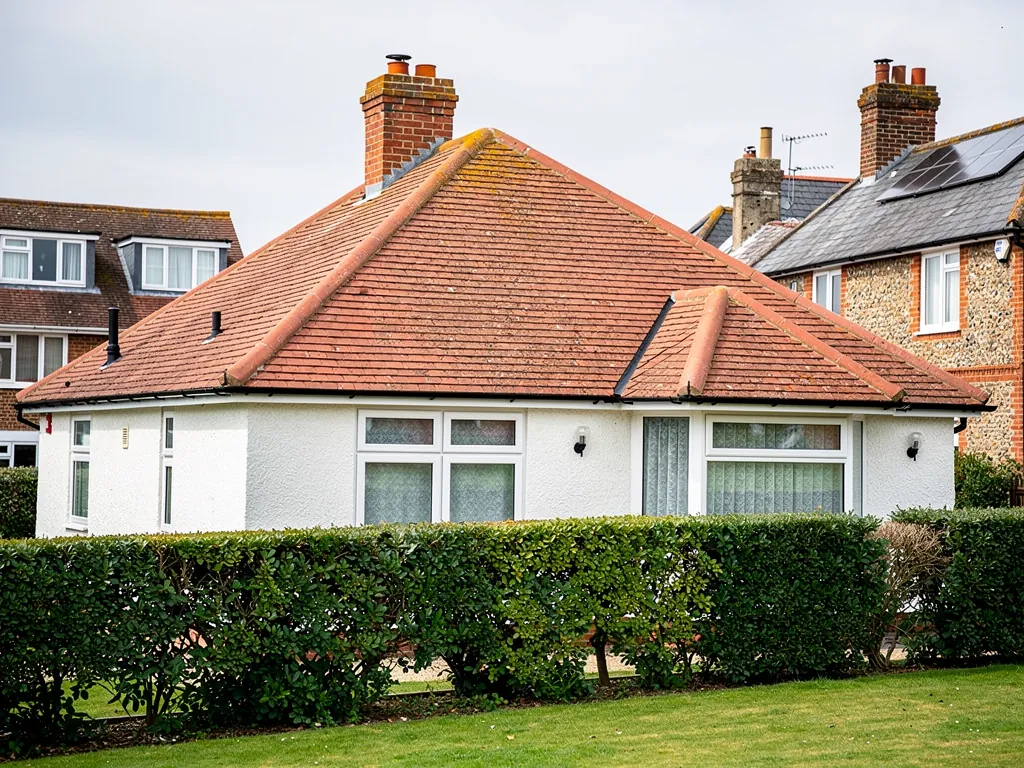
A conservation area is a part of town the council has marked out for its architectural or historic character. Living in one does not stop you repairing a roof, but changes to the appearance of a building, particularly as seen from the street, get a closer look than they would elsewhere.
Arun District Council says there are 29 conservation areas in its district. Several are in and around Bognor Regis, and the council's conservation area guidance for the town sets out what is special about each and what it hopes to see restored. We have used that guidance and the council's other published documents for the dates and descriptions below.
The practical question for most owners is simple. Can I repair or replace this roof, and do I need anyone's permission? The answer depends on the house, the type of work and sometimes the exact street. This guide explains the principles. If you are weighing up bognor regis conservation areas roof work for your own house, the council's planning team and conservation officer are the people who can confirm what applies.
What conservation area status changes on a roof
Start with what stays the same. Section 55 of the Town and Country Planning Act 1990 puts outside the meaning of "development" works that leave the building's exterior appearance materially unchanged. Re-covering a roof with the same material, laid the same way, usually falls into that group and needs no planning permission. A conservation area does not change this, though a listed building has a consent rule of its own.
What does change is the freedom to do something different. Swapping slate for concrete tiles, adding a roof window or building a dormer all alter appearance, and the council has more say over them here. Dormers are a clear case. Permitted development rights do not extend to dormers on what the regulations call article 2(3) land, which includes conservation areas, so a dormer in one of these streets needs planning permission.
Directions that remove rights
Some conservation areas also have an Article 4 direction, which withdraws specified permitted development rights across a defined area. On the Arun side, we can state two. The direction for Craigweil House in Aldwick, sealed on 30 November 2010, covers enclosure of verge areas and hard surfaces on front gardens, not roofs. The council's direction for Marine and Hotham wards in Bognor concerns change of use to small houses in multiple occupation, also not roofs.
Nothing here tells you about other streets, so ask the council whether a direction applies to your address before assuming it does not. Plenty of owners find that a short email saves a long delay.
Listed buildings follow a stricter rule of their own: consent has to be in place before any work alters the character that earned the listing. Our guide to roof repairs in a conservation area goes into the practical side, and the JJ Roofing Bognor Regis homepage lists everything we cover.
The conservation areas and when they were designated
Dates matter because they tell you which guidance applies, and because some sources get them wrong. A national dataset shows The Steyne with a 1994 start, for example, which is when the area was extended, not when it was first designated. The dates below come from the council's own documents.
| Conservation area | Designation recorded by Arun |
|---|---|
| The Steyne and Waterloo Square | August 1979, extended July 1994 to include Waterloo Square |
| Aldwick Road | July 1994 |
| Railway Station | September 1994 |
| Upper Bognor Road and Mead Lane | June 1993, extended August 1993 to include Bluelands Wood |
| Craigweil House, Aldwick | 15 April 2009 |
| Felpham village | February 1985 |
| North Bersted | February 1975 |
The council's guidance from 2000 counted 32 areas, which pre-dates the South Downs National Park taking in some of them. Arun's current figure is 29. It also says the National Park is responsible for any conservation areas inside the park.
How to check your own street
The simplest check is to ask. The council can tell you whether an address lies inside one of these boundaries, and its conservation officer can talk through a roof proposal before you commit to it. Do this before you order materials, because a change that needed consent and went ahead without it can be expensive to put right, and it can hold up a house sale.
Our guide to planning permission for roof work explains the general position, and the South Downs roof planning answer covers the National Park side.
The Steyne and Waterloo Square
The Steyne is where Bognor's seafront terraces cluster. Arun's guidance dates it to the 1820s and calls it an area of modest terraces, with bays and balconies on houses of two or three storeys, and it places the Royal Norfolk Hotel in the 1840s. Waterloo Square, numbers 7 to 17, is Regency in style, dating to 1815 to 1820. The predominant material is stucco, and the guidance picks out the chimneys as key features of the skyline.
One of the council's aims for the area is to bring back slate or plain clay where unsuitable modern coverings have crept in. That does not oblige you to change your roof. It does suggest that a plan to use something else may get a cooler reception than a plan to restore the original look.
Chimneys on the skyline
Because chimneys are called out, work on them deserves care. Repointing, flaunching and lead flashing around a stack can change how it looks, and removing a stack is a bigger matter. Taking out a chimney breast always brings Building Regulations approval into play, as the Planning Portal notes, and a breast on a party wall also means a party wall notice.
Our guides on chimneys in conservation areas and chimney removal and planning cover the detail.
On terraces, the roof is shared with neighbours. Valleys and parapets drain across party lines, so a repair to your side can affect theirs. We explain what we find and where it ends up, in the survey photographs, so that conversations with neighbours start from evidence.
Our slate roofs in conservation areas page covers matching slate and what to ask the council.
Aldwick Road and its seafront terraces
Aldwick Road was designated in July 1994. Arun's guidance pictures imposing terraces that run from the early 1800s into the Victorian and Edwardian years, with stucco, slate and flint dominant, and chimneys once more picked out as part of the skyline.
This is where the council speaks most plainly about roofs. Its view is that concrete interlocking tiles have often taken the place of slate, to the detriment of the buildings and the street, and the improvement it proposes is a return to the original roof coverings. If you own a house in this area with a concrete tile roof, you are not alone, and nothing in the guidance obliges you to change it. If you are re-roofing, the guidance tells you which way the council is likely to lean.
Going back to slate: practical points
Slate and concrete tiles are laid and fixed differently, and they weigh different amounts, so switching can mean new battens and fixings and sometimes a look at the rafters. Pitch is a limit as well: Cupa Pizarras quotes 20 degrees as the lowest for natural slate, and says no hooks below 25 degrees. One of the Planning Portal's triggers for building control approval is a replacement covering that leaves the roof 15 per cent or more heavier.
Matching also affects cost. In Checkatrade's repair table, last updated in June 2026, slate tops the list at £150 to £220 per square metre against £90 to £120 for concrete tile. Those are typical national figures, and our written quote follows a survey.
Our guides on changing tiles in a conservation area and Victorian slate roofs give the wider picture.
Craigweil, Felpham and the clay tile areas
Not every conservation area in Bognor is about slate. In Aldwick, the Craigweil House area received its designation on 15 April 2009 and takes its boundaries from a 1937 layout by J. Auty. Arun's statement names local stock brick and plain clay tiles as the traditional materials. It also notes lead on a number of entrance porch roofs at Wychwood, built from 1934.
The name Regis has its own story here. After King George V stayed at Craigweil House in 1929, he agreed to Bognor Urban District Council's request to grant the town the dignity of Regis.
Felpham and North Bersted
Felpham village was designated in February 1985. Arun's character appraisal lists coursed flint cobbles and red-orange clay for both brickwork and roof tiles. North Bersted, designated in February 1975, is noted for fine examples of 16th, 17th and 18th century farmhouses.
In areas like these, a clay tile roof is part of the character, and replacing like with like matters. Clay tiles vary in size and colour, particularly on older buildings, so a close match can take time to find, and reclaimed tiles may be needed for patching. Marley quotes a minimum life of 60 years for clay, but a building conservation article cautions against applying that to old peg tile roofs, where age and quality vary a great deal.
Some of these buildings may also be listed. The South Downs National Park Authority says routine maintenance and small matching repairs done in place do not need listed building consent, but a change to the covering is likely to.
Our guides on matching old roof tiles and clay and concrete roof tiles explain how we approach matching.
Who to ask and what to send them
When you are unsure, the process is the same in every case. Check first if the building is listed and if it lies in a conservation area. Ask the council what applies to the work you have in mind. Get it in writing if a decision affects the cost.
Arun has a conservation officer you can write to, and the council can confirm whether a particular address is covered by an Article 4 direction. For addresses inside the South Downs National Park, the Park Authority decides planning applications in the Arun area, and building control stays with the district council.
What helps the conversation
Photographs of the existing roof from the street and from close up, a note of the covering and its colour, and a clear description of what you want to change all help. If you have a survey from us, send that too. Our survey photographs show the covering, the fixings and the condition of the timbers, so the council sees what you are describing.
A plain repair that restores what was there may need nothing more than a call. A change of material, a dormer or a roof window on a front slope is where you should expect to apply. Roof windows fall under a separate class that Arun can explain, and our skylights and roof windows hub covers installation.
Building control runs on a separate track. The Planning Portal's thresholds, under 25 per cent of the total building envelope and under 50 per cent of the roof, apply whatever the planning position, while Arun separately counts re-covering a roof as approval-needing work. The council's building control team can confirm which applies, and a registered building control approver is an alternative to the council.
Our flat roofs in conservation areas answer covers extensions and garages, and the roof repairs in conservation areas page covers the repair side.
Questions
Bognor conservation area questions
Is The Steyne conservation area designated from 1979 or 1994?
Arun's guidance says The Steyne was designated in August 1979 and extended in July 1994 to include Waterloo Square. Some datasets show 1994 because that is the extension date. If a date matters for an application, ask the council to confirm it rather than relying on a map website.
Are front-slope roof windows allowed in these streets?
Sometimes. Roof windows fall under a class of permitted development that conservation area status does not remove on its own, though an Article 4 direction can, and a listed building has separate rules. Give Arun's planning team your address before anything else.
Does re-roofing in a conservation area need planning permission?
Replacing what is there with an identical covering seldom needs planning permission, because the exterior is unaltered. A new material, a dormer or a different pattern can change that, and a listed building has its own consent route. Ask Arun District Council if you are unsure.