
Conservatory roof insulation · 9 min read
Insulating a conservatory roof: panels, liners and full conversions
The three ways to insulate a conservatory roof, from liners and insulated panels to a full solid roof, with the energy rules, condensation risks, VAT and grant position for each.
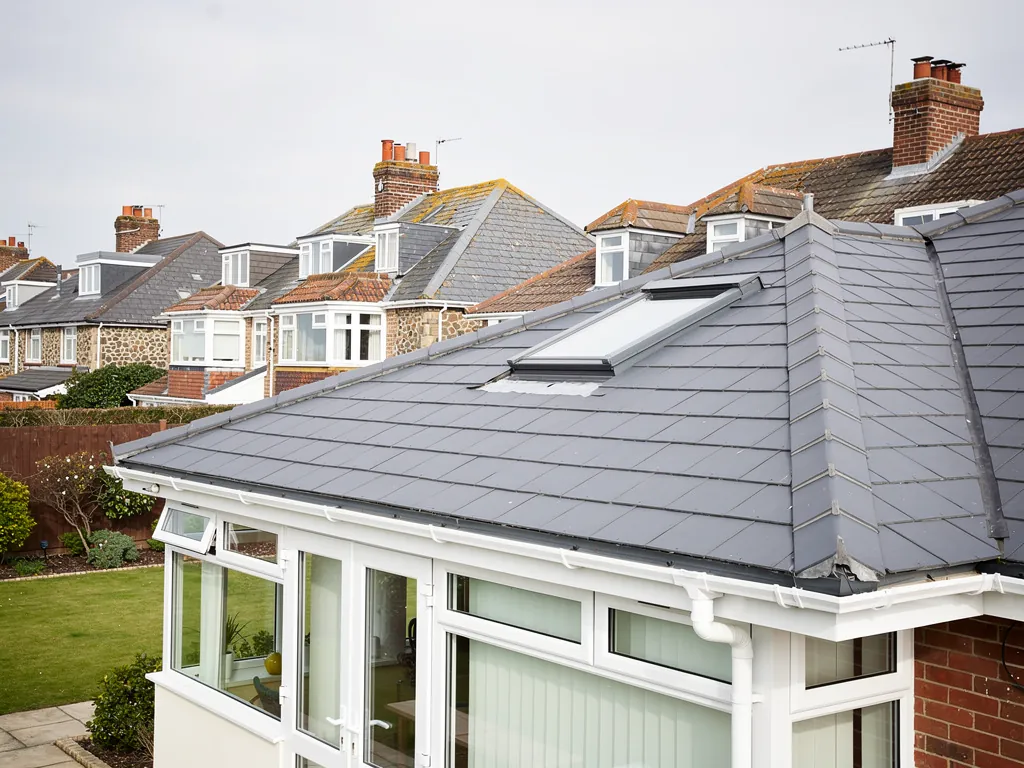
A conservatory roof loses heat in winter and gathers it in summer, because there is very little between the room and the sky. Insulation is the cure, but it comes in forms that differ enormously in cost, effort and result. Some are a weekend job. Some are a new roof.
There are three broad routes. You can add something to the inside of the roof you have: a thermal liner, blinds, a film. You can swap the infill for insulated panels while keeping the bars. Or you can replace the roof with a solid, insulated one, usually tiled, which changes the room more than anything else.
This guide takes each in turn and says what it can and cannot do. It covers the energy rules that apply when a roof is replaced, the condensation risk that follows badly done insulation, and what the VAT and grant position looks like at the time of writing. No national figure exists for what insulation costs on a conservatory roof, so the price depends on the route and the survey, and is given as one written total. The wider job is described on our conservatory roof replacement page.
Three ways to insulate, and what each can do
It helps to be clear what you are trying to achieve. Most owners want one or both of two things: a room that holds heat in winter, and a room that does not bake in summer. The routes below deliver different mixes of the two.
Add-on measures
Blinds, thermal liners fixed under the bars and solar-control film are the lightest touch. They are fitted without touching the roof structure, they can be removed, and they cost the least. They reduce glare and some heat gain, and a liner adds a layer of still air. They do not turn the roof into an insulated one.
Insulated panels
Here the infill between the bars is replaced with panels that have an insulating core. The frame stays, the bars usually stay, and the room keeps some character of the original. Daylight falls, as the panels are not clear.
A solid roof
The fullest answer is a new roof on its own structure, with insulation, a ceiling and a covering above. It is the only route that can bring the roof up to the standard the building rules set for new roofs. It also brings the most work and the most paperwork.
Our guide to solid and tiled conservatory roofs describes that last option in full, and a separate answer weighs blinds against insulation.
Blinds, liners and film: what to expect
These are the options people try first, and for good reason. They cost little, need no permission and make a visible difference on a sunny afternoon.
A roof blind sits under the bars and stops sunlight reaching the room. In summer that cuts heat gain and glare. In winter it can trap a pocket of air against the glass and reduce heat loss a little, as long as it is closed at dusk. Its limit is that it works on the sun, not on cold. A blind will not make a poorly insulated conservatory warm on a January evening.
Thermal liners go further. A foil-faced or quilted liner fixed beneath the bars adds a layer between the room and the roof. The risk is condensation. If warm, moist room air reaches cold glass or plastic behind the liner and cannot escape, moisture builds up out of sight. RICS makes the point in its consumer guide on spray foam: insulation that is badly installed can bring dampness with it, including condensation nobody controls. The same principle holds for any layer added to a roof that was not built for it.
Solar film works on heat gain and not heat loss. It is fixed to the glass, it cuts glare and some warmth from the sun, and it is hard to remove cleanly.
Whatever you add, leave a path for moisture to escape, and look behind it a few weeks after fitting for any sign of dampness.
Our separate answer on a conservatory that is too hot in summer and cold in winter looks at the same problem from the room's point of view.
Insulated panels in an existing frame
Replacing the infill with insulated panels sits in the middle ground. It is a recognised way to improve a polycarbonate roof when the frame is sound and you do not want a full conversion.
A panel of this kind is built like a sandwich, with an insulating core held between two skins. The room becomes quieter and steadier in temperature. Because the panels are not clear, the roof stops letting in daylight except where a roof window or a strip of glazing is added, so decide how much light the room needs before you choose.
The frame matters as much as the panel. Panels bear on the bars and are sealed along them, so bars that are corroded, bent or no longer true will let water in whatever the panel is made of. Weight matters too, because a panel with a core is heavier than a hollow plastic sheet. We assess the bars and their fixings at the survey and note any that need replacing.
The edges are the weak point
Where panels meet the ridge, the gutter and the house wall, the detail is what keeps the roof dry and the heat in. A gap at the wall or at the eaves defeats an otherwise good panel. We check flashing, trims and sealing as part of the job, and the photographs show what is there before and after.
If the old roof already leaks, deal with that first. Our guide on repairing or replacing a leaking conservatory roof sets out how to tell where the water comes in.
A solid roof and the energy rules
Fitting a solid roof is where insulation stops being an upgrade and becomes a requirement. The Planning Portal's conservatory roof FAQ expects a replacement roof to satisfy Building Regulations on structure, energy performance and ventilation. The application goes to your council's building control team or a registered building control approver, and the roof is designed to pass.
For energy, Approved Document L is the reference. In the 2021 edition, Table 4.2 gives a new or replacement roof in an existing dwelling a limiting U-value of 0.15 W/(m²·K), the figure that measures how quickly heat passes through a construction. A lower number means a warmer roof. From 24 March 2027 the 2026 edition applies, with the same figure in Table 3.2. Rooflights have a limit of 2.2 and roof windows 1.4, or Window Energy Rating Band B.
The rules also say when an existing element must be upgraded. Where more than 50% of the surface of a thermal element is renovated, or where renovation covers more than 25% of the building's external envelope, the upgrade requirements are triggered. How all that applies to a conservatory depends on how it is joined to the house, which is a question for building control before design is fixed.
Ventilation and moisture
An insulated solid roof must also manage moisture. BS 5250, which sets out how to manage moisture in buildings, is the reference, and the detail depends on the build-up of the roof. Our answer on ventilation in a solid conservatory roof deals with it.
Quick products, and the questions to put to a seller
Insulation is sold hard in the autumn, and several products promise a warm conservatory in a day. Some are sensible. Some solve a different problem from the one you have. A handful of questions sort them.
First, does the product deal with heat loss, heat gain or both? A reflective film or a blind answers summer glare. It does little for a January evening. A foil-faced liner answers heat loss a little, but it adds nothing to the roof's structure and it can hide a leak behind it until the stain reaches the ceiling.
Second, where does the moisture go? Any layer that sits tight under a cold roof can trap damp air behind it. Ask the seller to show you the route for ventilation, and be wary of any answer that amounts to sealing everything up.
Foam sprayed under the roof
Sprayed foam is sold as a quick fix from below, and it carries consequences that do not show on the day. RICS has published consumer guidance on it, and in November 2024 some lenders were refusing loans on homes with foam installed, while others decided case by case. For those reasons, we treat foam as a decision to take with your mortgage provider and your surveyor before anyone sprays, and not as a quick conservatory upgrade. Fix any leak first, because foam over a leaking roof hides the evidence. Our spray foam pages go into the lender and survey questions.
The third question
What does it do to the frame? Something that adds weight, blocks the bars' drainage or stops the gaskets moving can cause problems in a few winters. A good seller answers all three questions in writing, and a cautious one is happy to wait for the survey. A roof that needs insulation badly may also need replacing, and the quickest fix is not always the lowest bill over ten winters.
VAT, grants and the written quote
Tax and grants are the two questions owners expect to have easy answers. They do not.
VAT
Work on a conservatory roof is taxed at the standard VAT rate of 20%. Under VAT Notice 708/6, installing listed energy-saving materials is zero-rated between 1 May 2023 and 31 March 2027, and from the next day the reduced 5% rate applies. Insulation for roofs or lofts is on the list. Whether your job counts depends on the way the work is supplied, because a mixed job can be treated as one standard-rated supply. Because of that, the quote itself sets out how the tax applies to your job.
Grants
Most households will not find a grant for a conservatory roof. The Great British Insulation Scheme has ended, ECO4 runs only until 31 December 2026, and the schemes that remain fund insulation of lofts, walls and floors, not conservatory roofs. The gov.uk pages list what is open, and Arun District Council can say what local help exists for low-income or disabled households. We cover the position in our answer on grants for a conservatory roof.
The quote
After the survey comes the written quote, which states a single total. It names the route we propose, the insulation build-up, the covering and any wall or gutter work, and it comes with the survey photographs. For a sense of the wider cost picture, see our conservatory roof cost guide.
Questions
Insulating a conservatory roof
Will insulating the roof stop condensation in my conservatory?
It can reduce it, because a warmer roof surface means less cold glass for damp air to meet. It can also cause it, if insulation is fitted so that moisture is trapped behind it. Ventilation and the roof build-up matter. If condensation is your main complaint, ask for the cause to be identified before you pay for insulation.
Do I need Building Regulations approval to insulate a conservatory roof?
Adding blinds or a liner is a different matter from replacing the roof. The Planning Portal expects a replacement conservatory roof to satisfy Building Regulations, so a solid roof needs an application. Ask your council's building control team or a registered building control approver about anything between the two, such as new insulated panels.
Is an insulated conservatory roof worth it if the walls and glazing are poor?
It helps, but the room can only be as warm as its weakest part. Failed seals in windows, a draughty door or an uninsulated floor will still lose heat. A survey looks at the whole room, and the roof is often the largest surface, so improving it can make the biggest single change.