
Listed and conservation-area roofs · 9 min read
Emergency repairs on listed and conservation-area roofs
A roof that is open to the weather cannot wait for paperwork, yet a listed or protected roof has rules. Here is how to protect the building first and stay on the right side of the consent routes.
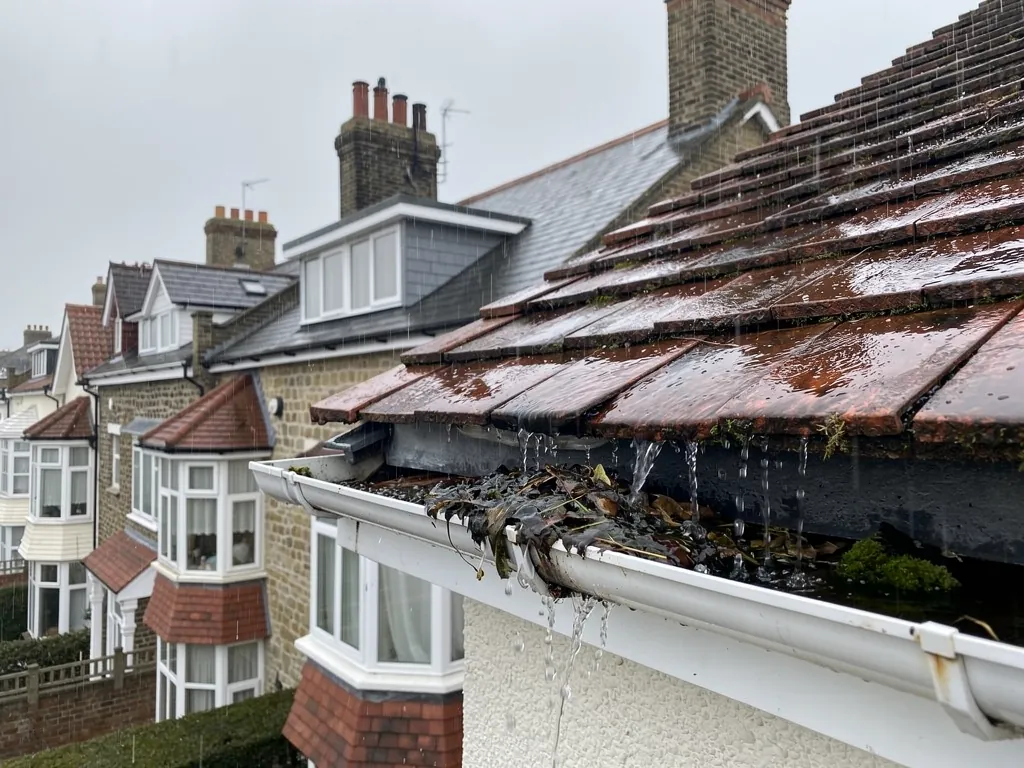
Water is coming through a ceiling, and the house is listed, or it stands inside a conservation area. Two instincts pull against each other. One says to get something over the hole tonight. The other says you are not allowed to touch the roof without permission. Both have something to them, and neither is the whole answer.
The law treats protecting a building from further harm very differently from changing how it looks or how it is built. A temporary cover that comes off again leaves the roof as it was. A new slate in a different colour, a swapped chimney pot or a replacement covering in another material is a change, and changes to protected buildings are where owners get into trouble. The trick is to know which side of that line a job falls on before the first ladder goes up.
Around Bognor Regis, Chichester, Arundel and the Downs villages, plenty of roofs sit under one protection or another. Below we explain how to keep the weather out first, which repairs usually need consent, who to ask and how matching materials work. The rest of our advice on urgent jobs sits on the emergency roof repairs page.
Protect the building first, then ask the questions
The sensible order when a protected roof is open to the rain is simple. Stop further damage, record what has happened, then sort out the repair. The first move is the same as for any other roof: get people safe and the water under control, because a wet interior makes everything that follows harder and dearer to put right.
For a roof that is leaking, that usually means a temporary weatherproof cover fixed so that it can be taken away again afterwards, with nothing cut out of old fabric to anchor it. Heritage buildings tend to have timber that is old, soft and irreplaceable, and a screw driven through a historic rafter does lasting harm. A good make-safe on a listed roof leans on weights, battens clamped to sound timber and covers that wrap over the ridge rather than through the structure.
Our page on what a roof make-safe involves explains how a cover goes on. On a protected building the difference is restraint: we fix as little as possible, and we leave everything else as we found it.
Keep what comes off
If tiles, slates, pots or lead have come down, do not sweep them into a skip. Pick up what is whole, bag the fragments and keep them dry. Old handmade tiles and reclaimed slates are often the best match for the repair, and the broken pieces tell the roofer the size, colour and thickness to look for. Photograph the debris where it fell, the gap it left and the state of the timbers beneath before anyone covers them. Those pictures are useful to the conservation officer, to your insurer and to whoever draws up the repair.
What makes a listed building different
A listed building is protected as a whole, and that includes the roof, the chimneys and often the features inside. The Planning (Listed Buildings and Conservation Areas) Act 1990, section 7, stops anyone demolishing a listed building, or altering or extending it in a way that touches the character earning it that listing, unless the works are authorised. Going ahead without authority is a serious risk, which is why the question deserves asking before the work, not after.
That wording looks alarming, but it is aimed at changes, not at keeping the rain out. The National Park Authority's guidance for owners states the everyday position: ordinary maintenance, and minor repairs done like for like where the fabric stands, do not need listed building consent. That is a useful benchmark wherever the house is. Swapping a few slipped slates for matching slates, in the same places, is that kind of repair. Taking the whole slope off and recovering it in a different material is not.
Where the line sits
Most owners are worried about the middle ground. Is a replacement ridge in a new style a repair? Is relaying a slope with sound slates reused a repair? Those are the questions to take to the council's conservation officer before the work starts, not after, and a short email with photographs is usually enough to start the conversation. The answer depends on the building, the listing description and what the work does to its character, and no general guide can settle it for your roof.
Our companion page on re-roofing a listed building covers the larger jobs where a full consent application is clearly needed.
Conservation areas and the extra controls
A conservation area protects the street or district rather than one house. Many houses in these areas are not listed at all, and ordinary repair work on them proceeds as normal. What changes is that the council has an interest in how roofs look from the public side, and in some places it has taken away certain permitted development rights with an Article 4 direction.
Around Bognor the picture is gentler than people expect. Arun District Council's conservation area pages show no Article 4 direction removing roof rights in its Bognor conservation areas. Aldwick's Craigweil House area has a direction too, but it deals with enclosing verges and hard surfaces in front gardens, and a separate direction on houses in multiple occupation concerns change of use. Elsewhere it differs: Portsmouth's Old Portsmouth direction, made on 3 August 2006, covers chimney stacks and the replacement of roof cladding on the main elevation fronting a highway, and Havant has one in Langstone dealing with roof alterations that face the highway. For Chichester, ask the council directly, because we do not know what its directions cover.
The Bognor conservation areas
Council records date The Steyne and Waterloo Square to August 1979, with Waterloo Square added in July 1994. Aldwick Road followed in July 1994, and September 1994 saw the Railway Station area designated. Upper Bognor Road and Mead Lane, beside Hotham Park, came in June 1993. At Aldwick, the Craigweil House area was designated on 15 April 2009. Felpham village dates from February 1985, and North Bersted from February 1975. If your roof sits in one of these, our guide to roof repairs in a conservation area goes into the day-to-day rules.
Who to ask, and how quickly
For most of the area the first call is the district or borough council. West Sussex County Council's own guide to who does what says district and borough councils deal with building regulations and building control, listed buildings and conservation areas. Arun District Council publishes a conservation officer's email address, conservation.officer@arun.gov.uk, for exactly these questions.
Inside the South Downs National Park the body that decides differs from place to place. In the Arun, Horsham, Adur and Worthing sections the Authority takes planning applications itself. On the Chichester, East Hampshire and Winchester sides, you deal with the local district council, which acts for the Authority. Building control stays with the district council wherever you are in the Park, and Arun says the Park is responsible for any conservation areas lying inside its boundary.
Chichester Harbour
Properties around Bosham, Fishbourne and Emsworth may lie within the Chichester Harbour National Landscape, a title that replaced Area of Outstanding Natural Beauty in 2023. The designation itself dates from 4 February 1964. It does not make a house listed, but it affects what householders can do without a planning application, so ask the council before any change that alters how the roof looks, and do not assume the answer is the same as for a house a mile inland.
A phone call or email with two or three photographs usually gets a quick steer from a conservation officer on what counts as maintenance. Say clearly that rain is getting in, and ask what temporary measures they are content with while consent is dealt with. Keep a note of who you spoke to and when.
Churches, chapels and scheduled monuments
Not every protected roof belongs to a house. Chapels, parish churches and monuments carry their own routes, and getting the route wrong is an easy mistake to make.
A working Church of England church skips listed building consent and goes through the Church's own faculty system instead. The Roman Catholic and Methodist denominations, and the Baptist Union Corporation where it holds the building, run their own approval processes. The United Reformed Church does the same for buildings on the specified trusts. Other faiths, including Quakers and Unitarians, are not exempt and apply to the local planning authority for listed building consent. Where a church has stopped holding services, or has passed to the Churches Conservation Trust, the exemption ends and the usual listed building consent route takes over.
The exemption does not stretch to everything. Government guidance adds a caution: work that alters the outer face of a listed church or chapel can still require planning permission, whatever the denomination. It is also not an exemption from scheduled monument consent, which applies to anything standing on a scheduled site, including some churchyard structures. Works to those without authority are an offence under the Ancient Monuments and Archaeological Areas Act 1979.
What this means in an emergency
For a church roof that is leaking, the sensible steps are the same: cover it, record it and contact the people responsible for the building's approvals straight away. Ask the denomination's own property team, or the council for non-exempt churches, what temporary works are acceptable. We deal with the roofing side, and we will work to whatever the responsible body agrees, including its choice of materials and method.
Matching materials, insurance and the written quote
When the building is safe and the consent route is clear, the repair itself turns on matching. Arun's appraisal for Aldwick Road regrets that slate was so often swapped for concrete interlocking tiles, and it wants the original roofing brought back. For The Steyne and Waterloo Square the council looks for a return to natural slate or plain clay tiles wherever modern substitutes crept in, and it counts the chimneys among the skyline's important features.
That tells you what the council is likely to expect on a seafront terrace: natural slate or plain clay, reusing sound originals where possible, and chimneys kept. On the interwar estates in Aldwick, Arun's own material describes plain clay-tiled roofs. Our guide to slate roofing shows how a slate repair is carried out and what drives its cost.
Insurance and costs
Tell your insurer first, as Which? advises, then make the roof safe, and keep photographs and receipts for any temporary work. Check your policy, because cover for listed buildings can carry its own terms. If scaffolding will stand on the pavement, the scaffold company, not the householder, takes out the licence. West Sussex County Council wants at least 10 working days' notice and charges £266 for one month, so a temporary cover often goes on first.
Our survey ends with a verdict and photographs of your own roof. You then receive the price in writing as a single sum. On a protected roof, we say at the start which parts of the work we think need the council's view, so you can ask them in parallel instead of waiting. That saves weeks when the weather is turning.
Questions
Listed and protected roofs in an emergency
Can I put a tarpaulin on a listed roof without permission?
A temporary cover that protects the building and comes off again without leaving a mark is a different thing from altering it. Use weights and clamps rather than fixings through old timber, and photograph the roof before and after. Tell the conservation officer what you have done and ask whether they want anything further while the permanent repair is sorted out.
Do I need listed building consent to replace a few slipped slates?
The National Park Authority's guidance treats ordinary maintenance and small repairs matching the existing, done where the fabric stands, as work needing no consent. Putting back a few slipped slates with matching ones, in the same spots, is that sort of job. If you are changing material, colour or detail, speak to the council's conservation officer first.
My house is in a conservation area but not listed. Do the same rules apply?
No. A conservation area protects the character of the place, not the fabric of each house, so routine repairs are far less restricted than on a listed building. Some areas have Article 4 directions that remove specific rights, though. Check with your council, because the directions differ from one area to the next.