
Soffits and fascias · 9 min read
Is it worth replacing soffits and fascias?
Sometimes tired-looking boards can be saved with a repair, and sometimes new ones are the cheaper route in the long run. Here is how to tell which, before anyone orders a scaffold.
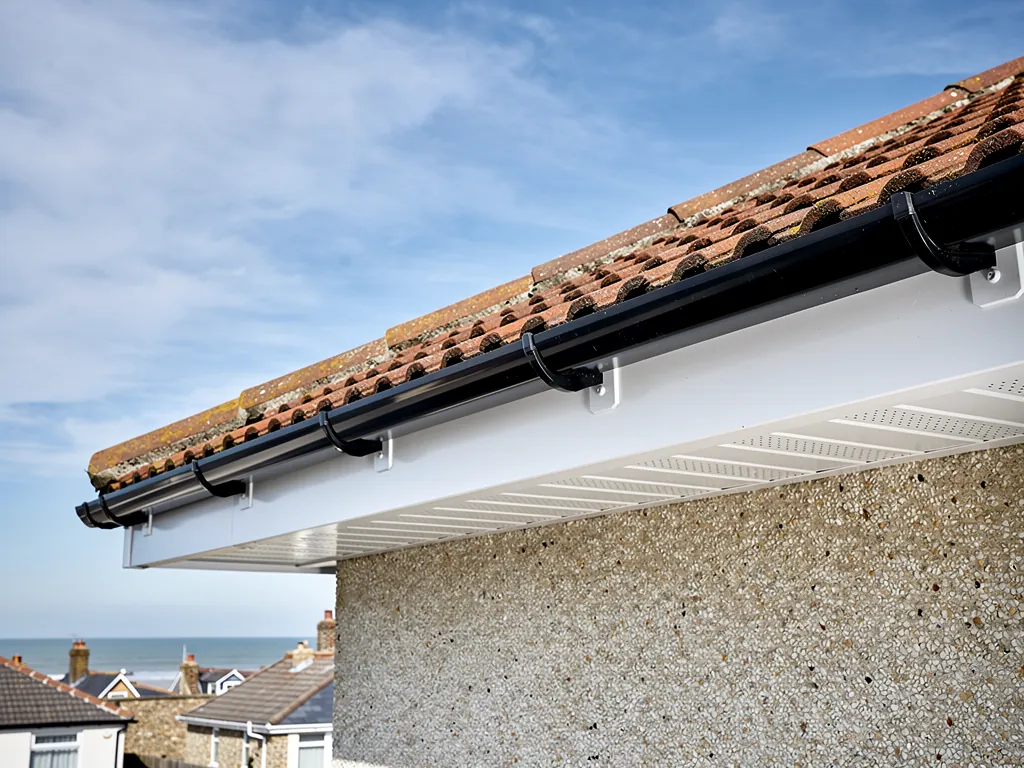
Boards along the edge of a roof are easy to ignore. They sit above eye level, they are painted white or brown, and nothing seems to happen to them until a gutter starts to tilt or a bird moves into the eaves. By then the question is no longer whether to look, but whether the boards are worth saving.
That question has a plain answer in most cases, and it turns on one thing: is the timber or plastic still doing its job? A fascia board is there to carry the gutter and to close the ends of the rafters. A soffit is there to close the underside of the overhang. When they stop doing that, patching them is a short-term answer. When they are still sound and just dirty or faded, replacing them is money spent on looks alone.
This guide helps you sort your own boards into one of those camps. It covers what to look for, what repair and capping can and cannot achieve, when replacement pays back, and the checks to make on an older house first. The roofer's job is to give a straight answer once they have been up and photographed the problem, and this page helps you judge whether that answer is a fair one.
Reading the signs from the ground
A good deal shows without a ladder. Stand back from the house on a dry day and look along each edge of the roof. A healthy fascia runs straight. Look for a dip, a wave or a place where the board has pulled away from the wall. Where the line sags, the board is probably no longer being held by what is behind it.
Next, look at the finish. Paint that has blistered or peeled to bare grey timber has let water in. Black or green streaks that follow a joint mean water is sitting there. On plastic boards, look for yellowing, warped lengths or joints that have opened like a smile.
Now look at the gutter. If it tilts, overflows in the same spot every time, or has a brown stain on the wall under it, the fascia carrying it may have gone soft around the screws. Replacing the gutter alone then fixes nothing, because the new brackets would grip the same weak board.
Finally, look up at the soffit. Sagging panels, flaking paint and dark patches are the usual signs, and so is any gap where daylight or a sparrow could get in. Our answer on a soffit board coming loose goes into the causes.
The screwdriver test
A roofer on a ladder will press a screwdriver tip into the timber. Sound wood resists. Wet rot lets the point sink in, and the wood crumbles or feels like damp cardboard. That test, plus a photograph of what it shows, is what turns a hunch into a verdict, and you can ask to see those photographs.
What worn boards let in
It is worth knowing why the condition of boards matters, because it explains why a delay is not neutral. Water that runs off a roof is meant to end up in the gutter. When the board behind a gutter is soft, the gutter loses its slope and spills over the edge instead, and the spilled water runs down the wall or back into the eaves.
Once water reaches the eaves it works on the rafter ends, the lower ends of the rafters. A fascia that has been wet for years can hide rafter ends that are soft too. They are structural timber, and putting them right is a bigger job than swapping a board.
Gaps are the other problem. A missing section of soffit is an open door for wasps, squirrels and birds, and nesting material then blocks the air path that a roof may need to stay dry.
None of this means every worn board is an emergency. A flaking finish on a board that is still sound is a painting job. The point is that the cost of waiting grows when the board is already letting water through, because every wet season adds to what the final repair has to cover.
Damp inside the house
Overflow that runs down the outside wall can show up as damp patches inside, usually near the ceiling on an upstairs outer wall. A blocked or tilted gutter is a far more common cause than a roof fault, and it is worth ruling out first. Our page on guttering, soffits and fascias explains how the parts work together.
Where a repair is enough
Not every tired board needs replacing, and a fair roofer will say so. If the damage is a short length of rot at one corner, cutting out that piece and fitting a new section can be a sound repair. Timber fascias can be sanded, treated and repainted, which suits an older house where the original profile matters.
A plastic board that has simply lost a clip, or a joint that has opened, can often be refixed. A soffit panel that has come loose in one spot may only need new fixings or a replacement panel. These are small jobs, often done from a ladder, and cheap enough that replacing the whole run would be hard to justify.
Capping over the top
Fascia capping is the middle option: a thin plastic skin fitted over the existing boards. It gives a clean, uniform look and removes the need to repaint. It is a reasonable choice when the timber underneath is dry and firm, and the main problem is appearance.
The risk is that capping can hide a problem as well as cover it. If the board under the cap is soft, the cap will go on looking neat while the rot carries on. We would only suggest capping after pressing the timber and seeing it hold. Our answer on what fascia capping is and whether it is a good idea goes into this, and the guide to rotten fascia boards covers the repair, cap or replace choice for boards that have already failed.
A fair repair is one the roofer can show you in a photograph before and after, with the sound timber either side of the join.
When replacing pays for itself
Replacement makes sense when the boards are failing along most of their length, not just in one place. At that point repairing section after section costs more over time than starting again, and each repair leaves a joint that can fail.
Age is part of it. Checkatrade's guide says there is no fixed interval for replacing fascias and soffits. A retailer of uPVC boards, the Plastic Centre, says between 20 and 40 years, a seller's view that sits at the optimistic end. If your boards are original to a house that is more than a few decades old, they are probably past the point where repair is a sensible spend.
The sum includes access. A fresh set of boards needs a scaffold, tower or good ladder access, and Checkatrade's October 2026 scaffolding table has £875 as the monthly hire for a semi and £1,200 for a detached house. If the gutters also need replacing, or the roof edge needs work, doing it all under the one scaffold avoids paying for access twice. That is the argument behind our guide to replacing soffits, fascias and gutters together.
What it costs
The national guide from Checkatrade works out at roughly £150 a metre for fascias and soffits, a UK average rather than a quote. Our guide to what soffits and fascias should cost shows how the length of the roofline turns it into a price.
Set that against the alternative. A board that fails again in three years, after a repair, costs you the repair and then the replacement. A set of boards that lasts a couple of decades, fitted while the scaffold is already up, is the cheaper path per year, even though it looks the larger bill on the day.
Period houses, conservation areas and listed buildings
On a standard modern house, replacing like for like does not usually raise planning questions. The Town and Country Planning Act 1990, in section 55(2)(a), carves out works that leave a building's outward appearance materially unchanged, so they are not development. Swapping a white board for another of the same shape fits that.
The picture changes when the house has special status. Listed building consent is required for alterations that would affect a listed building's character, while the South Downs National Park Authority notes that this consent is not needed for upkeep, nor for small repairs that copy what is already there. A change of material or profile is a different matter. Timber boards replaced with plastic ones, or a moulded profile replaced with a flat one, might alter the character, so ask the council before work starts.
In a conservation area, the same caution applies to any change of look. Bognor has several, including Aldwick Road and the village of Felpham. Check with Arun District Council's planning team whether a proposed change needs permission. A short email beforehand costs less than undoing a board that should not have been changed.
Matching what is there
On a period house, the practical answer is usually to copy the existing profile exactly. Timber is the safe choice where the originals were timber, and a roofer who can match the moulding is worth waiting for. Where the house is of a later date and the council has no interest, plastic is the common and sensible option.
If you are unsure which category your house falls in, ask the council first. We can tell you what we see on the roof and photograph the existing profile so you have it to hand when you write.
Checks before you commit: age, air and the quote
Three checks are worth making before you say yes to replacement. The first is the age of the house. HSE says to treat a house built or refurbished before 2000 as if it contains asbestos, and its list of places to look includes external soffits. By eye it looks like an ordinary board. If your soffits might be that material, they should be identified before they are drilled or removed, and the plan follows the result.
The second is airflow. Many roofs need a path for air along the eaves, and replacing a vented soffit with a plain one can shut it off. Marley's guidance on cold roofs wants 25mm of gap at the eaves for 15 degrees or less, and 10mm for anything steeper, for a roof with a high-resistance underlay. A good roofer checks which kind of roof you have, and our answer on whether soffits need vents explains the reasoning.
The third is the paperwork. Ask for a written quote that says what is included, whether VAT is in, whether scaffold is in, and that old boards are taken away. VAT at the standard 20 per cent is added to any figure that leaves it out. A written quote follows the survey, carrying one total that we believe is good and fair.
What the survey should show you
A good survey gives you photographs of the actual boards: the soft corner, the open joint, the gutter pulling away. If the photographs show sound boards, a roofer who recommends full replacement owes you a reason. If they show failing ones, you can see the case for yourself. You can send your own photographs with an enquiry through our quote page and we will say what we think from them.
Questions
Before you replace the boards
Can I replace soffits and fascias without replacing the gutters?
Yes, but the gutters have to come off to release the fascia, so they are taken down and refitted, or replaced if they are tired. Refitting old gutters to new boards is common where the gutter is sound. It is worth deciding both at once, because the access is the same either way.
How long should new fascias and soffits last?
Views differ. Checkatrade says no firm rule applies, while a uPVC board retailer says 20 to 40 years. That is not a promise. How long a set lasts depends on the quality of the boards, how well they were fitted, how well the gutters above them work, and how the house is maintained.
Will new boards stop birds and wasps getting into my eaves?
Tight joints and sound soffits close the gaps they use, so well-fitted boards help. They cannot help if an animal is already living there. Roosting bats and active nests are protected, and any sign of either under the overhang means the next step is settled before a board comes off.