
Listed buildings and churches · 9 min read
Leadwork on listed buildings and churches
How lead repairs are treated on listed houses and places of worship around Bognor Regis and Chichester: who gives consent, what counts as repair, and how new lead is matched to the old.
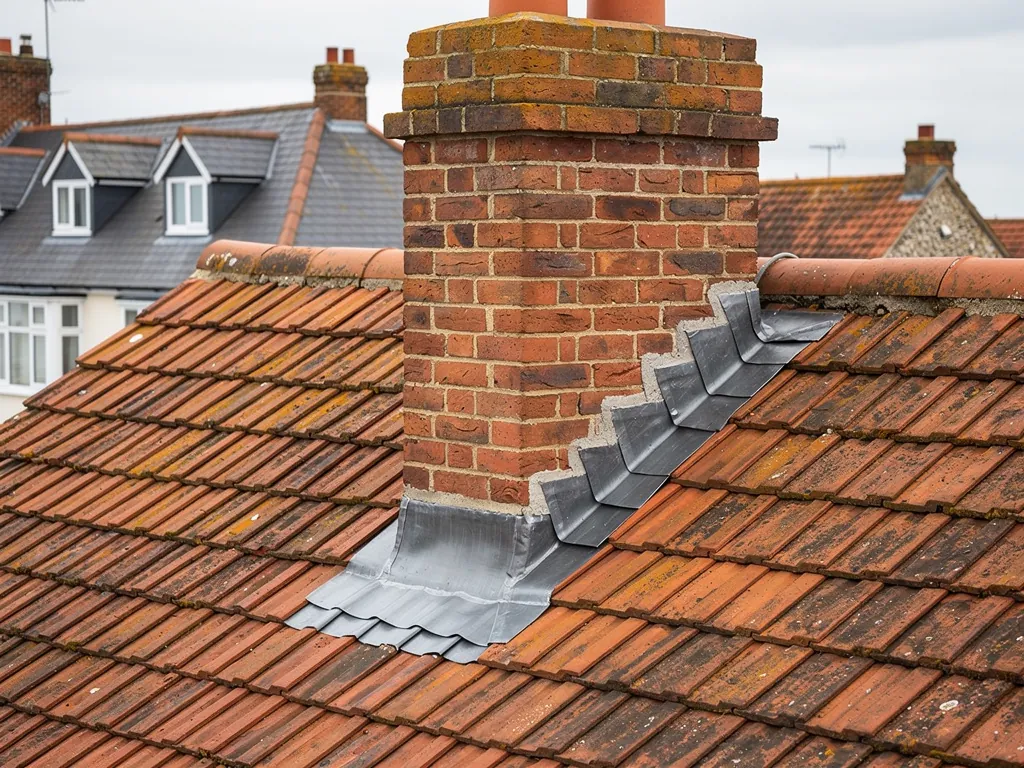
Old roofs are where lead earns its keep. Chimney flashings, valley gutters, parapet linings and the sheet covering a church aisle are all lead, and plenty of it has been in place for generations. When that lead fails, the owner of a listed building has a question an ordinary homeowner does not: am I allowed to touch it, and who says so?
The answer turns on what the work is. Replacing a worn flashing with the same metal in the same detail is a different thing in law from changing the material, the profile or the look of a roof. Churches add a second layer, because some are exempt from the normal listed building system and follow their own, while others are not exempt at all.
This guide sets out the consent routes as the legislation and the national guidance describe them, then turns to the practical side: reading the lead already on a roof, matching it, and getting safe access to a historic building. It cannot replace advice from the council's conservation officer, who decides what your building needs. We explain consent before a job starts, and the quote we write after a survey carries a single total.
When lead repairs on a listed building need consent
Section 7 of the Planning (Listed Buildings and Conservation Areas) Act 1990 is the starting point. Put simply, nobody may demolish a listed building, or alter it where that harms what makes it special, without proper authority. The test is character. A repair that leaves the roof looking and behaving as it did sits on one side of that test, and a change to it sits on the other.
The South Downs National Park Authority gives a practical reading. Its listed buildings page puts everyday maintenance and minor like for like work done in situ outside listed building consent. Swapping a split flashing for new lead of the same type, laid the same way, is the kind of job that wording describes.
Where repair becomes alteration
Several changes tip a job across the line. Switching lead for another metal, inventing a flashing detail that never existed, raising a gutter, resizing a chimney or covering a lead roof in a different membrane all alter how the roof looks and works. Those need consent from the local planning authority before anyone starts, so the paperwork comes first and the scaffold second.
Because the word minor is a judgement, the sensible move is to ask. Describe the work to the council's conservation team, attach photographs, and keep the reply. Arun District Council lists an email for its conservation officer on its conservation areas page.
When you are unsure whether lead work counts as repair or alteration, put the question to the council early, with photographs.
Protected species can matter as well. All bat species and their roosts are protected, and GOV.UK lists roof repair as work that can disturb them, so mention any droppings or sightings around the roof space to your roofer.
Churches and chapels: which consent route applies
A listed church is not always dealt with by the council. Section 60 of the 1990 Act sets aside the listed building controls for an ecclesiastical building in regular use for worship, and a 2010 order decides which denominations qualify. The Department for Culture, Media and Sport guidance says no other faiths or denominations currently benefit. The routes run like this:
| Building | Route for works to the listed building |
|---|---|
| Church of England church in use | Exempt; a faculty from the diocese |
| Roman Catholic church in use | Exempt; the denomination's own procedure |
| Methodist church in use | Exempt; the denomination's own procedure |
| Baptist church in use | Exempt only where held by a named Schedule 1 trust corporation; own procedure |
| United Reformed Church in use | Exempt if on the specified trusts |
| Unitarian, Quaker or any other faith | Not exempt; listed building consent from the council |
| Closed Church of England church | Normal listed building and conservation area controls |
| Church vested in the Churches Conservation Trust | Listed building consent from the council |
Two further points catch people out. The exemption stops short of planning permission where a project changes a listed church's exterior. And a scheduled monument in a churchyard needs its own scheduled monument consent, which the Secretary of State grants and no denominational procedure replaces.
For Methodist, Baptist and United Reformed churches, the approval process belongs to the denomination, and the church's trustees can confirm the right contact, and it is worth asking them before the roof is surveyed so nothing is ordered ahead of approval. For a Church of England roof, we can supply the photographs and a written specification that a faculty application draws on.
Reading and matching the lead that is already there
Good conservation practice on a lead roof begins with finding out what is there. Each code number stands for a sheet thickness and weight, and the Royston Lead brochure tabulates them. Code 3, at 1.32 mm, is recommended for soakers only. Code 4, at 1.80 mm, is listed against soakers, flashings, dormers and pitched valley gutters. Codes 5 and 6, at 2.24 mm and 2.65 mm, take in parapet and box gutters too. Codes 7 and 8 are the heavy end, for the biggest gutters.
On a listed roof the aim is to follow the original build, so we check the existing sheet on the survey, note where it has thinned or split, and propose a code and method to suit the position. A parapet gutter that has carried water off a church roof for a long time may call for a heavier code than a short chimney flashing, and the two should not be treated alike.
How long old lead lasts
Published lifespans are generous. MyJobQuote, in a guide last updated on 22 September 2026, says flashing can last for over 80 years, and Less quotes 50 to 100 years for a lead flat roof. Treat those as typical ranges, not promises. They do explain why so much historic lead still works, and why the right repair is so often a local one: renew the failed stretch and leave sound sheet alone.
Where a covering has been patched many times with mastic or flashing tape, the patches are worth recording. They show where water has been entering and tell the surveyor where to look. Our guide to lead codes sets the thickness table out in full, and the page on lead flashing covers the commonest repair.
Historic roofs in Bognor, Aldwick and the Downs
Bognor's older streets give lead plenty to do. The Arun District Council conservation area guidance (adopted October 2000) calls The Steyne, which dates from the 1820s, an area of modest terraces with bay windows and balconies, and singles out chimneys as features of the skyline. Each of those stacks and bays has lead tucked around it.
On Aldwick Road, the same guidance describes imposing early 19th century, Victorian and Edwardian terraces built of stucco, slate and flint. It records that slate was often swapped for concrete interlocking tiles there, and its advice is to restore original roofing materials. Lead repairs on such a roof should sit comfortably beside the slate.
At Craigweil in Aldwick, the council's statement for the 1930s estate records leaded porch roofs at Wychwood, constructed from 1934, alongside plain clay tiled roofs. Silvergates, also built in 1934, is Grade 2 listed. On Upper Bognor Road, Nos. 45 and 47 are the oldest of Sir Richard Hotham's late 18th century buildings, dating from about 1787.
Who decides in the National Park
North of Bognor the South Downs National Park changes the picture. In the Arun, Horsham, Adur and Worthing areas of the Park, planning sits with the Authority directly, whereas the Chichester and East Hampshire councils process applications for their own areas on its behalf. Building control stays with the district. For a listed cottage near Midhurst or a flint farmhouse above Arundel, find out which body applies before you write to anyone.
Chichester District Council covers the city, Bosham and the harbour villages, and its planning team can tell you which controls apply to a particular street or house.
Access and scaffolding on a historic building
Reaching old lead safely is often the biggest part of the job. A tall nave, a high parapet and a steep roof behind a street frontage all call for a scaffold or a tower, and the historic fabric needs protecting while it stands. Boards and fixings are planned so that stone, render and old brick are not marked.
Checkatrade's scaffolding table, updated in October 2026, shows how much access can weigh: around £875 per month for a two-storey semi, £1,000 for a detached bungalow, and about £660 for a week of chimney scaffold. A church or manor house sits outside those domestic figures, and a scaffold for one is a job of its own, designed to the building.
The scaffold licence
Where the poles stand over a public footway or road, a section 169 licence under the Highways Act 1980 is needed. In West Sussex the county council issues it, wanting 10 working days' notice and charging £266 for a month. Across the Hampshire border, the county there needs ten clear working days at £211.90 for a first fortnight, and Portsmouth acts as its own highway authority. On a listed street, put that waiting time in the timetable beside any consent.
The sums on small jobs are telling. MyJobQuote prices a full chimney lead at £350 to £460 without a scaffold and £700 to £920 with one, so access can double a small bill. Read them as national typical ranges, and never as the price of your own roof.
We survey the roof, photograph the lead and then send the written quote as one total figure. When you weigh up quotes, ask each roofer whether it includes the scaffold and VAT, which is charged at the standard 20 per cent.
Questions to settle before lead work starts
A listed roof job goes smoothly when the paperwork and the roof are looked at together. Before anyone orders lead, it helps to have clear answers to a short list of questions.
- Is the building listed, in a conservation area, or in the National Park, and which authority decides?
- Is the work a like for like repair, or does it change the material, the detail or the appearance?
- If it is a place of worship, is it in use, and which denomination or trust owns it?
- Is there a scheduled monument in the churchyard or grounds?
- What code and method does the existing lead suggest, and has the roof been photographed before work begins?
- Who applies for the scaffold licence, and how much notice does the highway authority need?
Write the answers down and keep them with the building records, alongside the photographs from the survey and any letters from the council, so the next owner or surveyor can see what was agreed. A conservation officer, a diocesan secretary or a trustee will usually answer a short email with photographs faster than a phone call.
When we survey, we study the whole lead system and not only the leak. Flashings, gutters, fixings and the boards beneath show whether patching will last, or whether a longer run needs renewing. You get a plain verdict first, repair, patch or replace, and we favour the lightest job that puts the fault right.
For a fuller view of pricing, see the guide to lead roofing cost, and for the whole service the lead roofing and leadwork page.
Questions
Listed roof and church lead queries
Can I replace a failed lead flashing on a listed cottage without asking anyone?
Possibly, though check first. The South Downs National Park Authority guidance does not require listed building consent for everyday upkeep and small repairs that match what is there, but changing the metal, the detail or the appearance does. Send the conservation officer a photograph with a brief note of the work, and keep the reply on file.
Is a Methodist chapel treated the same way as a Church of England church?
Not exactly. Both are exempt from listed building consent while in use for worship, yet Anglican churches go through a faculty and Methodist ones through their own denomination's process. Work on the outside can still need planning permission, and a closed church falls under the ordinary controls.
Who do I contact about lead repairs on a listed house inside the South Downs?
It turns on where the house sits. Parishes inside the Park in Arun, Horsham, Adur and Worthing go to the Park Authority itself, while those in Chichester or East Hampshire go to the district council acting for it. Building control stays with the district, so ask the authority covering your parish.