
Winter ridge work · 9 min read
Can ridge tiles be rebedded in winter?
Yes, in the right conditions, and a dry-fix ridge can go on in weather that would spoil fresh mortar. This guide explains what winter does to a bedded ridge and how to decide whether to wait.
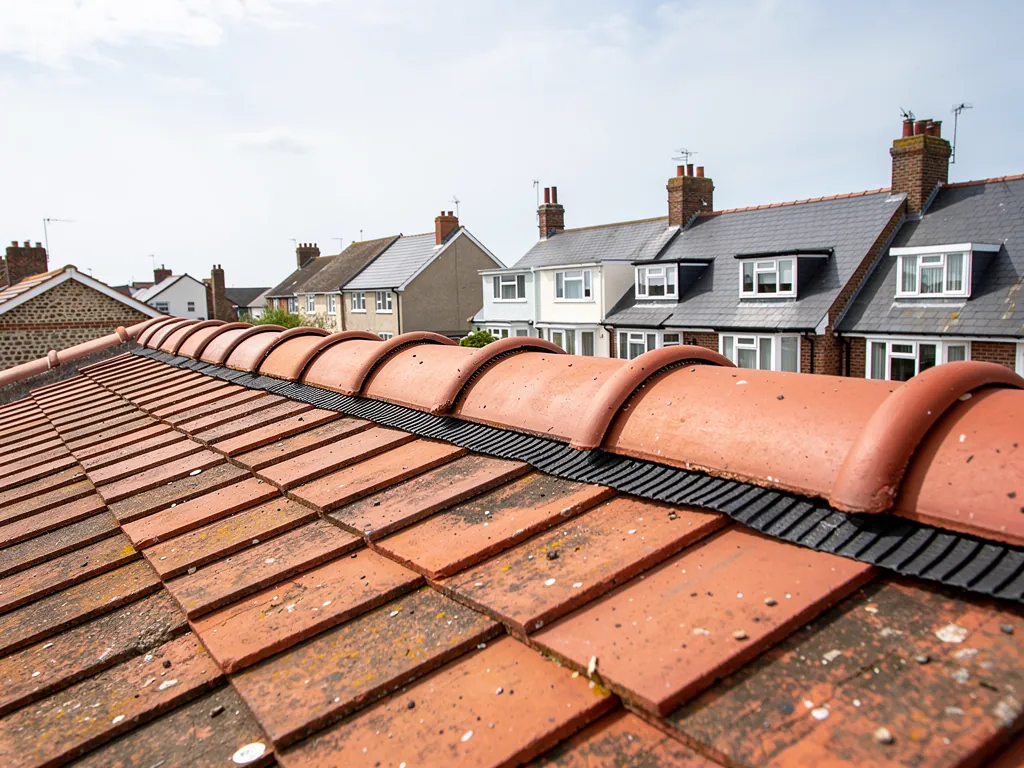
The tiles come loose in a gale in November and the question follows within a day: can this be done now, or does it have to wait until spring? Nobody wants to leave a loose ridge through December. Nobody wants to pay for a repair that cracks in January either.
The answer depends on the method as much as the month. Rebedding a ridge in mortar is a wet job. The mortar has to go on, bond and set without being washed, frozen or dried too fast. A dry-fix ridge uses screws, clips and a batten, and it is far less fussy about the weather on the day. Between those two sits a spread of days, some good for roof work and some not.
A roofer working on an exposed Sussex roof in winter also has to think about wind, wet slates and daylight, which have nothing to do with mortar and everything to do with doing the job safely. This guide sets out how each factor works, how the choice between waiting and acting is made, and how a loose ridge can be made safe in the meantime. For the wider picture of the work, see our ridge tile repairs page.
What cold, wet and frost do to fresh mortar
Mortar sets by a chemical reaction, and it needs two things to do it well: water that stays in the mix long enough for the reaction to finish, and time. Winter interferes with both.
Rain is the first problem. Fresh mortar on a ridge is exposed on the very top of the roof. A shower soon after it goes on can wash cement from the surface of the joint, leaving it weak and sandy. A dull, wet day is not the same as a downpour, and a roofer can cover a short ridge run against light showers, but heavy or driving rain is a reason to stop.
Cold is the second. Mortar sets more slowly in cold air. In a mild, damp spell it will still get there, only slower. Frost is a different matter, because water in a fresh joint that freezes expands and can break up the bond before it has formed. A bed that froze in its first night can look fine for a few weeks and then crumble. This is why roofers watch the overnight forecast as well as the daytime one.
A third problem is the opposite of rain. Strong winter sun and wind can dry a thin mortar bed too quickly, so it shrinks and cracks. This is rarer than the other two on a mid-winter roof but common on a bright, breezy day.
None of this is dramatic. It means mortar work is done in the gaps between bad weather, with the mix protected and the fresh joint covered. Our guide to how long ridge mortar lasts looks at the life of a joint once it is done.
The honest summary is that a mortar ridge can be rebedded in winter, but only on a day when the weather allows it, and a roofer who says otherwise is not telling you everything. A bed laid in poor weather is the kind that comes back as a call-out in the spring.
How a dry-fix ridge changes the answer
A dry-fix ridge replaces the mortar bed with a mechanical system. Along the apex goes a batten; the ridge tiles then fasten to it with screws or clips, and a roll of flexible material fills the gap below. There is nothing to cure and nothing to wash out.
That is a real advantage in winter. A light shower will not spoil it, and a cold night will not damage it, since no wet material is waiting to set. The limiting factors become wind, ice on the slates and the available daylight, which affect the roofer rather than the work.
A kit made to BS 8612:2018 has passed the tests that standard sets for ridge, hip and verge products that are fixed dry, which is worth asking about. Marley's reading of the 2014 revision of BS 5534 is that a mortar bed by itself will not be enough to keep ridge and hip tiles in place, which is one reason dry systems are widely used.
A dry-fix ridge is not the right answer for every roof. On a period house with handmade clay, the profile of a kit may not suit, and on a listed building consent may be needed first. Our guide to dry ridge systems goes through how they work, and our comparison of repointing against dry ridge weighs the two approaches.
Where mortar still comes in
Even with a dry system, a small amount of mortar or sealant may be used at the ends or where the ridge meets a hip. That is a small job that can be timed for a better hour of the day, so it need not hold up the rest.
If the loose ridge is on a roof where a dry system suits, the winter question often has a simple answer: it can go ahead.
Weather and safety on the roof itself
Mortar is only half the story. A roof in winter is a harder place to work, and some days are not right whatever is being laid.
Wind comes first. No part of the roof takes more wind than the ridge, and working up there in a strong gust is dangerous for the roofer and anyone below. Tiles and mortar can be carried off the roof, and ladders and towers move. On this coast a still day in winter is worth taking.
Wet and frost on the slope are next. A damp slate or tile is slippery, and a frosted one more so. Roof ladders and crawling boards help, but there are mornings when the surface simply is not safe until the sun has been on it. Waiting a few hours can be the right call.
Short days limit the work too. A ridge run is best done in one visit, so the bed is not left half done overnight. If the daylight cannot cover the whole run, it is better to start on a longer day or fix the loose section only and finish later.
Access matters as well. Where a ladder cannot reach safely, a tower or scaffold is needed. Under section 169 of the Highways Act 1980 scaffolding that blocks part of the highway needs a licence, from the highway authority: West Sussex County Council wants at least 10 working days' notice and Hampshire County Council ten clear working days. That wait can set the date more than the forecast does. Our guide to scaffolding for ridge tile repair covers when it is needed.
A roofer who turns up and then says the day is wrong is doing the job properly. We would rather rebook than lay a bed that will not hold.
Making a loose ridge safe until the weather turns
If a ridge has come loose in a storm and the weather will not let it be rebedded, the aim is to stop it getting worse. Storm damage and leaks come first in our diary, and stopping the water comes before the neat finish.
A temporary repair on a ridge might be one of several things. Loose tiles can be lifted off, stacked safely and the gap covered, or they can be fixed back with a mechanical fixing and weathered with a temporary seal. A dry-fix section can sometimes be put on a short run as a lasting repair. Sheeting or a tarpaulin held down with battens can cover a larger gap, though it needs checking after wind.
The point of a temporary measure is to keep water out and keep tiles from falling. It is not a final repair, and it should be photographed and written into the quote so you know what is still to be done.
The guidance from Which? and the Institution of Structural Engineers on storm damage is consistent. Tell your insurer as soon as possible, make a temporary repair if you must arrange one yourself, keep the receipts, and take photographs before anything is shifted. A roof that leaks through lack of upkeep falls into the wear-and-tear category in the Which? example, so be exact with your insurer about what happened and when. The policy and the cause decide the outcome.
Inside, stand a bucket beneath any drip and shift the furniture away. Stay off the roof yourself. A fall from a wet roof is a bigger problem than any ridge.
If a tile has come down, keep people and pets away from the spot until it has been cleared. A tile falling from the ridge of a two-storey house can do real harm.
Photographs can be sent over WhatsApp or the enquiry form, and we will say whether the ridge can wait or needs covering now.
When it is worth waiting for spring
Sometimes waiting is the better answer, and it is worth saying so. If the ridge is slightly loose but weathertight, no water is getting in and no tile is at risk of falling, a planned repair on a settled day does a better job than a rushed one in a cold snap.
The things that point towards waiting are a mortar-bedded ridge with no sign of leaking, a roof where the work needs lime or a close colour match that is hard to do in the cold, a job that needs scaffolding with a licence lead time, and a repair that has a wide run to complete with short days.
The things that point towards acting now are water entering the loft, tiles that are moving in the wind, a gap that exposes the ridge board or timbers, or a cracked tile that could fall onto a path.
Putting it off has costs of its own. A loose ridge in a second storm may lose more tiles, and a gap in the covering lets rain reach the timbers, which turns a small job into a larger one. Our guide to signs of loose ridge tiles helps you judge how urgent yours is.
The costs are covered in our guide to the cost of repairing ridge tiles. Typical UK ranges are published by national cost guides, and the quote you receive in writing after the survey is the number to rely on. Our prices are good and fair, whatever the month.
We give you a plain verdict: re-fix now, make safe and rebed later, or wait. You get pictures of the roof, one figure in the written quote, and a note of what is covered. Ask whether any other quote you hold includes VAT and scaffolding. Where the work needs a Building Regulations notification, we explain it.
Questions
Winter ridge repair questions
Is there a month when rebedding ridge tiles is not possible?
Not a fixed month. It comes down to the day: dry or only lightly damp, no frost forecast overnight and no strong wind at the ridge. A mild week in January can be better for it than a wet week in October, so the forecast decides, not the calendar.
Will a winter ridge repair fail sooner than a summer one?
Not if it is done on a suitable day and protected while it sets. A bed that is washed or frozen in its first hours is the one that fails. A dry-fix ridge does not carry that risk, because it relies on fixings rather than curing mortar.
Should I climb up and cover a loose ridge myself?
No. A wet or windy roof is dangerous, and a fall is worse than any ridge. Make the area below safe, photograph from the ground, tell your insurer and send the pictures to a roofer, who can advise on a safe temporary cover.