
Signs of a failing roof · 9 min read
Signs you need a new roof
The telltales that tell a worn-out roof from one that merely needs a repair, checked from the garden, the loft and the gutter before anyone books scaffolding.
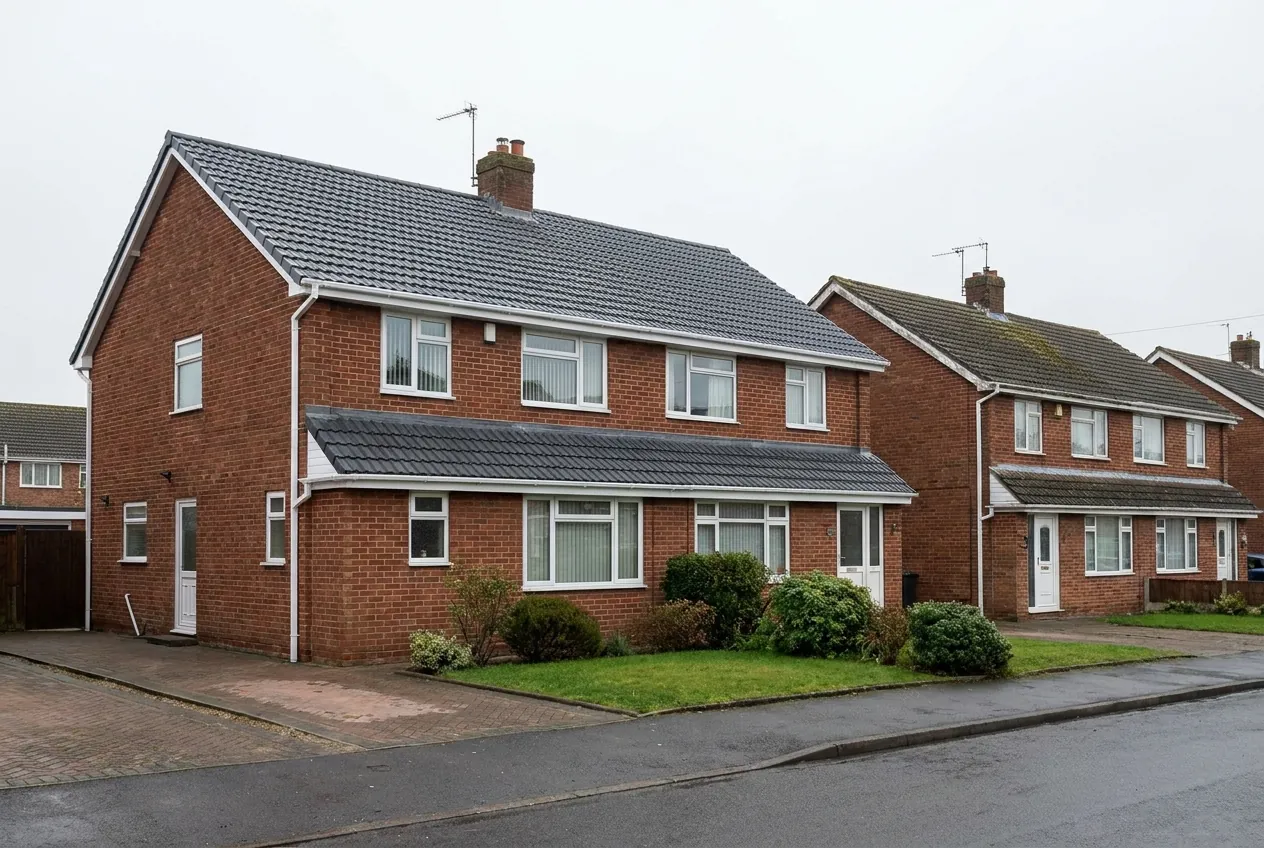
Roofs seldom give up overnight. They send warnings for years: a tile on the lawn after a gale, a brown ring on the landing ceiling, moss that returns every spring. Nearly all of those point to a repair. A handful, appearing together, mean the covering is finished, and paying for patches would only put off a bill that is coming anyway.
This guide helps you sort the two piles. It begins with the signs that tell you the whole covering is failing and not just one spot, moves into the loft, looks at what age does and does not prove, and ends with the alarming-looking signs that usually turn out to be small jobs.
Nobody should talk you into a new roof from a doorstep or a car park, and a verdict on your roof is only worth having when it comes with photographs of your own slopes. Use this page to know what to look for before a ladder goes up, then ask for the verdict in writing. If the answer is replacement, our roof replacement and new roofs page explains how we handle the work and what each stage involves.
Tiles or slates slipping across whole slopes
A single tile lifted by a gale is a repair. A scatter of them, on the same slope, winter after winter, is a different story. On slate the culprit is usually the fixings: nails rust through or the slates split around them, and each year the slates slide a little lower. On a tiled roof the battens can loosen, or the small nibs that hang each tile on its batten can snap.
From the lawn, or the pavement opposite, follow the lines of the courses with your eye. They should run true. A slope with dips, ripples or tiles standing proud of their neighbours suggests the layers below are moving. Check the ground under the eaves as well. Chips of tile or slate in the border or the gutter mean the covering is breaking up, not merely shifting.
Look hard at the edges. The verge, at the gable wall, is where the covering stops, and the ridge is the high point where two slopes meet. Both take the full force of a south coast gale. Since the 2014 revision of BS 5534, a bed of mortar has not been accepted on its own for ridge and hip capping, so each of those tiles also gets a screw or clip. A ridge capping that wobbles when pushed, or mortar crumbling along its whole length, tells you how old the work is and how it was done.
When it is still a repair
Trouble confined to one patch, such as a corner opened up in a storm or a short run of ridge, usually repairs well. Our guide to when to replace a roof sets out how we weigh repair against replacement and what we photograph before giving a verdict.
What the loft tells you that the street cannot
Climb into the loft on a bright morning and switch the torch off. Pinpricks of light through the covering show gaps, though read them carefully, since some older roofs let a little light in at the eaves by design. A broad band of daylight along a hip or valley is another matter altogether.
Next, study the underside of the covering. Underlay is the sheet laid beneath tiles or slates as a second barrier, and a roof built long ago may have none, or only a stiff bitumen felt. Torn, drooping or brittle underlay means whatever gets past the tiles has no safe route out. Stained rafters, dark timber near the eaves and damp insulation are all worth a phone photograph, with the date saved.
Use your nose too. A musty, earthy smell suggests moisture has been coming in, or that the loft has not breathed properly for a long time. Press a screwdriver gently into rafters and battens at a few points. Wood that gives way means the structure has been wet for months or years, and that nudges the job from repair towards stripping and replacing timber.
Photograph the loft before anyone else goes up. A dated record lets you compare what different roofers tell you.
Old asbestos products
The HSE's rule of thumb for any building dating from before 2000 is that asbestos should be presumed present. Corrugated sheets on garages and outbuildings, and some soffit boards, are the usual suspects. Do not drill, break or scrub a surface you suspect. Get it identified before any work begins, because how the material is handled decides how the job runs and how the waste leaves your property.
Damp stains, leaks and the pattern behind them
A stain on the ceiling is the first thing householders spot, and the most deceptive. Water enters at one point, travels along a rafter or over the underlay, and drips at a different place. A mark in the back bedroom can start at a chimney or valley two metres away.
One stain after one storm points to one fault: a flashing that has lifted, a tile that has cracked, a gutter that overflowed behind the fascia. That is a repair, and a decent roofer will say so. Several stains in different rooms, or the same one coming back after you have repainted, suggests a covering that no longer sheds water evenly.
Watch for these patterns:
- marks appearing in different rooms after the same kind of weather
- wet insulation or darkened rafters across a wide area of the loft
- paint blistering or peeling on upstairs ceilings and the tops of walls
- patches of mould high in the corners of upstairs rooms, which can have other causes too
Mould alone does not prove the roof is bad. Condensation from a poorly ventilated loft leaves similar marks, and a new covering will not cure condensation by itself. That is why the loft inspection comes before the verdict.
If water is getting in right now, the priority is stopping the water and protecting the rooms below. Our roof repairs page explains what a repair visit covers and the photographs we leave you with.
Age, material and the point where repairs stop paying
A roof's age does not settle the matter by itself, and a young one can fail early when it was badly laid. Published lifespans are ranges that vary, not guarantees, and a manufacturer's warranty tells you nothing about how long a roof will last. Marley expects concrete tiles to last around 60 years but says that figure is not a guarantee. CORC reckons well-kept slate lasts 100 years and more. Turning to flat roofs, Less quotes 10 to 20 years for torch-on felt, 25 to 40 for GRP and 30 to 50 for EPDM, while GreenSpec puts EPDM at 20 to 30. The sources disagree, which fairly reflects how much depends on workmanship and upkeep.
The trend counts for more than the number. A repair that fails within a year or two, a bill that keeps recurring, or a roofer reporting that neighbouring tiles crumble when lifted: these all suggest repair money is going into a covering with little left in it.
Questions that settle it
Ask whether the fault sits at one spot or runs across the slope, whether the fixings and battens are sound, and whether the repair will outlast the remaining roof. If the answer to the last one is no, replacing sooner can cost less across several years, since each visit and each scaffold hire is paid for again.
Checkatrade's October 2026 guide gives the UK average for a replacement as around £8,000, with most jobs between £4,000 and £19,000. Those are national numbers, not a price for your house. Our roof replacement cost guide goes through what moves a bill up or down, and for your own roof the figure to trust is whatever your own survey produces in writing.
Signs that look worse than they are
Some warning signs push people towards a new roof when something smaller would cure them. Knowing them helps you question a quote that leaps straight to replacement.
Moss and lichen are the usual ones. A green or grey roof looks neglected, and thick moss can hold water against tiles and choke gutters, but growth by itself does not mean the tiles are finished. Cleaning plus a check of the fixings may be all it needs.
Faded, streaked tiles are another. Concrete tiles lose colour from the surface as they weather, and dark streaks are normally algae. That changes the look far more than the performance.
A dip along the ridge deserves a proper look, but the cause is not always the covering. It can be the timbers beneath, which is a different job from re-covering, and one the roofer should photograph and explain.
Finally, a leak around a chimney, a roof window or a wall junction is nearly always a flashing fault. Flashing is the metal strip, usually lead, that seals the roof where it meets something vertical. MyJobQuote says lead flashing can last over 80 years. Its guide, last updated on 22 September 2026, gives £150 to £250 for patching chimney lead, against £350 to £460 for replacing the lead without scaffolding.
The honest test is whether the covering still sheds water across the slope. If it does, fix what has failed. If it does not, ask for the case for replacement in writing, with photographs of the evidence. Our guide to the roof replacement process shows what follows once you decide.
Deciding what to do next
Once you have walked the outside, checked the loft and read the stains, you should be able to describe the problem in a sentence: one fault, a tired area or a failing covering. That sentence is what you give a roofer, along with your photographs, and it keeps the conversation anchored to evidence.
Ask for a visit that includes the roof surface and the loft, and for the findings in writing. The useful kind of verdict says repair, patch for now or replace, and backs it with reasons and pictures. A verbal "you need a new roof" with no evidence is not. If two roofers disagree, ask each to show you exactly what they saw, and let the photographs argue it out.
Safety first
Do not climb on the roof to check. Broken tiles and slates are slippery, fragile roofs give way underfoot, and a fall from a bungalow eave can be as serious as one from a three-storey house. A pair of binoculars on the ground and a torch in the loft show you plenty.
If water is coming through, put a bucket under the drip, move belongings, and get the roof made safe before you think about a full replacement. A temporary repair is not a commitment to anything bigger.
When replacement is the answer, our quote page is where to send your photographs. We look at them, tell you plainly whether a repair would hold, and write the job up with one overall price. Before you accept any quote, check whether it includes scaffolding and VAT.
Questions
Questions about a failing roof
Can a roof be too old to repair?
Yes, though age is only one clue. A roof is past repair when the fixings, battens or underlay beneath the covering have given up, so each repair lasts only until the next gale. Sound materials on a failing structure are not worth patching. A survey with photographs shows which case you have.
Should I worry about a single leak after a storm?
A single leak after a storm is far likelier to be a lifted flashing, a cracked tile or an overflowing gutter than a dead roof. Make it safe, photograph the damage and the ceiling, and get the cause traced. If you plan to claim, tell your insurer first and save the receipts for any emergency patching.
Is a government grant available when a roof is failing?
Do not count on one. No national scheme funds re-covering a roof, ECO4 ends on 31 December 2026 and the Great British Insulation Scheme has closed, its installations having been due by 31 March 2026. Where income is low or a household member has a disability, a call to Arun District Council will tell you which local help is available, and gov.uk lets you verify any scheme before paying someone to apply for you.