
Repair or replace · 9 min read
When should a roof be replaced rather than repaired?
How to tell a roof that needs replacing from one that needs mending: what age tells you, what the timber tells you, and the point where repair bills stop making sense.
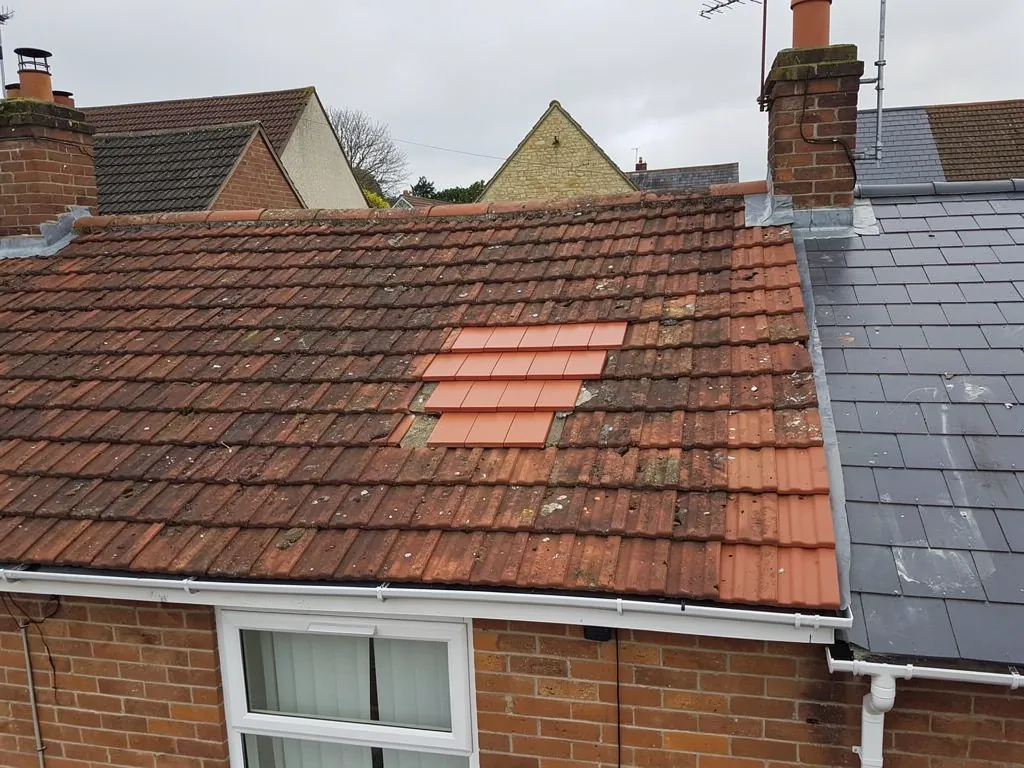
Every roof reaches a point where mending it stops being sensible. Few reach it as early as a salesman on the doorstep would suggest. The trouble for a homeowner is that a stain on the bedroom ceiling looks the same whether the cause is one cracked tile or a covering that has finished its working life.
The choice rests on three questions. Which covering is on the roof, and how old is it? What is holding that covering up, and is it still sound? And how has the roof behaved lately: one isolated fault, or a run of them in different corners? Age by itself settles very little. A well-kept slate roof can outlast several owners, while a badly laid felt roof can give up in under ten years.
Below, those questions come in turn, followed by the money, because the figures often make the decision for you. They are typical UK ranges from named cost guides, which is not the same as a price for your roof. Our habit is to climb up, photograph the fault and hand you a verdict before any price is mentioned. If mending will do, mending is what we recommend.
Start with the structure, not the covering
Tiles, slates and membranes are only the skin. Beneath them sit the underlay, the battens (small timber laths nailed across the rafters) and the rafters that carry the load. A covering in good order on a failing frame is a roof that needs replacing. A tired covering on a sound frame often does not.
So the proper look begins in the loft. Daylight through the boards is the obvious sign, but far from the only one. Dark staining on the underside of the roof boards, rafters that feel soft when a screwdriver is pressed into them and battens rotted at the ends all point to water that has been entering for a long while.
Sagging and spreading
A ridge that dips, or a slope that bows between the rafters, tells you something has moved. Sometimes a heavy covering sits on rafters that were never sized for it. Sometimes the rot is at the wall plate, the timber bedded on top of the wall that takes the foot of each rafter. Neither is cured by working on the surface, and you should not walk the roof to investigate. Our guide to a sagging roof goes through the causes.
Rotten timbers
Swapping a few battens during a repair is routine. Finding that most are rotten, or that the rafter feet have gone as well, changes the job entirely. You are then stripping the slope to reach the timber, so the covering has to come off whether you like it or not, and that is the sensible moment to renew it.
We prefer to show you this at the survey, with pictures of the wood itself, rather than have it surface midway through a repair doomed from the start. Evidence you can see beats an opinion you have to take on trust.
What age does and does not tell you
Lifespans published for roof coverings are typical ranges, never promises, and they differ by source. Marley, a tile maker, expects concrete tiles to last around 60 years, though it stresses that is not a warranty. For slate the CORC figure is 100 years and more when well maintained. Clay is similar to concrete on paper, though old handmade peg-tile roofs are a poor fit for that figure. The table gathers the figures we use.
| Covering | Typical life as published |
|---|---|
| Natural slate | 100+ years if well maintained (CORC) |
| Concrete tile | Around 60 years (Marley) |
| Clay tile | Minimum 60 years (Marley, quoting the Building Research Establishment) |
| Torch-on felt | 10 to 20 years (Less) |
| GRP | 25 to 40 years (Less) |
| EPDM | 20 to 30 years or more (GreenSpec, Less) |
Treat the table as a guide to where a roof sits in its life, not a countdown. A 40-year-old concrete tile roof with sound battens and a few slipped ridge tiles has plenty left. A felt flat roof at 18 years that has already been patched twice is another matter.
Where age does bite is the underlay. Older felt underlay dries out, cracks and lets go, which is invisible from outside and appears in the loft as pinpricks of light or a trail of damp. Torn underlay beneath good tiles is a reason to lift and relay the slope, and relaying a slope is the first step towards replacement in all but name. Our page on how long a new roof lasts sets out the ranges covering by covering.
Signs that point towards replacement
No single sign decides it. The pattern matters. Taken together, the signs below usually mean a roof has more wrong with it than a repair can answer.
- Leaks in more than one place. One leak is a fault. Leaks at the ridge, a valley and a chimney within a couple of winters suggest the whole covering is giving up.
- Slipped or missing slates across a wide area. Slate nails rust through and the slates drop. A few are a repair. Dozens, scattered over a slope, mean the fixings have failed everywhere.
- Tiles that crumble, flake or lose their surface. A tile that sheds granules or splits along its face has aged out, and new tiles set beside old ones will not change that.
- Thick moss on a soft surface. A little moss does no harm, though a deep mat that holds water against porous tile does not help.
- Spongy boards on a flat roof. A deck that gives underfoot is rotten, and no membrane will stay stuck to it.
- Pools that linger on a flat roof. If puddles remain days after rain, the falls are wrong, and that points to the construction, not the surface.
We cover the signs visible from the loft and from the street in our guide to the signs you need a new roof.
Be wary of anyone who reaches for replacement after a glance from the pavement, and equally of anyone who patches a roof showing all of these signs and wishes you luck. A good verdict comes with pictures of the specific fault, so you can look at it yourself before spending a penny.
Signs that a repair will hold
Plenty of roofs that look dreadful are perfectly sound. A repair earns its place when the fault is local, the structure is good and the covering has years left to run.
The usual cases look like this. A handful of tiles slipped after a gale. A ridge that has come loose along part of its length. A flashing (the lead strip that weatherproofs the joint where roof meets wall or chimney) that has lifted or split. A cracked edge trim on a flat roof. A gutter outlet that has clogged and pushed water back beneath the first course of tiles. Each is a defined job with a defined end.
The pattern to look for
A repair holds when you can name one cause in one place. If the loft is dry apart from a patch beside the chimney, and the timber there is firm, the chimney lead is the culprit. Renew the lead and the problem is solved. Replacing a whole roof to cure that leak would be money thrown away.
Ridges behave the same way. A ridge is the capping along the apex, and re-fixing a loose length is a job in its own right that leaves the slopes beneath untouched. Our page on ridge tile repairs describes how it is done.
When to wait
A roof close to the end of its working years can sometimes be patched to carry you through a season or two while you plan and save. That is a fair call if the patch is small and the wood is sound, and we tell you plainly when it applies. We are equally plain when a patch would be wasted.
The repair side of the story has its own page: our roof repairs service sets out what we do there.
Doing the sums: repair cost against replacement cost
Money often settles it. Checkatrade's repair table, updated June 2026, puts tile and slate repairs at £90 to £220 per m². For a whole roof, Checkatrade's replacement guide (updated October 2026) gives an average of around £8,000, with most roofs landing between £4,000 and £19,000. Its table, headed as plus VAT, runs from £2,800 to £7,500 for a flat roof, £7,000 to £16,250 for a gable roof and £9,250 to £18,000 for a hip roof.
Lay those side by side and a rule of thumb emerges, though only a rule of thumb. If a single repair costs a small fraction of a new roof and buys years, it is the better spend. If you are about to pay for a third or fourth repair at a few hundred pounds each, with a ladder or tower set up every time, the running total starts to resemble a deposit on a new roof.
Scaffolding changes the sum
In Checkatrade's October 2026 scaffolding table, a semi-detached house is around £875 a month. Pay that once for a full replacement and the access is shared across the entire job. Pay it repeatedly for separate repairs and it lands on every bill. So when we write up a verdict, we say whether the repair needs scaffolding, because it often tips the balance.
One written total for the replace decision
After the survey comes our written quote, one total, priced good and fair. Whoever else is quoting, ask them to confirm that VAT and the scaffold are counted, because leaving either out only makes a price look lower. For the arithmetic in more depth see whether it is cheaper to repair or replace, and for the national figures on replacement cost.
What a replacement brings with it
A new roof is a bigger undertaking than a repair, with obligations worth knowing before you commit. First come the Building Regulations. Planning Portal guidance sets two tests: under 25 per cent of the total building envelope, and under 50 per cent of the roof, affected. A full re-roof normally passes the second. Arun's building control pages put the re-covering of roofs on the list of work needing approval, so ask the council or your roofer which route applies. Our guide to the Building Regulations for re-roofing sets both out.
Insulation enters the picture
Approved Document L treats laying a fresh membrane across a flat deck as renovation. Where more than 50 per cent of a thermal element is renovated, upgrading the insulation can be required. A pitched roof raises the same question once the covering is off. Our page on insulation when re-roofing goes through it.
Planning, and the pavement
Re-covering in the same material rarely calls for planning permission, though listed status or an Article 4 direction can change the answer. Our guide to planning permission to replace a roof tells you who to ask. Scaffolding that stands over a public footway needs a licence, issued by the highway authority. Allow at least 10 working days' notice in West Sussex.
All this argues for deciding early, while you can still choose the season and the scaffold dates. A roof plainly heading for replacement is better planned for a dry spell than rushed in after the next gale. For the whole picture of the work, start at roof replacement and new roofs.
Questions
Replacing a roof: common queries
Can a roof be partly replaced, one slope at a time?
Often, yes. If one slope has failed and its neighbours are sound, re-covering only that side can be sensible and keeps the bill down. The catch is matching, because new tiles beside weathered ones show for years. The work still counts towards the Building Regulations limits too. We inspect every slope before saying which course makes sense.
Is moss a reason to replace my roof?
Not on its own. Moss is a surface problem that careful cleaning can usually deal with, and what counts is the state of the tile or slate beneath it. Where the covering is sound, cleaning is far cheaper than replacement. Heavy growth on tiles that are already crumbling is a different case, and the survey will show which one you have.
Should I replace the roof before selling the house?
Not automatically. A buyer's survey may flag a tired roof, and what the surveyor writes matters more than its age. A clear report with a written repair quote can reassure a buyer as well as a new roof would. If the roof is failing outright, replacement removes the worry. We give a plain verdict first so the choice is yours.