
Foam and leaks · 10 min read
Spray foam sold as a fix for a leaking roof
Foam sprayed under a roof that already leaks hides the fault instead of fixing it. This guide explains where the water goes, what the advice says and what a sensible order of work looks like.
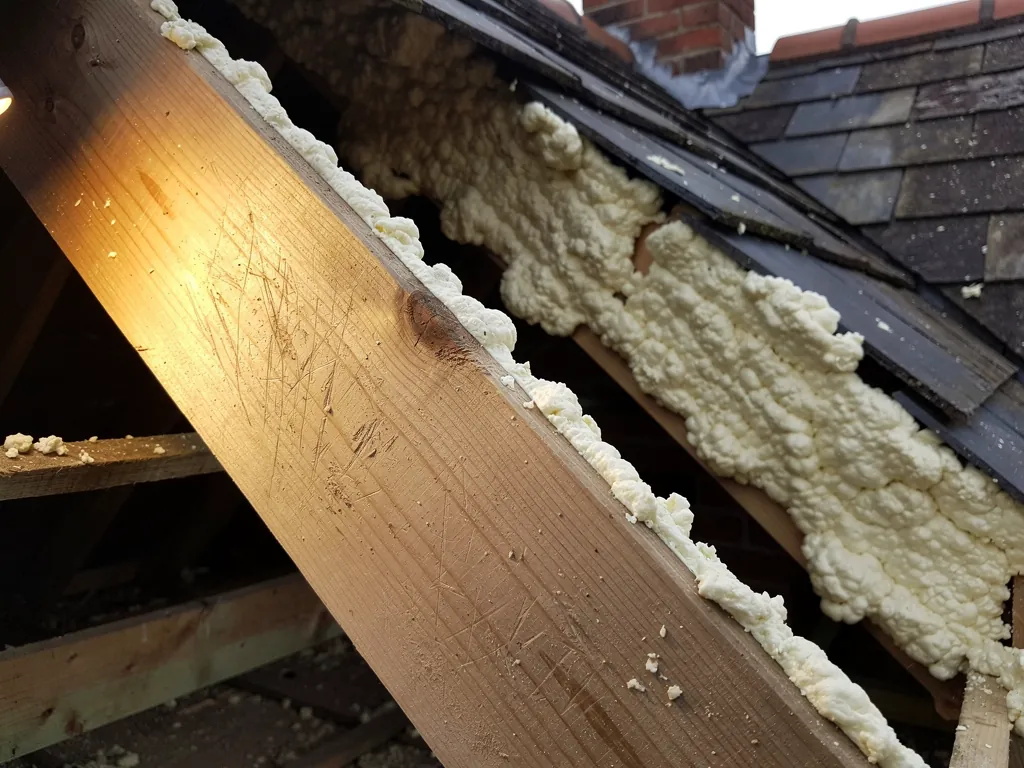
The pitch is easy to believe. A roof lets in a little water, a contractor offers to spray the underside with foam, and the leak seems to stop. The ceiling stays dry, the loft looks tidy and the bill is far smaller than a new roof. Then, a few winters later, a surveyor lifts the hatch and cannot see any of the timber.
The trouble is that foam is insulation, not waterproofing. The tiles, slates, felt, flashings and gutters keep the rain out. When one of them fails, water still arrives at the same spot, and a layer of foam only changes where it ends up and how soon anyone notices. A roof that leaks into an open loft shows itself with a brown stain. A roof that leaks into a loft sealed with foam can stay quiet for years while the rafters and boards behind the foam stay damp.
This guide covers why that happens, what the Energy Saving Trust and RICS say about it, how a foamed-over leak is found, and the order in which the problems should be dealt with. It sits under our spray foam insulation removal service, which explains how a removal runs on a job.
A sealed underside is not a repaired roof
A pitched roof is built in layers, each doing one job. The outer covering of tiles or slates sheds most of the rain. Underneath, the underlay (a flexible sheet, traditionally bitumen felt) catches what gets past. Around chimneys, walls and valleys, lead flashings seal the joints. Gutters and downpipes then carry the water away. The loft insulation sits below all of this and has nothing to do with keeping the weather out.
When a leak starts, one of those layers has failed. A tile has slipped, a slate has cracked, a flashing has lifted or the felt has torn. Spraying foam to the underside does not mend any of them. It sets across the back of the problem and leaves the hole in the covering exactly where it was.
That is why the idea of foaming a leaking roof gets such a cool reception from people who look after buildings. The leak is still a leak. It has simply gone out of sight.
The ceiling is no longer the warning
In an ordinary loft, water that gets through the felt drips onto the insulation or the ceiling, leaves a stain and sends the owner up the ladder. With foam stuck hard to the felt and the rafters, there is nowhere for it to drip. It runs along the surface of the foam or the timber until it finds a joint, a nail hole or an edge. The owner may see nothing at all for a long time.
Most of the damage in a case like this is therefore not the original slipped tile. It is what happened to the structure afterwards, while nobody could see it.
Where the water goes once the foam is on
Water from a small leak does not stay at the hole. It follows the underlay, runs down the slope of the rafter and collects at the lowest point it can reach. On most pitched roofs that is the eaves, where each rafter rests on the wall plate, the length of timber running along the head of the wall, close to the gutter.
Foam can trap that water in three ways. It can seal around the nail holes and gaps in the felt, so moisture has no route out. It can fill the eaves, so air cannot move through to dry the timber. And, where the foam sits tight against the wood, it can hold wet fibres against the surface for long stretches, without any gap to let them breathe.
Timber that stays damp over many seasons is the real worry. Wet wood is where mould, softening and decay set in, and a rafter foot or wall plate that has lost its strength is a structural problem rather than a cosmetic one. The RICS consumer guide on spray foam, dated March 2023, cautions that poorly fitted insulation can bring damp, including condensation nobody has planned for. A roof that was already leaking when the foam went on is the clearest case of a fitting that was wrong from the start.
Why nobody notices
A foamed loft is hard to inspect. Rafters, battens and the underside of the underlay all disappear, so a torch and a glance no longer show damp. Staining on the plasterboard below can take a long time to appear, and by then the water has had years to work. Where you have bought a house with foam under the roof and no history, nothing is known about the timber.
What the advice actually says
Two respected sources address this directly, and neither offers foam as a cure for a leak.
The Energy Saving Trust, in its roof and loft insulation advice last updated on 8 May 2026, considers the idea of coating a leaking roof with foam and leaving the leak as it is. Its verdict is short: "We don't recommend doing this." It adds that the danger should be far smaller with a soft, open-cell foam. Read that carefully. It is a comment on relative risk, not a recommendation.
RICS, in its consumer guide dated March 2023, makes three points that apply to any roof with foam. Poorly fitted insulation can bring damp. Taking foam out might harm the existing structure. And a valuer may let the foam colour their view of what the property is worth. Together they describe a trap: foam that was a poor choice is hard to take out, and its presence can shake the confidence of whoever is valuing the house.
If you are told a leak can be solved by foaming over it, ask who will repair the covering, and when. The answer tells you what you are buying.
Listed and protected buildings
The same guide adds that a listed or otherwise protected building needs prior consent before any foam goes in. On an old cottage with a leaking roof, a foam job could therefore be a consent problem as well as a damp one. For a listed property, speak to the local authority before you speak to a contractor.
None of this means every foamed roof is damaged. It means that foam over a leak is a bet against the weather, and the person holding the bet usually does not know the odds.
Open-cell and closed-cell on a roof that leaks
Foam is sprayed in two broad forms, and the difference matters when moisture is involved. Open-cell foam is soft and spongy, with tiny cells that connect. Closed-cell foam is denser and harder, with cells that stay sealed. If you are unsure which is in your loft, our guide to open versus closed-cell spray foam shows how to tell them apart.
The Energy Saving Trust's remark that the risk is much lower with open-cell foam fits the way the two behave. A softer foam is easier to peel back, easier to see through when you cut a test window, and less likely to bond the underlay rigidly to the rafters. A hard, thick skin of closed-cell foam is the opposite. It glues itself to the felt, locks the nails in place and can make a later inspection or a repair from inside the loft close to impossible.
That does not make open-cell foam a safe choice on a leaking roof. It makes it a smaller risk, which is not the same thing, and the advice still points to repairing the leak. For a roof that is sound and dry, the choice of foam is a matter of insulation performance and of what happens at sale or remortgage. For a roof that leaks, the leak has to be dealt with before the choice matters at all.
What changes the removal
If foam has gone onto a leaking roof and you now want it out, the foam type sets how much of the work is scraping and how much is stripping. Hard foam stuck to the felt will often mean lifting the covering in sections. Soft foam over bare rafters can sometimes come away from the loft side. Our walk-through of the spray foam removal process follows both routes from survey to clear-up.
Finding the leak that was foamed over
The first job on a foamed roof with a suspected leak is to find out where the water is coming from, and that is done from outside as well as in. A roofer walks the roof, or looks along it from a ladder or tower, checking the covering for slipped, cracked or missing pieces, the ridge and hips for loose capping, the valleys and chimney flashings for lifted lead, and the gutters for blockage and overflow.
Inside, the clues are more subtle than a drip. Look for brown or tide-marked patches on the plasterboard ceilings, particularly below a chimney, a valley or the edge of the roof. A musty smell in a closed loft is a hint. So is paint blistering on a bedroom wall below the eaves. Foam itself sometimes shows damp as a dark stain where it meets the timber, or as a sagging or discoloured patch.
Opening a window to look
Where the signs point to trouble, a small section of foam can be cut away to expose the rafter, felt and wall plate behind it. A probe, such as a bradawl, is pressed into the wood. Sound timber resists the point. Soft timber lets it sink. That test, done at several places along the roof, tells you more than any guess from the hatch.
It is also worth using a hosepipe test for a stubborn leak, with one person inside watching while another wets the roof section by section from the bottom up. It is slow and it needs two people, but it narrows down a leak that has travelled a long way from the hole.
Our spray foam survey guide covers what an inspector looks for, and the written quote that follows our own survey comes with photographs of what was found, fixed as one total price.
Repair first, then decide about the foam
The order of work matters more than the choice of insulation. Whatever is let in by the roof has to be stopped first, because every other decision is made on the assumption that the roof is watertight.
A sensible sequence runs like this. The covering is repaired or renewed so that the leak stops. The exposed timber is then checked, and any softened rafter or wall plate is cut back, supported or replaced. The wood is allowed to dry. Only after that does the question of what insulation goes back, and where, get settled.
Sometimes the foam can stay. If the leak was local, the timber under it has been probed and found sound, and the foam sits on a roof that now keeps water out, it may be left, with the position recorded in photographs. Sometimes it has to come out, because it is stuck fast to damaged felt, it is hiding timber that has to be checked or it is the thing stopping a repair.
Lenders, surveyors and the paperwork
Lending is a further worry. Reporting from November 2024 showed some lenders declining homes with foam in them, while others take each property on its merits. A history of leaking makes that conversation harder. If a sale or remortgage is on the horizon, keep the repair invoice, the photographs of the timber and any written confirmation of what was found.
Where the covering work fits
A repair to the tiles, slates, ridge or flashings is usually a small job compared with the cost of dealing with years of hidden damp, which is the argument for doing it before anything else. It is also the part that can be done quickly once the fault is found, so the roof is protected while the rest is decided. The covering work that should come first is explained on our roof repairs page.
Questions
Foam over a leaking roof
Will spray foam stop my roof leaking?
No. Foam is insulation, and the parts of the roof that keep rain out are the covering, the felt, the flashings and the gutters. If one has failed, the water still gets in. Foam can only hide the damp, and hidden damp is the kind that harms rafters.
Can foam that was sprayed over a leak simply be left alone?
Sometimes. It depends on whether the leak has been repaired and the timber behind the foam is sound. A roofer can cut a small window in the foam and probe the wood to find out. If the wood is dry and firm, the foam may stay. If it is soft or stained, the foam comes off.
Who should I call first if I think a foamed roof is leaking?
A roofer who will look at the outside of the roof as well as the loft. The aim is to stop water coming in, so the covering is checked first and the foam second. Take photographs of any staining on the ceilings, because they help show how long the water has been arriving.