
Roofers in Fishbourne
Flint, red brick and clay tile
Fishbourne's roofs sit at the head of its harbour channel, where a 16th-century rectory, a flint rubble church and the council's clay-tile character line the busy Chichester to Portsmouth road.

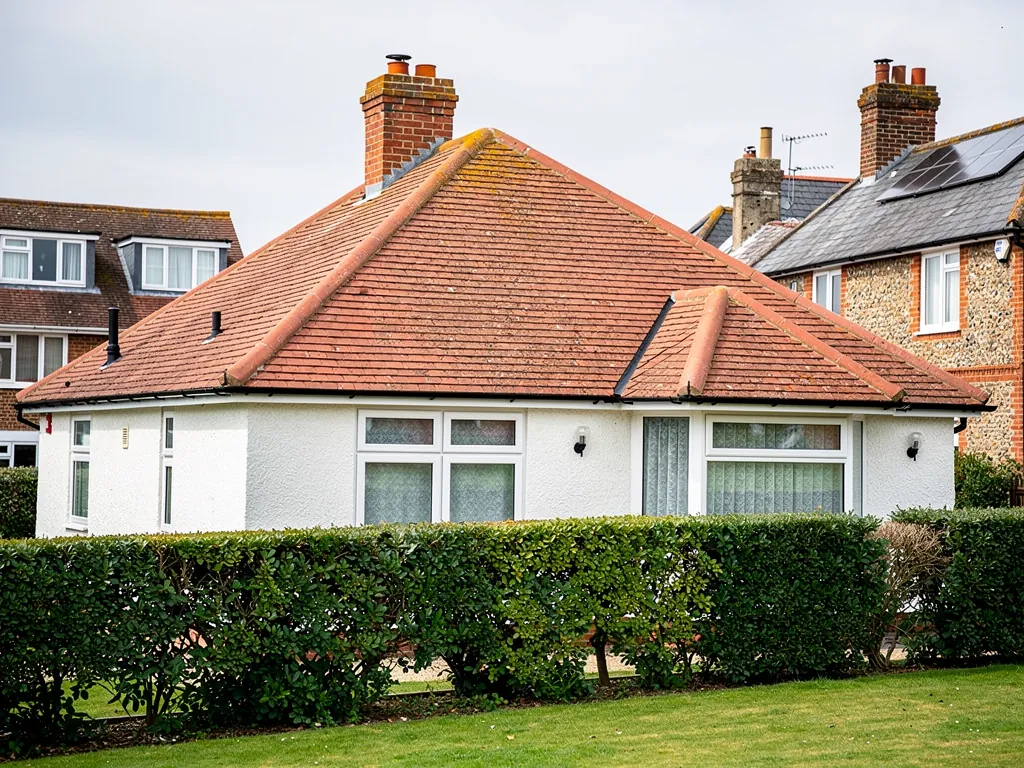
Fishbourne roofs
From the Old Rectory to the Fishbourne Channel
-
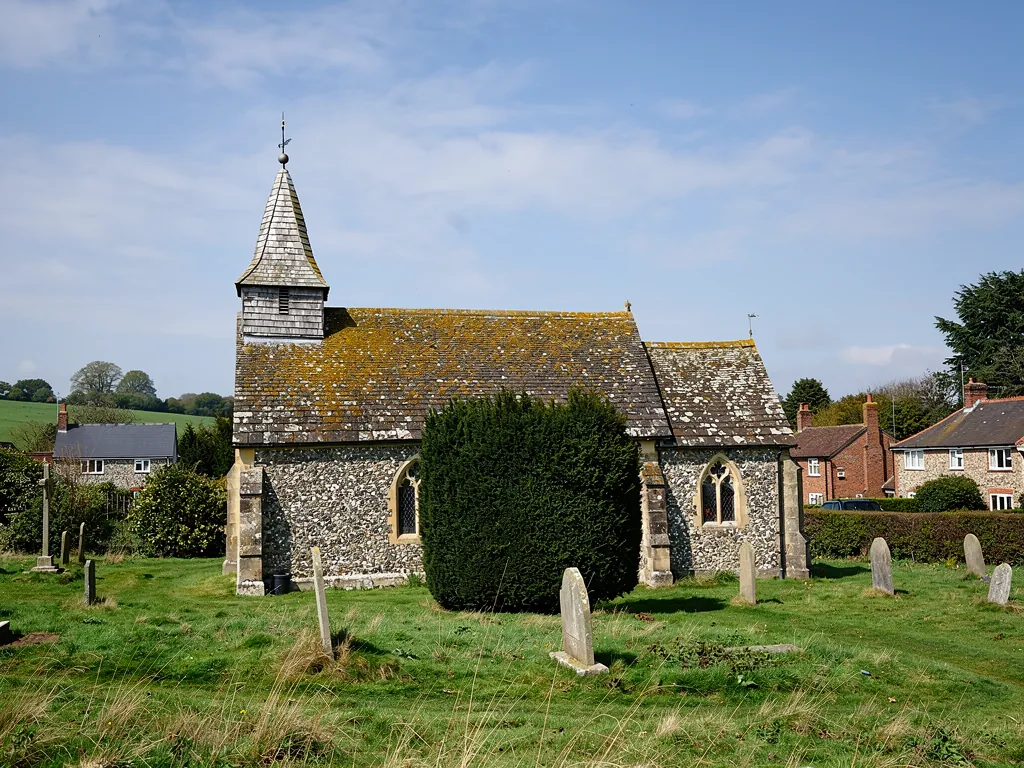
Flint rubble and freestone
The church of Saints Peter and Mary is flint rubble with freestone dressings, and its south aisle dates from 1847. Where a roof abuts stonework as uneven as this, the lead has to be dressed tight against every irregular face.
-
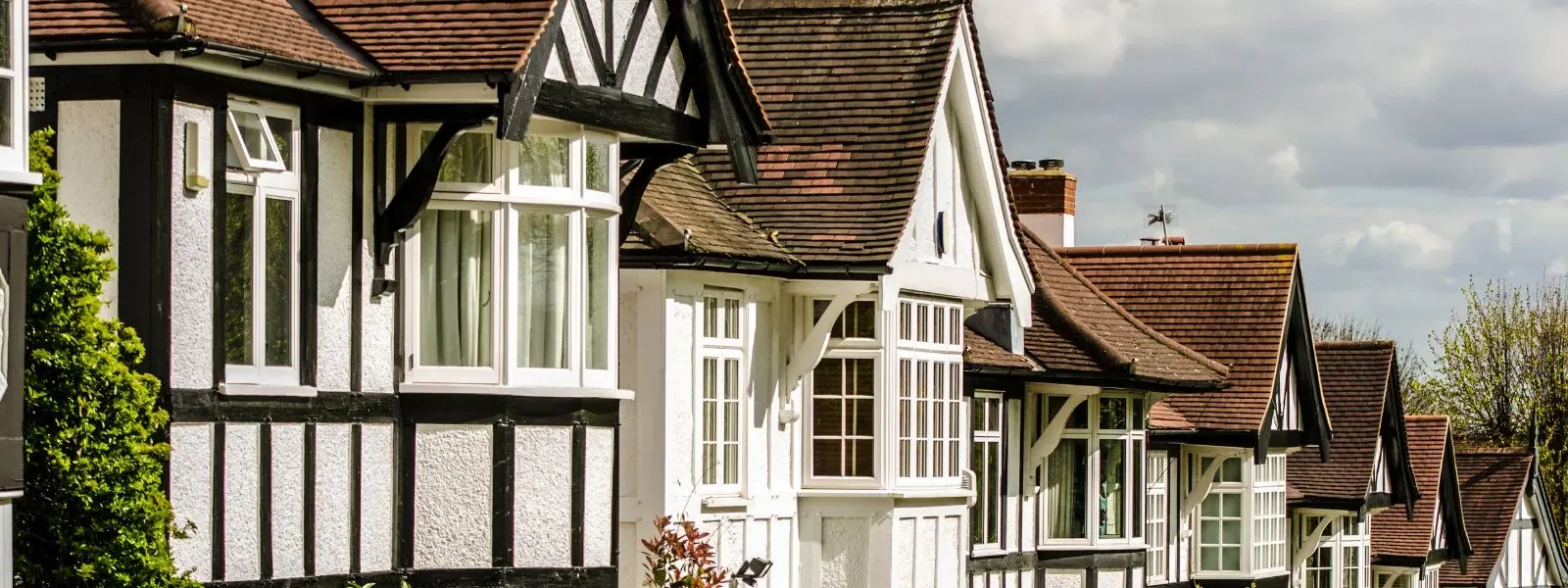
A refaced Tudor rectory
The Old Rectory dates from the mid to late 16th century and was refaced late in the 17th with stone and flint rubble and brick dressings. A house with that many layers usually carries roof repairs from several different periods.
-
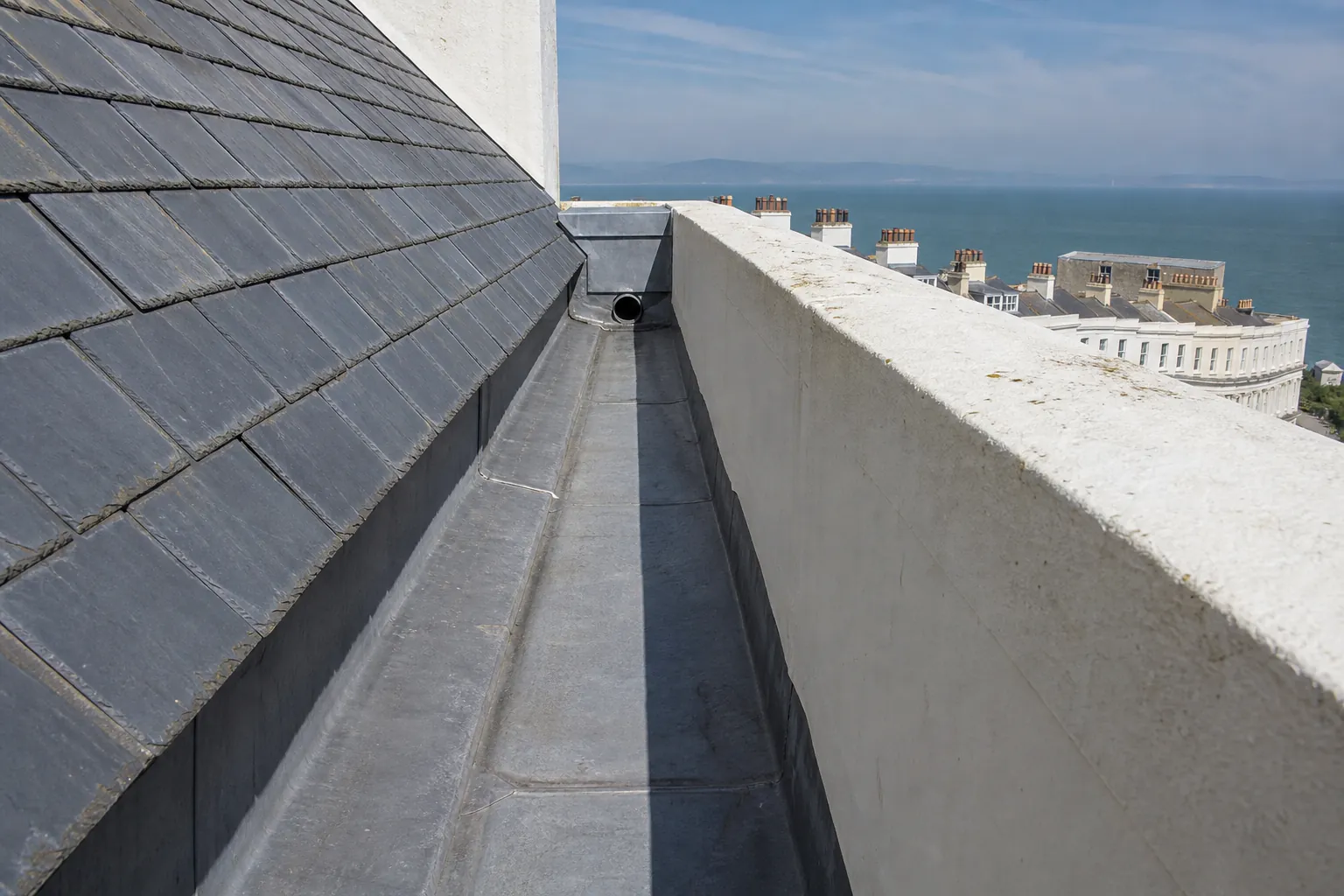
Mills at the channel's head
A tide mill built in the 1790s was abandoned in the late 1830s, and Fishbourne Mill, built early in the 17th century, worked until 1917. Water shaped this edge of the village, and roofs near it need their gutters looked at regularly.
Map of Fishbourne, 8.5 road miles north-west of Bognor Regis, with the nearest towns we also cover.
The conservation area and the harbour edge
- Council
- Chichester District Council
- County
- West Sussex County Council
- Conservation area
- Fishbourne Conservation Area, with a Chichester District Council character appraisal dated 2012
- Harbour landscape
- Most of the conservation area south of the A259 sits inside Chichester Harbour National Landscape, known as an Area of Outstanding Natural Beauty until 2023
- Parish church
- Saints Peter and Mary, Church of England
- Distance
- 8.5 road miles north-west of Bognor Regis, about 15 minutes by car
Harbour-head notes
Flint, lime and a harbour channel
How the village's walls, its church and its waterside setting shape the way we approach a roof here.
Chapter 1: Flint and lime beside the Chichester road2501
Sheet 01 / 03Fishbourne grew along the road between Chichester and Portsmouth, and most of its people are still grouped beside it. The village was once called East Fishbourne and later New Fishbourne. Chichester District Council's character appraisal for the conservation area, written in 2012, names flint and lime as important local building materials. It lists flint, red brick and clay roof tiles among the area's key characteristics. For a roofer that is a practical description, because it says what a roof here has to sit beside: a clay-tiled slope butting a flint gable, a brick stack rising through the ridge, a boundary wall that the guttering has to clear. Each of those junctions is a place where water finds a way in if the detail is lazy.
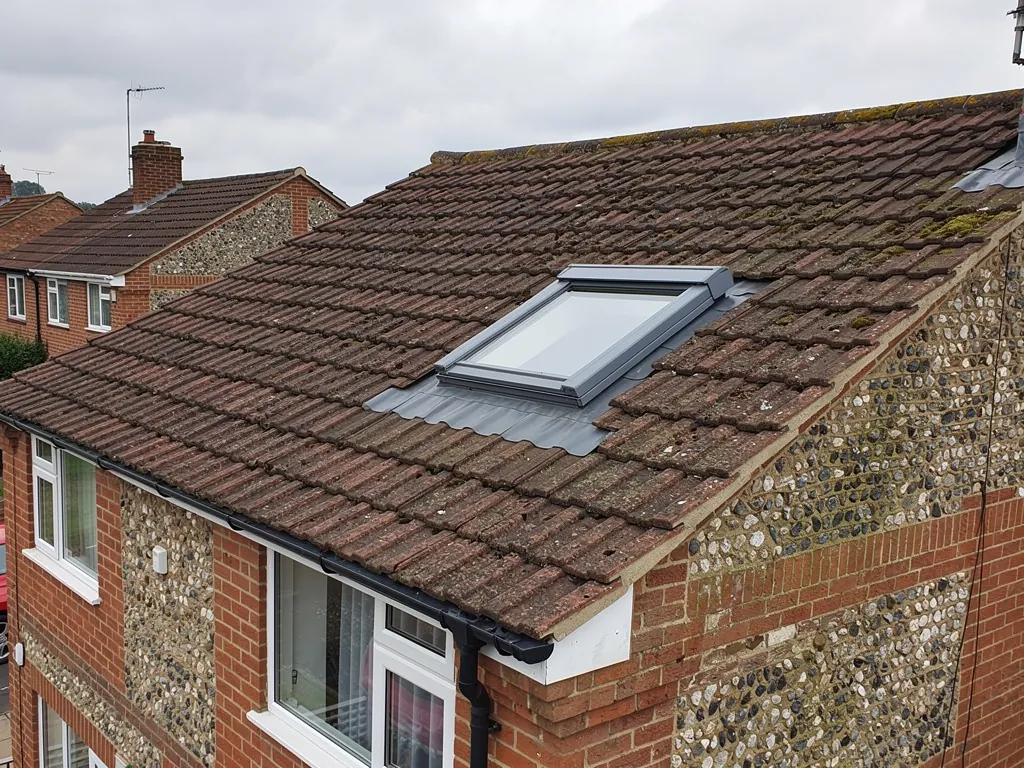
First things we look at on a Fishbourne roof
- Ridge and hip capping that rocks
- Gaps at gable verges
- Lead where roof meets flint
- Pointing around brick stacks
- Gutters that overflow at the corners
1.1 Clay tile against flint and brick
The ridge caps the very top of the roof, and the verge is the slanting edge of the roof beside a gable wall. Both take the full force of the weather, and on an older roof both are often held by a bed of mortar and little else. Since the 2014 revision of BS 5534, mortar on its own no longer counts as enough for ridge and hip tiles (hips are the slanting corners of a hipped roof), so they are mechanically fixed as well. When we survey a Fishbourne roof we walk along those lines first, photograph any capping that rocks or any gap at a verge, and send the pictures with the written quote. Clay plain tiles are small, so a slope of them has plenty of joints to check, and faults turn up at the edges more often than in the middle of the slope.
1.2 Flashings where roof meets stone
Flashing is the lead sheet that keeps a roof watertight at a wall or chimney. Against flint, which is uneven by nature, the lead must be dressed tight to the wall and pushed into a raked-out joint, not smeared over with a sealant that peels within a season or two. Our lead roofing and leadwork page explains how sheet lead is chosen and fitted. Stacks need the same attention. A brick chimney that has stood beside the main road for generations may want its pointing renewed before the lead is worth touching, and our chimney repairs page sets out how we judge that. Where the fault is a slipped tile or a split flashing, the smaller job is the right one to quote.
Chapter 2: The Old Rectory and a church in flint rubble2684
Sheet 02 / 03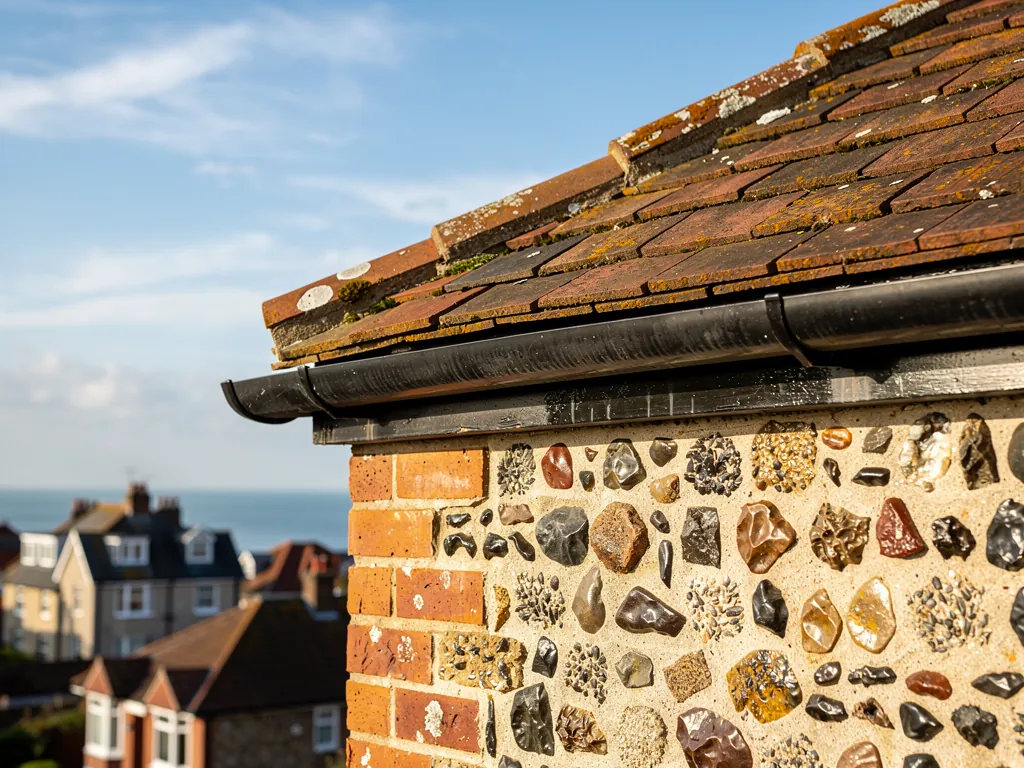
Fishbourne's oldest buildings show how layered a village roof can be. The Old Rectory is a house of the mid to late 16th century that was refaced late in the 17th with stone and flint rubble and brick dressings. A house with a history like that has usually been altered more than once: its roof timbers may belong to one century, its tiles to another and its chimney to a third. The church of Saints Peter and Mary is built of flint rubble with freestone dressings, and its south aisle was added in 1847. Buildings of that standing need the right consent before anyone touches them, but they set the tone for the cottages and houses around them, and they show the kind of work a roofer here is asked to match. A newer house a few streets away may share nothing with them except the weather.
Working on an older Fishbourne roof
- 1SurveyWe photograph each fault on the roof and on the flint or brick it meets.
- 2Check consentThe list entry and the conservation area get read before any quote beyond a repair.
- 3Match materialsTiles are chosen to suit the colour and texture of the neighbouring slope.
- 4Repair or relaySound tiles are kept and refixed; a failed slope is stripped and relaid.
2.1 Matching what is already there
On a street of older neighbours, matching counts. Replacement clay tiles should suit the colour and texture of the slope beside them, and reclaimed tiles are sometimes the sensible answer when only a small area needs repair. The appraisal lists clay roof tiles as a key characteristic, so on a house inside the conservation area we would check with Chichester District Council's planning team before suggesting a different material. Our pitched roofing page walks through a tiled slope being stripped, re-battened (battens are the softwood laths each row of tiles hooks over), given fresh underlay (the sheet beneath the tiles) and relaid. A relaid slope that reuses its good tiles keeps the look of the street and keeps the bill down.
2.2 Listed houses and the parish church
Owners of a listed house should find the list entry and ask the council before any job that goes further than putting back what was there, because work that would alter the character of the building needs listed building consent. A working Church of England church takes a different route. Listed building control does not apply to it, and the faculty system, the Church's own permission process, takes over; that is a matter for the parish, not for a roofing firm. If you look after a building in the village and cannot tell which route applies, ask before you book anyone to climb on it. We would rather wait a week for the answer than strip a roof that needed paperwork first.
Chapter 3: Channel water, old mills and the National Landscape3111
Sheet 03 / 03The water at the head of the Fishbourne Channel is the reason the village looks as it does. A tide mill built in the 1790s was abandoned in the late 1830s, Fishbourne Mill was built early in the 17th century and ground on until 1917, and the Roman palace lies beside the conservation area. Most of the conservation area south of the A259 lies within the Chichester Harbour National Landscape, which carried the older title of Area of Outstanding Natural Beauty after its designation on 4 February 1964, until the renaming in 2023. For a homeowner the designation matters when a roof is being altered and not just repaired, so ask the council before altering a roof's shape or putting a window into it. Repairs that put back what was there are a different matter, and they make up the bulk of what a village roof needs. A reroofed slope with a tidy ridge, firm verges and gutters that run clear does more for a house than any amount of cosmetic work, and that is the standard we work to on every roof near the channel.
After a hard winter by the channel
- ClearGutters and downpipes cleared when the overflow marks the wall below.
- RefixSlipped tiles and loose capping put back and fixed mechanically.
- RelayA tired slope stripped and relaid when repairs would only delay the leak.
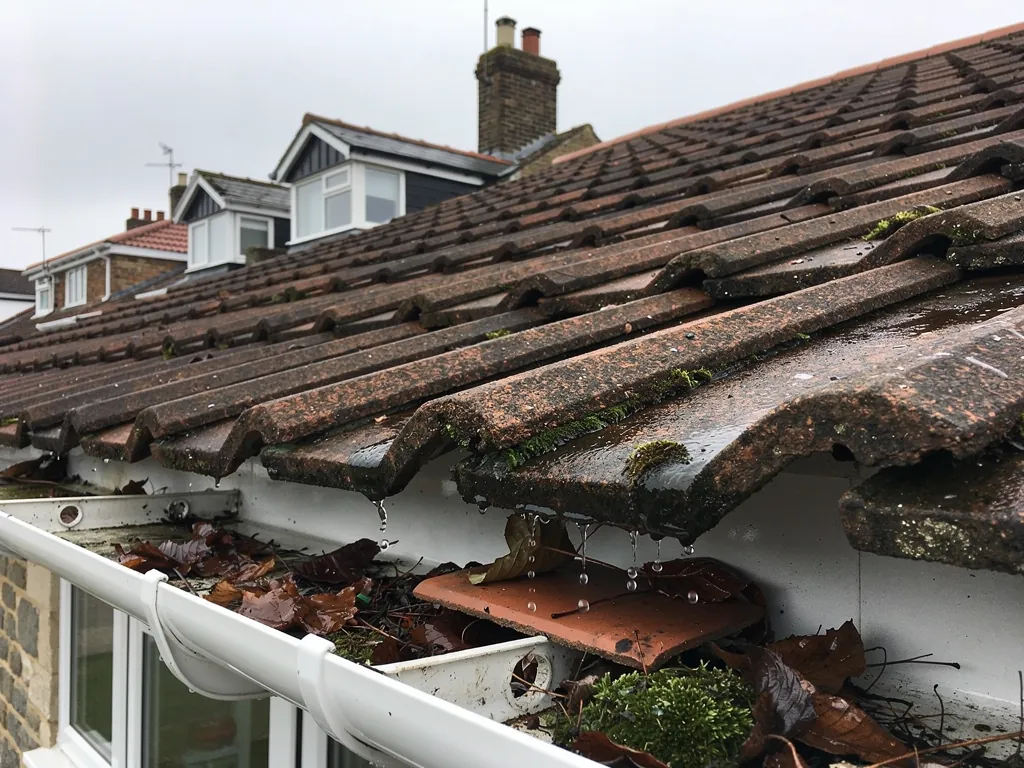
3.1 Roofs close to open water
Roofs near a harbour take the weather: gales, driving rain and the occasional sea mist. That does not mean every roof here is failing. It means the gutters, the downpipes and the lower courses of tiles deserve a look after a hard winter, because overflowing water is what stains the wall below and rots a fascia (the timber board behind the gutter) long before the roof covering gives up. Shaded roofs under trees can gather moss. Cleaning it off is sometimes all that is needed, and when it is not, photographs of the evidence for a repair or a relay reach you before you decide.
3.2 After a gale
If you think the wind has shifted tiles, look from the ground or from a window, and keep off the roof. Water coming in gets stopped first, with a temporary repair, and the permanent job follows once the roof has dried and been surveyed. Tell your insurer before you arrange anything, photograph the damage and keep every receipt for the temporary work. Bats and nesting birds are protected, so if you see either in a roof space, tell us before work starts. If you are weighing a roof window, our guide to skylight planning permission explains what to ask the council.
A roofer for the Fishbourne Channel
Frequently asked questions
Questions from the Old Rectory to the A259
Can the clay-tiled roofs near Fishbourne's flint church be repaired instead of stripped?
Often, yes, when the tiles themselves are sound. Cracked or slipped tiles can be swapped singly for a match in colour and texture, ridge and hip capping can be refixed with mechanical fixings, and lead at a flint gable can be renewed without lifting the slope. If the battens or the underlay beneath have failed over a whole slope, relaying it, reusing the good tiles, is the better repair. The photographs show which job you have.
Does the Chichester Harbour National Landscape limit what I may do to a roof south of the A259?
The designation, which began as an Area of Outstanding Natural Beauty in 1964 and was renamed in 2023, can affect planning when the shape of a roof or its windows change. Re-covering a roof in matching material is not normally development calling for planning permission. A listed building or conservation area adds its own caveats, so ask Chichester District Council's planning team first if you plan anything beyond a repair.
Does a flint gable change how a verge or a flashing is fixed?
It changes the detail. Flint is uneven, so a flashing has to be dressed to the wall and pushed into a raked-out joint, and a verge needs tiles that sit firmly and are held by more than mortar. We look at how the tiles meet the wall, photograph the gaps, and tell you whether a local refix will hold or the whole edge wants rebuilding.
What should I check on a house near the Fishbourne Channel after a gale?
From the ground, scan the ridge line, the gable edges and the gutters, and check the ceilings inside for new stains. Do not go up a ladder onto a wet roof. If water is coming in, we make it safe first. Tell your insurer before you arrange repairs, take photographs, and keep receipts for any temporary work.
Nearby areas
Get a quote
Tell us about your roof
Describe what's happening and we'll call you back.
Loading the enquiry form. You can also call 01243 252373.