
Roofers in Lavant
Flint cottages, two churches, one valley
Lavant's roofs run along a downland valley: thatch on the oldest East Lavant cottages, flint walls with brick quoins, and tiled church roofs at St Mary and St Nicholas.

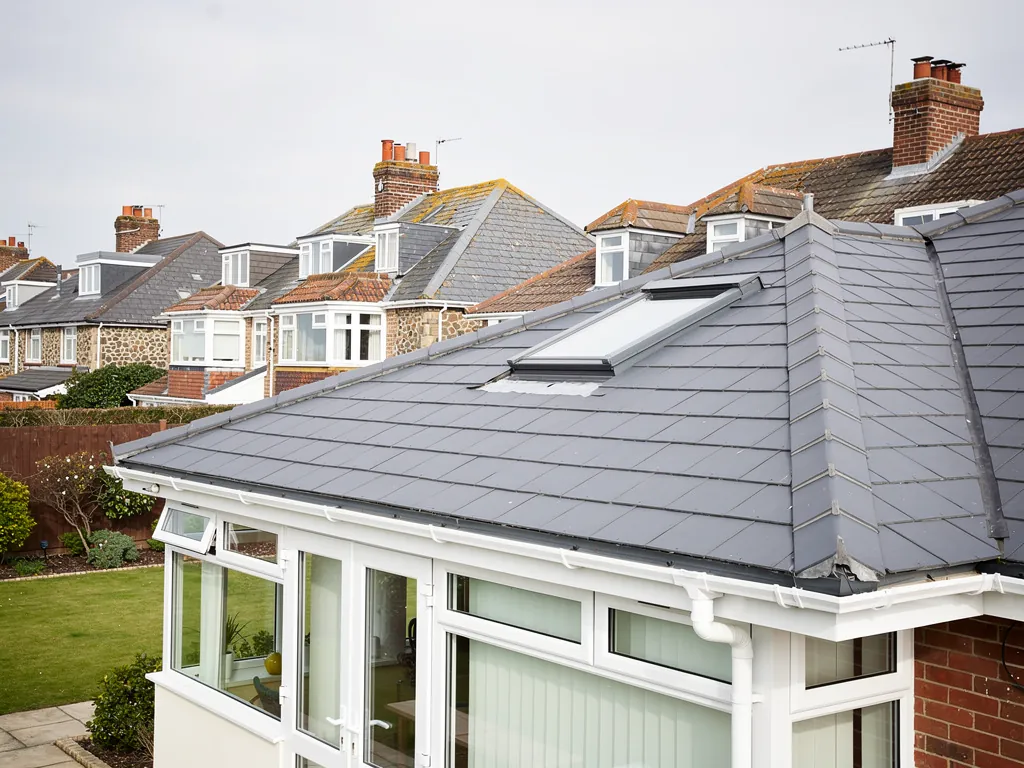
Lavant roofs
Split flint, brick quoins and thatch in the Lavant valley
-
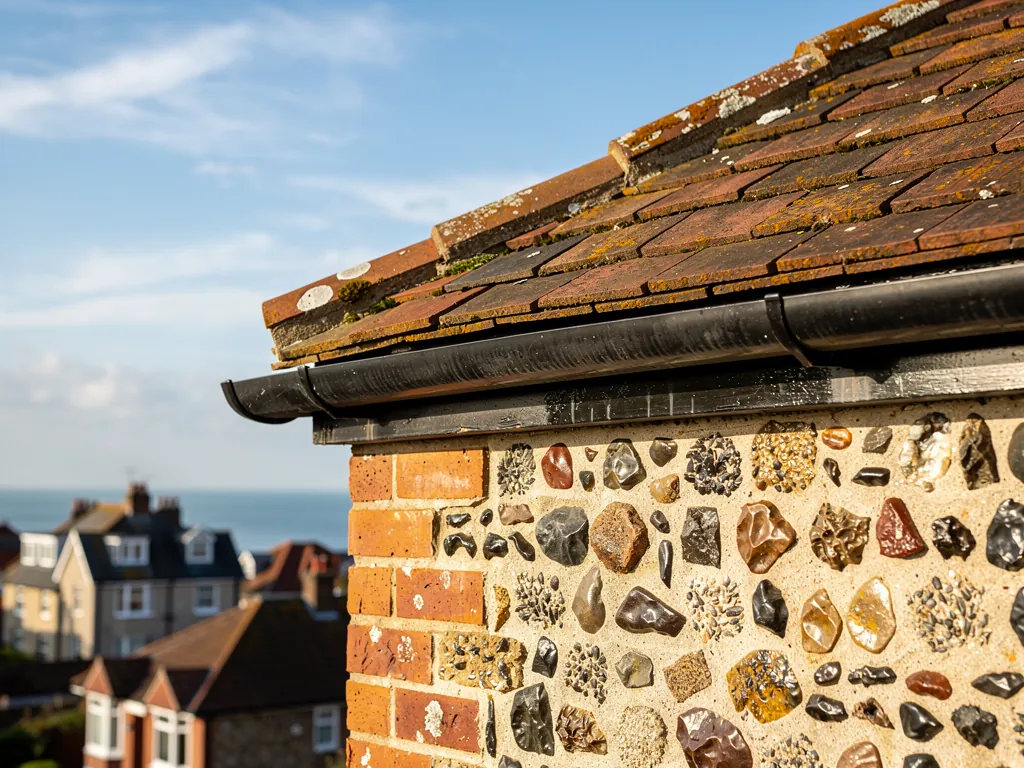
Split flint with brick corners
One East Lavant house has walls of split flints with 17th-century brick quoins, the dressed corner stones that hold a wall square. A roof meeting a wall like that depends on its flashings and verges, which take the weather first.
-
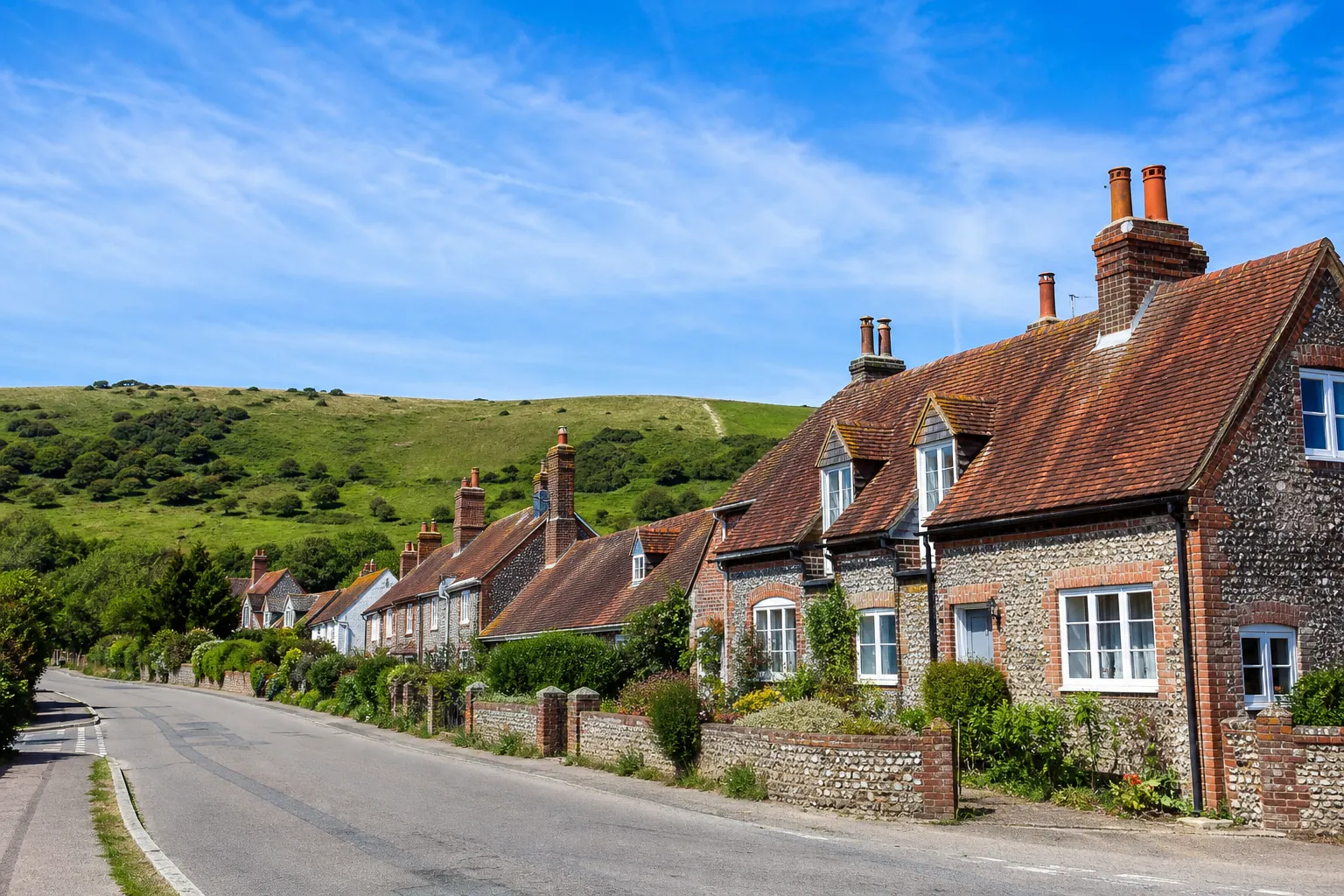
Thatched cottages beside tiled neighbours
East Lavant has an early-17th-century timber-framed cottage with a thatched roof and another thatched cottage of plastered flint or rubble. Tiled roofs next door share walls, gutters and stacks with them, so the junctions get a close look.
-
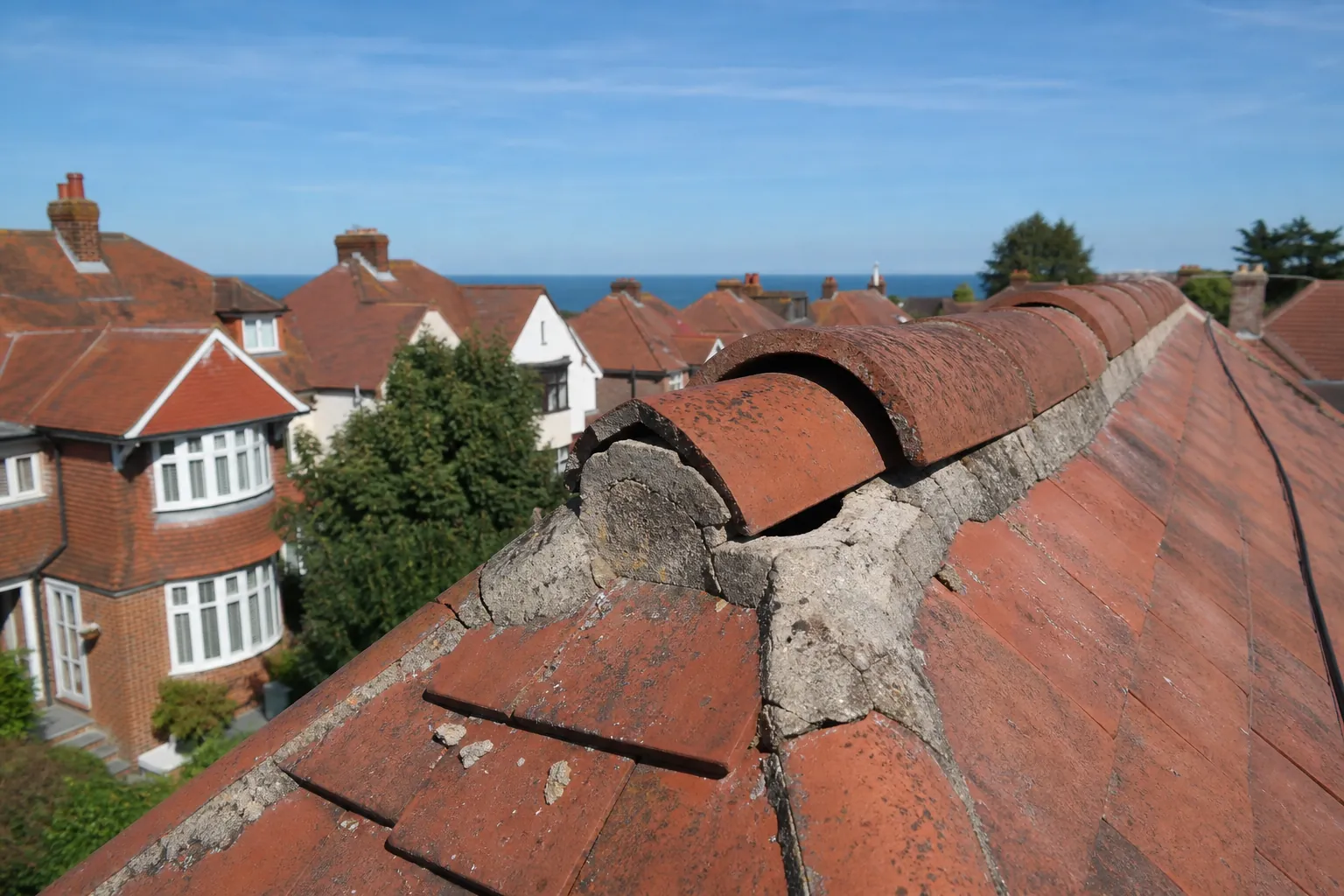
Tiled roofs on both parish churches
St Mary at East Lavant, listed Grade I, is rubble with a brick-faced chalk tower, roofed with tile. St Nicholas at Mid Lavant is flint rubble with ashlar dressings, tiled, and has a shingled bell-cote on top.
Map of Lavant, 10.6 road miles north-west of Bognor Regis, with the nearest towns we also cover.
Mid and East Lavant in the South Downs National Park
- Council
- Chichester District Council
- Planning
- South Downs National Park Authority
- County
- West Sussex County Council
- Conservation area
- Mid and East Lavant, on the South Downs National Park Authority's Chichester map
- Article 4
- None listed for Lavant on the National Park Authority's Article 4 page
- Listed church
- Church of St Mary, East Lavant, Grade I
- Distance
- 10.6 road miles north-west of Bognor Regis, about 21 minutes by car
Lavant notes
Two villages on the Lavant stream
The valley's flint cottages, its two churches and the National Park rules each decide how a roof job is planned.
Chapter 1: Flint, brick and thatch in East Lavant2318
Sheet 01 / 03Lavant parish lies on the southern slopes of the Downs, running down towards Chichester, with the River Lavant flowing through it from north to south. In East Lavant the older houses are built from what the ground gave: flint from the chalk, brick for the corners, and thatch on the oldest roofs. One house has walls of split flints with 17th-century brick quoins. Nearby are an early-17th-century timber-framed cottage with a thatched roof and another thatched cottage of plastered flint or rubble. Roofs on houses like these are rarely level. Walls move, timbers dip and a ridge line wanders, so a good repair follows the building as it stands.
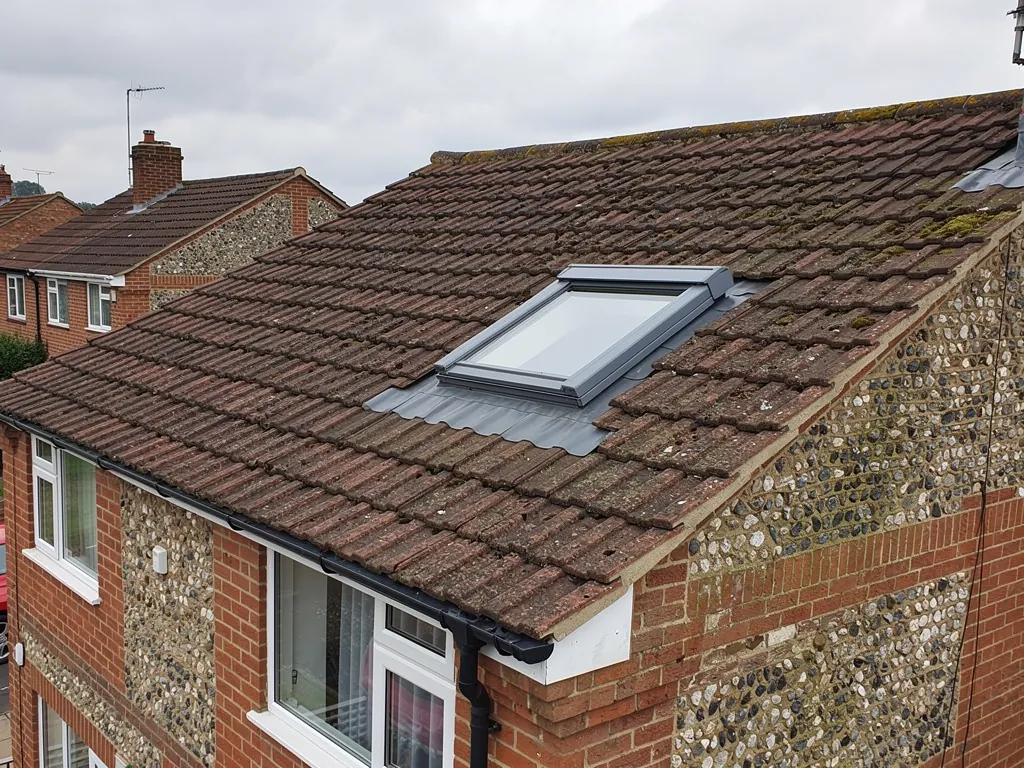
Before working beside flint and thatch
- Check the list entry
- Photograph flashings and flint joints
- Keep roof water off the thatch
- Match old clay tile by eye
1.1 Where a tiled roof meets flint
A flint wall has no flat face for a flashing to sit against. A flashing is the metal strip that keeps water out where a roof butts a wall. Here the lead is dressed over the tiles and tucked into a mortar joint, and that joint has to be sound before the lead goes in. We prefer a lime-based mortar in an old flint wall, because a hard cement mix cracks as the wall moves and lets water in. Where a stack of brick stands on a flint gable, the junction between the two materials is the first thing we check for damp. Our lead roofing and leadwork page shows how the sheet is cut and dressed.
1.2 Living next to thatch
A thatch roof belongs to a thatcher, and we do not touch it. What we do is look after the roof beside it. A tiled outbuilding or a slated extension attached to a thatched cottage shares a wall and often a gutter, and rainwater from the slope behind can run down the thatch if the gutter is blocked. We check that the water from our roof goes where it should and not onto the neighbouring one. If the cottage is listed, we also read the entry to see what the listing covers before we quote for anything beyond a repair.
1.3 Tiles and the clay-tile eye
Where a cottage roof is plain clay tile and a few need replacing, we try to match them by size, colour and texture. A new tile among old ones glows for a few years, so we mix tiles across the slope to soften it. On a slope that has sagged over centuries, the timber laths under the tiles are often irregular too, and we level the line without forcing the whole roof into a shape it never had. Our pitched roofing page explains the stripping and relaying involved.
Chapter 2: St Mary, St Nicholas and the parish roofs2501
Sheet 02 / 03The former parishes of East Lavant, with West Lavant, and Mid Lavant were joined for civil purposes in 1872 and for church purposes in 1880, so one parish now holds two village churches, and each has its own roof to look after. St Mary at East Lavant is built of rubble, with a 17th-century tower of chalk rubble faced with brick, and it is roofed with tile. It is listed Grade I. St Nicholas at Mid Lavant is flint rubble with ashlar dressings (dressed stone at the corners and openings) under a tiled roof, and it carries a shingled bell-cote, a small timber turret for the bell.
Who to ask about a Lavant roof
- 1RepairA like-for-like repair to a house is the lightest case and usually starts with us.
- 2PlanningChichester District Council handles applications on the National Park Authority's behalf.
- 3Building controlThe district council, not the National Park Authority, deals with Building Regulations.
- 4ChurchChurch of England churches in use have their own faculty route.
2.1 Consent for a church roof
Both churches are Church of England. A church of that denomination, while in use, is exempt from the usual listed building consent, and any works follow the Church's separate faculty system. That is separate from the council, so the parish is the first call, not the planning team. If a church closed for regular worship, the normal listed building controls would apply. The repair side is where we come in: loose tiles at the eaves, a failing gutter, lead at the junction of a tower and a roof, and ridge tiles lifting in a gale.
2.2 Houses in the conservation area
Mid and East Lavant are shown as a conservation area on the South Downs National Park Authority's Chichester map. No Article 4 direction is listed for Lavant on the Authority's Article 4 page. Houses inside it get the usual conservation-area care, and a listed house needs consent for work that would change its character. The Authority's own guidance on listed buildings says routine upkeep and small repairs made in matching materials and done in place need no consent. That draws a sensible line between a repair and a rebuild, and wherever the roof allows it we stay on the repair side. The result for you is less cost, less waiting and less disturbance to an old building than a full relay would bring.
2.3 Who decides, and who inspects
Lavant is inside the National Park, where the Authority is the planning authority. In the Chichester part of the Park, the district council takes in and handles the applications for the Authority. Building control is not the Authority's job. A job that needs both has two paths, and we explain which applies before any work is booked. Our guide to skylight planning permission shows how those questions get answered for roof windows.
Chapter 3: Valley floor, railway line and weather2318
Sheet 03 / 03The railway that follows the river once ran through Mid Lavant, and the station there carried only goods traffic from July 1935. The line is part of the village story, a sign that this was once a working valley, with cottages and farms built close to the water. Houses here sit on the slopes between the Downs and the plain, so roofs take the weather from several sides: gales, driving rain and the wet that gathers in a valley. A cottage that has stood for three or four hundred years has met every kind of storm, and its roof has usually been patched in response to each one. We read those patches like a log of the house's past, noting where a slate or tile was swapped, where lead was added and where a valley was relined, so that the repair we propose is a considered next step and never a guess.
Three outcomes for a Lavant cottage roof
- PatchA few tiles or a flashing fixed while the battens still hold.
- OverhaulRidge, verge, lead and stack work done with the covering kept.
- RelayTiles stripped and relaid on new battens, reusing the best clay.
3.1 Gutters, downpipes and the valley's rainwater
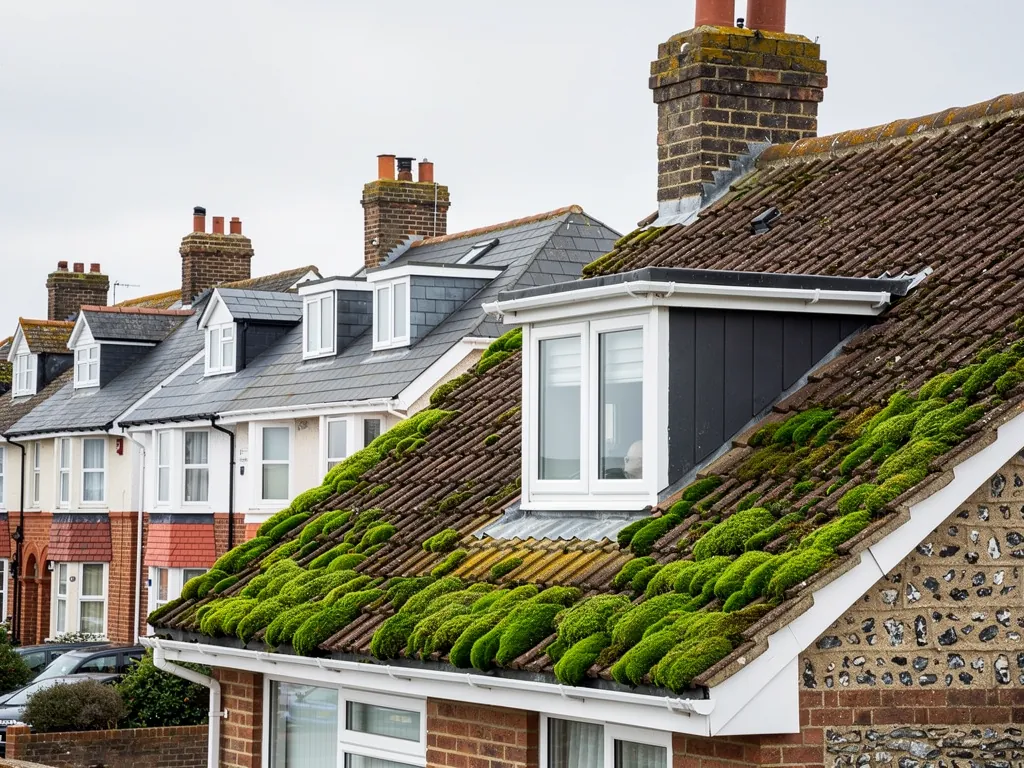
On a hillside house, water runs off the slope behind and meets the roof below. Gutters fill with leaves and moss, and a blocked gutter sends water down the wall or into the eaves, where it rots a fascia (the board along the roof edge) and stains the ceiling. On a first visit we clear and inspect the full roofline and say plainly whether the problem is the gutter or the roof. Our guttering, soffit and fascia page covers the repairs and replacements.
3.2 Chimneys on older cottages
Where a cottage has a brick stack, each face of it takes the weather. The mortar joints soften, the flaunching on top cracks, and the lead around the base lets go. A stack that leans or sheds brick wants a closer look from a ladder or a camera before anyone decides on a repoint or a rebuild. We say which it is, with photographs, and you receive the quote in writing. If the house is listed or in the conservation area, we check what permission, if any, is needed before the work is booked.
3.3 When access is the hard part
Where a lane is tight or a garden slopes, scaffold gets awkward. If it would stand on the highway, the scaffolding firm asks West Sussex County Council for a licence, and the council asks for 10 working days' notice. We plan the date around that and tell you early, so you are not left waiting with a tarpaulin on the roof.
A roofer for Lavant
Frequently asked questions
Questions from East Lavant to Mid Lavant
Can the tiled roof on a cottage next to thatch in East Lavant be repaired safely?
Yes. We never work on the thatch, which belongs to a thatcher. We repair the tiled slope next to it, check that rainwater from that slope and its gutter does not run onto the thatch, and renew any lead where the two roofs meet. We photograph the join from both sides first, so you see where the water gets in. Where the lead there has gone, new sheet replaces it, and if the thatch needs attention, that goes back to the owner to pass to a thatcher.
Who do I ask about re-roofing a house inside the South Downs National Park at Lavant?
Lavant is in the National Park, where the Park Authority is the planning authority, and Chichester District Council handles applications there on its behalf. Building control stays with the district council. A like-for-like repair usually needs no application, but a listed building needs consent where work would alter its character. Ask the district council before changing a roof covering.
Is there an Article 4 direction on roofs in Lavant?
None is listed for Lavant on the South Downs National Park Authority's Article 4 Directions page. Mid and East Lavant are shown as a conservation area on the Authority's Chichester map, so a change to how a roof looks deserves a question to the council first. Rules change, so put your plan to the council before altering a roof, and we can supply the survey photographs for the enquiry.
What is the difference between repairing and relaying the roof of a flint cottage?
A repair swaps loose or broken tiles and renews flashings while the battens and underlay still do their job. Relaying strips the slope and puts the sound tiles back on new battens. We lift a few tiles and photograph what is under them, then tell you which job fits. If the roof is listed, the choice also depends on what the consent allows.
Nearby areas
Get a quote
Tell us about your roof
Describe what's happening and we'll call you back.
Loading the enquiry form. You can also call 01243 252373.