
Roofers in Apuldram
A shore-side church and Grade I stone
Apuldram has no village centre. A flint church roofed in tile stands alone by Chichester Harbour, with the Manor House and the Grade I stone house of Rymans a little to the south-east.
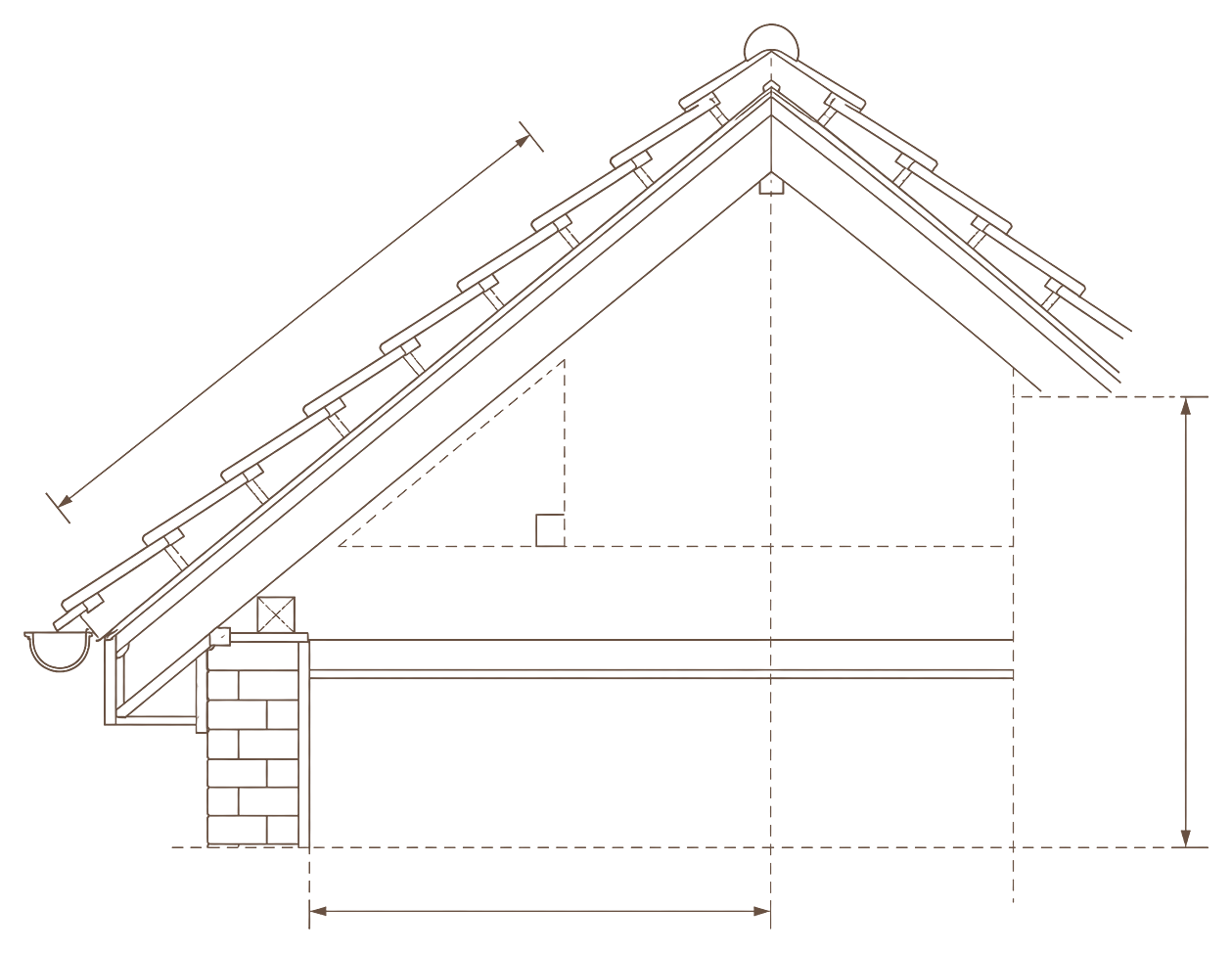

Apuldram roofs
From St Mary's tiled roof to Rymans' stone wing
-
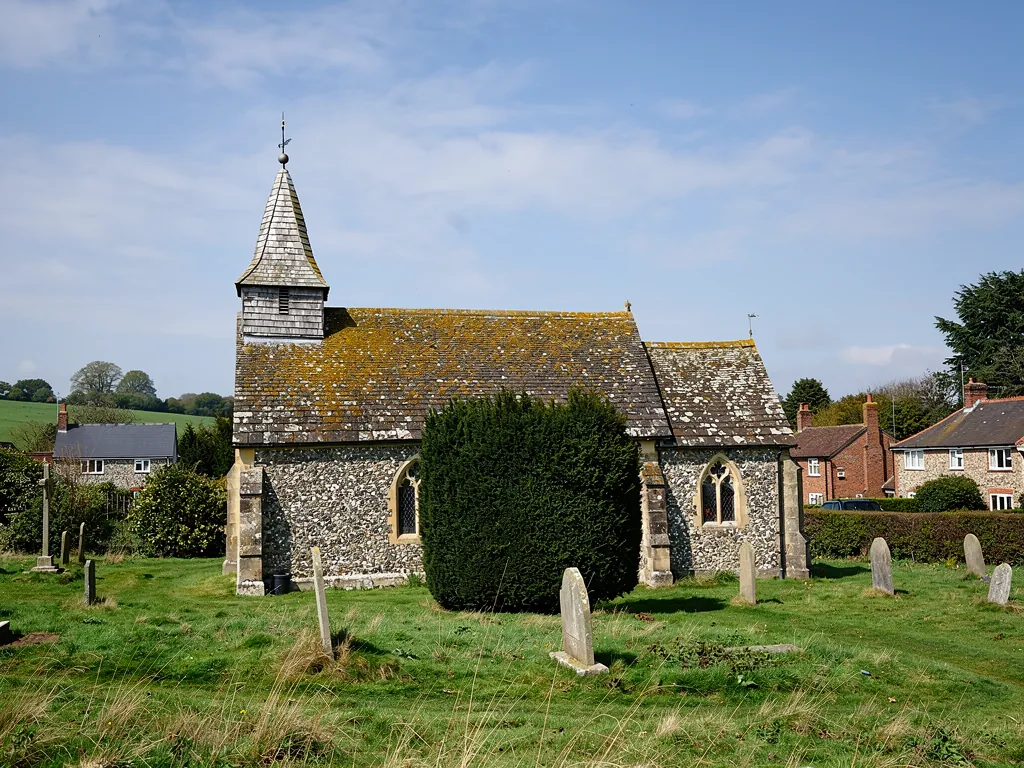
A flint church under tile
St Mary the Virgin is built of flint rubble with Caen stone dressings and roofed with tile. The sides and small broach spire of its bellcote are covered in wooden tiles, a second covering on the same building.
-
Rymans and its three-storey wing
William Ryman acquired the freehold in 1410 and built the house. Its three-storey solar wing is built of stone from the Bembridge and Ventnor quarries, and the whole house is listed Grade I.
-
A parish without a village
Apuldram's 1,111 acres include about 180 of tidal water and foreshore. The church stands alone in the north, with the Manor House and Rymans to its south-east, so each roof is judged on its own.
Map of Apuldram, 8.1 road miles north-west of Bognor Regis, with the nearest towns we also cover.
Apuldram on the harbour's edge
- Council
- Chichester District Council
- County
- West Sussex County Council
- Landscape
- Inside Chichester Harbour National Landscape, the 2023 name for the old area of outstanding natural beauty
- Listed buildings
- Church of St Mary the Virgin, Grade I (first listed 5 June 1958); Rymans, Grade I (first listed 5 June 1958)
- Parish edge
- Bounded on the west by the main channel of Chichester Harbour
- Distance
- 8.1 road miles north-west of Bognor Regis, about 15 minutes by car
Apuldram notes
Church, manor house and harbour shore
Three things shape a roof at Apuldram: its old stone and flint, its listings and the open water beside it.
Chapter 1: St Mary's: flint, Caen stone and a wooden bellcote3050
Sheet 01 / 03The parish church of St Mary the Virgin stands by itself in the north of the parish, and the Victoria County History describes it as built of flint rubble with ashlar dressings, principally Caen stone, and roofed with tile. Ashlar means dressed stone cut square and laid in neat courses, and Caen stone is a pale limestone from Normandy that was shipped across for fine work. Historic England's list entry (number 1026474) records the church as Grade I, first listed on 5 June 1958. A building of that standing is looked after slowly and carefully, and any roofer who works on one should be ready to explain every step to the people responsible for it. The roof tells its own story if you read it: the colour of the tiles, the patches where later repairs were fitted and the places where moss and damp have settled all point to what is failing and why.
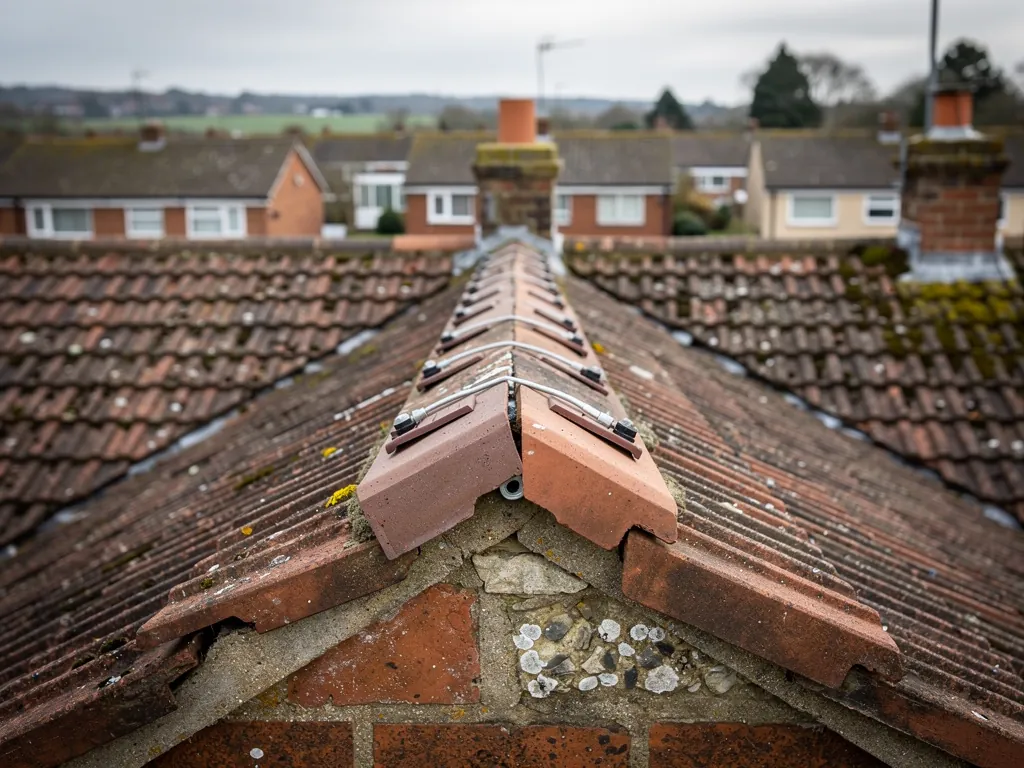
Two coverings on one church
Tiled roof slopes
Cracked or slipped tiles are swapped singly and the battens beneath are checked.
Wooden bellcote
A specialist covering that needs its own craftsperson and its own approval route.
1.1 Tile meeting stone and flint
A tiled roof is only as watertight as the edge where it meets the wall. At St Mary's that edge runs along flint rubble, which has an uneven face, and past dressed stone, which is softer than it looks. Lead (the flashing metal sheet that seals the joint) has to be dressed into the mortar joints and not forced into the stone itself, and the mortar needs to be a soft, matching mix. A hard cement repair can crack the stone around it, and the damage shows up in the very place the repair was meant to protect. Gutters matter here as much as the roof: a leaking joint that has run down a wall for a few winters washes out soft mortar and wets the masonry, so we look at the rainwater goods on every church and manor survey. Our pitched roofing page explains how a tiled slope is taken off and put back when a repair is not enough. When a tiled roof shows slipped or cracked tiles, we replace those and check the battens beneath, which are the timber laths each course hooks over. Where water has got in, they are often the first thing to rot.
1.2 The wooden bellcote
The sides and small broach spire of the bellcote are covered in wooden tiles, not clay. A broach spire is an eight-sided spire that rises from a square tower, with a small sloping piece, the broach, filling each corner. Wooden coverings are a specialist's job, and we would tell you that before pricing. What we can do is the lead, the tiled slopes below it and the guttering and downpipes that carry the water away.
1.3 Who agrees the work
Because St Mary's is a Church of England church in regular use, it sits outside listed building consent, and its works go to the Church of England's faculty system. The outside of the building can still need planning permission. The parish deals with that route. We prepare a written quote for the roof work and photographs of what the survey found, which is what a parish needs to put in front of its advisers.
Chapter 2: Rymans and the Manor House: listed stone roofs2806
Sheet 02 / 03Rymans takes its name from William Ryman, who acquired the freehold in 1410 and built the house. Its three-storey solar wing is built of stone from the Bembridge and Ventnor quarries, and Historic England's list entry (number 1354451) records the house as Grade I, first listed on 5 June 1958. The Manor House sits near it, to the south-east of the church. Neither is a house for a quick patch from a ladder. A three-storey wing means work at height, and work at height means scaffolding, planned before a tile is touched.
Before work on a Grade I house
- Look up the list entry
- Photograph every slope
- Ask the conservation officer
- Plan the scaffold first
2.1 Listed building consent comes first
Under the Planning (Listed Buildings and Conservation Areas) Act 1990, no one may alter a listed building in a way that would affect its character unless the works are authorised. That is listed building consent, and Chichester District Council is the body to ask. Putting the same covering back in the same way is the least likely to need an application, but whether a job counts as like for like is a judgement we would not make for you. We read the list entry, photograph the roof and write down what we found, so your conversation with the council's conservation officer is about facts.
2.2 What a careful repair involves
On an old house, the sensible first move is to find out what is wrong before anything is stripped. A single leak is often a failed soaker (the small folded piece of lead that slides under tiles at the point a slope butts against a wall or a chimney) and nothing more. Water also finds its way in through an old underlay, the membrane beneath the covering, or through a gutter that has been leaking onto a wall for a long time. Should the covering need to come off, the tiles worth keeping are sorted and set aside to go back, and the battens and underlay are renewed. Our roof repairs page explains the smaller jobs, and our lead roofing and leadwork page covers flashings, valleys and soakers in detail.
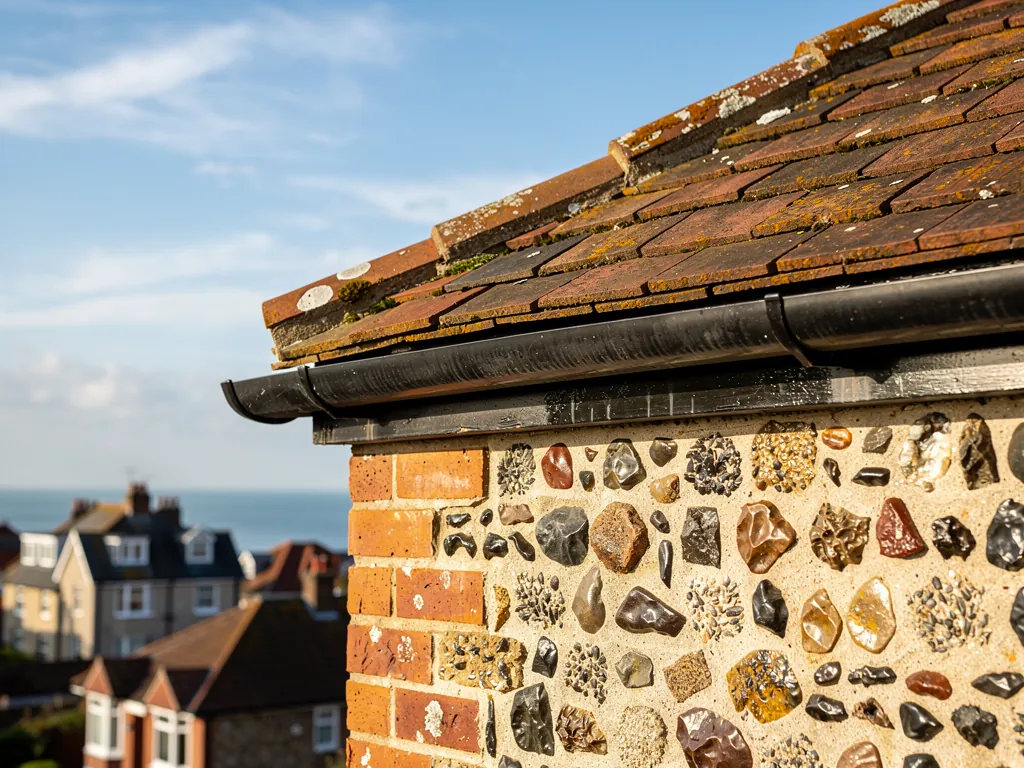
2.3 Age and condition on an old tiled roof
Marley quotes a minimum life of 60 years for clay tiles from the Building Research Establishment, but a conservation article warns that the figure is not a reliable guide for old handmade peg-tile roofs. On a roof as old as these, condition counts for more than the date. We look at whether the tiles ring when tapped or sound dull, whether their surfaces are flaking, whether the nail holes have elongated and whether the timbers underneath are dry. A roof with the odd failed tile may need nothing more than a day's repair, whereas one where the tiles are laminating across a whole slope is beyond patching, and we show you the difference in photographs. Either way you get a written quote with one total, after the survey.
Chapter 3: Harbour shore, open water and a scattered parish2928
Sheet 03 / 03The parish is bounded on the west by the main channel of Chichester Harbour, and Apuldram lies inside Chichester Harbour National Landscape. The harbour was designated an area of outstanding natural beauty on 4 February 1964, and in 2023 all such areas were renamed National Landscapes. The practical effect for a roofer is that the land counts as protected land when planning rules are applied, so rules for dormers and roof windows are tighter than on an ordinary street. Our guide to skylight planning permission explains where the lines fall, and Chichester District Council's planning team gives the answer for your address.
A note on survey photographs
Every Apuldram quote follows photographs of the roof itself, because no two buildings here share a type, an age or an exposure.
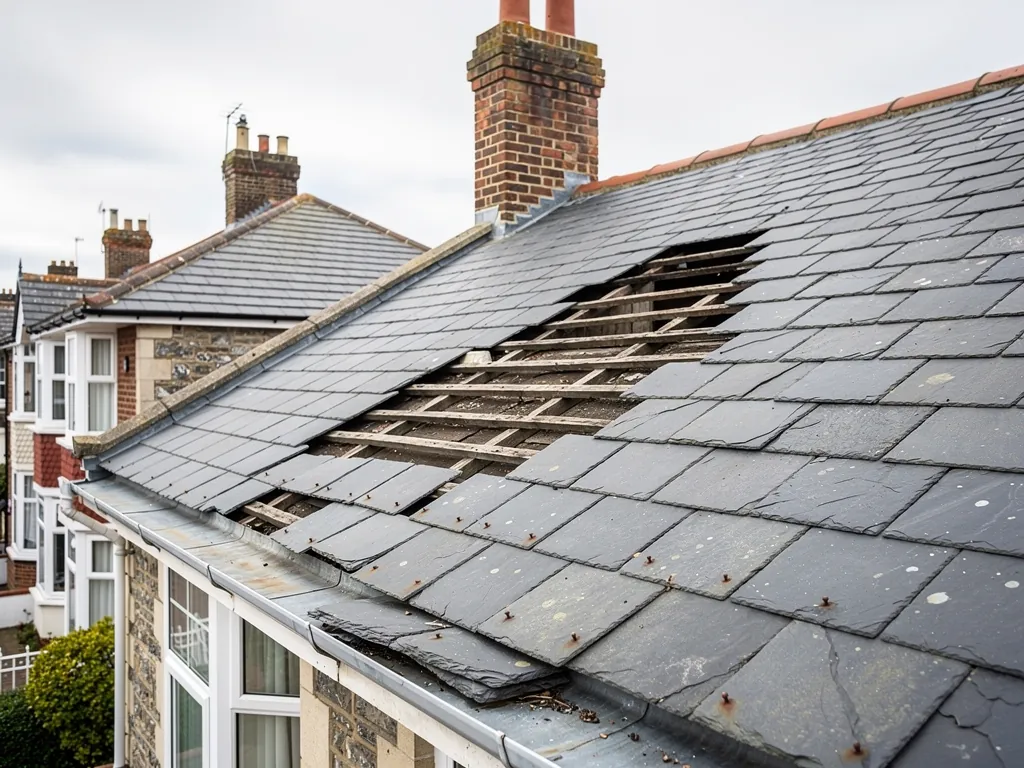
3.1 Sea weather on open ground
A house beside open water takes the weather as it comes. Gales, driving rain and the salty air close to the shore all work on a roof, and they show up first where the fixings are weakest: the ridge, the verges, the tiles at the eaves. Fixing specifications are site-specific, and Marley notes that a pitch of less than 30 degrees can leave the windward slope under severe suction. So we look at how each roof is held down before we judge how it keeps rain out. If a ridge or verge sits on nothing but old mortar, the answer is mechanical fixings, not another coat of mortar.
3.2 Scattered buildings, one roof at a time
The Victoria County History is blunt: there is no village here. The church, the Manor House and Rymans sit apart across the parish, and the roofs have little in common except the weather. We do not treat Apuldram as a single type of job. We survey each building, photograph the problem and give you one of three answers: refix, repair or replace. A farm outbuilding with a failed covering is a different question from a listed wing, and the written quote reflects that. Bats and nesting birds are protected by law, which matters on old roofs near water, so we check for them before lifting anything. If an outbuilding was built or refurbished before 2000, the HSE says to assume it contains asbestos until it has been checked. Sheets of asbestos cement are fragile, so nobody should walk on one, and careful removal without breaking the material up is non-licensed work, though broken or substantially damaged sheets make it notifiable. Household asbestos waste also travels on a consignment note. We raise this at the survey, not halfway through a job.
What we fix on Apuldram roofs
Frequently asked questions
Questions from Apuldram church to the harbour shore
Can a tiled flint church like St Mary's be repaired without stripping the whole roof?
Often, yes, if the battens and rafters beneath are sound. Cracked or slipped tiles are replaced one by one, the lead at the walls is renewed and the gutters are cleared. If the survey finds rotten battens across a slope, that slope needs stripping. A parish church needs a faculty first, so the scope is agreed with the parish before we start.
Does the Grade I listing of Rymans change how its roof is repaired?
Yes. Works that affect a listed building's character need listed building consent, so the council's conservation officer is the first call. A repair that puts back the same covering the same way is the least likely to raise questions. We read the list entry, photograph the roof and write down the proposed work, so the discussion with Chichester District Council is quick.
Do roof windows on a house within Chichester Harbour National Landscape need special consent?
The rules are tighter on this land than on an ordinary road, and listed buildings need consent as well. Read our skylight planning guide, then check the exact position with Chichester District Council's planning team. Do not order a roof window until you have the answer, because a refused application leaves you with a unit you cannot fit.
How do gales and driving rain off Chichester Harbour change what a roof needs?
They put the weight on the fixings. On a house by open water, we check that ridge and hip tiles are held with clips or screws as well as mortar, that verge tiles are secure and that eaves courses have not slipped. Where fixings have failed, refixing the tiles is often a smaller job than a new roof, and the survey photographs show which one yours needs.
Nearby areas
Get a quote
Tell us about your roof
Describe what's happening and we'll call you back.
Loading the enquiry form. You can also call 01243 252373.