
Roofers in Purbrook
Flint, plain clay tile and Welsh slate
Purbrook lies on the north side of Portsdown Hill, once Forest of Bere woodland, and the St John's conservation area keeps plain clay tile over flint and Welsh slate over red brick.


Purbrook roofs
From the 1843 church to the Portsdown slope
-
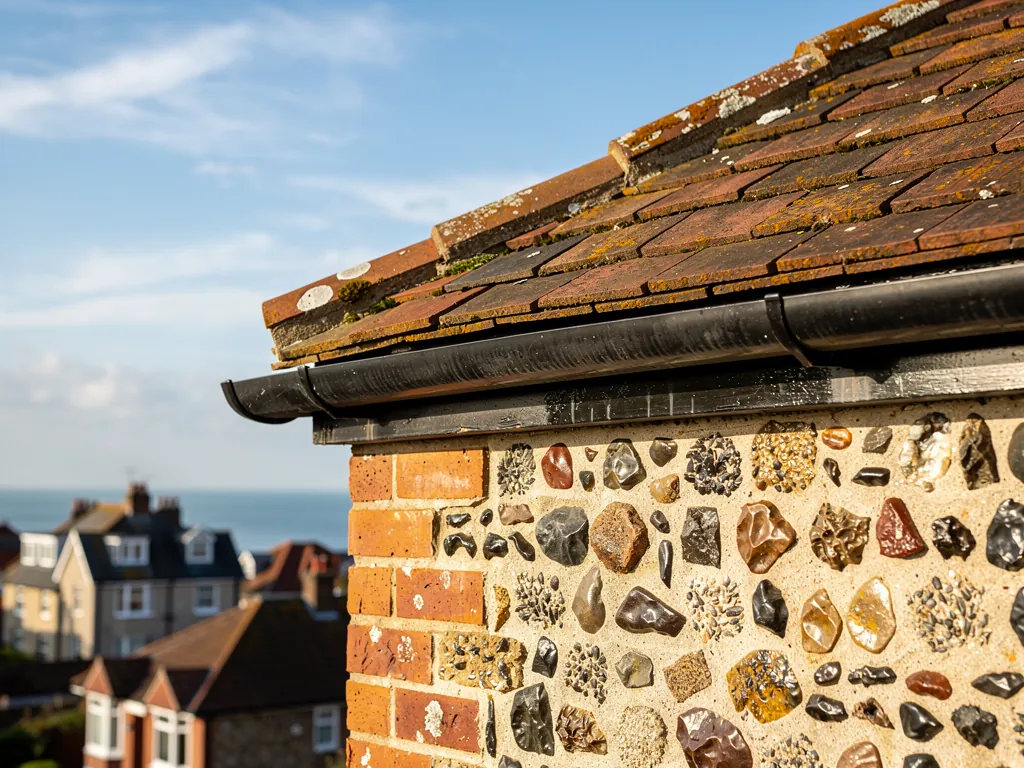
A flint church under plain tile
St John the Baptist church, designed by J P Harrison and built in 1843 in an Early English style, is flint with stone dressings under a plain clay tile roof. It anchors the St John's conservation area.
-
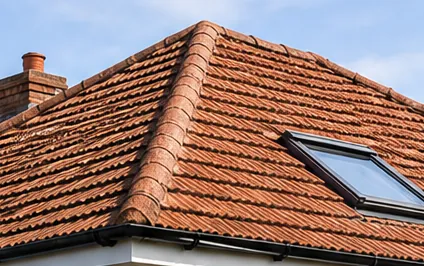
The school and its steep pitch
The neighbouring school, from the middle of the 19th century, has flint walls, stone and brick dressings and steeply pitched plain tile roofs, a pitch that sheds rain fast and leaves plenty of tile edge to keep fixed.
-
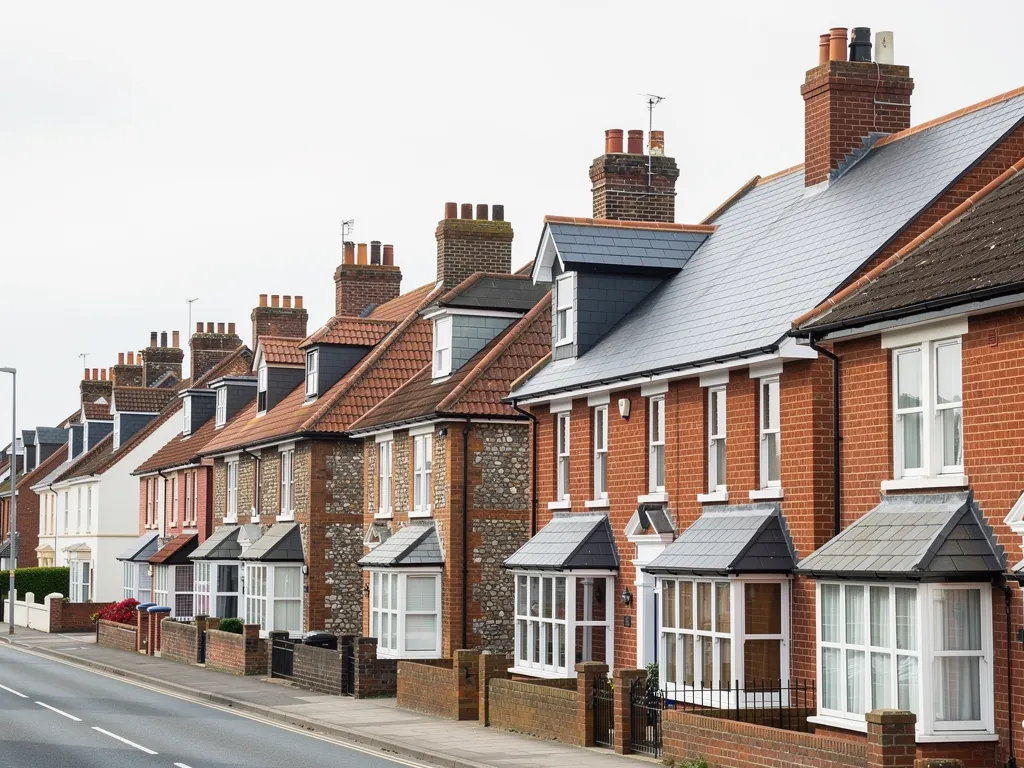
A red brick chapel in slate
The former Methodist chapel is red brick with a Welsh slate roof. Two roofs a few metres apart, one clay and one slate, call for different repairs, and a surveyor has to know the difference.
Map of Purbrook, 20.5 road miles west of Bognor Regis, with the nearest towns we also cover.
St John's and the Portsdown side
- Council
- Havant Borough Council
- County
- Hampshire County Council
- Conservation area
- St John's Conservation Area, first designated in 1985 and reviewed in June 1994
- Article 4
- None covers Purbrook on Havant's Article 4 page
- Listed landmark
- Church of St John, Grade II, first listed 6 February 1984
- Distance
- 20.5 road miles west of Bognor Regis, about 29 minutes by car
Purbrook notes
Flint, forest edge and the Portsdown slope
Where Purbrook's roofs come from, and what that changes when one of them needs work.
Chapter 1: Flint, stone and clay round St John's2257
Sheet 01 / 03The oldest roofs in Purbrook cluster around St John's church, and Havant Borough Council protects them as the St John's Conservation Area, first designated in 1985 and reviewed in June 1994. The council's character appraisal singles out three buildings: a flint church, a flint school and a red brick chapel. Each wears a different roof, and all three sit within a short walk of one another. That is a useful lesson for anyone with an older house nearby. Before anybody proposes changing a roof in a conservation area, somebody should look at it properly and say what is actually wrong.
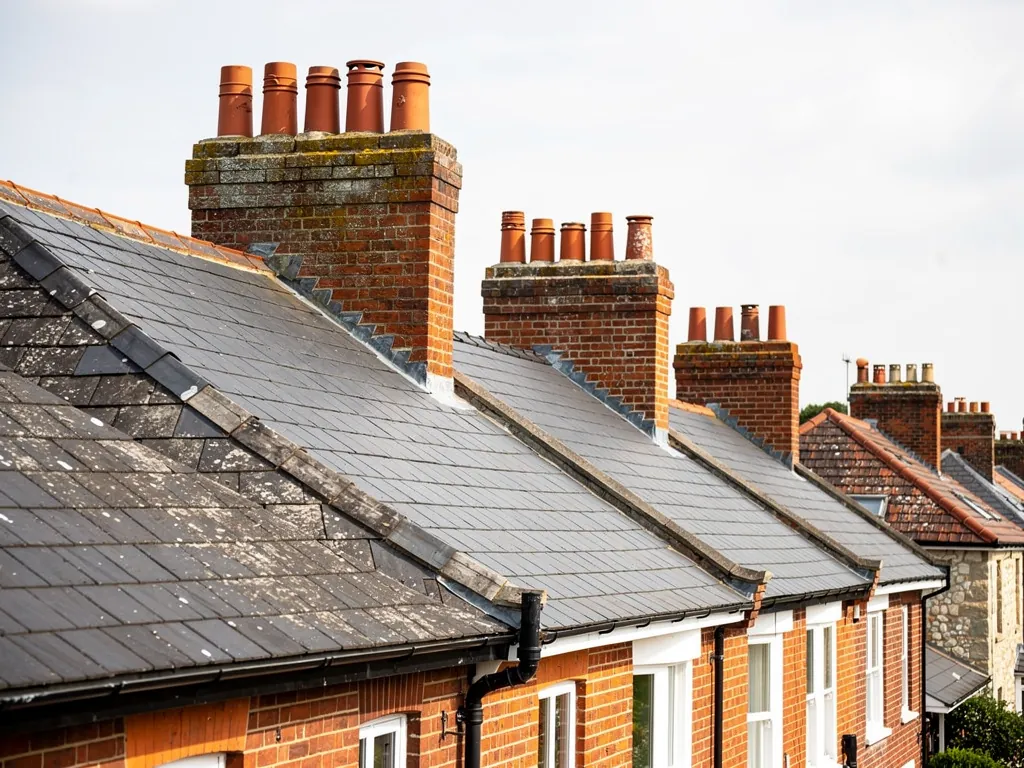
Before you book anyone near St John's
- Look up Havant's boundary map
- Check for a list entry
- Match plain tile or slate
- Ask Havant's planning team
1.1 Plain clay tile on a flint church
J P Harrison designed the church, built in 1843 in an Early English style, in flint with stone dressings under a plain clay tile roof. Plain tiles are small and flat. Each one hangs from a softwood batten, the lath the course hooks over, by two nibs cast into its back, and every course laps the one beneath, which is why such a roof is thick, steep and quick to shed rain. Because every tile is separate, a cracked one comes out and a matching salvaged one goes in while its neighbours are left alone. That makes a sound plain tile roof a repair candidate far more often than an owner expects. The church is still in Anglican use, so its own repairs go through the faculty system rather than the council, but the houses around it share the setting and the roof type.
1.2 The school and its steeply pitched roofs
The neighbouring school, built in the middle of the 19th century, has flint walls, stone and brick dressings and steeply pitched plain tile roofs. Steep pitches forgive water but not loose edges. The verge, the sloping edge that finishes a gable, and the hips, the angled ridges at the outer corners, take the full force of a gale. A ridge bedded on mortar alone falls short of BS 5534 as revised in 2014, which adds a clip or screw. Where a steep slope runs into a flint wall or a chimney stack, a strip of lead flashing seals the junction, and that junction is where an old roof most often lets go. Our pitched roofing page walks through stripping a tiled slope and relaying it.
1.3 Welsh slate on the former chapel
The former Methodist chapel is red brick under Welsh slate. CORC says slate, if well maintained, can last 100 years or more, so on an old slate roof the slate itself is often still sound. The nails and the lead let it down. A slipped slate is held back in place by a tingle, a strip of metal bent to clip it without disturbing the course above, and the flashings round the stacks are renewed where they have split. Our slate roofing page covers the wider job.
Chapter 2: Forest of Bere, Portsdown and the road2318
Sheet 02 / 03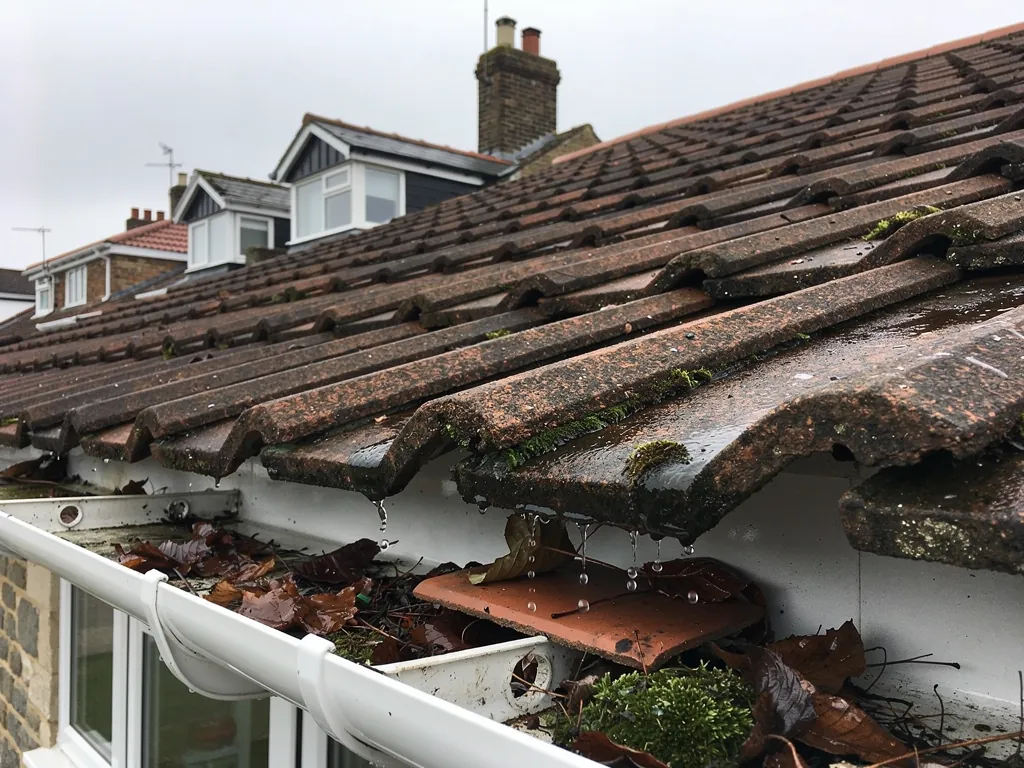
The Victoria County History pictures Purbrook on the London and Portsmouth road, ringed by small copses and woods that were once part of the Forest of Bere. The village lies on the north side of Portsdown Hill, and Fort Purbrook stands up on the hill in the old parish of Farlington. For a roofer that setting points straight at trees. Anything beside woodland collects leaves, twigs and seed, and a slope kept in shade stays wet for longer than one in sun, which is why the first visit looks at the gutters as closely as the tiles.
Two slopes, two sets of checks
Slope under trees
Gutters, valleys and moss come first, because leaves and damp do the damage.
Slope in open light
Slipped tiles, ridge fixings and flashings come first, because the covering stays drier.
2.1 Leaves, moss and blocked gutters
Litter settles in three places: the gutters, the valleys (the troughs where two slopes drain together) and the back of each chimney stack. Once a valley chokes, water backs up and creeps beneath the tiles on either side. Moss thrives on shaded, damp slopes, and a thick cushion of it holds water against the clay. Loose growth brushes or washes off. If the moss has already lifted or cracked tiles, those are replaced first, because cleaning over damaged tile only hides the fault. While we are on the ladder we check the gutter falls too, the gentle slope that carries water to the downpipe. A gutter that stands full will rot the fascia board behind it. Our guttering, soffits and fascias page covers the replacement work. A loft near woodland may also hold a bat roost, and bats are protected, so we plan around them. Nesting birds are protected too, so a nest in use at the eaves can hold up work there.
2.2 Scaffold where the house meets the pavement
A house that fronts a road may need scaffold standing on the public highway, and that requires a licence under section 169 of the Highways Act 1980. Hampshire County Council is the highway authority for Purbrook, and the scaffold firm makes the application to it. Ten clear working days must pass between application and the planned start, the fee is £211.90 for the first two weeks and £72 for each fortnight after, and no extensions are offered. We therefore fix the programme around the licence, not the other way round. When you weigh quotes, ask every roofer whether scaffold and its licence sit inside the price. Access matters too. A deep front garden, a narrow side passage or a shared drive changes where materials are stacked and how the waste leaves, and we look at all of that on the survey visit so the programme is realistic.
Chapter 3: Repair, overhaul or re-roof on the hill2379
Sheet 03 / 03Most callers want a price before anyone knows what is wrong. We turn that round. You get a verdict on the roof first, backed by photographs of your own slopes, and the verdict names the smallest job that will hold. Only after that does a figure appear, and it is a written one.
Typical re-roof ranges for a Purbrook house
- Hip roof£9,250 to £18,000
- Gable roof£7,000 to £16,250
- Flat roof£2,800 to £7,500
One total price goes in writing once we have surveyed your own roof.
Source: Checkatrade roof replacement cost guide, table last updated October 2026, prices plus VAT
3.1 What we read from the ladder
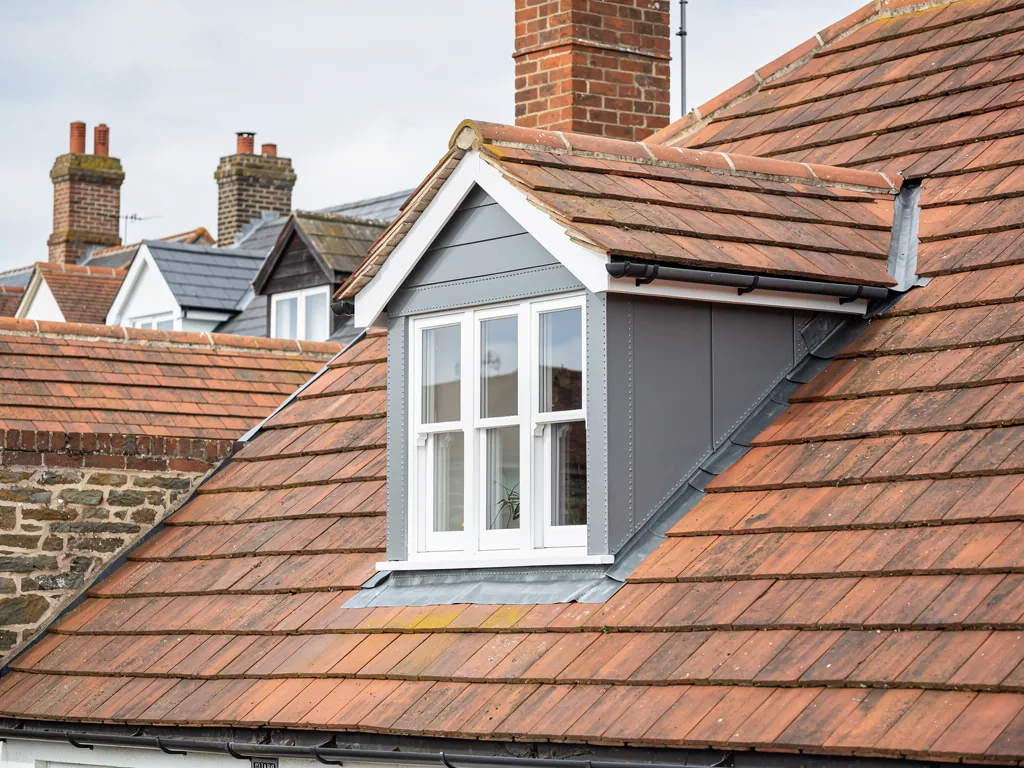
A cottage near the church and a house built long after it can stand a few streets apart, so a street name tells us nothing about the roof. We read the roof itself. Slipped tiles in clusters point to failing fixings. Sagging between rafters points to a rotten batten or a soft deck. From inside the loft we study the underlay, the sheet under the tiles, for daylight, damp stains and old felt that has turned brittle. Then we check the ridge, the verges and every flashing, because those details fail first and cost least to put right when caught early.
3.2 When a repair holds, and when it does not
A few scattered slipped tiles on a sound roof are a repair. Fixings that have failed across a whole slope are not, because every tile you replace sits beside one about to go. Marley gives a minimum life of 60 years for clay tiles, though old peg tile roofs may not follow that figure and a quoted lifespan is never a promise. Under the Planning Portal's guidance a re-roof usually needs no building control application when less than 25 per cent of the total building envelope and less than 50 per cent of the roof is affected, while a new covering at least 15 per cent heavier than the old one does need approval. Havant Borough Council's building control team, or a registered building control approver, confirms the position, and we manage the notification where one is due.
3.3 What moves a re-roof price
Access, the covering you choose, how big and how complicated the roof is, and whatever the survey finds under the old tiles, all move the price. Check that any quote you hold states whether VAT, at 20 per cent, and the scaffold are included. A hipped roof has more edges than a gable and costs more to cover, a chimney through the slope adds lead, and a shallow pitch narrows the choice of tile. If the survey finds rotten battens or boarding, those are renewed before the covering goes on, and you see the photographs before you agree.
Where we can help in St John's and Portsdown
Frequently asked questions
Purbrook roofs, answered from St John's to Portsdown
My roof near St John's is plain clay tile: can a few tiles be replaced without relaying the slope?
Usually, yes. Plain tiles are individual, so slipped or cracked ones can be lifted out and swapped for matching tiles while the rest stays put. The test is the fixings. If the nibs and battens are sound across the slope, a repair holds. If they are failing everywhere, relaying the slope with the good tiles reused becomes the sensible job, and the written quote spells out which of the two we recommend and why.
Do I need to tell Havant before re-roofing a house inside the St John's conservation area?
Putting back the same covering on an unlisted house is rarely a planning matter. A listed building is different and rules change, so ask Havant Borough Council's planning team before you start. Havant's Article 4 page lists no direction covering Purbrook. Building control is a separate question: the council or a registered building control approver says whether your job is notifiable, and we pass on the details they need.
Who arranges the scaffold licence if the scaffold must stand on the pavement outside a Purbrook house?
Scaffolders ask Hampshire County Council for it, and the council wants 10 clear working days of notice. The fee is £211.90 for the first two weeks and £72 for each further two, with no extensions offered. We build the roof programme around those dates, so you fill in nothing yourself. It also helps to know the licence is for a particular scaffold, so changes to the access plan need a fresh conversation.
Is there an Article 4 direction on roofs near Fort Purbrook or the Portsdown slope?
Havant's list of Article 4 directions names Langstone, Homewell and a trio of land-use directions on Hayling, and Purbrook appears nowhere on it. For an unlisted house the normal permitted development position therefore applies, with the St John's conservation area and any listing as the checks to make. Because directions can be added, confirm the current position with the council for your own address before ordering materials.
Nearby areas
Get a quote
Tell us about your roof
Describe what's happening and we'll call you back.
Loading the enquiry form. You can also call 01243 252373.