
Roofers in Waterlooville
A roadside town north of Portsdown
Waterlooville is a modern settlement on the London and Portsmouth road, north of Portsdown in old Forest of Bere country, so every roof here has to be judged on its own age and build.

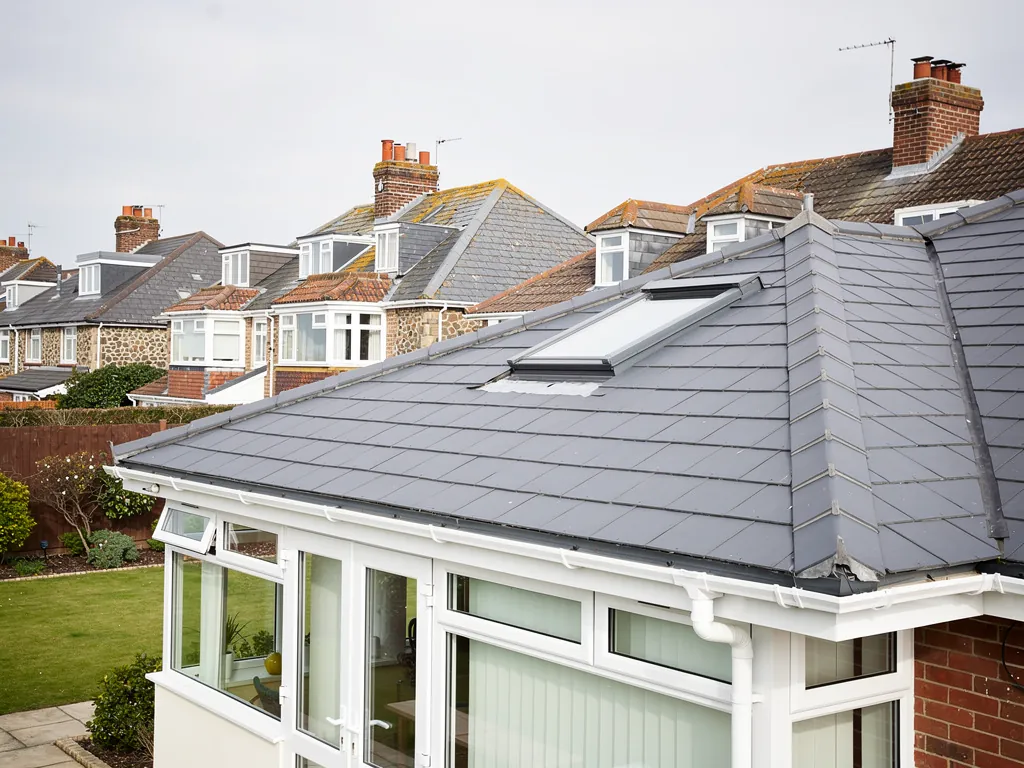
Waterlooville roofs
From the London road to the convent church
-
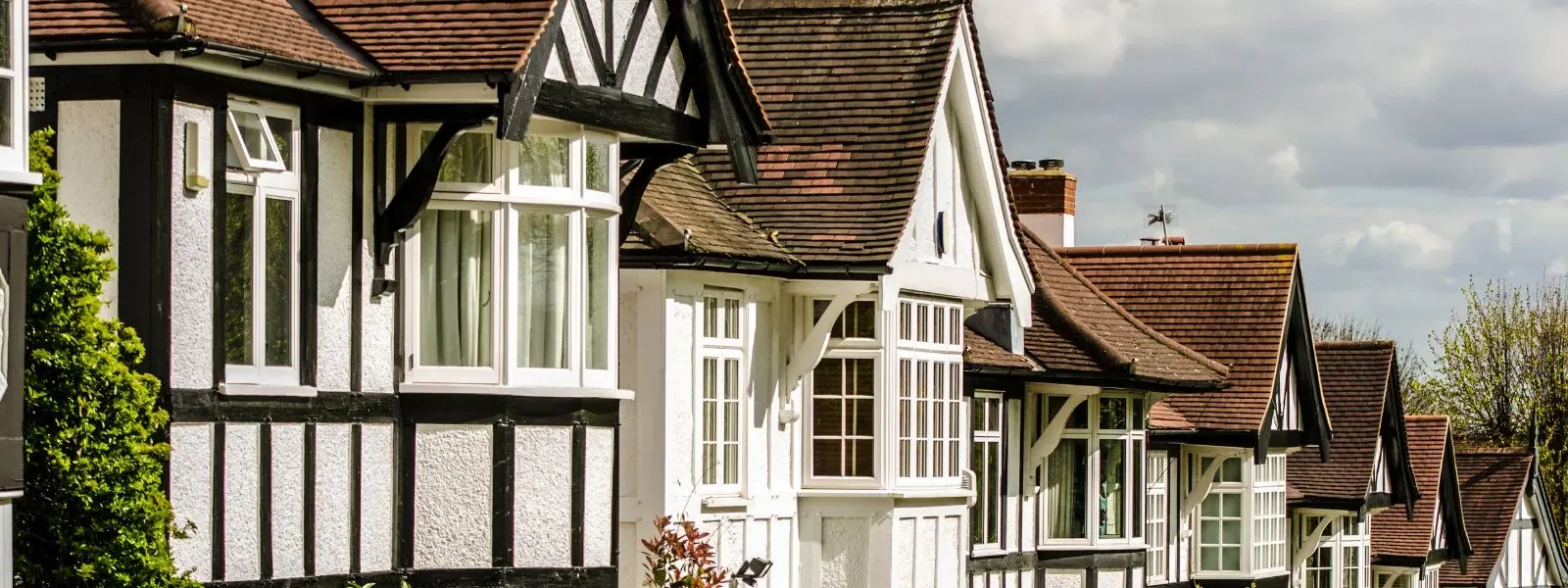
A settlement named for a battle
The Victoria County History of 1908 calls Waterlooville a modern settlement, as its name implies, on the London and Portsmouth road about three miles north of Cosham. No ancient core guides a roofer, so every roof starts from a clean sheet.
-
Inns beside the road
The same history records numerous inns, among them the Heroes of Waterloo, and a light railway to Horndean. Where an older building has grown by wings and extensions, each join adds a valley or an abutment to keep watertight.
-
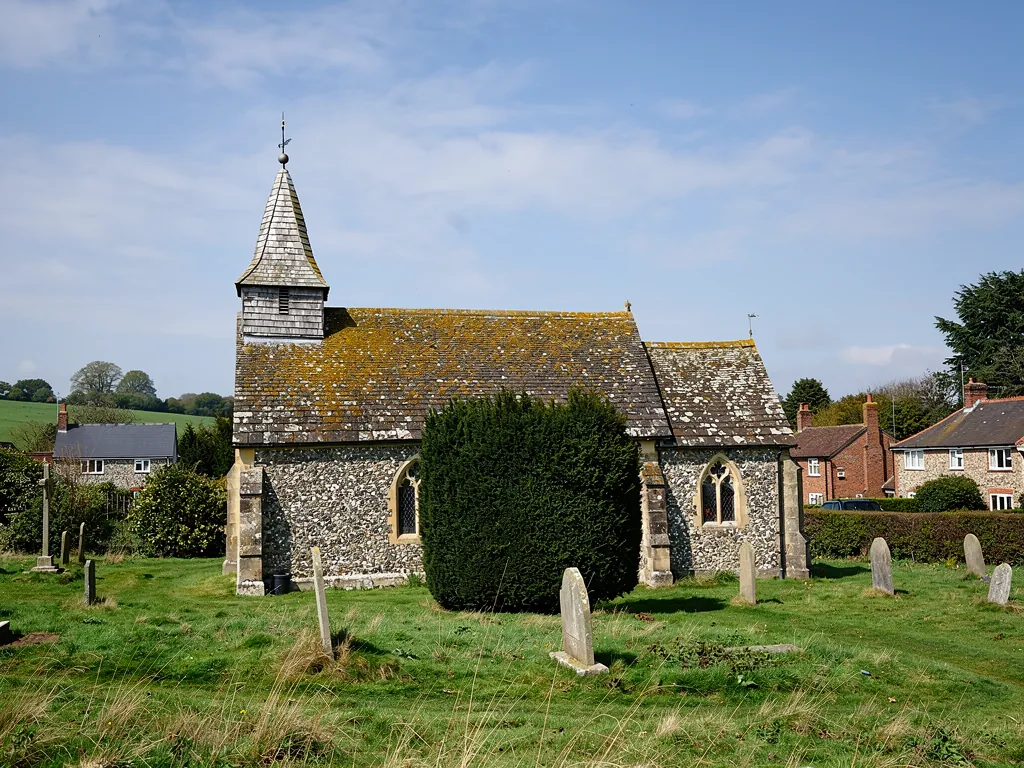
A listed convent church
Sacred Heart Church at St Michael's Convent is a Grade II listed building, first listed on 2 February 1999. Work that affects a listed building's character needs listed building consent, so we read the entry first.
Map of Waterlooville, 20.9 road miles north-west of Bognor Regis, with the nearest towns we also cover.
The London road settlement
- Council
- Havant Borough Council
- County
- Hampshire County Council
- Conservation area
- None named for Waterlooville among Havant's 14 conservation areas
- Article 4
- None covers Waterlooville on Havant's Article 4 page
- Listed landmark
- Sacred Heart Church at St Michael's Convent, Grade II, first listed 2 February 1999
- Distance
- 20.9 road miles north-west of Bognor Regis, about 29 minutes by car
Waterlooville notes
A road town with no old core
How a town that grew along a road changes the way a roof is read, repaired or replaced.
Chapter 1: Reading a roof in a road town1769
Sheet 01 / 03A village with a medieval church and a green tells a roofer a good deal before he lifts a single tile. Waterlooville gives no such clues. The Victoria County History called it a modern settlement, as its name implies, strung along the London and Portsmouth road about three miles north of Cosham, and it lies on the northern side of Portsdown in what used to be Forest of Bere country. The practical meaning for a roof is plain: the postcode will not reveal how old the covering is, so the roof has to tell us.
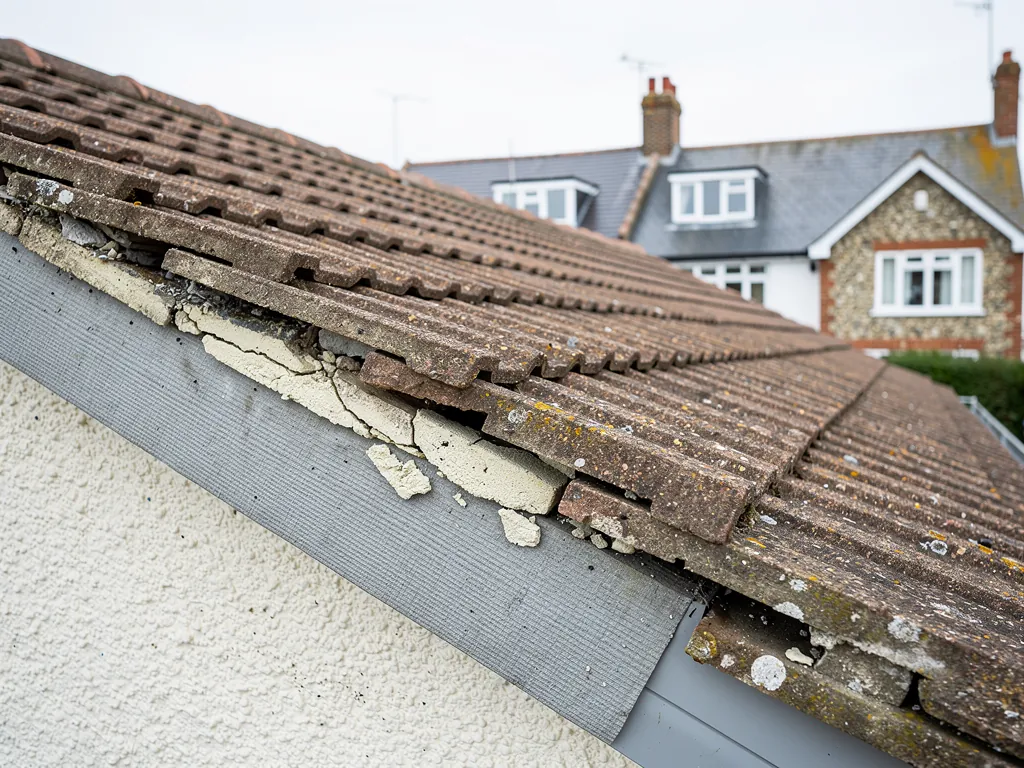
What we establish before quoting
- Age of the covering
- Ridge fixings
- Lead at every join
- Any listing on the building
1.1 Why age matters more than the address
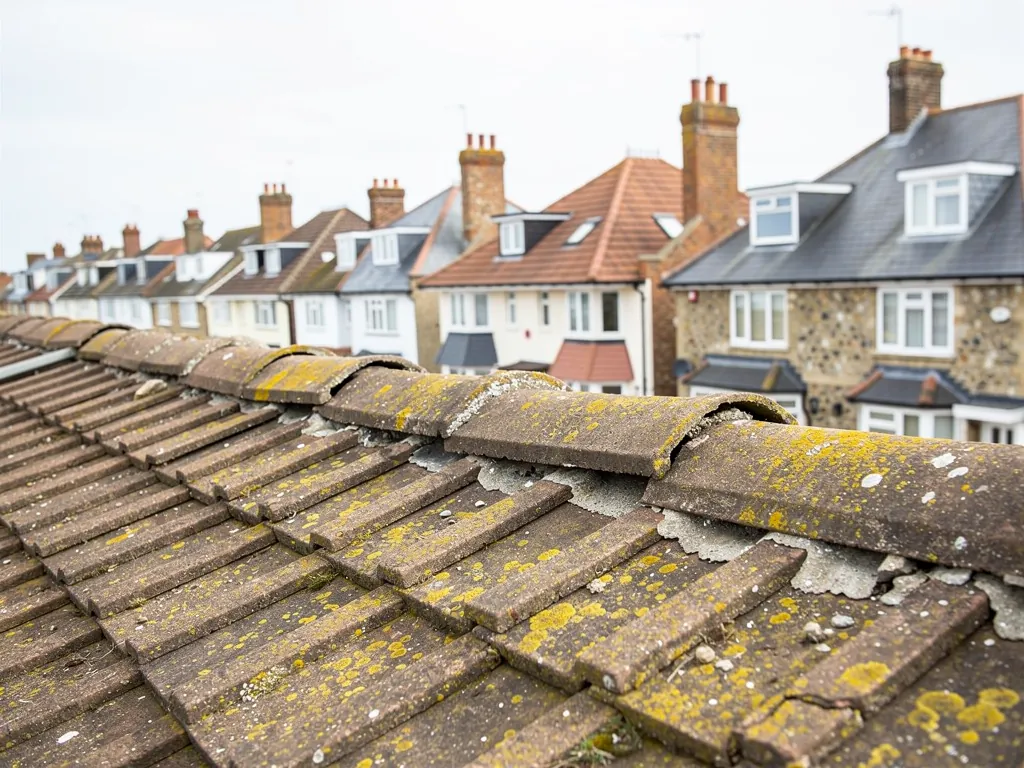
We work from evidence. The battens, the softwood laths the tiles hang from, show whether the roof has been renewed. The underlay, a waterproof membrane below the battens, dates the build, as old felt goes brittle and splits at the laps. BS 5534, revised in 2014, wants ridge and hip tiles tied down with a clip or screw as well as mortar, so a ridge bedded on mortar alone dates the work and often calls for attention.
1.2 No conservation area, but still some checks
Havant Borough Council lists 14 conservation areas and none is named for Waterlooville, and its Article 4 page records no direction covering the town. For an unlisted house, replacing a roof on the same lines seldom needs planning permission. Flats do not share a house's permitted development rights, and a listed building follows its own rules, so send your address to the planners before work begins. The council also runs building control, and it or a registered building control approver tells you whether your roof job is notifiable.
1.3 Valleys, abutments and rear extensions
A long road holds a long mix of building types, and the harder roofs are the ones with a join in them: a valley where two slopes drain together, an abutment where a slope runs into a wall, a rear extension tied into the main roof. Lead seals each join. Soakers are small folded lead sheets slipped beneath each course next to a wall, with the flashing as the strip laid over them to carry water off. Our lead roofing and leadwork page describes the materials we choose, and our pitched roofing page covers the slopes around it.
Gutters and downpipes sit along the lowest edge of every slope and are rarely noticed until a stain appears on a wall. On the same visit we check the gutter run, its joints and the fascia behind, and say whether a length can be refixed. Our guttering, soffits and fascias page covers replacements.
Chapter 2: Sacred Heart and the convent roofs2074
Sheet 02 / 03The most formally protected roof in Waterlooville belongs to Sacred Heart Church at St Michael's Convent, a Grade II listed building first listed on 2 February 1999. How a roof like that is governed is worth understanding, because the same rules explain what happens to any listed building in the town, a house included. A listing protects the building as a whole, so its roof, its walls and the details that give it character all fall within it.
Consent starts with the list entry
Find the list entry, find out who owns the consent decision, and only then agree the repair method and the materials.
2.1 Which consent route applies to a church
Two things decide the route: the body that owns the church, and whether services are still held. An Anglican church holding services sits outside listed building consent, and its works follow the faculty process. Roman Catholic, Methodist and some Baptist and United Reformed churches in use are exempt as well, each through its own approval process. Churches of other faiths have no exemption and apply to the council for listed building consent. When worship ends, the ordinary listed building and conservation rules apply, so check the church's current status before anyone books a scaffold. Whichever route applies, planning permission is still required for development that alters the exterior.
2.2 When the house itself is listed
For a house the position is plainer. Alterations that would change a listed building's character need listed building consent, and the list entry defines what is protected, so reading it is step one. Havant Borough Council's planning team says whether a given repair needs consent, and nothing should be ordered before it answers. Where consent is needed, we match the covering, the pitch and the details, and we photograph the roof before and after so the file shows what was done. A list entry explains why a building was listed and sometimes names the roof, but it rarely says anything about condition, so the survey and its photographs do that job.

2.3 Lead, and how thick it should be
Old buildings carry a lot of lead. Sheet lead is rolled to codes from 3 to 8. Royston's brochure lists code 4 at 1.80 mm for soakers and flashings, code 5 at 2.24 mm and code 6 at 2.65 mm for flashings and gutters, with the heavier codes suited to parapets and box gutters. An old roof space is also the sort of place where bats roost, and they are protected by law, which can change the timing of a repair. Lead can also be kept: where a flashing is sound and only the pointing has failed, we re-point the joint and leave the lead alone, which keeps the roof closer to how it was built.
Chapter 3: Planning a re-roof beside a through road2440
Sheet 03 / 03A road town puts houses close to traffic, and that changes how a re-roof is run. Where the scaffold stands, what the council has to be told and what the quote must include all deserve an answer before a tile comes off.
Two ways a quote can read
One total, scaffold and VAT stated
Tells you the full cost, so nothing is added later.
A figure with gaps
Leaves out scaffold or VAT, so the real total is higher.
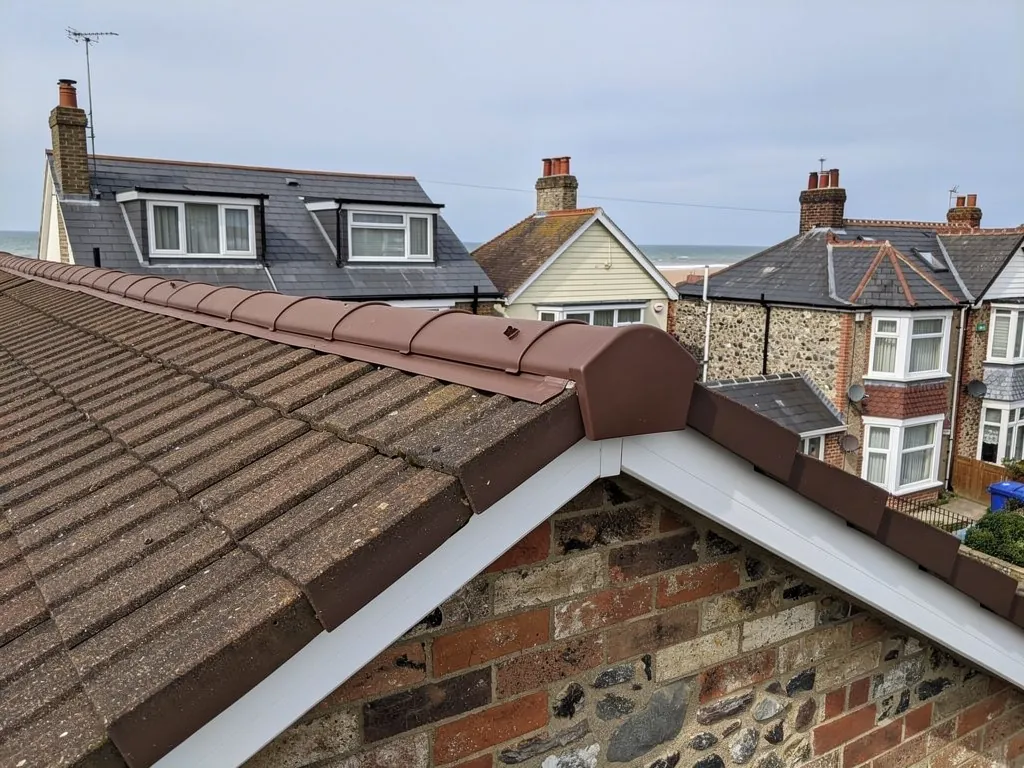
3.1 Scaffold on a Hampshire road
Section 169 of the Highways Act 1980 puts scaffold that blocks the public highway under licence, and around Waterlooville the licence is issued by Hampshire County Council. Under Hampshire County Council's arrangements the scaffolding contractor makes the application for the householder, and the county asks for at least 10 clear working days' notice. The charge is £211.90 for the first two weeks and £72 for every further two, and no extensions are given. A job that overruns can therefore cost more, which is one reason we line up deliveries and the dry spells before the licence is requested.
3.2 The thresholds that decide building control
According to the Planning Portal, you can normally skip a building control application where under 25 per cent of the whole building envelope is affected and under 50 per cent of the roof. Approval is needed if the new covering will be 15 per cent heavier or more, if the structure is altered, or if the new covering will behave differently in a fire. Havant's building control service or a registered building control approver confirms what applies to your roof, and where a notification is due we deal with it. Approved Document L can also demand better roof insulation when more than 50 per cent of its surface is renovated, with an improved value of 0.16 W/(m²·K) in Table 4.3 of the 2021 edition.
3.3 VAT and what a quote should say
The standard VAT rate is 20 per cent, and a re-roof is standard-rated. When quotes arrive, check that each one states whether VAT and scaffold sit in the total. Checkatrade's October 2026 guide puts a typical UK three-bedroom semi-detached re-roof at around £12,000, a figure to sense-check against, not a price for your roof. Our quote is written, with a single total at the bottom, and the survey photographs behind it show what the work covers. The unglamorous parts are in the job as well: taking the old covering away, protecting the garden and the drive, and leaving the road swept. Nothing is left behind: the old covering and the rubbish leave with us.
Roofs we look after in Waterlooville
Frequently asked questions
Waterlooville roofs, from the London road to the convent
What tells you the age of a Waterlooville roof when there is no old village core to go on?
We read the roof, not the road. Battens, underlay, the state of the nails, ridge fixings and the lead at each join show whether the covering is original or has been renewed, and one house on the main road can differ a lot from the next. We photograph each fault, give a verdict of repair, patch or replace with the evidence, and a written total price comes after it.
If my house is near Sacred Heart Church at St Michael's Convent, does its listing limit my roof work?
The listing covers the listed building, so a neighbouring house is not itself listed. Whether anything nearby needs extra care is a question for Havant Borough Council's planning team, and you should ask before any materials are ordered, because a refusal after delivery is an expensive way to learn the rules. A short email with your address and a photograph of the roof gives the planners what they need to reply. If your own house is listed, listed building consent applies to work affecting its character, and the list entry tells you exactly what is protected.
Waterlooville has no conservation area, so can I change my roof as I like?
Not quite. Havant names no conservation area for Waterlooville and records no Article 4 direction covering it, so an unlisted house keeps its usual rights and a like-for-like re-roof seldom needs planning permission. Listed buildings, flats and some changes of appearance are treated differently, and building control may still apply. Put your address to both of the council's teams before you commit.
How is a roof with several valleys and abutments repaired?
Slowly and in order. We trace each leak to its source, which is usually a valley, an abutment or the join with a rear extension, then renew the lead and the courses of tiles around it rather than stripping the whole slope. The complicated roofs need the most careful lead dressing, and we show you the photographs of every join before the written quote arrives.
Nearby areas
Get a quote
Tell us about your roof
Describe what's happening and we'll call you back.
Loading the enquiry form. You can also call 01243 252373.