
Roofers in Almodington
Smallholding houses, sheds, glasshouse nurseries
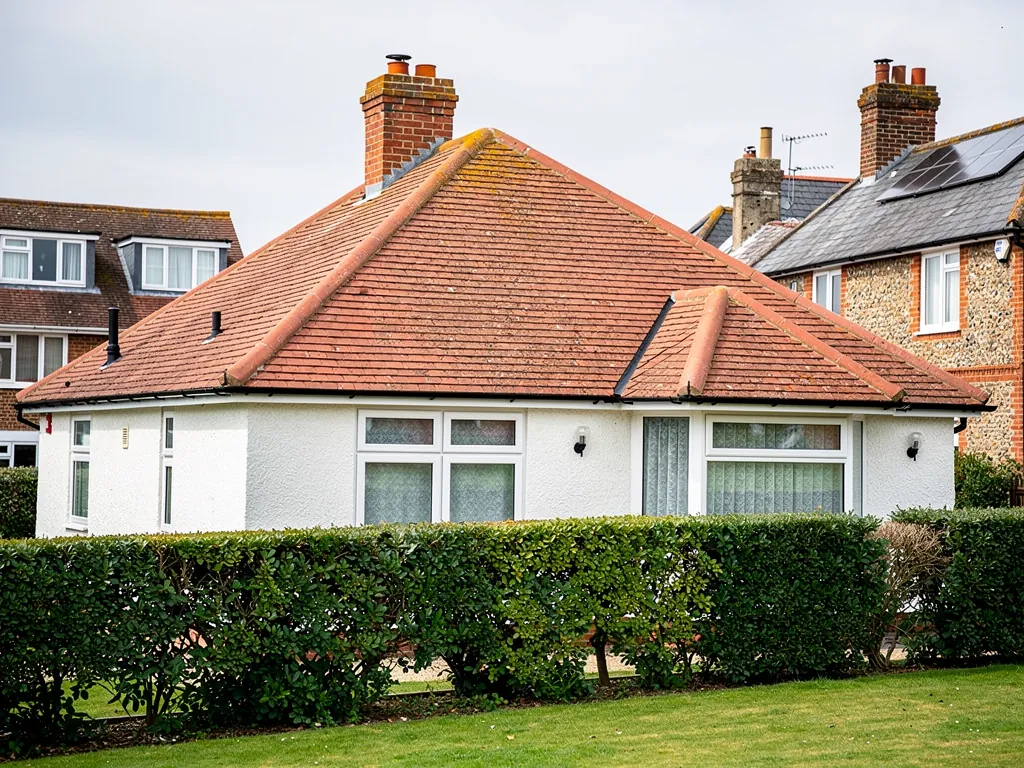
Almodington is a hamlet on the flat Manhood Peninsula, where 1930s smallholdings and large nursery glasshouses mean its roofs are houses, sheds and outbuildings more than village rows.

Almodington roofs
Smallholdings, outbuildings and nurseries on the flat
-
Houses built for the 1935 smallholdings
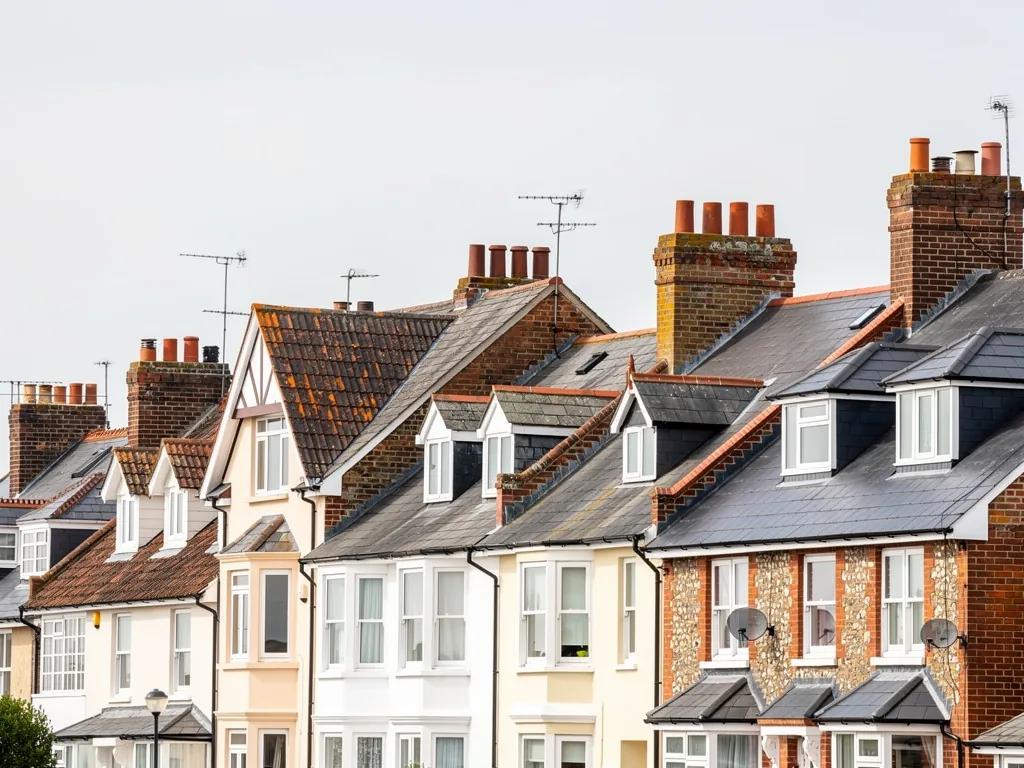
In 1935 the Land Settlement Association bought farms including Batchmeres Farm to create about 130 holdings of four to five acres, each with a house. A house from that scheme is now more than ninety years old, so its roof is read on its condition.
-
Sheds, piggeries and farm outbuildings
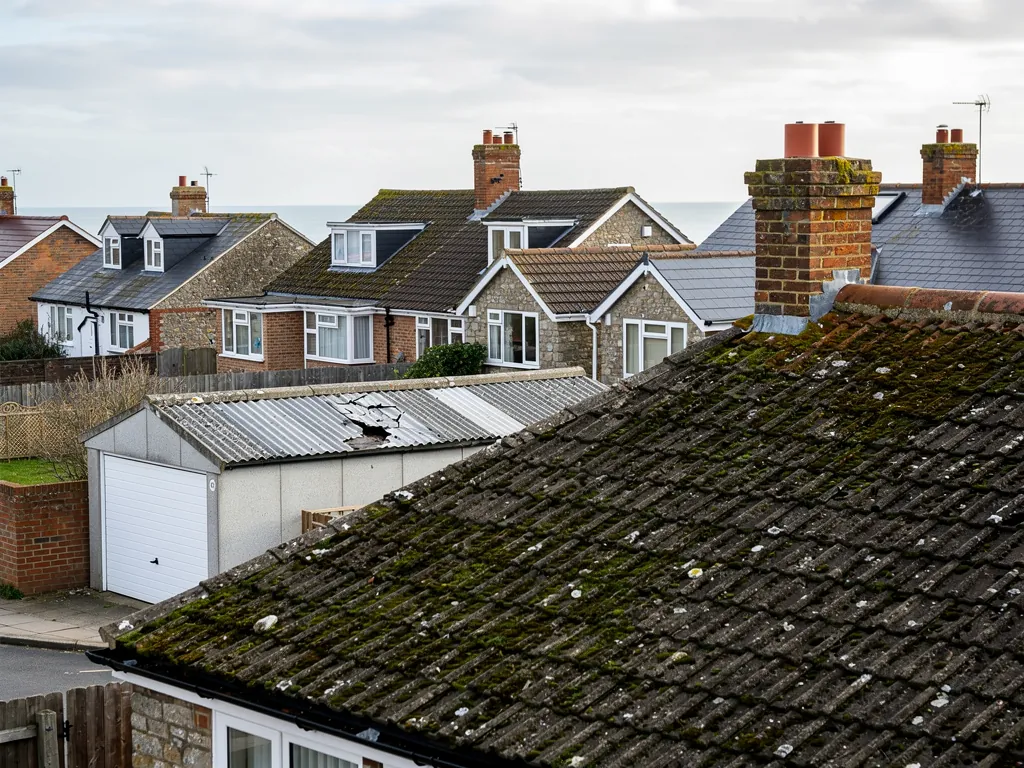
Each holding also came with greenhouses and piggeries. Outbuildings like these have simple roofs, often corrugated sheet or felt, that take weather with little shelter and are rarely looked at until a leak starts.
-
Nursery units with flat and low roofs
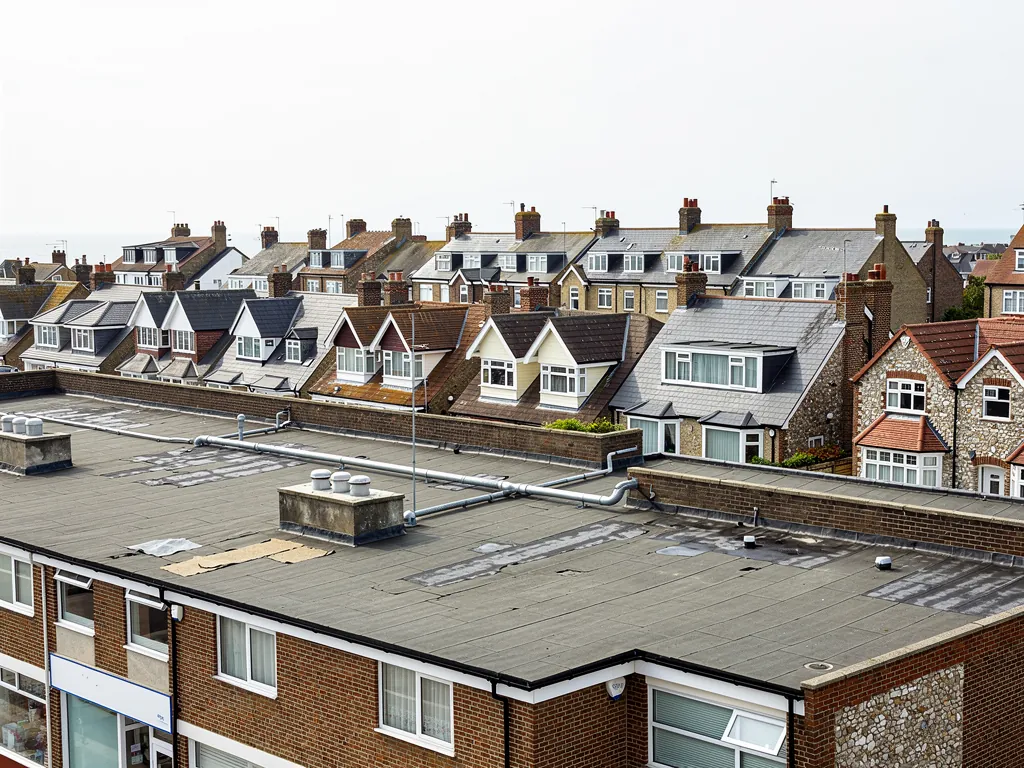
The smallholdings have largely become commercial nurseries, notable for their huge glasshouses. The packing sheds, offices and workshops that sit beside the glass bring flat and low-pitch roofs with gutters, upstands and falls to keep right.
Map of Almodington, 10.8 road miles west of Bognor Regis, with the nearest towns we also cover.
A hamlet between Earnley and Sidlesham
- Council
- Chichester District Council
- County
- West Sussex County Council
- Setting
- Flat Manhood Peninsula land among nurseries and glasshouses
- Church
- No parish church in the hamlet; it shares Earnley's
- Nearby landmark
- An 18th-century octagonal windmill, weather-boarded, in Earnley parish
- Distance
- 10.8 road miles west of Bognor Regis, about 21 minutes by car
Almodington notes
Smallholding houses and glasshouse nurseries
A hamlet shaped by a 1930s settlement scheme, and the three kinds of roof that scheme left behind.
Chapter 1: Houses of the Land Settlement scheme2196
Sheet 01 / 03Almodington is not named in Domesday, and it was united with Earnley in 1526. The hamlet has no parish church of its own and shares Earnley's. The shape of the place today comes from a much later event. In 1935 the Land Settlement Association bought farms including Batchmeres Farm at Almodington and divided them into about 130 holdings of four to five acres. Each had a house, greenhouses and piggeries, and the tenants were unemployed men from the north-east and South Wales. Nearly a century on, the layout of small plots and scattered houses is still what you see. Roofs have followed the same pattern. They were put up for people with little money and a lot of work to do, repaired when something broke, and rarely surveyed as a whole. That is why a first visit here is often the first time anyone has looked at the whole roof.
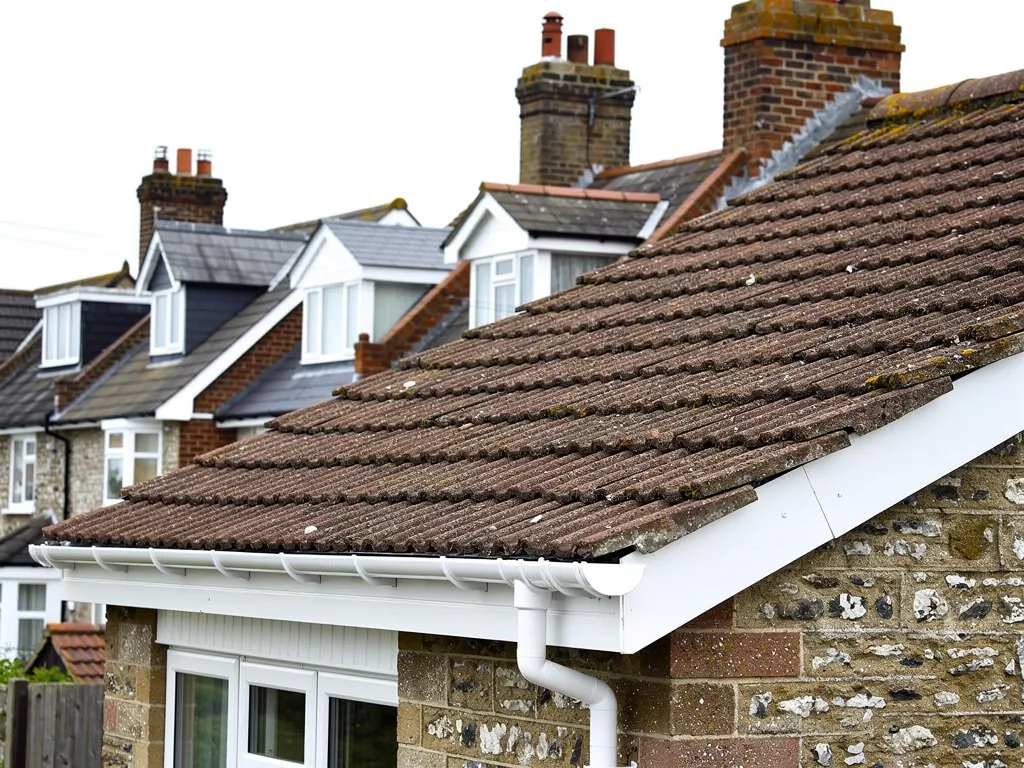
What we check on a smallholding house roof
- Underlay and battens from the loft
- Ridge and verge fixings
- Flashings at chimneys and extensions
- Gutters, fascias and downpipes
1.1 A roof that has done more than ninety years
A house built for that scheme will be more than ninety years old. We do not assume what it was covered in, because the settlement houses have been altered over time, and the sound way to find out is to look. In the loft we check the underlay, the battens, the rafters and the condition of the nails. On the slope we check the ridge, the verges (the edges along the gable ends) and the flashings. A roof of that age that has never been touched is due a hard look. One that has been re-covered since may need little more than gutters and a chimney. Our roof repairs page explains how we decide between a patch and more.
1.2 Extensions and flat-roofed additions
A smallholding house that has been in use for decades will usually have been extended: a kitchen at the back, a porch, a lean-to. Those additions bring flat or low-pitch roofs, and the joint where the new roof meets the old wall is a common leak. BS 6229:2025 gives a minimum finished fall of 1:80 for a flat roof, and we plan steeper so the surface drains properly. Ponding on a flat roof is the sign to watch for: water that is still standing two days after rain means the fall is wrong or the deck has sagged. Our flat roofing page lists the coverings we lay and what each suits. On an extension, the choice of covering depends on how the roof is used, how big it is and how the edges and upstands are detailed, and we explain the reasons for our pick.
1.3 Choosing between repair and replacement
We give a plain verdict on the roof you have. If the covering is tired but the structure is sound, we repair it and tell you what the repair should buy you. If the battens and underlay have failed, patching only delays the cost, so we say that too.
Chapter 2: Greenhouses, piggeries and nursery sheds2440
Sheet 02 / 03The smallholdings were built around glass. The Land Settlement Association gave each holding greenhouses, and the settlement farms have largely become commercial nurseries, notable for their huge glass houses. Glass itself belongs to specialist growers and glaziers, and we do not work on it. The buildings around it are another matter. A nursery has packing sheds, cold stores, workshops, offices and old outbuildings, and every one of those has a roof that someone has to keep watertight. Several of those buildings may share walls with glasshouse frames or sit hard against them, and a flashing at that line is hard to reach and easy to forget. We photograph those junctions on the survey, and we describe how we would tackle them before we price.
Two kinds of outbuilding roof
Sheet or corrugated
Quick to lay, but fixings loosen and old sheets may contain asbestos.
Felt or membrane
Needs a sound deck and a proper fall, with upstands sealed at every wall.
2.1 Outbuilding roofs: sheet, felt and asbestos
Sheds and piggeries from the 1930s onwards were roofed cheaply and quickly, and often reroofed the same way. Corrugated sheets and felt are the usual coverings. The HSE says to assume that a building built or refurbished before 2000 contains asbestos until it is checked, and asbestos cement was a common sheet material in that period. Lifting asbestos cement that is intact and carefully handled counts as non-licensed work. Sheets that have broken up make it notifiable non-licensed work, and the waste travels with a consignment note, because the household exemption does not cover asbestos. We never break or drill a sheet before we know what it is. Our guide to checking whether a garage roof is asbestos applies equally to a shed.
2.2 Commercial roofs on nursery units
A packing shed with a large flat or low-pitch roof is a commercial job in its own right, and the owner often cannot see the roof from the ground. Ponding, split seams, blocked outlets and damaged upstands are the usual faults, and a survey with photographs finds them quickly. Our commercial roofing page sets out the systems we fit. After the survey you get one total price in writing, and we confirm whether it includes VAT and scaffold so you know exactly what the figure covers.
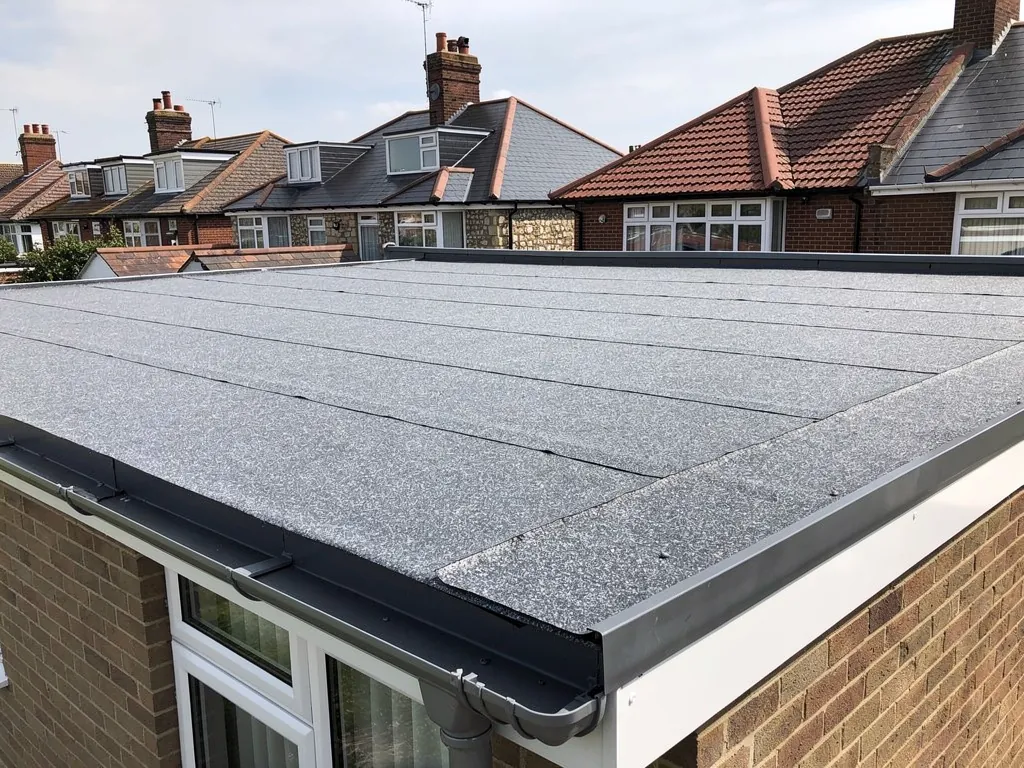
2.3 Long gutters and heavy rain
A shed roof with a long run of gutter collects a great deal of water in a downpour, and one sagging bracket or choked outlet is enough to send it over the edge and down the wall. We look at the fall along the run, the joints and the downpipes. Where a gutter was sized for a small building and now serves a larger roof, we flag it and recommend a size that suits the area it drains.
Chapter 3: Open ground, an old windmill and the weather2684
Sheet 03 / 03Almodington is a hamlet on the flat Manhood Peninsula between Earnley and Sidlesham, among nurseries and glasshouses. The land is low and open. In 1792 some 230 acres of waste at Almodington Green were enclosed, and an 18th-century octagonal tapering windmill, covered with weather-boarding, stands in the north of Earnley parish near the old Almodington boundary. A windmill is built to catch the wind, and that tells you something about the ground. Roofs here have little shelter from gales and driving rain. The ground is flat, so water has few places to go and wind has few things to slow it, and both reach the roof with their full force. A tile or a sheet that works loose on a calm day will move further on a rough one, so we fix the small faults before the weather makes them large.
Three outcomes for an exposed roof at Almodington
- RefixLoose ridge and verge tiles held with clips or screws.
- OverhaulRidges, verges, flashings and gutters renewed with the covering left alone.
- ReplaceA new covering, battens and underlay when the old set has come to its end.
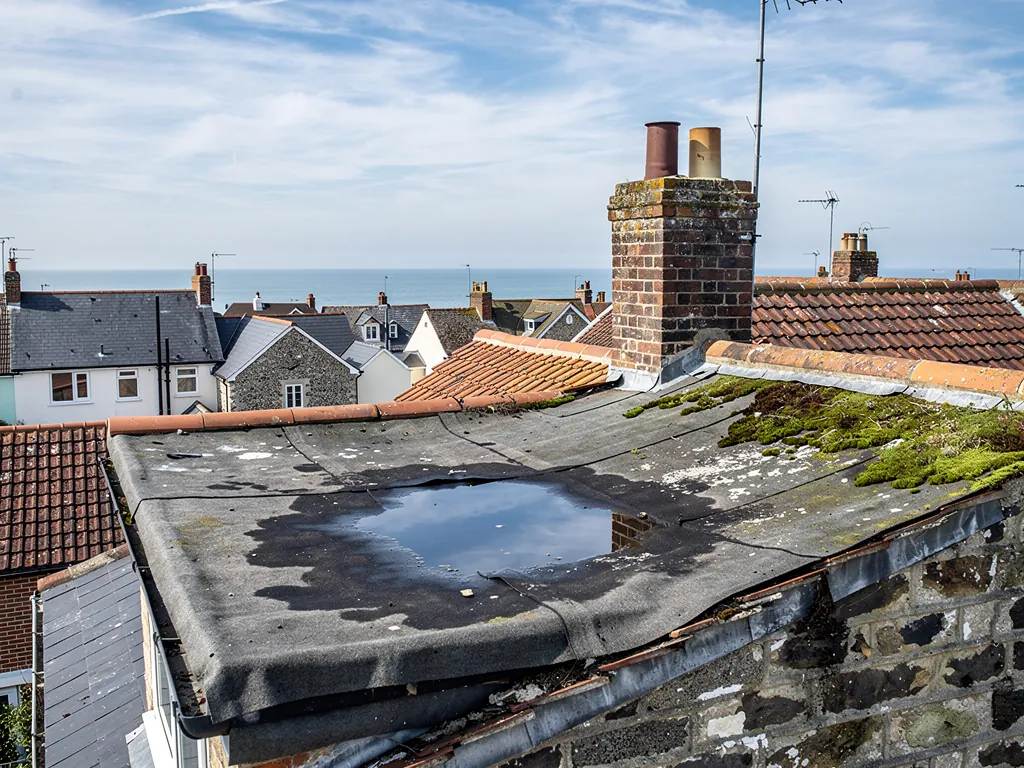
3.1 Fixings that hold in a gale
Out on open ground, the ridge line, the hips and the gable edges take the worst of it. Ridge and hip tiles bedded on mortar alone were once standard. Since the 2014 revision of BS 5534, they are expected to be mechanically fixed as well. If your ridge is cracked or the mortar is crumbling, we refix it with clips or screws. At the verge we check that each tile is held and that the mortar or dry-fix trim is intact. A loose verge lets wind get under the tiles, and a gale can lift a run of them at once. That is the kind of failure that turns a small repair into a bigger one overnight.
3.2 Gutters and drainage on flat land
On flat ground, rainwater from the roof has nowhere to run to, and a blocked downpipe fills the gutter and spills over the wall. We clear and check the whole roofline at a first visit and show the result in photographs. If the fascia boards or soffits are rotten, we show you where. The same close look applies to a house as to a nursery shed.
3.3 Wildlife and access
Bats and nesting birds are protected, and a roof can shelter both, so we look before disturbing eaves or ridge. Scaffold that would stand on the road or footway needs a licence from West Sussex County Council, which asks for 10 working days' notice. We build that wait into the start date.
Roofing services around Almodington
Frequently asked questions
Questions from Almodington Green to the nursery sheds
How old is the roof on a house from Almodington's 1935 smallholding scheme?
A house built for the scheme dates from 1935 at the earliest, so it is more than ninety years old. That does not tell you its roof is original, because many have been re-covered or repaired since. From the loft we examine the underlay, the battens and the fixings, take pictures, and give you a plain call between a repair, an overhaul and a new covering.
Can an old farm or nursery outbuilding roof contain asbestos?
It can. The HSE says to assume that a building built or refurbished before 2000 contains asbestos until it is checked, and asbestos cement sheeting was widely used for outbuildings. Removing sheets that are intact and carefully handled is non-licensed work, but broken sheets can make it notifiable. We confirm the material before touching anything and arrange the waste with a consignment note.
Do flat nursery shed roofs need a different covering from a house extension?
Often they do, because they are bigger, less visited and more exposed. The covering must suit a wide span, and the fall has to carry water to every outlet. We survey with photographs, find any ponding or split seams, and propose a repair or a replacement covering sized to the building. After the survey you receive a written quote, one total price.
Is a house at Almodington in a conservation area?
Almodington does not appear among Chichester District Council's conservation area appraisals, but we check every address before we quote. Your own house could still be listed, which brings its own consent rules. Rules change, so ask Chichester District Council's planning team about your house before altering a roof covering, and we can send them the survey photographs with the enquiry.
Nearby areas
Get a quote
Tell us about your roof
Describe what's happening and we'll call you back.
Loading the enquiry form. You can also call 01243 252373.