
Roofers in Hunston
Moated manor, flint barns, rebuilt church
Hunston has no village centre. Its roofs are a Grade II* manor house in handmade clay tile, flint barns under gently pitched natural slate, a church rebuilt in 1885 and farmland homes.

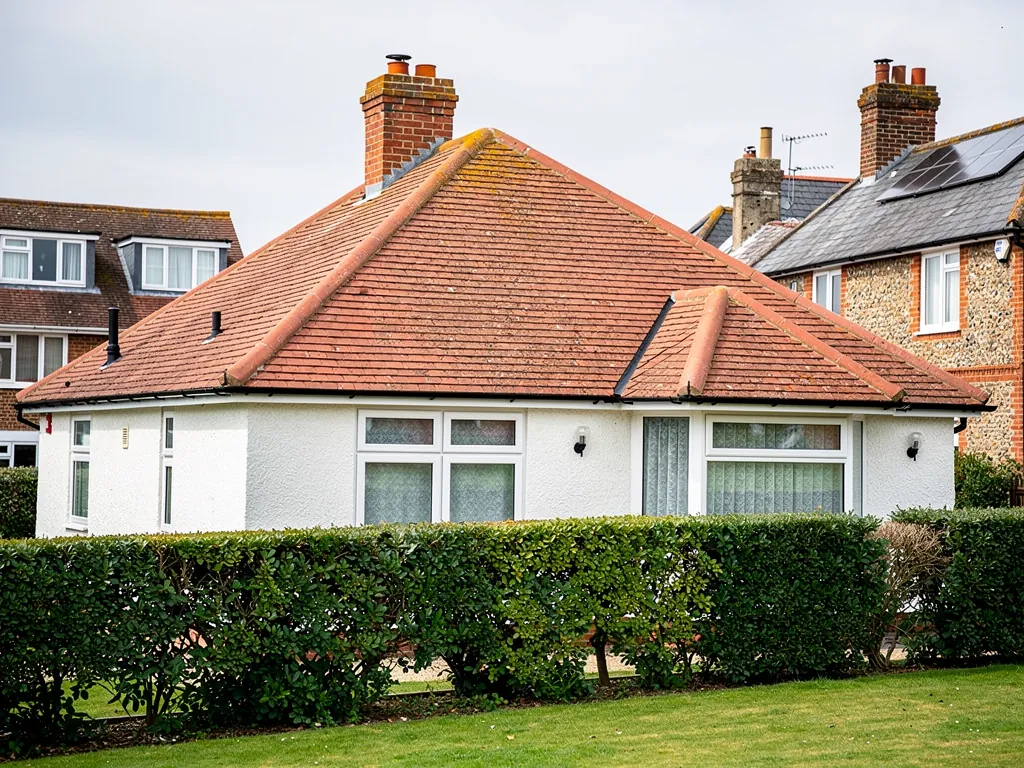
Hunston roofs
From Manor House clay tile to slate-roofed barns
-
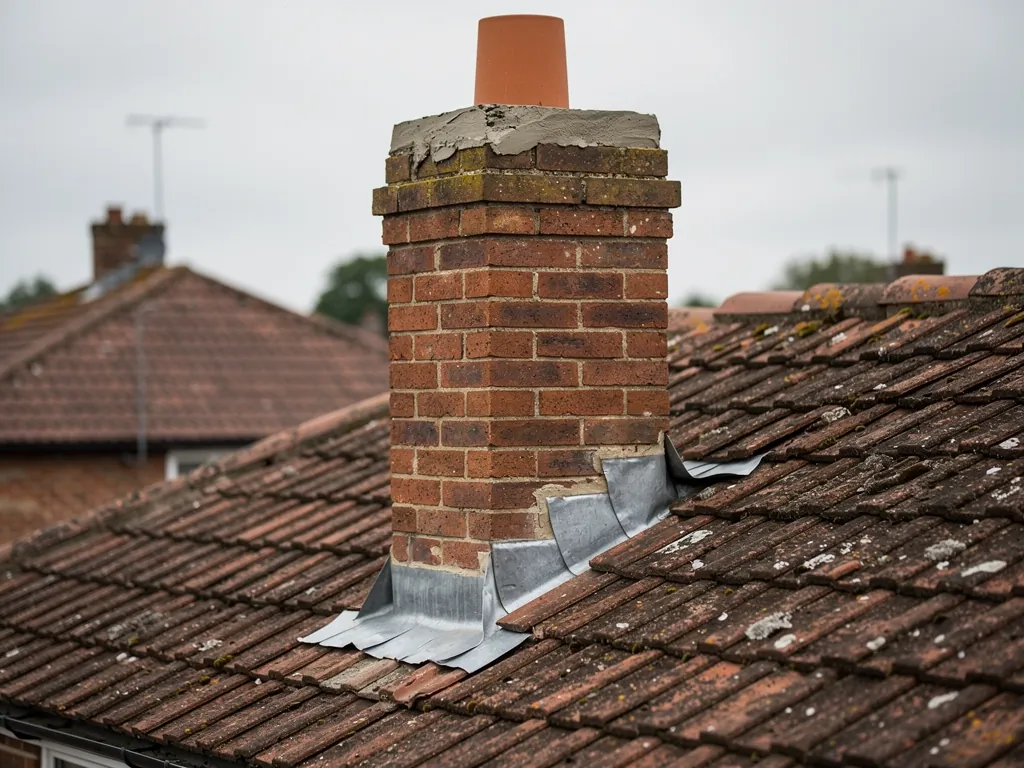
Handmade clay tile at the Manor House
The Manor House dates from about 1660 to 1680, with walls of Mixon rock rubble and brick angles. The council appraisal records red bricks and red handmade clay tiles, and the house once stood within a rectangular moat.
-
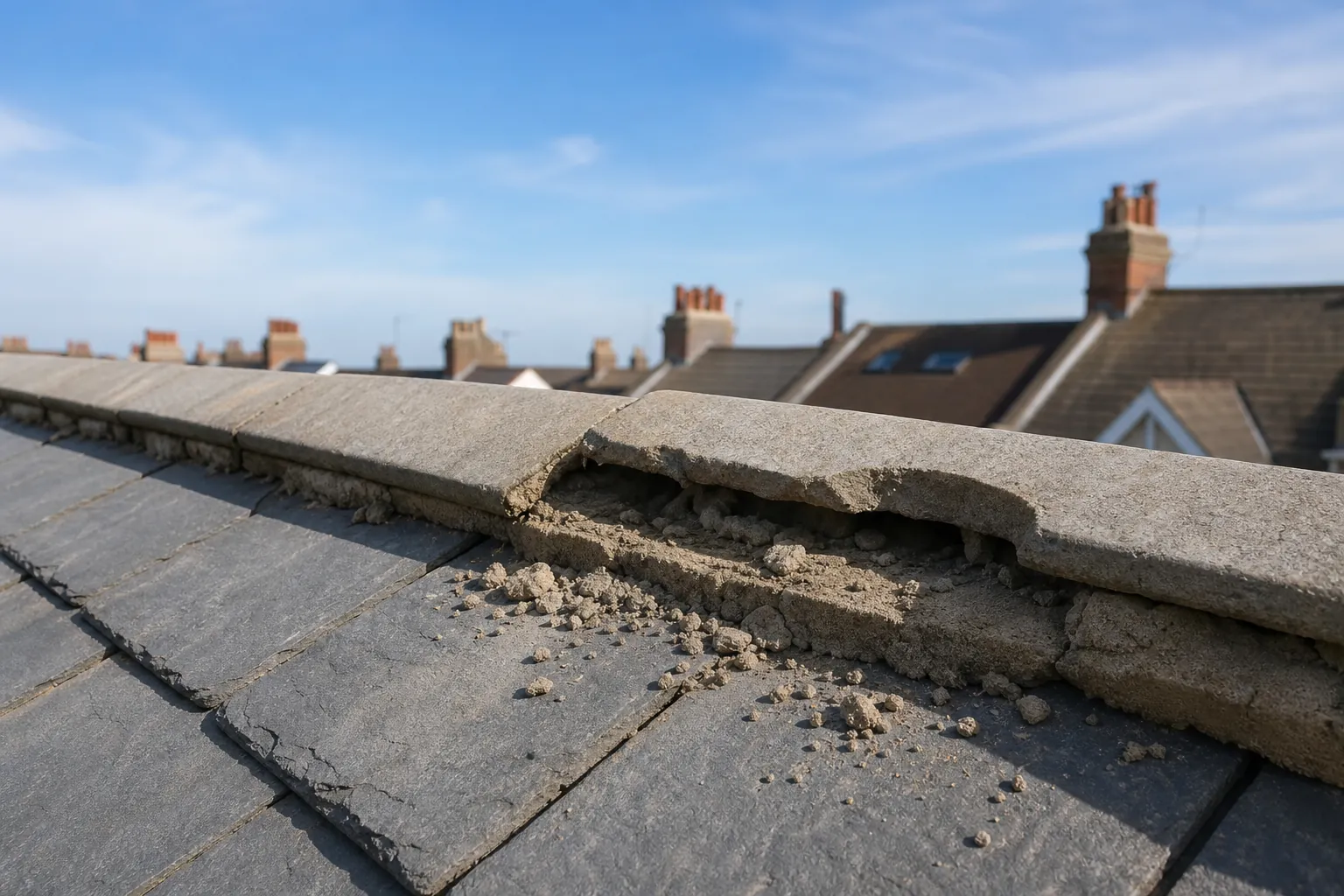
Flint barns under natural slate
The former manorial barns in the conservation area are of flint with red brick dressings and have gently pitched natural slate roofs. Some have been converted into homes, which brings new roof questions with the new use.
-
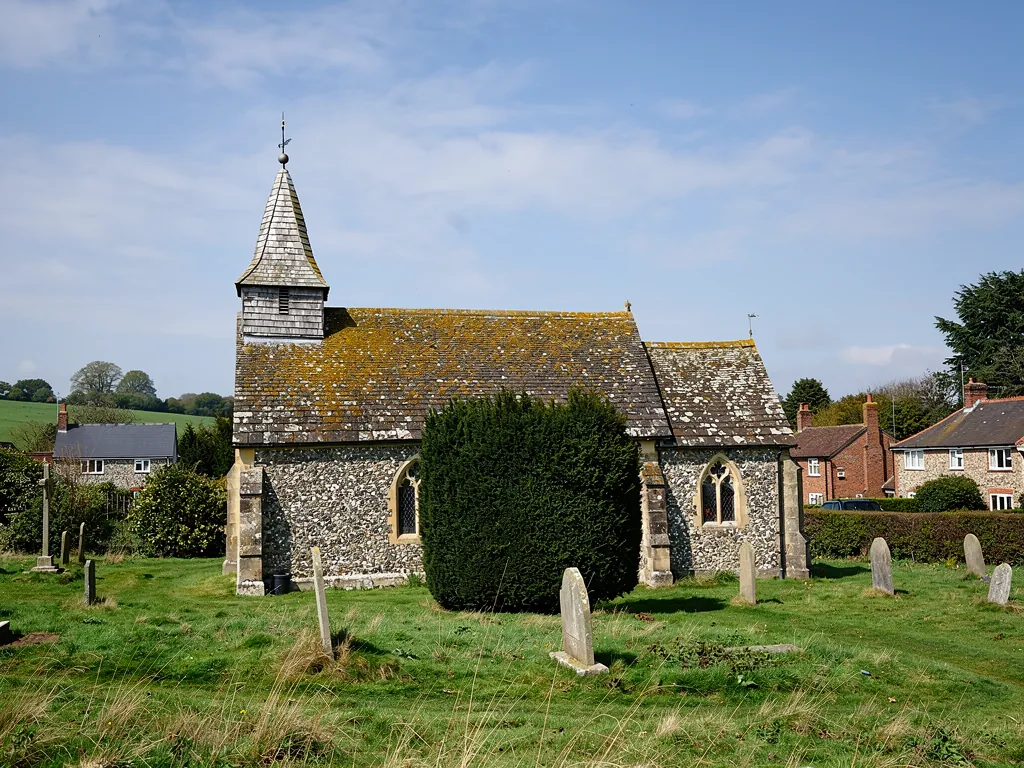
A church rebuilt in 1885
St Leodegar was wholly rebuilt in 1885, to designs by A. W. Blomfield according to the council appraisal. Beside a manor house of about 1660 to 1680, it is the young roof.
Map of Hunston, 6.1 road miles west of Bognor Regis, with the nearest towns we also cover.
Hunston's conservation area and its Grade II* manor
- Council
- Chichester District Council
- County
- West Sussex County Council
- Conservation area
- Hunston Conservation Area, designated June 1976
- Listed landmark
- The Manor House, Grade II*, about 1660 to 1680
- Setting
- Flat Manhood Peninsula plain beside the Chichester Canal
- Distance
- 6.1 road miles west of Bognor Regis, about 13 minutes by car
Hunston notes
Handmade tile, flint barns and a Victorian church
Three parts of a scattered parish, from a moated manor to a rebuilt church, and the roof questions each one raises.
Chapter 1: Manor House tile and the moat1769
Sheet 01 / 03Hunston is farming country with no village centre, which the county history sums up as good wheat-growing land, and its landmark is not a green or a high street but the Manor House. It dates from about 1660 to 1680, stood within a rectangular moat, and has walls of Mixon rock rubble with freestone ashlar and brick angles. The council's appraisal adds that the house uses red bricks and red handmade clay tiles, and it is listed Grade II*. A roof of handmade tile is a different animal from a machine-made one: the tiles vary in shade and camber, which gives the roof its texture, and a flat modern replacement beside them stands out. Colour is only part of it. Handmade tiles are often thicker and less regular, so the battens and the nailing need to suit the tile, not the other way round. We check the spacing before any tile goes back, because a roof laid to the wrong gauge never sits quite right and lets water in at the laps.
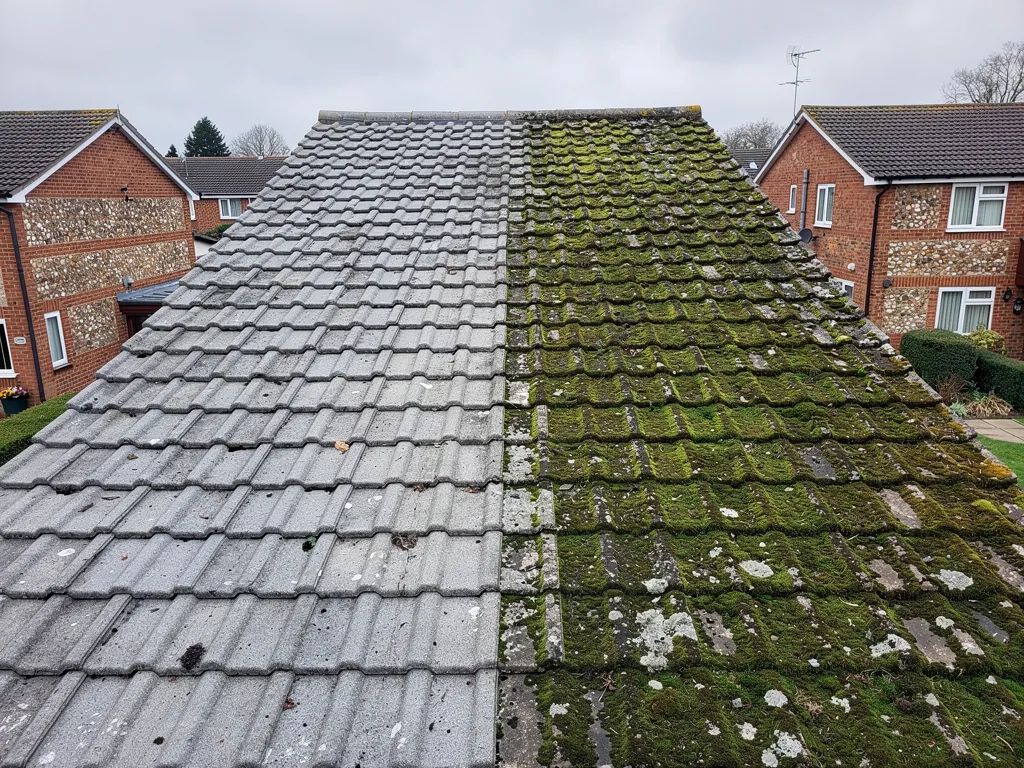
Two tiles for one cracked handmade roof
Reclaimed tile
Old tiles close in size and colour, mixed in so repairs blend with the original covering.
New handmade tile
Made to a similar pattern, but brighter at first and needing time to weather in.
1.1 Matching handmade tile
When a handmade tile cracks, the sensible replacement is another old one. Reclaimed tiles of the right size and colour are the usual choice, taken from a roof being taken down or from a salvage supplier, and they are worth waiting for. A sound roof of this kind rarely needs stripping. On an old house it also pays to keep gutters and downpipes clear and carrying water well away from the walls. We refix what has slipped, replace what has cracked, and tell you when the battens beneath (the softwood laths the tiles hook over) are spent. Our pitched roofing page explains how a clay-tiled slope is stripped and relaid when it does come to that.
1.2 Consent before you touch a listed roof
Section 7 of the Planning (Listed Buildings and Conservation Areas) Act 1990 requires listed building consent before a listed building is altered in a way that changes what makes it special. A repair in matching materials is a separate matter, and Chichester District Council is the one to ask where the line falls in your case. We study the list entry, photograph the roof as it stands, and write down exactly what we propose, so the council has something concrete to answer. A vague description invites a vague reply, and a roof left leaking while you wait gets worse. Where a make-safe is needed in the meantime, a temporary covering keeps the weather out without altering the historic fabric, and the permanent repair follows once the council has replied.
Chapter 2: Flint barns under gently pitched slate2318
Sheet 02 / 03The former manorial barns in the conservation area are built of flint with red brick dressings, and the council appraisal describes their roofs as gently pitched and covered in natural slate. Some of them have been converted into homes. A low slope in slate is a combination that needs care, because slate sheds water by gravity and a shallow pitch gives it little help. Wind-driven rain can be pushed up under the laps, so the lap (the overlap between courses) and the fixings carry more of the load than they do on a steep roof, and a small fault turns into a leak sooner. The Chichester Canal runs beside the parish and the ground is flat and open, so a barn roof takes weather from every side. Flint barns also have thick walls, so a slate that lets water in may leave no stain on the inside for a long time; the damp travels through the masonry first. We trace it from the wallhead down, not from the stain upward.
Three outcomes for a shallow slate roof
- RefixSlipped slates replaced singly and held with tingles; lead renewed where it has split.
- RelaySlates lifted, battens and underlay renewed, sound slates laid again at the right lap.
- Re-coverA new covering chosen to suit the pitch once the old slate is spent.
2.1 How shallow is too shallow for slate
Cupa Pizarras reads BS 5534 as giving natural slate a minimum pitch of 20 degrees, for a 500 mm slate in moderate exposure, with hook fixings left off any pitch under 25 degrees. A barn roof near that limit has little margin. If old slates are being relaid, we measure the pitch and check the headlap (how far each course covers the one two below) before choosing between relaying on the existing lap and increasing it. Where a single slate has slipped, a tingle holds its replacement. Our slate roofing page sets out how slate is sorted, matched and relaid.
2.2 Converted barns and roof windows
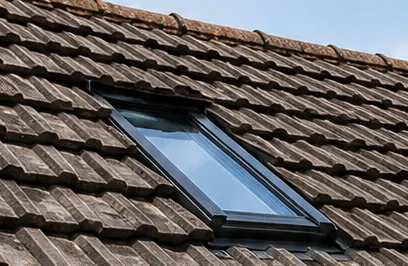
A barn turned into a home often wants more light in the roof. Once it is a dwelling, roof windows added or replaced in it must reach Window Energy Rating Band B, or 1.4 W/m²K, under Approved Document L (2021, Table 4.2), while rooflights need 2.2 W/m²K, until the 2026 edition takes over on 24 March 2027 with the same values. Inside a conservation area the planning side deserves a look first, so read our guide to roof windows in a conservation area before you order anything. The verge, where the slate stops at a gable, is the spot where flint, brick and slate meet, and it is finished neatly or not at all. A converted barn also tends to have a large, uninterrupted roof plane, so ventilation at the eaves and ridge needs thought whenever insulation is added.
Chapter 3: St Leodegar's rebuilding and the farmland edge2806
Sheet 03 / 03The parish church of St Leodegar was wholly rebuilt in 1885, and the council appraisal names A. W. Blomfield as its architect. In a parish where the manor house dates from the 17th century, a Victorian church is the young building. St Leodegar belongs to the Church of England, whose churches in use sit outside listed building consent and under the church's own faculty system, so its roof is a matter for the parish rather than for a householder. The practical lesson for a house nearby is simpler: roofs built in different decades age in different ways, and the survey has to read each one on its own terms. A Victorian covering, an interwar one and a modern one each fail at different places, and we look for the places that suit the period.
Before work on a farm outbuilding roof
- Treat pre-2000 sheet as asbestos
- Stay off the roof
- Look for bat droppings
- Check for active nests
3.1 Outbuildings with fragile sheet
Hunston has no village centre, so houses sit scattered among fields, and the appraisal notes large numbers of commercial nurseries around North and South Mundham on the London clay and brick earth near Hunston. Where a house has sheds, stores or lean-tos behind it, those roofs can be older and lighter than the house roof, and some are cement sheet. The HSE's guidance warns that cement-sheet roofs are always fragile, and advises treating any building put up or refurbished before 2000 as likely to contain asbestos. Never climb on a corrugated cement roof or on rooflights set into one. Weathered asbestos cement handled carefully and removed unbroken is non-licensed work, while sheet that is substantially broken up is notifiable non-licensed work. We assess such a roof from a ladder and from below. Our garage roof replacement page covers the coverings that replace it.
3.2 Bats, barns and roof voids
Old barns and roof voids are exactly where bats roost. Legal protection covers bats and their roosts, and a re-roof can disturb them. If you find droppings in a loft, or see bats leaving at dusk, stop and tell us before any work starts, and we will pause the job until the right advice has been taken. Nesting birds are protected too, so a job is better held over an active nest than torn through it. If the roof is a flat one on a garage or store, that applies to the felt edges and gutters as well, where birds like to build.
Roofing help for Hunston
Frequently asked questions
Questions from the Manor House to the Mundham nurseries
Can a handmade clay tile roof like the Manor House's be repaired with reclaimed tiles?
Yes, and it is usually the best approach. Reclaimed tiles close in size and colour blend into the old covering, where new ones can look brighter for years. We replace only what has cracked, refix what has slipped and check the battens beneath. Where the house is listed, its list entry is read first, because anything that changes the roof's character needs consent from Chichester District Council.
Does a gently pitched slate roof on a Hunston barn conversion need a bigger lap when it is relaid?
It depends on the pitch. BS 5534, as Cupa Pizarras reads it, gives 20 degrees as the minimum for natural slate in moderate exposure, and hook fixings are not for pitches under 25 degrees. We measure the slope, check the existing lap and slate size, and tell you whether to relay at the old lap or increase it. A very shallow slope may mean a different covering altogether, and that is worth knowing before any slates are bought. The written quote follows that measurement.
Does Hunston's conservation area, designated in June 1976, affect re-covering my roof?
Re-covering a roof in the same material rarely needs planning permission in itself, but the conservation area and any listing add controls, so put your address to Chichester District Council's planners first. Say if you want a different tile or slate, because a change of material is the case most likely to need consent. We photograph the existing roof so the council sees what is there, and the pictures go with your quote, so you can reuse them for any application.
What do I do about an old corrugated roof on a shed at a Hunston farm?
Leave it intact and stay off it. The HSE warns that cement-sheet roofs are always fragile and advises assuming asbestos in older buildings until checked. Carefully removing weathered sheet unbroken is non-licensed work; broken sheet becomes notifiable, and the waste leaves under a consignment note. Never use a pressure washer, a wire brush or a drill on it. Ask us to look from a ladder, and we will tell you what the roof needs.
Nearby areas
Get a quote
Tell us about your roof
Describe what's happening and we'll call you back.
Loading the enquiry form. You can also call 01243 252373.