
Roofers in Denmead
Barn Green, All Saints, Bere woodland
Denmead is called Barn Green after its small triangular green, became a parish in 1881 around an 1880 church, and lies in former Forest of Bere country where trees and roofs meet.

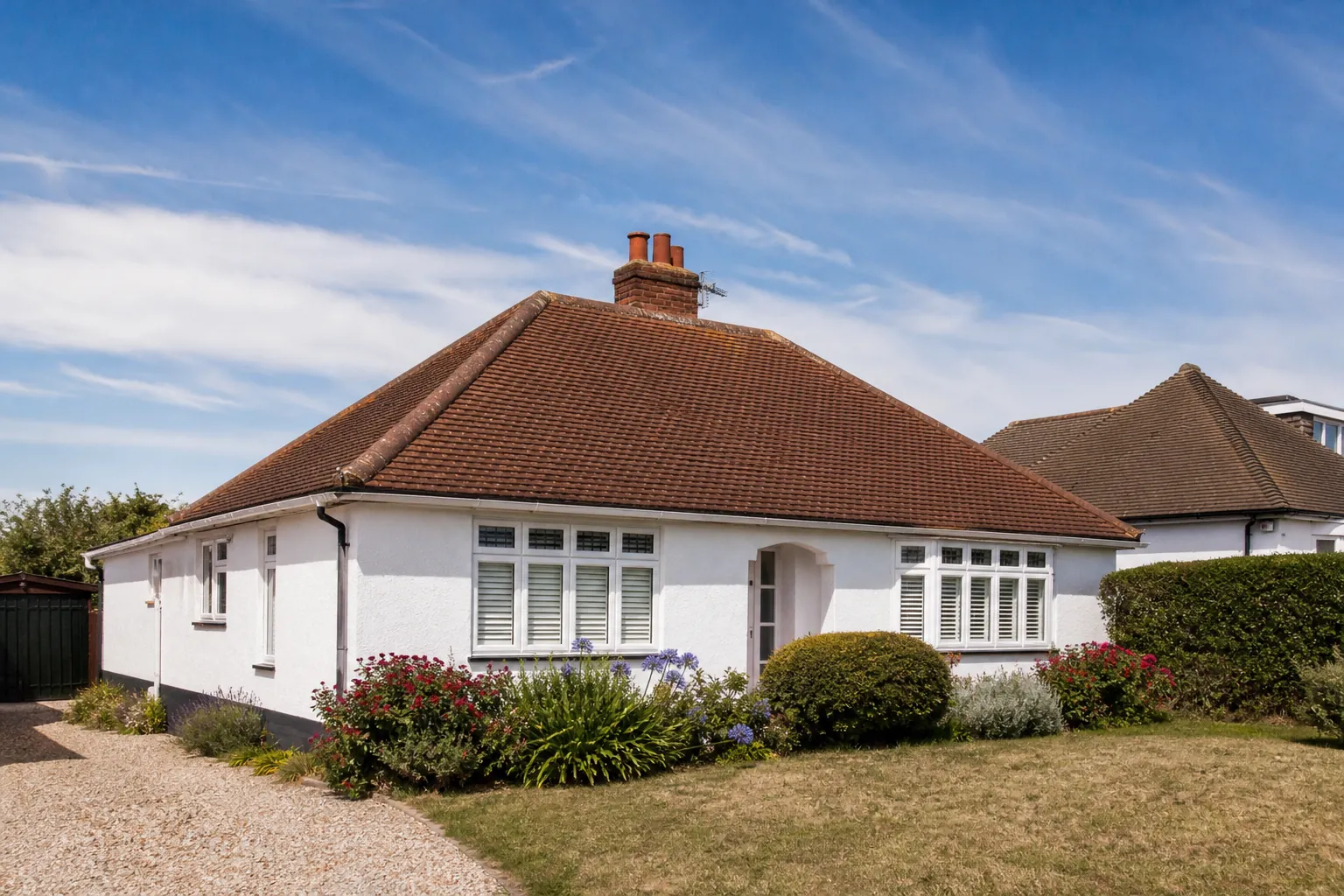
Denmead roofs
Around the green, the church and the trees
-
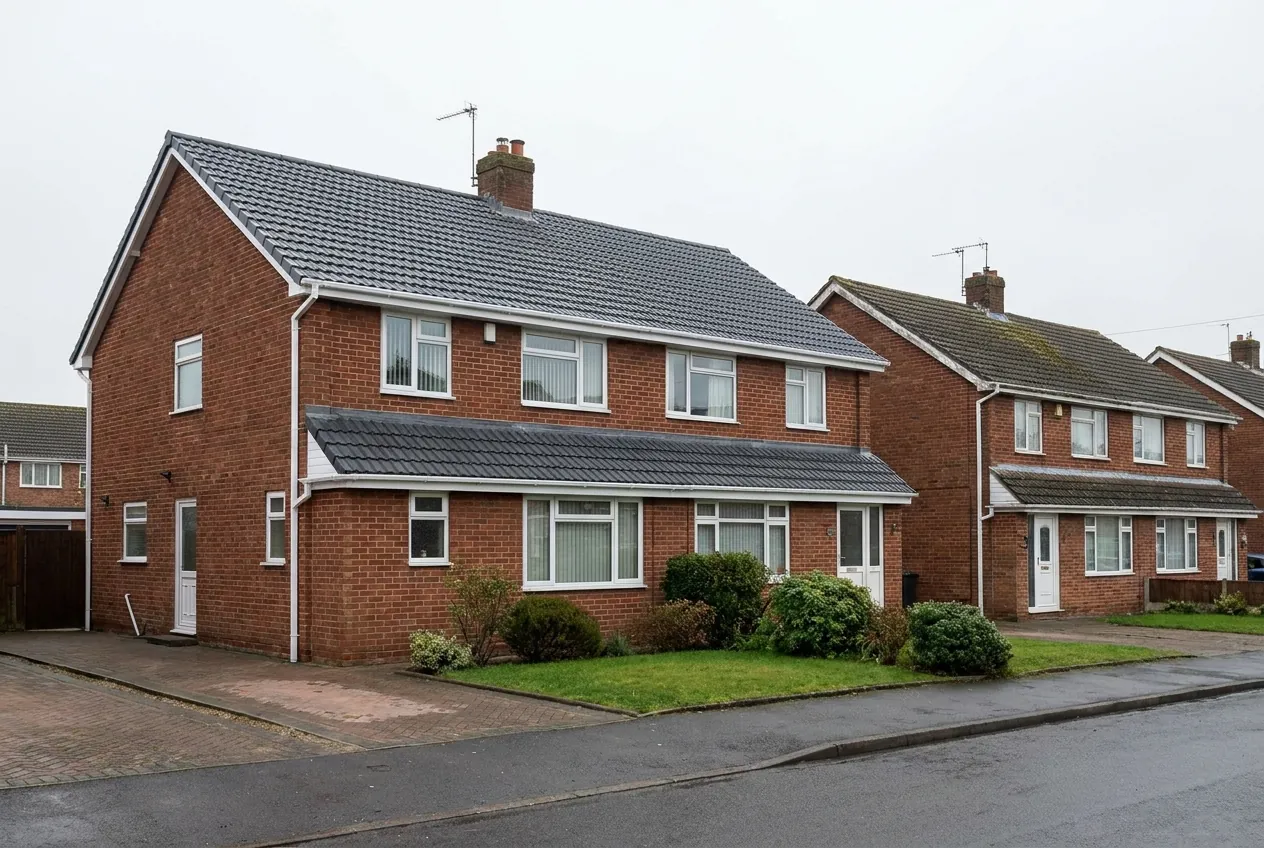
Houses round Barn Green
Barn Green is the small triangular green that gave Denmead its other name. Roofs close to a village green are rarely all one age, so we date each one from its battens, underlay and ridge bedding rather than guessing from the street.
-
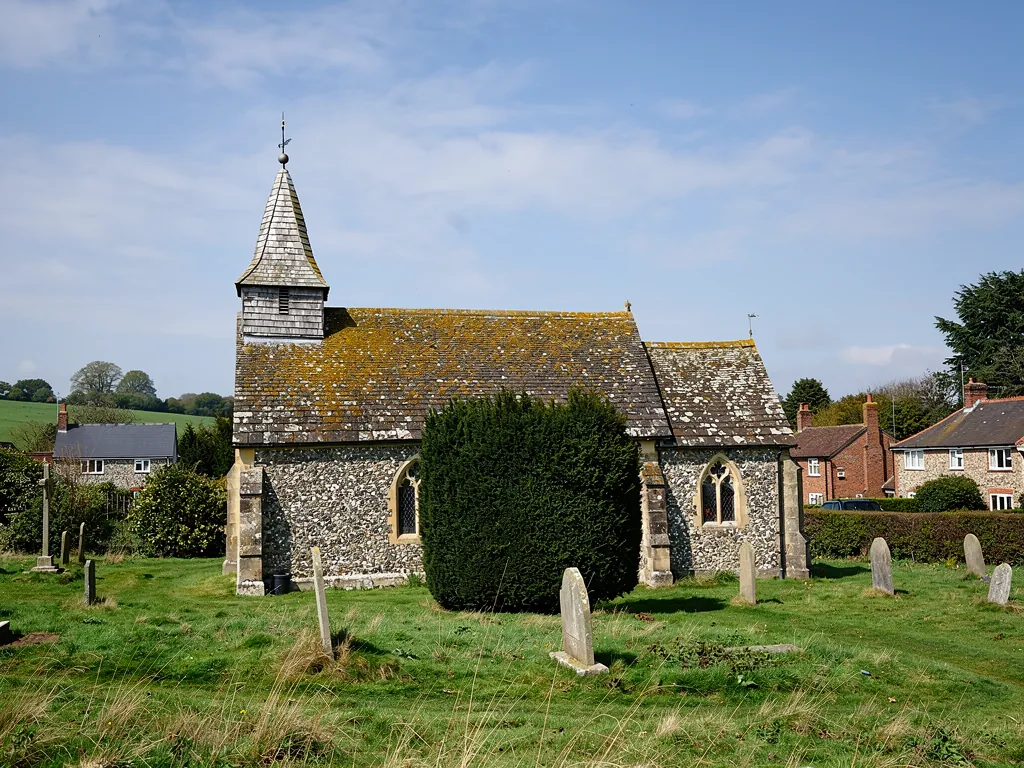
All Saints, built in 1880
All Saints was built in 1880 at a cost of £2,000 and has been Grade II listed since 24 September 1987. The church follows its own consent route, while ordinary houses nearby follow the usual planning and building control rules.
-
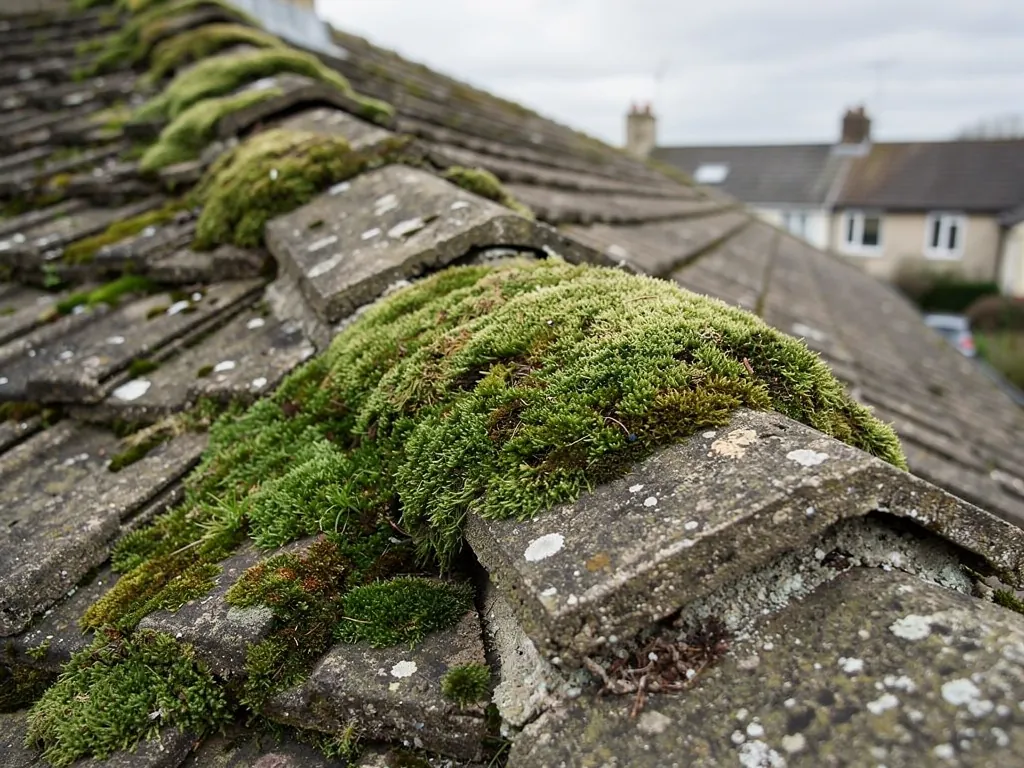
Plots close to woodland
Denmead lies south of Hambledon in former Forest of Bere country. Wherever a house stands close to trees, leaf litter in the gutters and moss on the shaded slopes become the roof's steady enemies.
Map of Denmead, 23.2 road miles north-west of Bognor Regis, with the nearest towns we also cover.
Parish, church and park boundary
- Council
- Winchester City Council
- County
- Hampshire County Council
- Parish origin
- Ecclesiastical parish formed in 1881 out of Hambledon
- Listed landmark
- Church of All Saints, Grade II, first listed 24 September 1987
- National Park
- Outside the South Downs National Park boundary
- Distance
- 23.2 road miles north-west of Bognor Regis, about 34 minutes by car
Denmead notes
Barn Green, All Saints and the Bere trees
Three things that shape a Denmead roof job: the age of the house, the example of the church and the trees close by.
Chapter 1: Barn Green and an 1881 parish1769
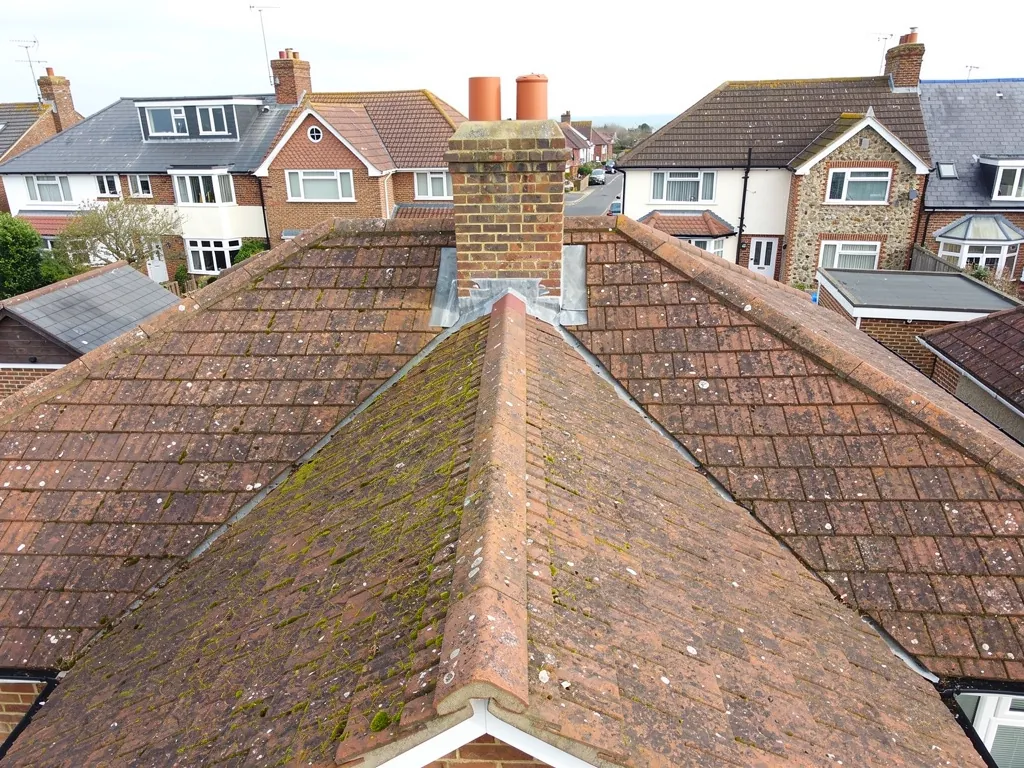
Sheet 01 / 03Denmead is usually called Barn Green after its small triangular green, and it became a parish of its own only in 1881, when it was formed as an ecclesiastical parish out of Hambledon. The date matters to a roofer in a roundabout way. A village that took shape as a parish in the late Victorian years sits among buildings of many ages, and the age of a roof tells us more than its address does. Before we say anything about repair or replacement, we work out which generation of roof we are looking at, because a roof from before the Second World War and one from the last few decades fail in different places.
What a Denmead loft inspection decides
- RepairBattens and underlay are sound, so slipped tiles and loose ridges are refixed.
- PatchOne tired slope is held together until the whole roof can be planned.
- ReplaceBattens, underlay and covering have all reached the end of their working life.
1.1 Reading a roof's age from the loft
From inside the loft we look at the battens, the thin softwood strips the tiles are hung from, and at the underlay, the membrane laid beneath the covering. Brittle, darkened underlay and battens gone soft around the nail holes mean the covering has outlived what carries it. Sound battens under a few slipped tiles point the other way, towards a repair. Lifespans are only typical ranges. Marley quotes a minimum of 60 years for clay tile, citing the Building Research Establishment, and a similar figure for concrete, while stressing that neither is a guarantee. Checkatrade puts stone slate beyond the century mark. A roof of any covering can fall well short of those figures if it has been neglected.
1.2 Ridges, hips and verges on older roofs
The ridge caps the top of the slopes. Hips are the angled ridges at the roof's outer corners, and the verge is the finished edge over a gable wall. These are the first parts to loosen, because they take the most weather and often sit on nothing but old mortar. After BS 5534 was revised in 2014, mortar on its own stopped being trusted to hold ridge and hip tiles; screws, clips or straps now back it up. The standard itself allows that older roofs built from reclaimed tiles or slates may not fit its rules to the letter, so we judge each one on its own merits and explain what we would change and why.
1.3 What you receive after the survey
We photograph each fault on your roof, say plainly whether it needs a repair, a stop-gap or a full replacement, and our written quote then names a single total. Smaller jobs sit under roof repairs, which explains how a tired slope is mended without stripping the whole roof. Each fault we find is logged against a photograph, so you can see the slipped tile, the open joint or the lifted flashing for yourself instead of taking our word for it.
Chapter 2: All Saints and the consent route1952
Sheet 02 / 03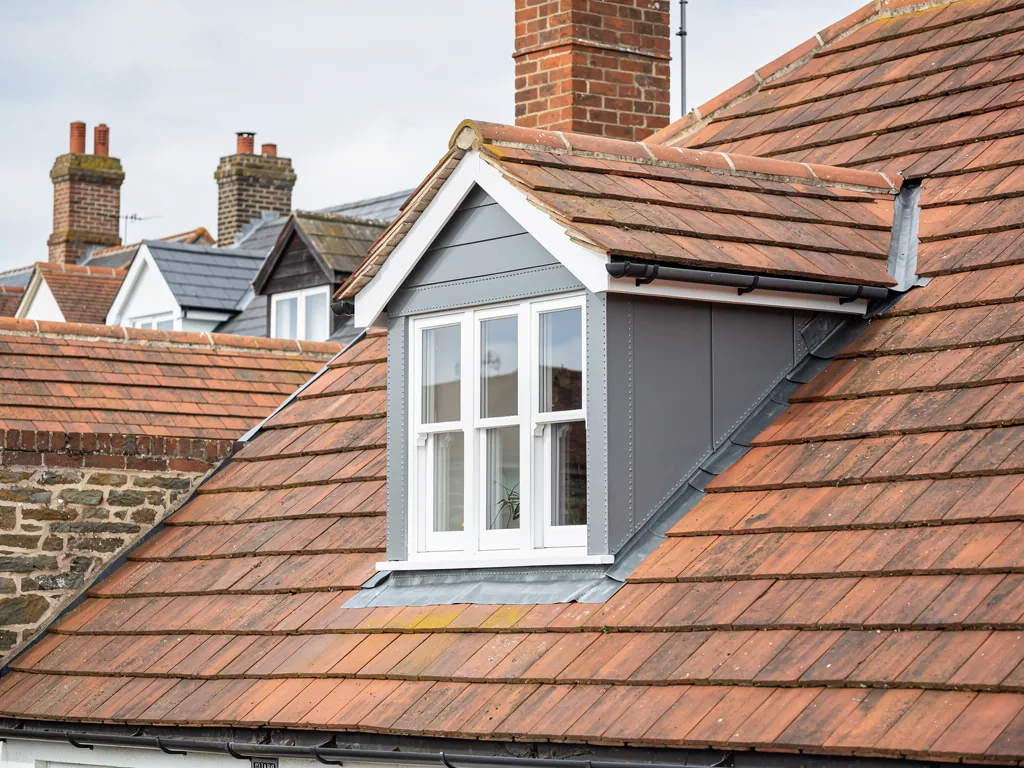
All Saints church was built in 1880 at a cost of £2,000, and it has been a Grade II listed building since 24 September 1987. As a listed church, it makes a useful example of how consent works on a protected roof. Which rules apply depends on the building and who owns it, not on the roofer holding the tools.
Questions to settle before a Denmead roof job
- Is the building listed
- Is there a conservation area
- Is a new covering heavier
- Who owns the church roof
2.1 Church roofs and the faculty route
Where a Church of England church is in regular use, the Church deals with permission itself through a faculty, in place of the council's listed building consent. Planning permission is a separate matter: anything that changes the outside of a listed church or chapel still goes to the council. Other denominations follow other routes, and once a church stops holding services the ordinary controls apply to it. If you sit on a parochial church council and are weighing up roof work, start with the faculty process, then ask us for a survey so the specification is ready before the application goes in.
2.2 Lead on a Victorian-era roof
A church of 1880 reminds us how much a roof depends on lead. Flashings, valley gutters and soakers (the small lead pieces that tuck under each course where a roof meets a wall) are all cut from sheet lead, which is sold by code. Royston Lead lists code 4 at 1.80 mm thick, code 5 at 2.24 mm and code 6 at 2.65 mm, with the heavier codes suited to gutters and parapets. Which one belongs on your roof depends on the detail, and we name it at survey.
2.3 Houses near the church
Most homes are not listed. Replacing a covering with the same material and the same look is generally not treated as development at all, since the Town and Country Planning Act leaves out works that do not materially change the outside of a building. Two caveats follow. A listed house needs listed building consent before anything touches its special character, and an Article 4 direction can take away rights that would otherwise apply. None of Winchester City Council's conservation areas is named for Denmead, but ask the council's planning team before you plan more than a simple repair in matching materials, since a listing or a nearby boundary can change the answer.
A re-roof does not normally need a building control application if less than 25 per cent of the total building envelope and less than 50 per cent of the roof is affected. Anything heavier, a structural change or a different fire performance brings a re-roof back into building control. We tell you which way your job falls and handle the notification where one is needed.
Chapter 3: Bere woodland, leaves and moss1830
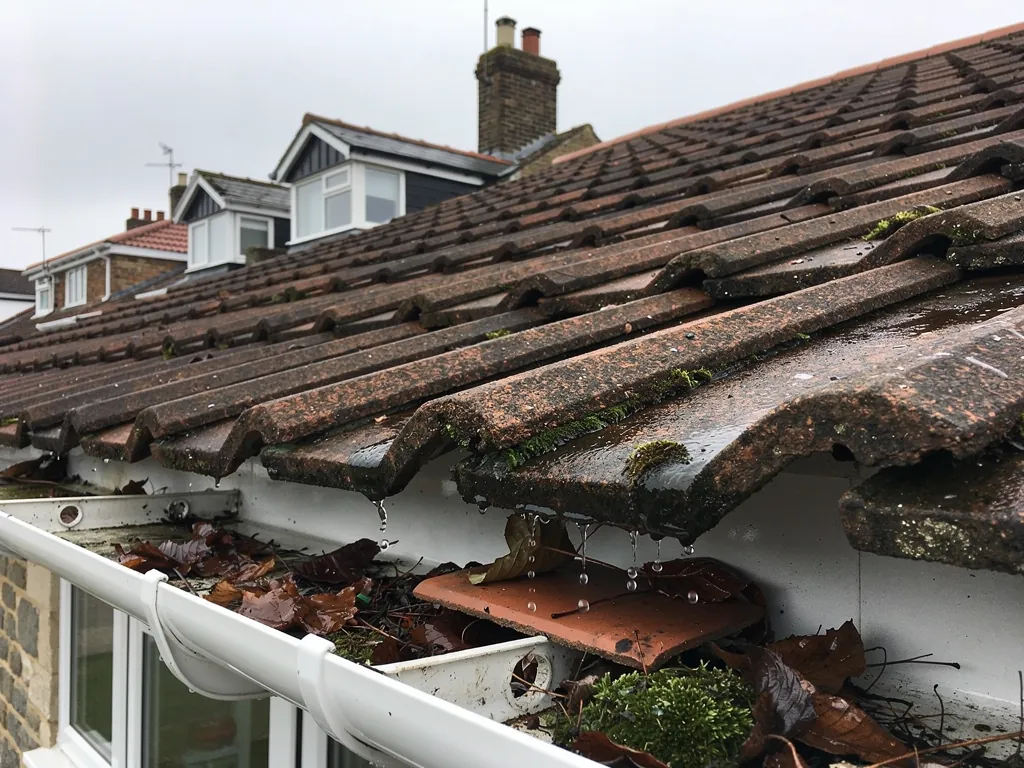
Sheet 03 / 03Denmead lies south of Hambledon in what was once Forest of Bere country, according to the Victoria County History. Wherever trees stand close to a house, what they do to its roof is easy to predict. Their leaves and needles land in gutters and valleys, they shade north slopes so that moss holds water against the covering, and their branches rub on tiles in a gale. A woodland edge plot is a gutter and moss job as much as a tile job.
A clear-out for a tree-lined roof
- 1Walk roundWe photograph overhanging branches, blocked gutters and mossy slopes from the ground.
- 2Check the loftStains on the underlay show where water has already found a way in.
- 3Clear and fixGutters and valleys are cleared first, then any cracked tiles are replaced.
- 4Treat lastMoss treatment follows once the covering underneath is known to be sound.
3.1 Gutters that keep up with the leaves
Rainwater guttering is laid to a gentle fall towards the outlet, roughly 1:600 to 1:350 depending on the system, and brackets are normally set no more than 900 mm apart. A gutter that has sagged between brackets holds a pool of wet leaves, and the overflow runs down the wall or soaks the fascia, the board behind the gutter, and the soffit beneath the overhang. Clearing is the first step, and it is worth doing before the autumn leaf fall as well as after, since a gutter that is full going into a gale is the one that overflows against the wall. When the board behind has gone soft, replacing the lot is the plainer answer, and our guttering, soffit and fascia page sets out the options.
3.2 Moss, cleaning and what lies underneath
Moss is a symptom. It tells us the slope stays damp, and it can hide cracked tiles and failed pointing beneath the green. We wash and treat only once the roof has been checked, because cleaning a roof that is already letting in water simply moves the leak. If a clean shows tiles that are past saving, the photographs show you which. Our roof cleaning and moss removal page covers the process.
Checkatrade's roof repair guide, updated in October 2026, puts ridge tile repairs at £50 to £70 a metre and lead flashing repairs at the same range, with the note that its costs exclude VAT. The same guide gives £280 to £360 a day for roofers. Those are national typical figures, not a price for your roof, and your quote is written after the survey.
Protected species matter near woodland: bats roost in roof spaces and birds nest in eaves, and a roost or an active nest halts the work until it is safe to go on.
Roofing jobs we take on in Denmead
Frequently asked questions
Questions from Barn Green to the Bere woods
What tells you a Barn Green roof's age before you quote?
We climb up and check the loft. The colour and condition of the underlay, the state of the battens around the nail holes, the way the ridge is bedded and the tiles themselves all give away a roof's age. We photograph each point, give a plain verdict on repair, stop-gap or replacement, and one total price comes in the written quote afterwards.
Is permission needed before re-roofing a house beside All Saints?
For an unlisted house, a like-for-like covering is not normally a planning matter, while a listed one needs listed building consent first if the work would alter its character. The church itself, if it is Church of England and in use, goes through a faculty. Ask Winchester City Council's planning team about your own property, and we will explain what the survey shows.
Is it worth clearing moss from a roof under Denmead's trees?
Often, yes, but only after the roof has been checked. Moss that stays wet against the covering holds moisture, and the roof underneath may already have cracked tiles. We inspect first, replace anything damaged, then clean and treat. If a slope is past saving, the photographs show it, and cleaning would only delay the bill.
Will scaffolding for a Denmead roof need a licence?
Any scaffold standing over the pavement or road needs a highway licence, and on Hampshire County Council's page it is the scaffold firm that applies for its customers. The council charges £211.90 for the first fortnight and wants the application lodged ten clear working days before the scaffold goes up. A scaffold kept entirely within your own garden does not need one, and we tell you which applies.
Nearby areas
Get a quote
Tell us about your roof
Describe what's happening and we'll call you back.
Loading the enquiry form. You can also call 01243 252373.