
Roof work and the rules · 9 min read
Roof work and the rules: Building Regulations, planning and consent explained
Building Regulations, planning permission and heritage consent are three separate systems, and a roof job can touch one, two or all three. This guide explains which applies when, and who to ask.
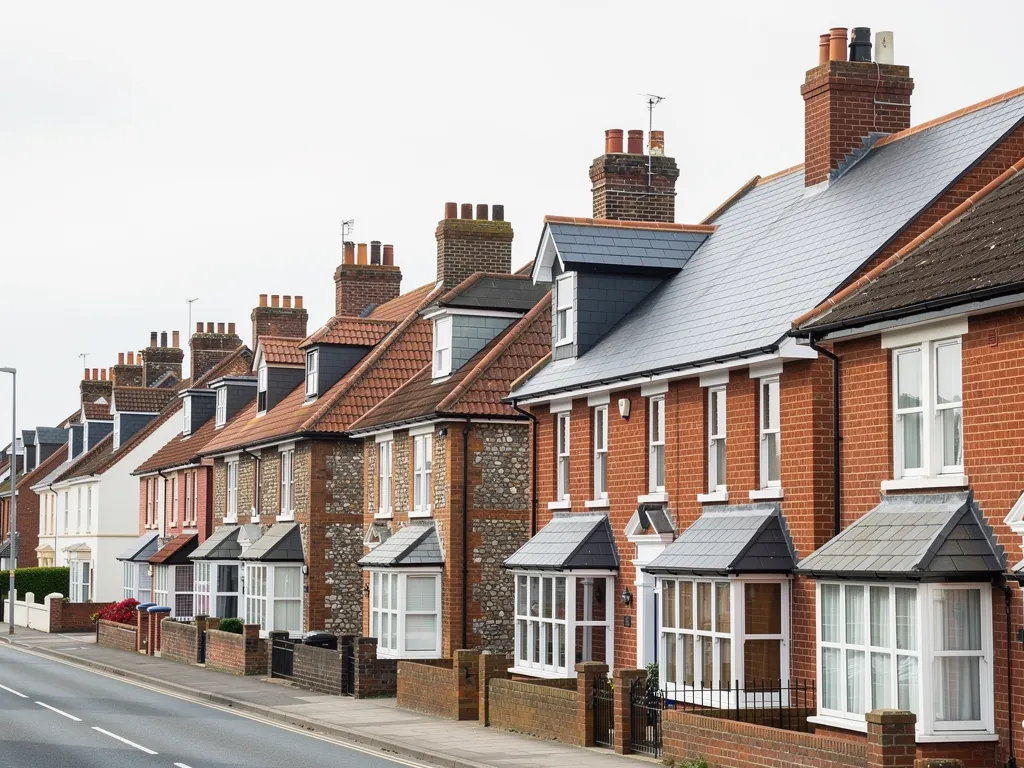
People often talk about getting permission for a roof as though there were a single form. There are several, run by different bodies, and each asks a different question. Building Regulations ask whether the work is safe, weatherproof and energy efficient. Planning asks whether it changes the look or use of the building. Heritage controls ask whether it harms something protected.
A plain re-roof on an ordinary house may trigger none of them in a way that holds up the job. A new roof window, a heavier covering, a dormer, a listed cottage or a house inside a National Park can trigger one or more. We take each system in the order a homeowner usually meets it, then cover three rules that sit alongside: asbestos, wildlife and scaffold licences.
This is general information for England, drawn from the Planning Portal, GOV.UK and council pages, and it is not legal advice. Where the answer depends on your address, ask your council, the South Downs National Park Authority or a building control body. Our team at JJ Roofing Bognor Regis also explains the consent route as part of the survey.
Three systems, three different questions
Keeping the systems apart stops people worrying about the wrong one.
Building Regulations set technical standards for building work: structure, fire, weather resistance, ventilation and energy use. They follow the work wherever the house stands. A building control body checks it, either the district council or a registered private approver.
Planning permission deals with development. Under section 55 of the Town and Country Planning Act 1990, changes that leave the exterior of a building looking materially the same do not count as development at all, so putting back the very same covering rarely needs an application. Permitted development rights then allow some other changes without a formal application, unless the property is listed, is on specially protected land or is covered by an Article 4 direction.
Heritage controls protect buildings of special interest and the areas around them. Any work altering the special interest of a listed building needs listed building consent from the planning authority, even if it would not otherwise be development.
Why a roof can pass one test and fail another
A re-slate of an ordinary house may need no planning application and still call for a Building Regulations notice. A new roof window may be permitted development and still have to meet the energy standard for glazing. A conservation area can remove rights that apply elsewhere. When you put the question to a roofer or a council, say which system you mean, so the answer fits.
Building Regulations and the re-roof
The Planning Portal gives two limits. A re-roof normally needs no building control application when less than 25 per cent of the total building envelope is affected and less than 50 per cent of the roof is. Think of the envelope as everything that encloses the house: walls, floor, roof and every window, door and rooflight. Both limits apply at once, and a job inside them is generally treated as a repair or a like-for-like renewal.
Approval is needed if you go past either limit, alter the structure, choose a covering that would behave very differently in a fire, or make the covering 15 per cent or more heavier. Approved Document A phrases the weight test as an increase of more than 15 per cent, so for a heavier covering a structural check and a word with building control is the safe course.
What Arun District Council says
The Arun building control page names the renewal of both pitched and flat roof coverings as work that needs approval. The two statements sit together without conflict: the Planning Portal says when approval is normally unnecessary, and the council confirms what it expects for your job. Our answer on Arun building control explains who to contact.
For anything beyond a repair, we set out the consent position during the survey and handle the notification itself if the work is notifiable. You should never be left to guess. The guide to re-roofing and Building Regulations goes through the two tests in more detail.
Part L: insulation, roof windows and flat roofs
Part L is the energy part of the regulations. On a roof it matters when you renew the insulating layer or fit new glazing.
Approved Document L (2021 edition, 2023 amendments) gives limiting U-values in its Table 4.2 for any new or replacement element in an existing dwelling: 0.15 for a roof, a window, roof windows among them, has to reach 1.4 W/(m²·K), or alternatively Band B on the energy rating scale, whereas a rooflight is held to 2.2. The difference lies in how the unit is fitted. A roof window lies in the pitch of the roof, while a rooflight sits proud of the roof on a kerb, an upstand.
A new edition exists. The 2026 Approved Document L takes effect on 24 March 2027 for work that is not connected with higher-risk buildings, and its Table 3.2 carries the same values. Until then, the 2021 text applies.
When insulation joins a re-roof
Some roof work counts as renovation, among it stripping and re-laying the waterproof layer on a flat roof. Where more than 50 per cent of an element's surface is renovated, that element may need upgrading, and renovating more than 25 per cent of the external envelope makes the job a major renovation. A full re-roof therefore often brings insulation into the conversation, and a patch repair does not. Our guide to insulating when you re-roof sets out what Part L asks for.
Planning permission: the usual cases for a roof
Most roof work begins from the section 55 idea: if the outside of the building is not materially changed, there is no development. A covering that matches the old one in look and material falls into that, so re-roofing with a matching covering does not usually need planning permission.
Matters change when the appearance does. A different material, a noticeably different colour, a raised ridge, a new dormer or large roof windows can turn maintenance into development. The General Permitted Development Order allows some alterations without an application, and our guide to planning permission for roof work covers them in detail. Flats are treated separately, because the Order's wording for a dwellinghouse leaves out any building divided into flats, and the flats inside it.
Where the rights stop
An Article 4 direction withdraws chosen rights across a defined area, and what it removes depends on its own wording. The directions we found in Arun cover houses in multiple occupation in Bognor Regis and Littlehampton, and the Craigweil House conservation area in Aldwick, where the controls concern verge areas and front-garden hard surfaces and leave roofs alone. Elsewhere in our area the position varies by council, so ask the planning team before assuming a right exists.
If you are unsure which category your roof falls into, a short call to the council is quicker than guessing.
Listed buildings, conservation areas and the Downs
Heritage controls change the answer for many Sussex roofs. Section 7 of the Listed Buildings Act forbids works that change the special character of a listed building unless authorised. The National Park Authority draws its line at upkeep: mending a listed roof where it stands, with matching materials, is one thing, and changing the covering is another. A complete re-roof or a change of covering is a bigger step, so check first.
Conservation areas do not forbid roof work, but local guidance leans towards original materials. In Aldwick Road, Arun's guidance records concrete interlocking tiles on buildings that once had slate, and wants the original covering restored. For The Steyne and Waterloo Square it wants slate or plain clay tiles put back wherever unsuitable modern coverings have taken their place. Our guide to roof work in Bognor Regis conservation areas takes each area in turn.
Who decides inside the South Downs
Inside the National Park, the deciding body depends on the district. Where the Park overlaps Arun, Horsham, Adur or Worthing, the Park Authority takes the applications itself. Where it overlaps Chichester, East Hampshire or Winchester, those councils receive them for the Park. Building control stays with the district council throughout. The answer on South Downs roof planning sets out the split.
Chichester Harbour National Landscape, until 2023 an Area of Outstanding Natural Beauty, was designated in 1964. It carries extra planning controls, so check with Chichester District Council or the landscape team before changing a roof there.
Building control bodies, chimneys and conservatory roofs
Where the regulations apply, someone has to inspect the work. Since April 2024 private approvers have been on a register, and the right term is a registered building control approver. The other route is the district council's own team, and you choose between them for each job. If an approver stops operating because the Building Safety Regulator has removed its registration, Arun asks owners to contact the council.
Arun's team will not take requests for inspections on the day they are made, and wants a full day's notice for a completion inspection. That matters when a roofer is working to a tight programme.
Two structural jobs that always count
On conservatories, the Planning Portal is clear that a new roof must meet the regulations on structure, energy and ventilation, and that covers a solid replacement. On chimneys, it says removing a breast always needs approval, because breasts hold up part of the structure, and one shared with a neighbour also brings a party wall notice.
Asking early saves money here. Approval before work begins is easier to obtain than regularisation afterwards, and an unapproved structural change can surface in a house sale. Our pages on conservatory roof replacement and chimney repairs explain the routes.
Whoever carries out the work, ask who will notify, whose name goes on the application, and what you will receive once the work has been inspected.
Asbestos, wildlife and the scaffold licence
Three more rules touch roof jobs without being part of Building Regulations or planning.
Asbestos cement
Many older garage and outbuilding roofs are sheets of asbestos cement. The Health and Safety Executive says sheeting that is weathered but not substantially damaged can be taken off without a licence, provided it is lifted carefully and never broken up. If the sheets are badly damaged or start to crumble, the job moves into the notifiable category, and notice goes in before work begins. HSE adds that these roofs are always fragile and that big pieces go down to the ground, never dropped. Insulating board, found in some soffits, is mostly licensed work. For any building from before 2000, HSE says to assume asbestos may be present. Household asbestos waste needs a consignment note, so ask how it will leave the site, and never break or drill suspect material yourself.
Bats and birds in the roof
All bat species are fully protected by law, as are their roosts, and GOV.UK names roof repair and replacement among the work that can disturb them. A nest that is in use or being built is protected from deliberate damage as well. Found either, stop and get advice.
Scaffold licences
Section 169 of the Highways Act 1980 makes a highway licence necessary for scaffolding that obstructs the road or pavement, and ask your roofer who will apply. In West Sussex the minimum notice to the county council is 10 working days. The scaffold licence in West Sussex answer has the details and fees.
Nothing here justifies putting off a repair that is needed. It is a reason to ask the right questions before the first tile comes off.
Questions
Roof rules: common questions
Does an ordinary roof repair need Building Regulations approval?
A small repair stays under the Planning Portal's limits of 25 per cent of the envelope and 50 per cent of the roof, and then usually needs no application to building control. Arun lists re-covering among approval work, so put anything bigger to the council.
Who do I ask if I am not sure which rules apply to my house?
Ring your council's planning team, or the National Park Authority if you live within the Park. For building control, ask the council's team or a registered building control approver. A roofer should also be able to say which consents your job needs.
Can I get a grant for a roof that needs replacing?
Re-roofing is not on the list of anything the national schemes pay for. ECO4 finishes on 31 December 2026, and the national insulation scheme that ran until 31 March 2026 has already ended; both are about insulation and heating. Households with low incomes or a disabled member can ask Arun about its own help, and gov.uk holds the current rules.