
Frost and snow · 9 min read
Frost, ice and snow damage on roofs
A cold snap does its harm quietly. Water that has crept into a crack or a joint freezes, forces it wider and shows itself as a leak days later. This guide covers what to look for and when to call a roofer.
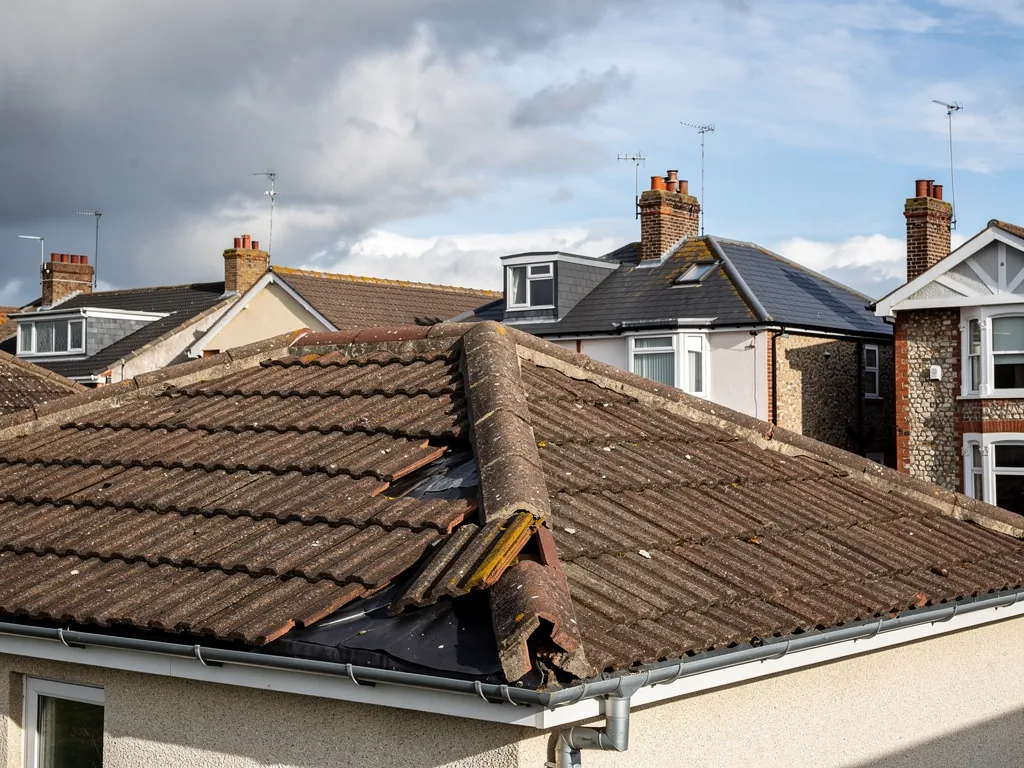
Gales get the headlines, but cold weather wears a roof down in a different way. There is no bang and no tile on the lawn. A hairline crack takes in a little rain, the temperature drops overnight, and by morning the crack has opened a touch further. Repeat that through a few cold weeks and a roof that looked fine in November is leaking in February.
Snow and ice add their own problems on top. Snow sitting on a slope melts from the underside first, ice builds along the eaves, and gutters that were already half blocked can crack under the weight of frozen water. Flat roofs, with water lying on them, are especially open to it.
Cold spells reach the coast as well, and a roof that has been neglected feels them first. Below we go through how frost harms each kind of covering, what to check once the thaw comes, how to deal with snow without hurting yourself or the roof, and what the lasting repairs are. If water is already coming in, start with our guide to a roof leaking in heavy rain, or see the emergency roof repairs page.
How freezing water breaks a roof
The mechanism is simple. Water expands as it freezes. When it has soaked into a tile face, a mortar joint or a crack in a gutter, the ice takes up more room than the liquid did and pushes the material apart from the inside. Thaw releases the pressure, the crack stays a little wider, and the next rain gets in further. A material that is dry or sealed is not affected. A material that is porous, cracked or poorly bedded is.
That is why the first sign of frost damage is rarely dramatic. A tile face flakes, a joint crumbles, a line of pointing falls out. None of them lets in much water by itself. Together they open a path, and the water that arrives with a wet spell finds it.
Where the damage collects
Three places take the worst of it. The first is anything bedded in mortar: ridge and hip capping, verge fillets, chimney flaunching and pointing. Mortar is porous, and old or poorly mixed mortar takes in more water than good work. The second is the lowest line of tiles and the gutter, where meltwater and drips gather. The third is anywhere water can lie, which on a pitched roof means valleys and behind chimneys, and on a flat roof means the whole surface.
It follows that the best defence is a roof that sheds water quickly and has no cracks to hold it. Fresh pointing, sound tiles and clear gutters matter more than any treatment sprayed on afterwards.
Which coverings are most at risk
Not every roof reacts the same way. Modern concrete interlocking tiles are factory made and dense, and Marley expects them to last around 60 years, though it is careful to say that figure is neither a guarantee nor a warranty. Damage tends to come from cracks, broken corners or failed fixings rather than from the tile face itself.
Clay is a mixed picture. A good fired clay tile resists frost well, but older handmade clay can be softer and more porous, and a tile that has begun to flake on its face is telling you it is letting water in. For old peg-tile roofs, an article on the Building Conservation website warns that a 60-year life expectancy cannot be trusted as a guide, so the actual condition of the tiles is what counts.
Natural slate is dense and takes very little water, which helps it through cold weather. The CORC advice site states that well-maintained slate can last 100 years and more. Slate is more likely to fail at its fixings than to freeze apart: nails that have corroded, or slates that have slipped. Our page on slate roofing covers what failure looks like in slate.
Flat roofs and lead
Flat roof coverings show frost damage as splits, blisters and open seams. Less puts torch-on felt at 10 to 20 years, noting that careful laying can reach the top of that range and sloppy work can fall short of 10. GRP is given as 25 to 40 years and EPDM, a synthetic rubber membrane, as 30 to 50 years. Whatever the covering, water that lies on the surface and freezes will find its way into any weakness. Lead is tough and rarely fails by freezing, but a flashing that has lifted from the wall lets water behind it. MyJobQuote's guide to chimney lead puts flashing life beyond 80 years.
Reading the signs once the thaw arrives
Wait for a dry, mild day after the cold has gone, then check the roof from the ground. Binoculars or a camera with a zoom lens help. You are looking for the small signs rather than the obvious ones.
On the tiles, look for flakes or shards on the ground below, tile faces that have lost their surface, cracks that run across a tile and any tile sitting out of line. Look at the pointing along the ridge, hips and verges for gaps and crumbs. On the chimney, check the flaunching around each pot and the pointing in the brickwork, since a stack stands in the wind and takes in water from every side.
Gutters are quick to show frost damage. Look for split seams, joints that have opened, a section that sags and water stains running down the wall behind. A cracked gutter drips onto the wall or the fascia and soaks them for the rest of the winter.
Inside the house
Check the loft, and the ceilings beneath eaves and chimneys. New brown rings, a damp patch that appears days after rain, or a drip on a cold morning all point to a way in. Condensation can cause similar marks. It usually shows on cold surfaces in a wet loft, rather than as a stain below a single point on the roof, and our answer on whether it is a roof leak or condensation explains how to tell them apart.
Take dated photographs of anything you find, and write down when you first saw it. A short, clear record helps the roofer, and it helps with the insurer if you decide to claim.
Snow on the roof: what to leave alone
When heavy snow does fall, people are quick to reach for a ladder or a broom. The safest advice is to do less. Snow melts, and a roof in reasonable condition copes with a layer of it. Climbing up to clear it risks a fall, and raking it down from the ground puts tiles and pots at risk of being pulled loose.
The danger from snow is usually below the roof rather than on it. A slab sliding off a slope can land on a path, a car or a person. Keep the area under the eaves clear and warn visitors. If a lot of snow has gathered over a porch, a bay or a lean-to, keep out from beneath it until it has shifted.
Ice at the eaves and in the gutter
Snow melting on the warmer part of the roof can run down and refreeze at the cold edge, building a ridge of ice along the gutter. Water that backs up behind it may be driven under the lowest tiles. A gutter holding frozen water can be pulled away from its brackets by the weight. Do not hack at ice with a tool, since that will crack the gutter or chip the tiles. Let it thaw, then clear the gutter and check the fixings.
If you notice a sag, a split or water coming through, that is a job for someone equipped to work at height. A temporary measure, such as a cover over an open area, can keep the building dry until the weather lets the repair go ahead. Our guide to what a roof make-safe involves describes how this works.
Lasting repairs after a cold snap
Repairs follow the damage. Cracked or flaking tiles are replaced with matching ones, using clips or nails to the manufacturer's instructions, and the battens and underlay beneath are checked while the area is open. Ridge and hip capping that has lost its mortar is refixed. BS 5534 changed in 2014 so that mortar on its own no longer counts as the fixing for capping, which means every tile is also screwed or clipped. BS 8612:2018 covers dry-fix kits if the roof is to be done that way. Our ridge tile repairs page describes the options.
Chimneys need repointing when the joints have gone, and a cracked flaunching should be cut out and replaced rather than skimmed over. Gutters with split seams are usually better replaced than patched, especially where the old run sags. Manufacturers such as Brett Martin give roughly 1mm of fall for every 600mm, so a sagging gutter that holds water will freeze solid and fail again.
Flat roofs, falls and ventilation
On a flat roof, ponding is the problem to solve. The current flat roof code, BS 6229:2025, sets a minimum finished fall of 1:80, while the usual design target is nearer 1:40 to allow for building tolerances. A roof that holds standing water needs the falls corrected, which means a re-cover rather than a patch. On pitched roofs, loft ventilation also matters, because a damp cold roof space makes frost and condensation problems worse. Marley gives eaves ventilation of 25mm for pitches of 15 degrees or less and 10mm above that, for a cold roof with high-resistance underlay.
Checkatrade's June 2026 repair table puts concrete tile repairs at £90 to £120 per m², clay at £110 to £160 and natural slate at £150 to £220, before VAT. These are national figures, not our price. Our written quote has one total price once the survey is done.
Cold-weather work and who pays
Repairs can be done in winter, but the weather decides how. Mortar and some flat roof coverings need dry, mild conditions to bed in properly, so a roofer may recommend a temporary repair now and the lasting one when the weather improves. That is sound advice, not a delay for its own sake. Our pages on roof repairs in winter and on flat roof winter repairs explain what can go ahead in the cold.
Frost damage and insurance deserve a note. Insurers distinguish a sudden event from gradual deterioration. Which? counts a leak through a roof in poor repair as wear and tear. It also cites Financial Conduct Authority data: 32% of storm-related claims in 2024 ended in a payout. Whether your policy responds to cold-weather damage depends on its terms and what the insurer concludes caused it. The order that works is to ring the insurer, get the roof covered, then file the photographs and receipts.
Caring for the roof between winters
The simplest protection is the least exciting. Clear the gutters each autumn, replace cracked tiles before the weather turns, keep pointing in good order and make sure water leaves flat roofs freely. Moss holds water against tiles, so removing it can reduce the amount a tile takes in. Our roof cleaning and moss removal page explains how it is done without harming the tiles.
A survey from us ends with pictures of your own roof and a clear opinion: mend, hold or renew. Many cold-weather faults turn out to be small and local, and for those the right answer is a modest repair rather than a bigger job.
Questions
Frost and snow on your roof
Why did my roof leak after a frost when it never leaked before?
Frost often makes an existing weakness bigger rather than creating a new one. Water in a hairline crack, a pointing joint or a gutter seam freezes and widens the gap, and the next wet spell gets through. The leak then appears days after the cold has passed, which makes the connection hard to spot.
Is it safe to clear snow off a roof myself?
We would not advise it. A wet, snowy roof is slippery, ladders slip on frozen ground and pulling snow down can drag tiles with it. A roof in reasonable condition copes with a layer of snow, and it will melt. Keep people clear of the eaves and call a roofer if you see water coming in.
Can cold weather crack roof tiles?
Yes, particularly tiles that are already cracked, porous or flaking. Water soaks in, freezes and pushes the material apart. Dense, sound tiles cope far better. If you find flakes of tile below the roof after a cold spell, have the slope looked at before the next wet week.