
Reclaimed or new stone · 9 min read
Reclaimed or newly quarried Horsham stone?
When a stone roof cannot take back every slab it gave up, the shortfall comes from salvaged stone or fresh quarry stone. Here is how the two differ, how to judge either, and when each is the better match.
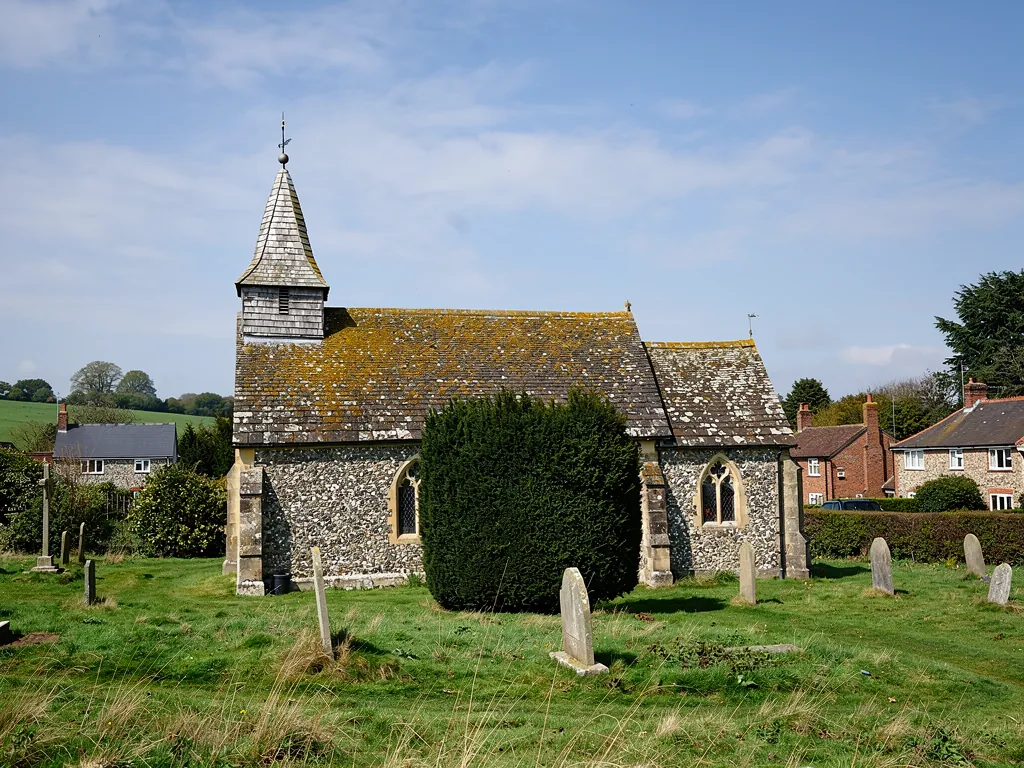
Strip a Horsham stone slope and you will find the roof sorts itself. Some slabs come off whole and sound. Some are cracked across, some have flaked to nothing, and some were already missing, patched years ago with whatever fitted. The sound ones go back. The rest have to be replaced, and that is where the question in the title arrives.
Reclaimed slabs have already spent a long time on a roof. They arrive weathered, lichened and uneven, with the fixing holes of their first life. Newly quarried slabs are cut fresh from the rock, so they come cleaner, paler and more regular. Both are real stone, and neither is better in every case.
The right choice turns on the roof in front of you: how much stone is needed, what the neighbouring slabs look like, whether the building is listed, and what is on the market when you want it. This guide sets the two side by side so you can ask the right questions of any roofer, including us. Nothing here is a price. Every stone job is priced after a survey, and our Horsham stone roofing page explains how that works.
What reclaimed Horsham stone is
Reclaimed stone means slabs that have already served on another roof. They come from a barn that was pulled down, an outbuilding that was re-covered in something lighter, or a neighbouring job where the owner chose not to reuse everything. Salvage yards and stone merchants sort them and sell them on.
The great strength of reclaimed stone is that it already looks right. A century or more of weather has softened the edges and darkened the surface, and lichen has settled in. A reclaimed slab set beside a weathered neighbour tends to vanish into the course, which is what you want from a repair. Using salvaged material also avoids cutting fresh rock for a repair that needs only a handful of slabs.
The weakness is that the history is unknown. A salvaged slab may have been cracked, may have taken frost, or may be laminating, which means splitting into layers along its bedding. It may carry old fixing holes in the wrong places for your battens. Sizes are mixed, so the pile has to be sorted into the sizes your courses need, and the right size at the right thickness can be hard to find.
Own stone first
The best reclaimed stone is often on the same roof. Slabs lifted from one slope, an outbuilding or a rear pitch can be redistributed so the least weathered ones go where they are seen least. A conservation officer will generally want to know the roof's own stone is being reused as far as it will go before anything is brought in. Our guide on repairing, re-laying or replacing a Horsham stone roof explains how the survey decides that.
What newly quarried stone brings
Newly quarried stone is split from the rock for the job. Because it is produced to order, it can be had in the sizes the courses call for, which makes the grading easier. There is no doubt about the history of a fresh slab. It has not been through a winter on someone else's roof, and it should be free of old fixing holes, so it can be pegged or nailed wherever your battens fall.
The cost of that tidiness is the look. Fresh stone is cleaner and usually lighter in tone than a roof that has weathered for generations, and a block of new slabs among old ones can stand out from the lane for years. Weathering narrows the gap, but slowly. Where the new slabs are few, scattering them across a slope instead of grouping them in one patch helps them settle in. Where a whole slope is being re-laid and new stone fills a large share, the finished roof will read as newer than its neighbours until it ages.
Lead times deserve a place in the plan. If a roof needs a large number of slabs in particular sizes, the order cannot be rushed, and the roof may need a temporary cover in the meantime. A realistic timetable is agreed once the survey shows how much stone is needed. Supply is the other question. Stone in the right sizes, thickness and colour is not always on the shelf, and waiting times can be long. That is another reason to start the conversation early. Our answer on where Horsham stone comes from today deals with the sourcing side.
Ask any supplier to show you the stone, not just describe it. A photograph of the actual pallet, or a sample slab you can hold, tells you far more than a name on a quote. Lay a few out in daylight beside slabs from your own roof before you agree to anything, and check the faces for flaking before they go anywhere near a scaffold.
Matching stone to the roof you have
Matching is a judgement, and a good survey makes it concrete. Four things decide whether a replacement slab suits the course it goes into.
Thickness comes first. A thin slab among thick ones sits badly, lifts at the tail and leaves a gap for wind and rain. Size is second. Courses diminish from the eaves to the ridge, so a replacement needs to be the right size for its row, and a slab that is too big or too small throws out the rows around it. Colour and texture are third. Local stone ranges widely in tone, from warm ochre to cool grey, and a mismatch shows from the road. Fourth is condition: a replacement should not be flaking, laminating or cracked before it is laid.
Weight on the roof matters here too. Stone is heavy, and the timbers beneath it were built to carry it. Putting a full slope of new stone in place of thinner or missing pieces shifts the load. The Planning Portal puts the trigger for a building control application at a new covering that is 15 per cent or more heavier than the one it replaces. Replacing like with like in the same stone rarely moves that figure far, but the question is worth raising at the survey, and our guide on how much a Horsham stone roof weighs looks at the structure.
No supplier's description replaces your own eye. Many roofs end up with a blend. Reclaimed slabs take the visible faces, new ones fill the sizes that cannot be found, and the oldest, most weathered pieces go together on the front slope so they read as one. We lay the mix out on the ground first, so you see the effect before it goes up. The surveyor, the roofer and the owner should all agree on the match before the first slab goes up, and where the building is protected, the conservation officer should agree too.
Reclaimed stone and the conservation officer
On a listed building or in a conservation area, the choice is not only yours. The conservation officer advises the council on whether the work respects the building's character, and the stone is a large part of it.
A few patterns come up often. Officers tend to favour reuse of the building's own stone, then reclaimed stone from a source that can be named, and new quarried stone as the last resort for any shortfall. Whatever you propose, expect to be asked where the replacement stone comes from, how it will be matched, and where on the roof it will go. Write the answers down before you apply.
There is also a point about where reclaimed stone has been. Buying slabs that were stripped from another old building raises its own concern if that building was protected and the stripping went ahead without consent. Ask the merchant plainly about the source, and avoid stone that cannot be traced. Reputable dealers can say roughly where a batch came from, how it has been stored since and whether it sat on bare ground, where damp and frost work into the layers. A dealer who is happy to name the job the slabs came from is a good sign.
Our guide on Horsham stone roofs on listed buildings covers the application itself. The National Park Authority takes the view that everyday maintenance and minor in-place repairs need no listed building consent. Replacing a handful of slabs in matching stone may fit that, while stripping a slope and bringing in a lot of different stone may not, so describe the plan in full and let the council say.
Where the house is neither listed nor in a protected area, the choice is yours, but the same matching rules give the best result.
How we decide on a survey
We never settle the stone before the survey. The order is simple: look at the roof, photograph it, count what can be reused, then talk about where any shortfall comes from.
In the loft we check the battens and rafter ends, because rotten timber changes the amount of work. On the slopes we mark each slab that has slipped, cracked or flaked, and photograph the lines of failure. The survey then gives us three numbers: how much stone is sound, how much is lost, and how much of the loss is on the street side, where a mismatch shows most.
From that we say whether reclaimed, new or a mix suits the roof. A small shortfall on a rear slope often goes best with reclaimed stone placed where it is seen least. A larger gap, or a need for one particular size, may point to fresh stone. A listed roof will bring the conservation officer into the decision, so we write it up in terms you can pass on.
The price follows as one written total, because the amount of sound stone, the state of the timbers, the access and the finish at ridges and valleys all move it and none can be judged from the garden. You see the photographs behind our verdict before any figure arrives.
If you are weighing the same question against a different covering altogether, our guide on Horsham stone against other roofing materials compares them. To start, send photographs of each slope by WhatsApp or ring 01243 252373, and tell us whether the building is listed.
Questions
Stone sourcing questions
Is reclaimed Horsham stone always the better choice for a repair?
Not always. Reclaimed slabs blend in quickly, but their history is unknown and they may be cracked, laminating or pre-holed in the wrong places. New stone is cleaner and can be had in the sizes the courses need, though it looks fresh for years. The right answer depends on how many slabs are missing and where they sit.
How can I tell if a delivered stone slab is sound?
Look at it in daylight before it goes up. Check for cracks, for layers lifting along the edges and for a face that has flaked away. Compare thickness and colour with slabs from your own roof. Ask the supplier for photographs of the actual pallet, and refuse any stone that arrives damaged or different from what you saw.
Will the council ask where my replacement stone comes from?
On a listed building or in a conservation area, very likely. The conservation officer usually wants to know the source, the match and where the new stone will go. Have those answers written down, with photographs, before you apply. Where the house is unprotected, the choice is yours, but the same questions give a better result.