
Slate or tile · 9 min read
Is it cheaper to slate or tile a roof?
Natural slate sits near the top of the price table and tile coverings sit lower, but lifespan, repair rates, weight, pitch and your street's rules all change which one is cheaper for your roof.
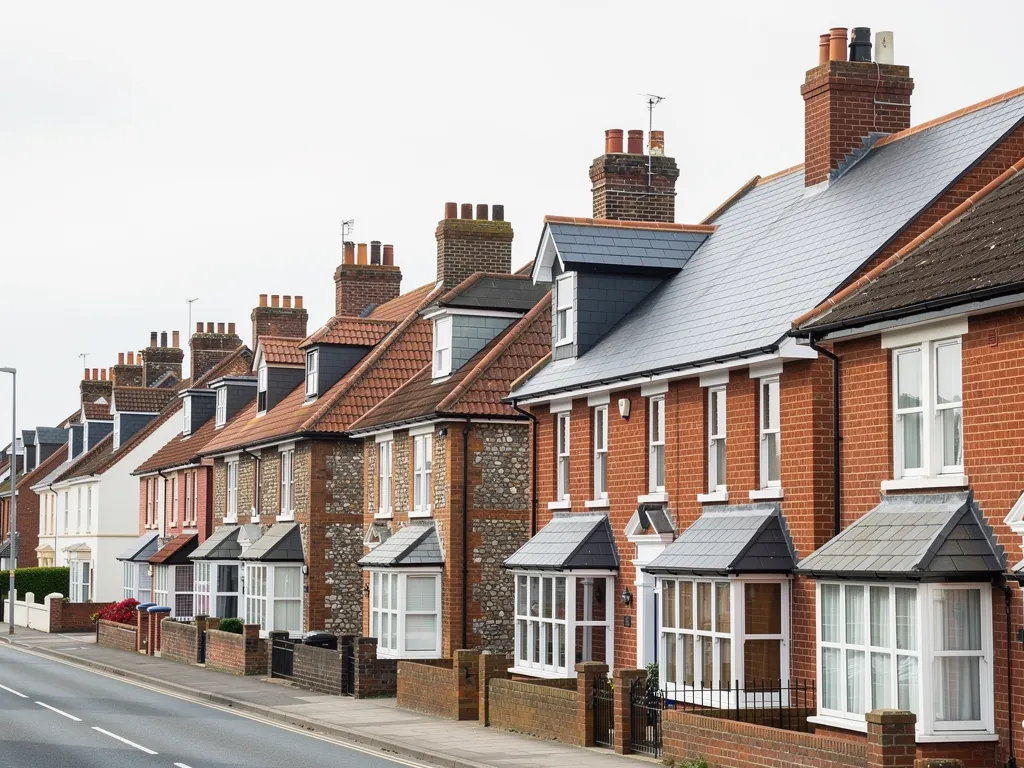
Ask whether slate or tile is cheaper and the quick answer is tile. A concrete or clay covering is made in volume, goes on in larger pieces and is priced lower per square metre than natural slate in the published cost guides. That is where the sum starts, not where it ends.
The rest of the sum is what the roof costs across the years you own the house. Slate is fixed one piece at a time and takes longer to lay. It can also outlast a tile covering by decades, and a roof paid for once costs less than one paid for twice. Then come the things that have nothing to do with taste: the load your rafters can carry, the pitch of the slope, and whether you live on a street where the council expects slate to stay.
Below, the dated prices sit side by side, with what moves them and when each covering is the better buy. Those figures describe the market at large, and your own roof will land somewhere inside or outside them. After the survey we put one total price in writing for the work we find, and that is the number to act on.
What the national price guides put on each covering
Start with slate. Checkatrade's slate pricing table, dated September 2026, runs from £160 to £210 per m² for a natural slate roof, with an average of £184. Spanish slate, the cheaper imported option, is listed at £95 to £125 per m². Slate roofers appear in the same guide at £280 to £360 a day.
For a like-for-like look at the materials themselves, the clearest table is Checkatrade's repair rates, last updated in June 2026. These exclude VAT, so the standard 20 per cent goes on top:
| Material | Repair rate, per m² |
|---|---|
| Concrete tile | £90 to £120 |
| Clay tile | £110 to £160 |
| Natural slate | £150 to £220 |
The order never changes: concrete at the bottom, clay in the middle, natural slate at the top. Repair rates are not new-roof rates, but they show how the market sees each material, and the ranking carries over to the way people talk about new work. Bear in mind too that these rates assume ordinary access, so a steep, awkward or tall roof can cost more to work on than the same covering on an easy one.
Whole-roof figures are wider because they span every covering and every size of house. Checkatrade, in October 2026, gives a UK average near £8,000, with the bulk of jobs landing between £4,000 and £19,000. Those numbers blend slate, clay and concrete together. What a new tiled roof costs on your own house turns on the tile you pick, the area, the shape of the roof and how you reach it, and our written quote settles it after the survey.
Why slate takes longer to lay
Labour is where the gap opens. A slate is a small, thin piece of stone, and every one is fixed by hand with nails or hooks. An interlocking tile covers a bigger patch of roof in one go, so fewer pieces go on for the same area.
Slate also asks for more cutting. At the hips (the sloping ridges where two slopes meet) and the valleys (the internal angles where they join) each slate is trimmed to follow the line. That is slow, careful work, and it is part of why slate is priced higher than tile.
Access costs the same for both
Scaffolding is priced by the house, not by the covering. In Checkatrade's October 2026 table a semi on two floors comes to around £875 monthly, a terrace £800, a detached bungalow £1,000 and a detached house £1,200. Poles that reach across the footway require a highway licence under section 169 of the Highways Act 1980, which needs advance notice. West Sussex County Council asks for at least 10 working days' notice and charges £266 for a month.
That matters here because access is a fixed cost that ignores what goes on the roof. On a small, simple roof the labour difference is a large share of the bill. On a tall house where the scaffold is a big part of the job, the gap between slate and tile shrinks as a share of the total. Before you decide between slate and tile on price, confirm that both figures take in scaffolding and VAT. A figure that leaves them out can look cheaper and finish dearer.
Lifespan: the cost of laying a roof twice
The case for slate rests on how long it lasts. On CORC's figures a well-maintained slate roof can run past a century. Checkatrade says stone slate passes the hundred-year mark too.
Concrete tile gets a shorter figure. Marley, a tile maker, expects its concrete tiles to give around 60 years and is careful to say the number is no warranty. For clay it quotes a floor of 60 years from the Building Research Establishment, though old peg-tile roofs are poorly measured by that number. Every lifespan here is a typical spread, not a pledge, and a manufacturer's warranty is a different thing from how long a covering actually lasts.
Repairs along the way
Slate costs more to mend, as the repair table shows. A slipped slate is usually secured with a tingle, a small metal hook nailed to the batten that holds the foot of the slate in place. When the nails holding a whole slope have corroded, slates drop in numbers, and a re-slate may be the sound answer. Our guide to nail sickness on slate and tile roofs explains the signs.
Put it together and the question becomes how many more years you will live under the roof. If the house is staying in the family, slate's higher price per metre is spread over more decades. If you plan to sell in a few years, a buyer's surveyor will look at the condition of the covering and its remaining life, and either material in good order will do.
Weight, pitch and what your roof can carry
Swapping one covering for another is not only a money question. Slate and tile weigh different amounts per square metre, and your rafters were sized for the covering they carry now. For the Planning Portal, a covering that makes the roof 15 per cent heavier or more brings building control into play. Approved Document A speaks of a rise above 15 per cent as a significant change in loading. The two wordings differ slightly, so we treat roughly 15 per cent as the line where building control and a structural check come in. A swap that makes the load noticeably higher or lower also deserves a professional opinion on the timbers before anyone orders materials.
Pitch limits the choice
Pitch means how steeply the roof rises. Cupa Pizarras, a slate supplier, says BS 5534 indicates 20 degrees as the smallest slope that suits natural slate where exposure is moderate and the slate is 500 mm long, and it adds that hook fixings are not suited to slopes shallower than 25 degrees. Tiles differ by product. Marley lists its concrete plain tile at 35 degrees, its Edgemere interlocking tile at 17.5 degrees and its Mendip and Wessex interlocking tiles at 15 degrees. The maker's own sheet for the precise product is the document to check before choosing.
So a shallow extension roof may rule slate out and point you to a low-pitch interlocking tile, while a steep original roof can take either. Our answer on whether a slate roof is heavier than a tiled one goes through the load question in more detail, and the survey tells us the real pitch of each slope.
Streets where the council expects slate
Along parts of the Bognor seafront you may not get to choose freely. Arun's Aldwick Road conservation area, designated in July 1994, is described there as a place of stucco, slate and flint. The district's guidance records that slate has often given way to concrete interlocking tiles, calls that damaging to the terraces and their setting, and wants the original roofing put back.
The Steyne and Waterloo Square area (August 1979, extended July 1994) gets the same treatment: the document wants natural slate or plain clay tile back wherever unsuitable modern materials have gone on. Both areas show that a low-cost covering on a prominent frontage can become an expensive mistake if the council later asks for it to be undone.
What that means for a new covering
Renewing a roof in matching material rarely needs planning permission, because planning law leaves out works that do not change how a building looks from outside. Changing slate to concrete tile does change the look, so for a listed house, or one within a conservation area, ring the planning team before anything is ordered. Listed building consent is needed whenever an alteration would change a listed building's special character. Inside the South Downs National Park, who handles the application depends on the district, so ask the Park Authority first.
If your house sits in one of these areas, the cheaper covering may not be one you are allowed to fit. Our guide to slate roofs in conservation areas covers the consent side in full, ahead of any quote for a swap.
Choosing between them on your own roof
Put the findings together and a pattern appears. Slate is the better buy when the existing roof is slate in sound condition, when the house sits in a conservation area, when the pitch is steep enough and when you plan to stay. Tile is the better buy when the budget is fixed, when the slope is shallow, when the structure was built for a lighter covering and when no local rule asks for slate.
What we check at the survey
At the survey we go over the whole roof: the covering, the battens (the timber strips the slates or tiles hang from), the underlay beneath them and the nails. Photographs of your own slopes come with a plain verdict. If the bulk of the slates are sound and a handful have slipped, the verdict is a repair rather than a new covering. If the roof has run its course, we tell you so and lay out what each option involves.
Where a swap is on the table we explain whether building control is likely to be involved because of weight or pitch, and we handle the Building Regulations notification where the work is notifiable. You then get one written price for the job. Whoever else you ask, find out if their number takes in VAT and the scaffold, and what their inspection turned up, before you weigh one covering against the other.
For more on slate prices, our guide to the cost of a new slate roof goes deeper, our comparison of clay and concrete roof tiles covers the tile side, and the slate roofing service page describes what slating involves from first visit to final clear-up.
Questions
Slate and tile cost questions
Do I need building control to swap slate for concrete tiles?
Possibly. The Planning Portal names a covering that makes the roof 15 per cent heavier or more, or one that performs quite differently in a fire, as grounds for requiring approval. Arun District Council's building control page also names replacing roof coverings. Ask the council's building control team, or your roofer, before you order tiles.
Is a slate roof cheaper to maintain than a tiled one?
Not per repair. Checkatrade's repair table gives natural slate at £150 to £220 per m² against £90 to £120 for concrete tile, excluding VAT. A sound slate roof may need fewer visits over its long life, but failing nails can bring slipped slates in numbers. A survey shows which kind of roof you have.
Does scaffolding cost less on a tiled roof than a slate roof?
No. Scaffold is priced by the house and how long it stays up, not by the covering above it. Checkatrade's October 2026 table puts a two-floor semi at around £875 a month. A licence is needed over the pavement, and West Sussex County Council charges £266 for one month.