
Roofers in Whitehill and Bordon
Camp-era buildings, heath edge, units
Bordon was the site of a permanent military camp on Woolmer Forest heathland, and its roofs come from many eras and uses, with several standing among trees.

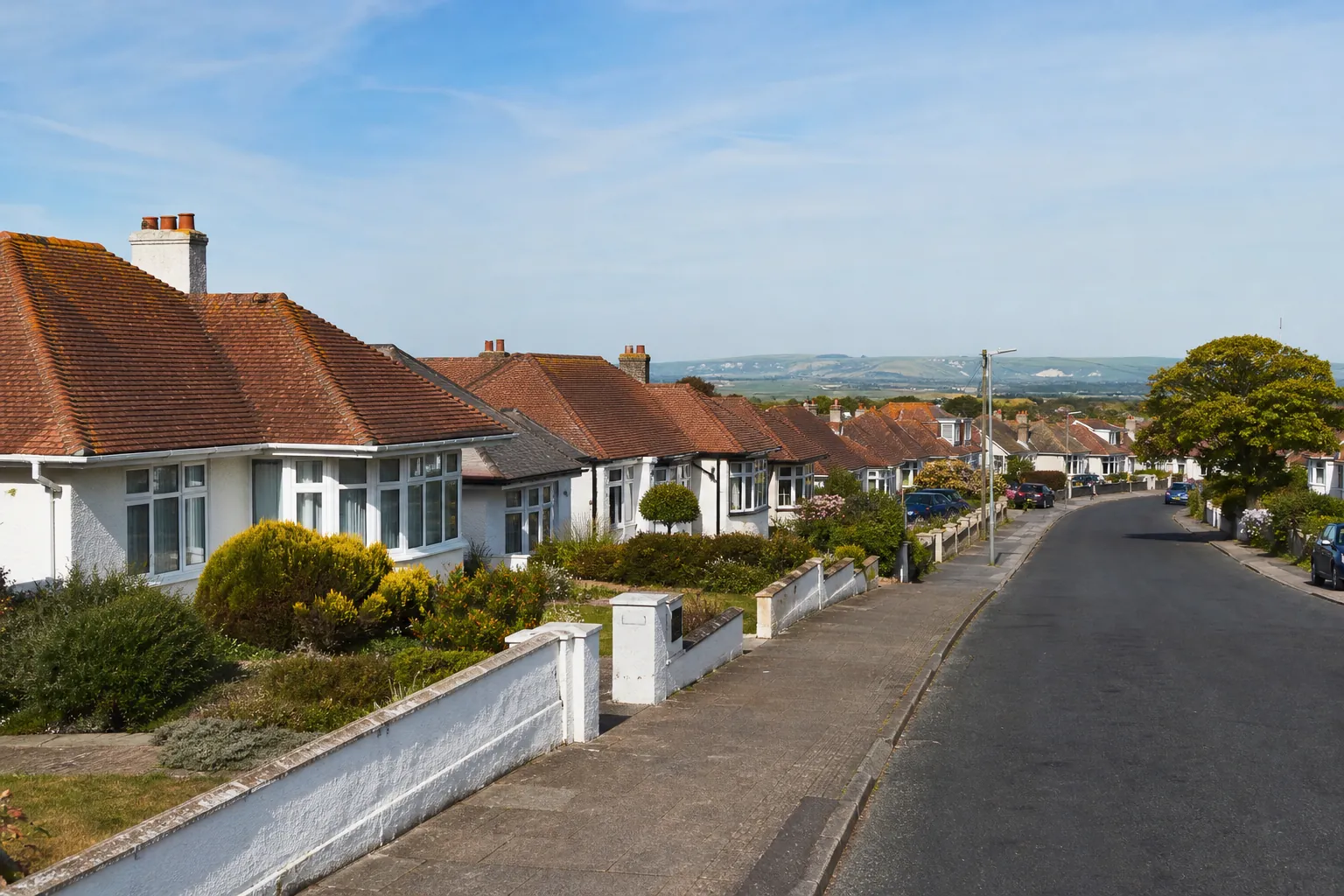
Whitehill and Bordon roofs
Roofs around a camp on the heath
-
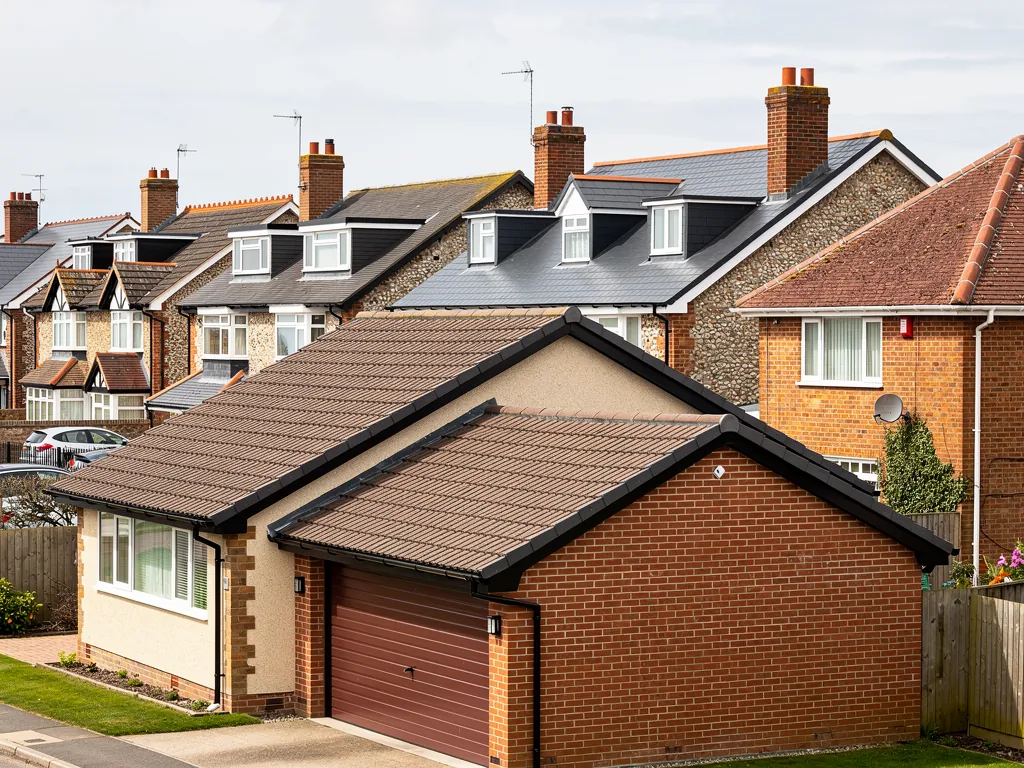
The camp that began the town
A permanent military camp was made at Bordon in the west of Headley parish, the Victoria County History records in its 1908 volume. Brick barracks followed in 1906, and the buildings around them span many dates.
-
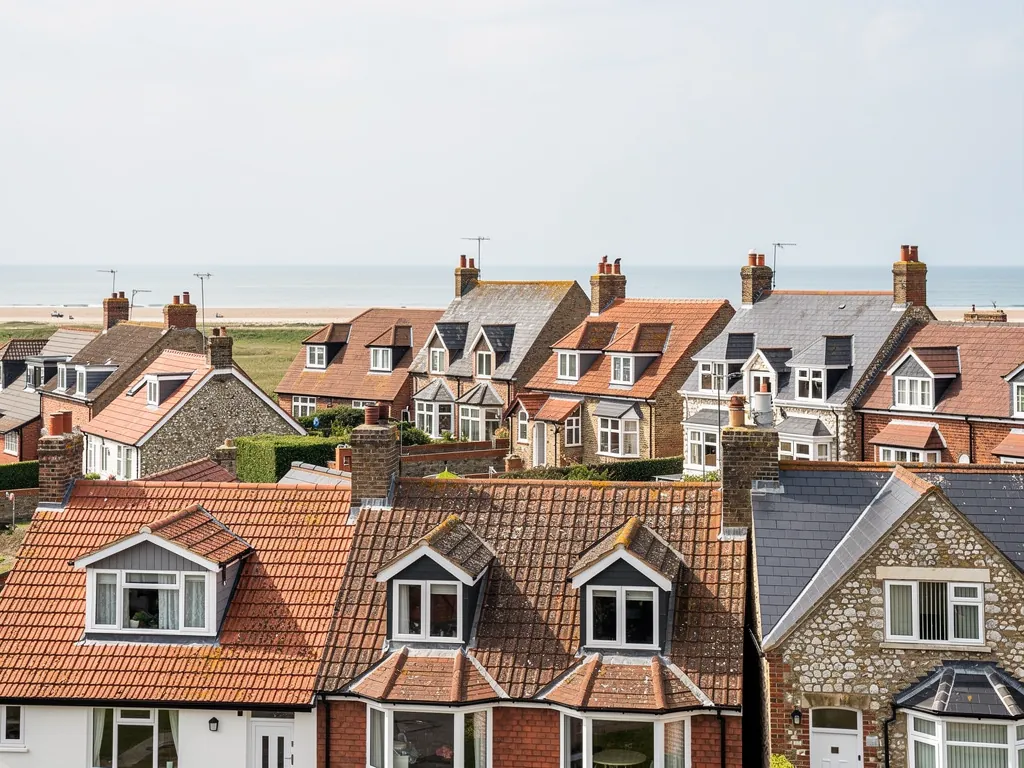
Land sold to the army
Part of the Woodcote estate was sold to the military authorities as an appendage to Bordon Camp, so ground that was once countryside carries buildings put up for a new purpose.
-
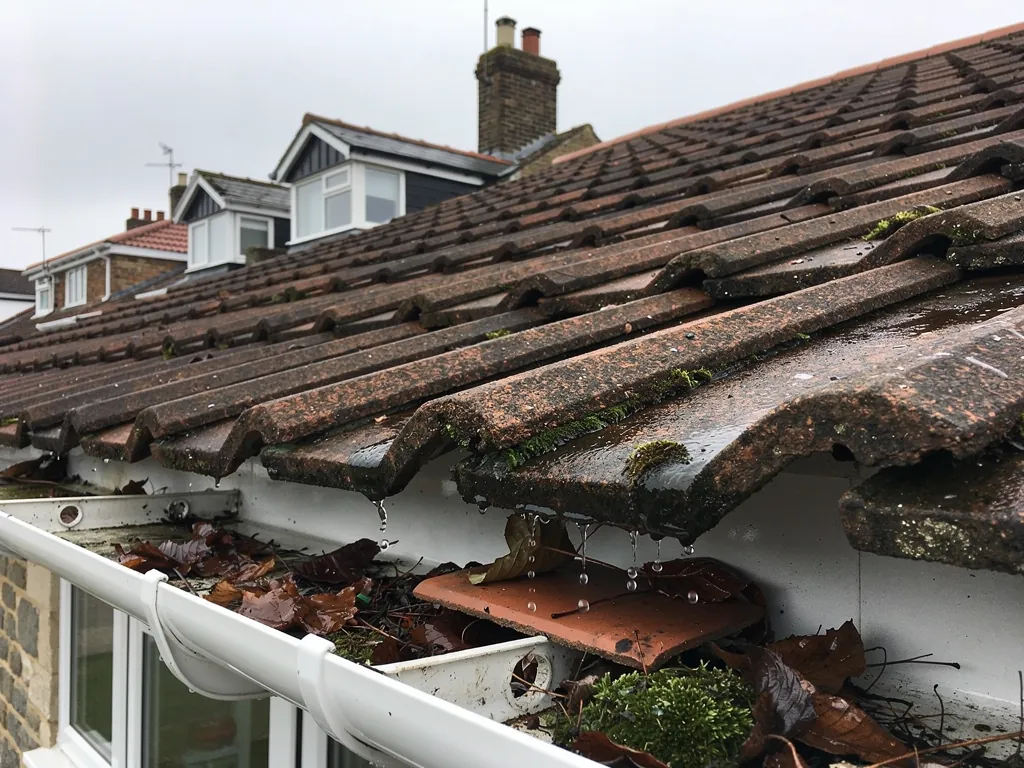
Heathland and trees
Bordon stands on Woolmer Forest heathland in the west of Headley parish. Roofs near heath and woodland collect leaves and needles, hold damp and grow moss more readily than open sites.
Map of Whitehill and Bordon, 29.7 road miles north of Bognor Regis, with the nearest towns we also cover.
Whitehill and Bordon and its planning picture
- Council
- East Hampshire District Council
- County
- Hampshire County Council
- Conservation area
- None in East Hampshire District Council's conservation area table
- Article 4
- The employment-to-residential direction, made 31 January 2018, removes no roof rights
- Setting
- Woolmer Forest heathland in the west of Headley parish
- Distance
- 29.7 road miles north of Bognor Regis, about 53 minutes by car
Bordon notes
From camp roofs to heathland gutters
Three things that shape roof work in Whitehill and Bordon: a mixed building history, a heathland setting and a stock of older commercial buildings.
Chapter 1: A camp, a heath and the roofs they left2379
Sheet 01 / 03Whitehill and Bordon has a founding story that is unusually plain. The Victoria County History of 1908 records that a permanent military camp was made at Bordon in the west of Headley parish, and that part of the Woodcote estate was sold to the military authorities as an appendage to Bordon Camp. The setting is Woolmer Forest heathland. Brick followed the first camp buildings: Louisburg Barracks, built in 1906, housed two artillery regiments, a riding school and a veterinary hospital. A place shaped by a camp is not one where one era set the pattern. Its roofs date from whichever decade built them, for whichever purpose, and each has been altered by whoever owned it next.
Finding out what a roof is made of
- Look in the loft first
- Identify tile or sheet type
- Count slipped or cracked units
- Test battens and fixings
1.1 Why we do not guess at a roof here
On a street of one date, a roofer can reasonably guess what lies under the tiles. In a place like this a guess is a risk. One house may have a clay tile covering over timber battens, the one beside it a concrete tile over a modern membrane, and a third a patched mixture of both after an extension. So we begin by finding out what is actually there, from the loft first, with a lamp and a camera, and then from the roof itself. The pictures go out with the written quote. Only then do we say repair, patch or replace.
1.2 Joins, extensions and chimney stacks
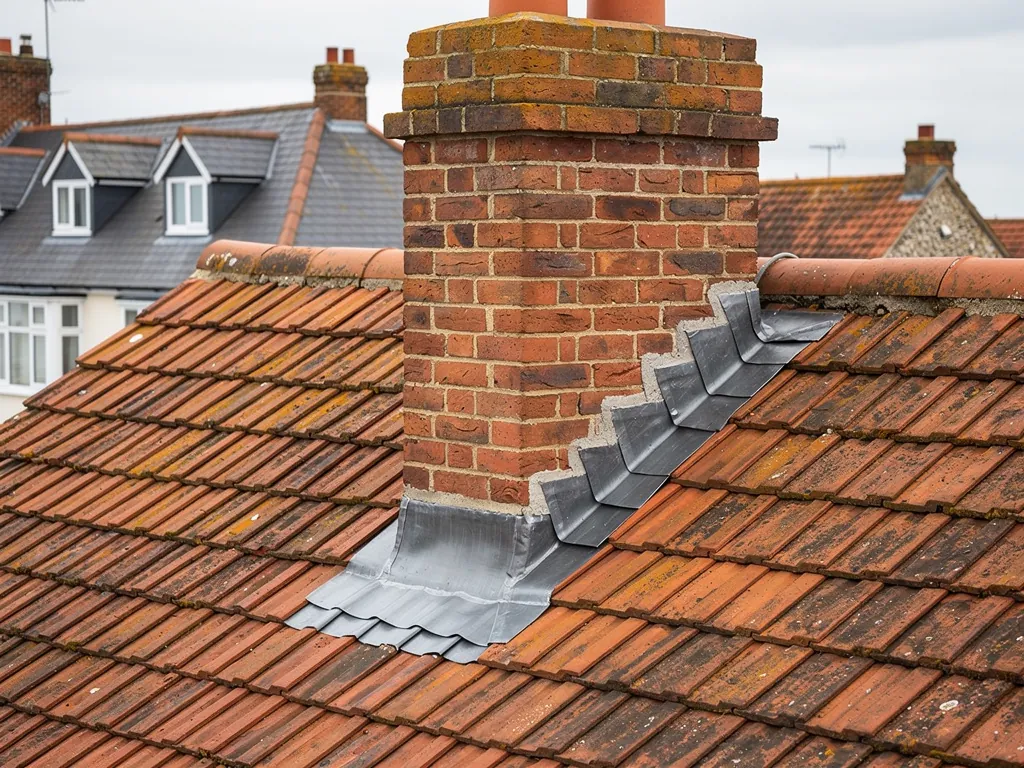
Where a town has been altered piece by piece, roofs meet walls and each other in odd places. A rear extension against a first-floor wall, a porch tied into a gable or a chimney stack standing alone in a slope all need lead flashings, the strips of sheet lead that seal a roof to a wall. Royston Lead lists code 4 at 1.80 mm and code 5 at 2.24 mm for flashings. MyJobQuote gives a typical UK figure of £150 to £250 for patching chimney lead and £350 to £460 for a full renewal without scaffolding. Those figures show how much of the cost is just reaching the stack.
1.3 Telling a repair from a relay
The real test is how many separate faults share one cause. A single slipped tile is a repair. A line of slipped tiles along an eaves, with softened battens beneath, points to a failed fixing system and a stretch that has to be stripped and relaid. Lifespans give a rough guide only: Marley reckons concrete tiles last around 60 years and calls that no guarantee, so a roof of unknown history could be well short of it or well past it. Our roof repairs page sets out how we weigh a patch against a bigger job.
Chapter 2: Gutters, moss and falling needles near the heath2928
Sheet 02 / 03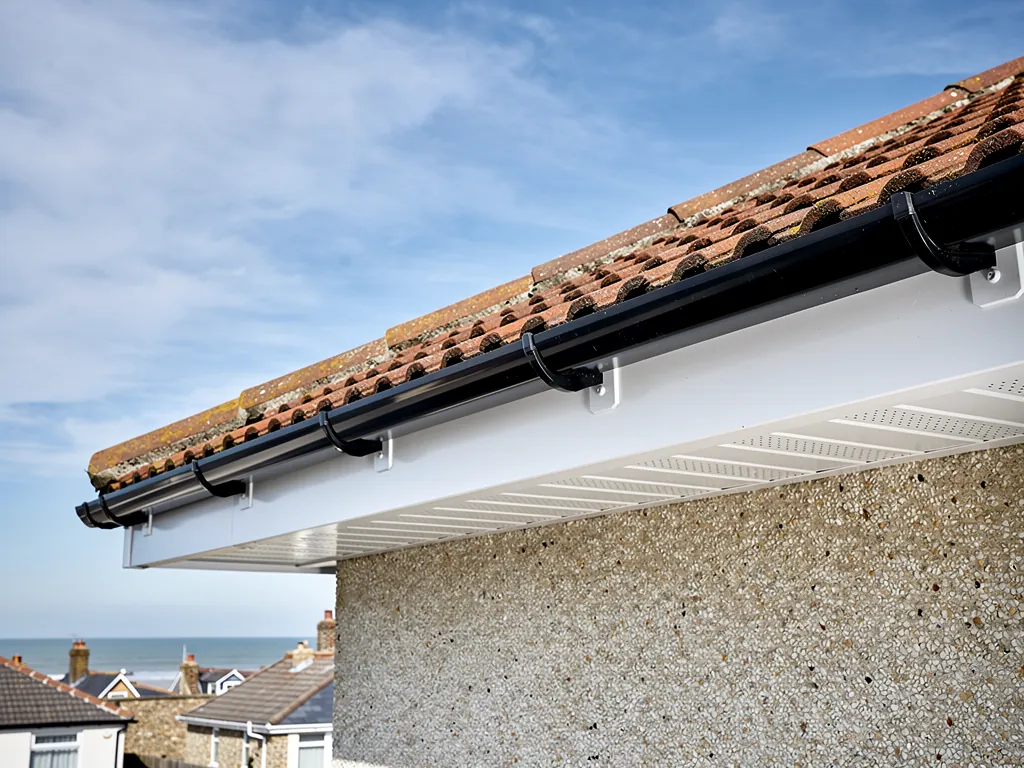
Bordon stands on Woolmer Forest heathland, and roofs near trees live a different life from roofs on open ground. Leaves, twigs and pine needles drop into valleys and gutters, hold damp against the covering and give moss a bed to grow in. Moss itself is a symptom to read, not only a nuisance. A roof under heavy shade may stay wet for days after rain, and a tile that stays wet is more likely to crack in a frost. Our roof cleaning and moss removal page describes the cleaning methods we use and when a roof is better left alone.
A woodland-edge roof visit
- 1ClearLeaves, needles and moss are lifted from valleys and gutter outlets first.
- 2WatchWe note where water lingers, since a wet patch shows a lost fall or a blocked path.
- 3InspectTiles, battens and flashings under the shaded slopes are examined for damp damage.
- 4AdviseA written verdict follows, with photographs of every fault found.
2.1 Gutters that need to fall properly
Gutters on a wooded plot fill quickly, and a gutter that holds water has usually lost its slope. Manufacturer guidance is not a standard, but Brett Martin suggests a fall of 1 mm for every 600 mm, with brackets no more than 900 mm apart, and FloPlast quotes 1 in 350 for its MiniFlo system. So the range is roughly 1:600 to 1:350, depending on the system. A sagging run, a bracket that has pulled out or a joint that weeps are all found by standing back and watching the gutter in rain, then looking from the ladder.
2.2 Nests, bats and the timing of work
Woodland edges mean wildlife. All bats and their roosts are protected by law, and roof work can affect them. It is also an offence to intentionally destroy a wild bird's nest that is being built or used. If we see signs of either, the work pauses and you are told what the next step is, instead of pushing on. Nothing is lost by waiting, and a roof can usually be made watertight in the meantime.
2.3 Fascias and soffits under the trees
The boards that close the eaves live beside the gutter and suffer from the same wet. Checkatrade says there is no hard and fast rule for when fascias and soffits need replacing; a plastics retailer claims 20 to 40 years, but a retailer has a stake in the answer. Rot that starts behind a blocked gutter is the usual reason a board is replaced early. Renewing the roofline means new boards, a new gutter run and proper fixings, all done in one visit if the scaffold is already up.
Where a north-facing slope under trees has been wet for years, the battens and underlay beneath are the parts to worry about. If they are sound, a clean and a repair is enough. If they are rotten, relaying that slope is the only lasting fix, and while the covering is off we can improve ventilation and renew the felt. A slope that has stayed wet for years rarely comes right with a clean alone, and the photographs from the survey show which of the two you are dealing with.
Chapter 3: Older units, garages and employment buildings2745
Sheet 03 / 03Owners of older garages, workshops and small units across the town ask us about the same things: the sheeting, the flat roof and the cost of reaching it. East Hampshire District Council's employment-to-residential Article 4 direction covers changing employment buildings to homes. It was made on 31 January 2018, took effect on 31 March 2019 and removes no roof rights. If you are converting a unit into a home, that is a planning question for the council, not a roofing one. The roof is a building question as well: Approved Document L 2021 Table 4.2 sets 0.15 W/(m²·K) for a new or replacement roof element in an existing dwelling, and the 2026 edition's Table 3.2 repeats it from 24 March 2027.
Two kinds of older roof
Garage or workshop sheeting
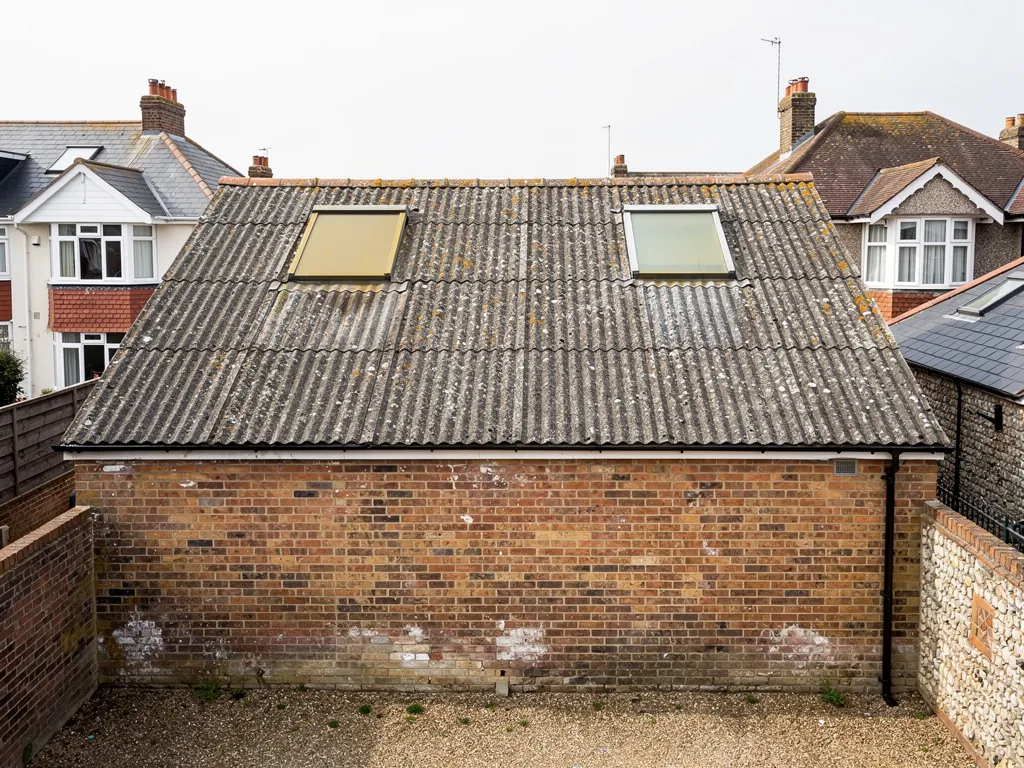
Light, low and quick to cover, but check for asbestos before anyone steps on it.
Flat roof on a unit
Needs the right fall, edge trims and insulation if the building changes use.
3.1 Asbestos on older sheeted roofs
HSE advice is to proceed as if asbestos is there in a building completed or refurbished before the year 2000. Fibre cement sheeting, a common cover for older garages and workshops, may contain it. HSE guidance is that asbestos cement roofs are always fragile, and large pieces must be lowered to the ground and never dropped or thrown down a chute. Careful removal of sheets that are intact and merely weathered is non-licensed work. If the material breaks up significantly, the work becomes notifiable non-licensed work and the waste needs a consignment note. Never walk on such a roof. Our commercial roofing page covers the larger units.
3.2 Flat and low-pitched covering
Single-ply, felt and liquid coverings are all found on older flat roofs, and each has a typical life: 10 to 20 years for torch-on felt according to Less, 20 to 30 or more for EPDM, and 25 to 40 for GRP. BS 6229:2025 gives a minimum finished fall of 1:80, and a roof that holds water is losing years. A survey tells you whether a repair will hold for a few winters or whether the deck has gone. Whoever quotes, check whether the figure includes VAT, which the government puts at the standard 20 per cent for a re-roof.
3.3 Access and the scaffold licence
Scaffolding that blocks a pavement or road is licensed by the highway authority, and here that is Hampshire County Council. The scaffolder applies and pays: £211.90 for the first two weeks, with ten clear working days needed between application and start, and no extensions.
Roofing for Whitehill and Bordon homes
Frequently asked questions
Whitehill and Bordon questions, camp to heath
How do you tell what a roof in Whitehill and Bordon is made of before repairing it?
We never assume. Bordon's buildings come from many decades, so neighbouring roofs can differ in age, tile and structure. We begin in the loft with a lamp and a camera, then examine the covering, battens and flashings from the roof. You receive photographs and a plain verdict of repair, patch or replace, then a written quote that states a single total.
Why does moss keep coming back on a roof under Bordon's heathland trees?
Shade and falling debris keep the covering wet, and moss grows wherever a roof stays damp. Cleaning clears it for a while, but cutting back overhanging branches and keeping gutters and valleys clear does more over the long run. If the tiles or battens beneath have been wet for years, we report on them with photographs before suggesting a repair.
Is my Bordon garage roof asbestos, and can I remove it myself?
If the garage was built or refurbished before 2000, treat the roof as asbestos until tested. Corrugated fibre cement is fragile and nobody should walk on it. Careful removal of intact sheets is non-licensed work, but broken material is notifiable, and the waste needs a consignment note. Ask for a sample test first, and do not break the sheets up.
Does an Article 4 direction in Whitehill and Bordon affect my roof?
East Hampshire District Council's employment-to-residential direction concerns converting employment buildings to homes, has applied since 31 March 2019 and removes no roof rights. East Hampshire's conservation area table lists none for Bordon. Rules can change, so check with East Hampshire District Council's planning team before changing the look of a roof.
Nearby areas
Get a quote
Tell us about your roof
Describe what's happening and we'll call you back.
Loading the enquiry form. You can also call 01243 252373.