
Roofers in Liphook
Hung tile, red brick, old coaching road
Liphook's roofs sit among hung clay tiles, red brick and galletted stone on the old London to Portsmouth road, with railway-era streets and River Wey water meadows close by.


Liphook roofs
From the Royal Anchor yard to the railway streets
-
Hung tile and red brick
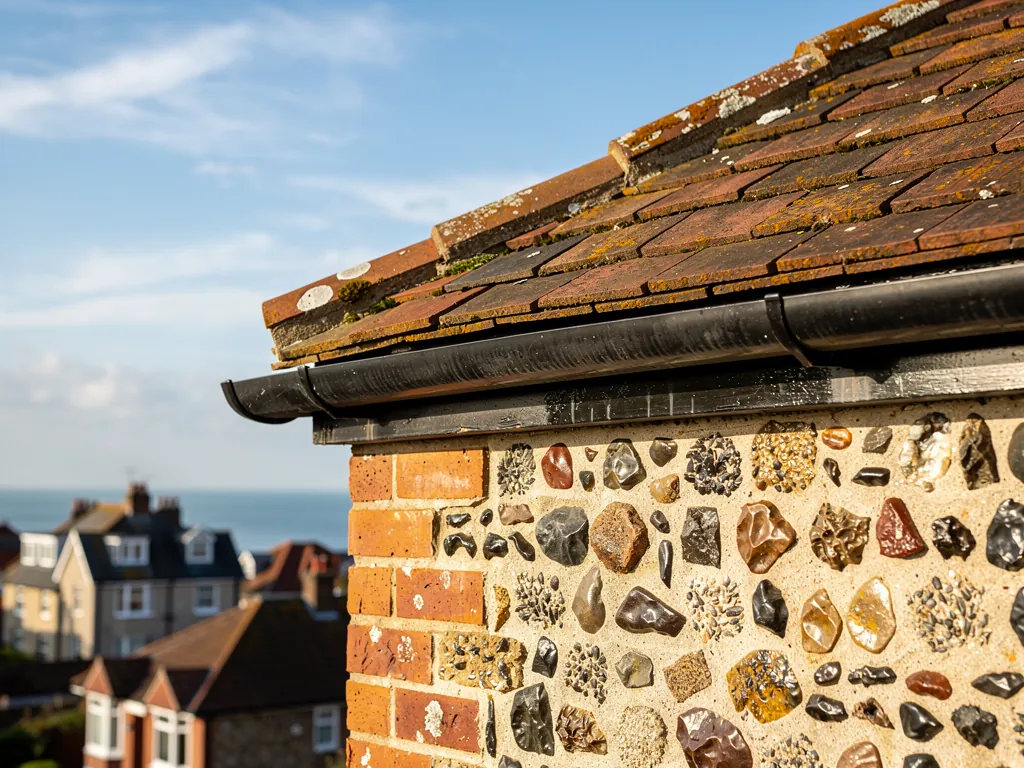
The council's appraisal names hung clay tiles, red brick dressings and galletting as the village palette. Where a tile-hung wall meets a roof slope, the abutment and its lead decide how long a repair lasts.
-
The coaching road
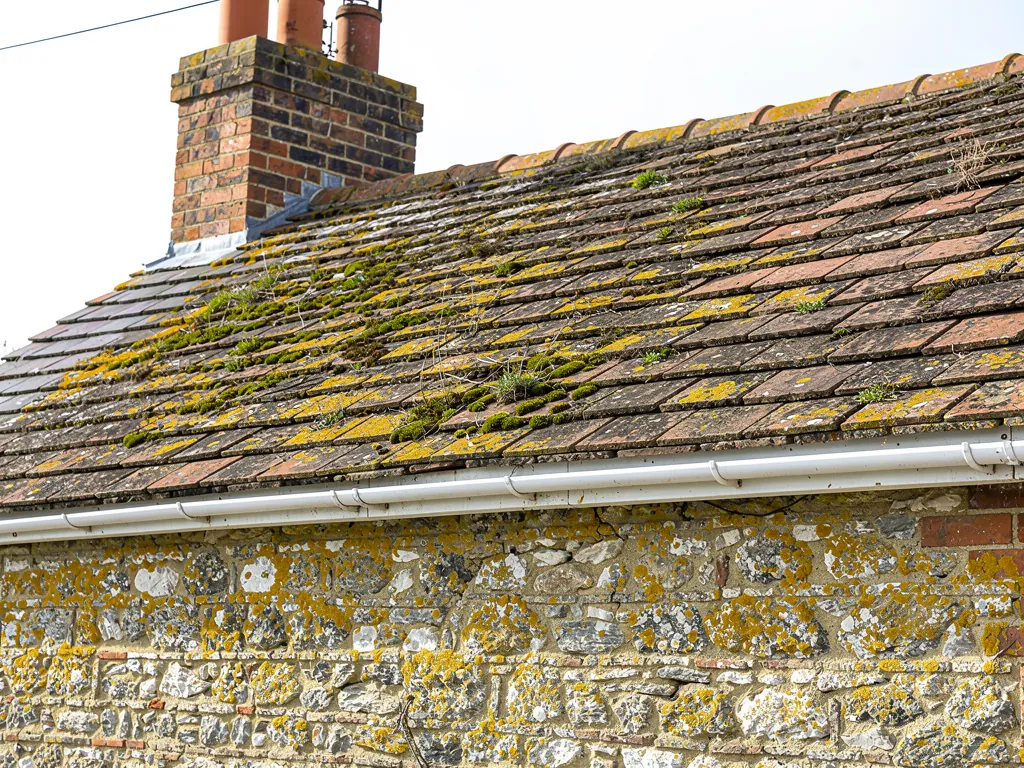
The Royal Anchor, with its yard and malthouse, is recorded as a coaching inn, and Samuel Pepys stopped in Liphook three times in the 1660s. Old inn ranges usually mean valleys, abutments and gutters that need regular looking at.
-
Railway and Arts and Crafts houses
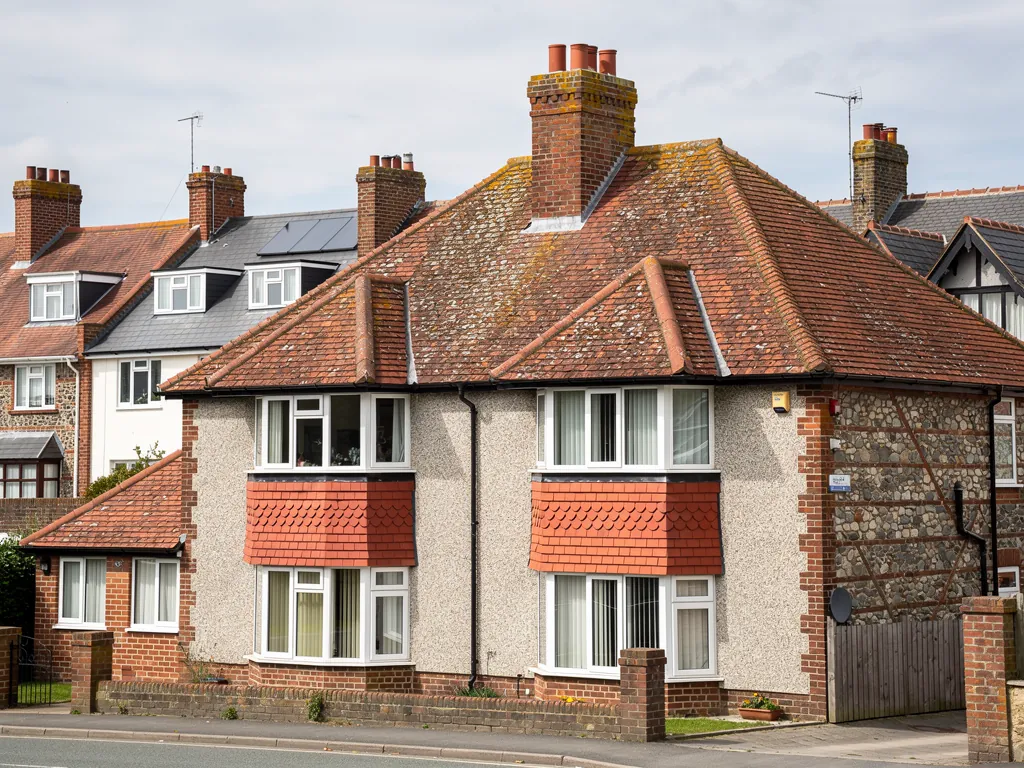
A station opened a short distance south of the village in 1859 on the direct London to Portsmouth line. The appraisal also lists Arts and Crafts houses and the Methodist church among its positive buildings.
Map of Liphook, 24.6 road miles north of Bognor Regis, with the nearest towns we also cover.
Liphook's 1977 boundary and the River Wey
- Council
- East Hampshire District Council
- County
- Hampshire County Council
- Conservation area
- Liphook Conservation Area, designated April 1977 and extended October 1992
- Article 4
- None recorded that removes roof rights; East Hampshire's one direction covers employment-to-residential conversion
- Neighbouring area
- River Wey Conservation Area, following the water meadows past Liphook
- Distance
- 24.6 road miles north of Bognor Regis, about 40 minutes by car
Liphook notes
Hung tile, coaching yards and water meadows
Three corners of Liphook, and what the roof above each of them needs.
Chapter 1: Hung tile and galletted stone in the 1977 area2806
Sheet 01 / 03Liphook Conservation Area was first designated in April 1977 and extended in October 1992, and East Hampshire District Council's character appraisal spells out what holds the village together. Its list of characteristic materials takes in hung clay tiles, masonry with red brick dressings and galletting. To a roofer, that list reads like a map of awkward junctions, the places where one material stops and another begins and water looks for the gap. A sound covering can sit beside a failing abutment for years before a brown stain appears on a bedroom ceiling, and by then the timber behind the tiles has had a long soaking.

Before roof work inside the 1977 boundary
- Check the boundary map
- Find any list entry
- Photograph each wall junction
- Ask East Hampshire's planners
1.1 Where tile-hanging runs into a roofline
Tile-hanging means clay tiles fixed upright to a wall instead of laid on a slope. Where such a wall climbs through a roof, or the roof runs into its side, the join is sealed with lead. Each course of roof tile gets a soaker, which is a little folded lead sheet tucked beneath the tiles and turned up against the wall, and a longer stepped flashing covers the top edge of the whole run. If the lead has lifted, split or was never pressed tightly into the wall, rain slips behind the hung tiles and runs down inside. We photograph the junction from above and from inside the loft, because damp often turns up a metre or more from the real source. Our lead roofing and leadwork page shows how these details are made and dressed.
1.2 Galletting, brick and the stacks above them
Galletting means pressing small chips of stone into wet mortar joints, which is why the walls of some older Liphook buildings look studded. The same attention to masonry carries up to the chimneys. A red brick stack with open joints lets rain into the flue and the roof timbers below it, and a repoint wants a softer, lime-friendly mix matched to the old brick, never one harder than the brick around it. When bricks are shelling or the stack has started to lean, rebuilding the top few courses is the more honest answer. Our chimney repairs page explains the work, from the lead tray to the flaunching, the sloping mortar bed on the stack top that holds the pots and throws water off. Inside the boundary, look at the conservation area map first, and check the list entry too if your home is listed. Then ask us for the photographs before anyone talks about a price.
Chapter 2: The Royal Anchor, old road and railway streets2806
Sheet 02 / 03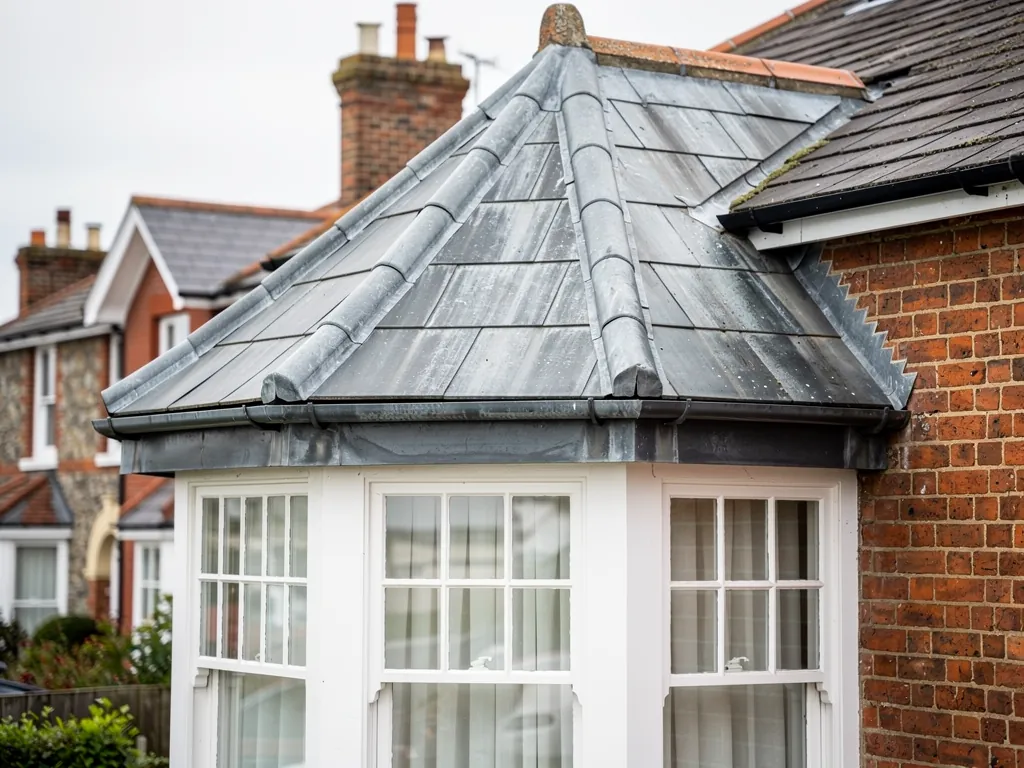
Liphook grew along the old London to Portsmouth road, and the appraisal reads the village through that road. The Royal Anchor, its yard and its malthouse are identified there as a coaching inn, and the appraisal notes that Samuel Pepys recorded stops in Liphook three times in the 1660s. In 1859 the direct London to Portsmouth railway opened with a station a short distance south of the village, and new streets and houses grew up in the railway decades. A village laid out first by road and then by rail ends up with roofs of several different ages standing next to each other, and each age fails in its own way.
A leaking valley on an old range
Patch the lead
Sound lead with a single split gets a new section welted in.
Renew the valley
Lead that has been patched before is lifted and replaced under fresh tiles.
2.1 Yards, ranges and valleys
An inn with a yard, outbuildings and a malthouse is a cluster of roofs, and clusters mean valleys. A valley is the sunken channel formed where two slopes join, and it collects the run-off from both, so it handles a heavier flow of water than the rest of the roof. The tiles along it are cut to fit and sit over a lead lining or a purpose-made valley tile, and a gutter running into a nearby wall gives leaves another place to pile up. When we find a failing valley, we weigh patching the lead against renewing the run, and we show you both options with photographs. A patch can hold if the rest of the lead is sound. A valley that has been patched over and over is better renewed once and done properly. Our roof repairs page explains how we reach that call, and why a small repair is sometimes the right answer.
2.2 Roofs from the railway decades
A house put up after 1859 may well have been re-roofed once since. What matters is what sits under the visible tiles: the battens, which are the thin timber laths each course of tile hooks over, and the underlay, the sheet laid beneath them. Both can age behind a surface that still looks fine from the drive. We check from the loft with a torch and a camera. Sagging battens, daylight at the eaves and nails that have let go point towards a larger job, while a few slipped tiles and a worn ridge point towards a smaller one. Either way the verdict comes first, shown in photographs taken on your own roof, and once the survey is done the written quote is a single total. If the covering is sound but the ridge has loosened, we fix the ridge and leave the field of tiles alone.
Chapter 3: River Wey meadows, Bramshott and Arts and Crafts2928
Sheet 03 / 03The River Wey Conservation Area follows the river past Liphook, Bramshott and Passfield to protect an eighteenth-century water-meadow system. It sits next to the village boundary and not inside it, but it shapes the setting all the same. Roofs close to damp ground and tree cover collect moss and leaf litter faster than roofs in the open, and gutters on a shaded side clog sooner. That is ordinary upkeep and does not call for a new roof by itself.
Who gives consent
A listed church and a listed house follow different consent routes, so name the building first, then ask the right body before any work starts.
3.1 Shade, moss and what lies under it
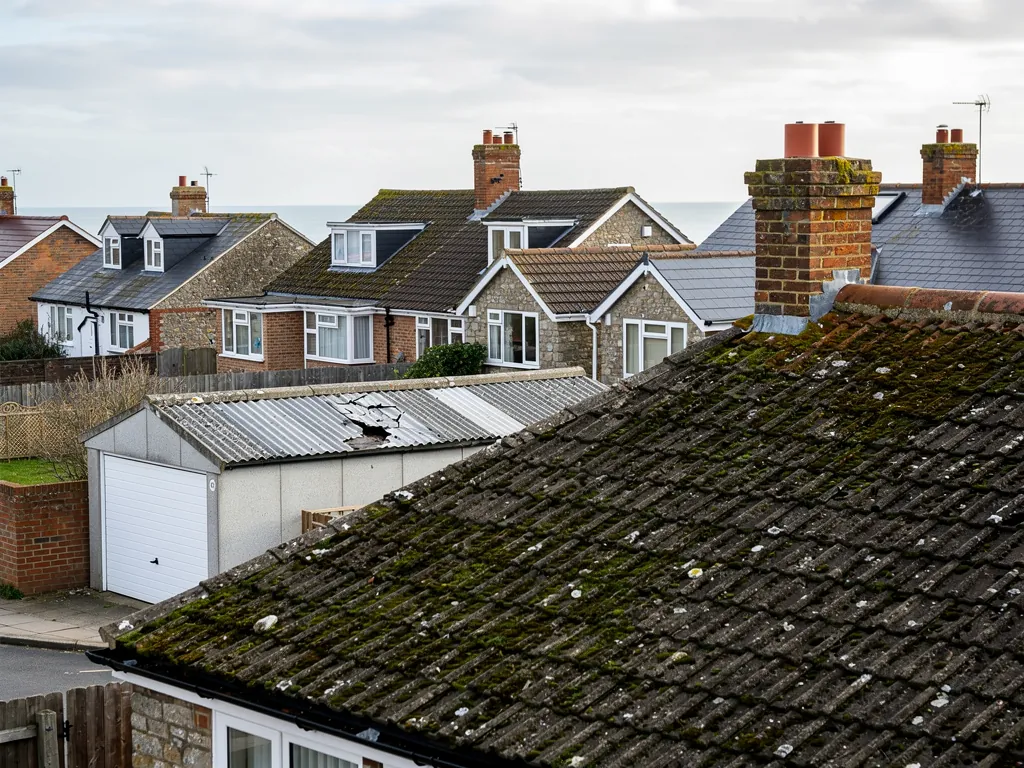
Light moss on a clay tile is largely a question of looks until it starts holding water against the tile edge or blocks a gutter outlet. We check whether the tiles are sound beneath the growth, whether the moss is lifting the laps, and whether the downpipes run clear. A wash and a clear-out could be all that is wanted, and on a shaded slope a yearly look at the gutters costs far less than the damage a blocked outlet can do to the fascia and soffit behind it. If the growth was hiding cracked tiles or a slipped ridge, you will want those faults on the quote as well. Cleaning has limits, and we tell you when a roof is better left unwashed.
3.2 St Mary's and the listed route
The old parish church for Liphook is St Mary at Bramshott, listed Grade II* and first listed on 16 March 1954. A listed church has its own consent route, which turns on the denomination and on whether the building is still in regular worship use, so the first call is to whoever looks after the building. For a listed house, works that change its character need listed building consent from the council, while a repair in matching materials is treated differently from a re-roof in another material. The list entry gets read before we suggest anything at all.
3.3 Arts and Crafts roof detail
The appraisal counts Arts and Crafts houses among Liphook's positive buildings. Houses in that tradition tend to carry plenty of roof detail: hips, valleys, tile-hung gables and lead at every change of plane. More detail means more joints to inspect, which is why survey photographs matter. A hip that has settled, a cheek of lead that has slid down, a gable where the tile-hanging has parted from the verge: each is small alone, and each can let in water through a wet winter. We take pictures at each junction, so you can see the loose lead or the cracked tile for yourself, and the job we put forward is the smallest one that will hold.
Roof work we do around the old Liphook road
Frequently asked questions
Questions from the Royal Anchor to the River Wey
My Liphook house has tile-hanging on the upper walls. Is a leak there a wall problem or a roof problem?
It can be either, and the junction is where we start. Water usually gets in where the hung tiles finish against the slope, along lead that has lifted or split, and then shows up inside a long way from the source. We check the lead and the nearest tiles from above and photograph the loft side too. If the lead is the fault, relaying it often cures the leak without touching the wall. If the wall tiles themselves are cracked, the photographs will show that instead.
Can the stack on a Liphook red-brick house be repointed, or does it need rebuilding?
Repointing is enough when the bricks are sound and only the joints have worn. If bricks are shelling, the stack leans or the top courses move when pressed, rebuilding is the safer repair. We photograph the stack from the roof, say which job it is, and match the mortar to the old brick. The lead tray and the flaunching at the top get checked either way, because a perfect repoint under a failed tray still leaks.
Do Article 4 rules stop me re-roofing in Liphook's conservation area?
East Hampshire District Council's Article 4 direction covers conversion from employment to residential use, which means it removes no roof rights. Planning permission is rarely the issue for new tiles of the same kind, but a listed building needs consent for works affecting its character. Check with East Hampshire District Council's planning team before changing material or appearance, and ask the same question again if your plans change.
Is moss on a roof near the River Wey meadows worth worrying about?
Only if it is doing something. Light moss on sound tiles is mainly a looks issue. Thick growth that holds water on the laps, lifts the tile edges or fills the gutter should be dealt with. We look underneath before suggesting a clean, because washing a tired roof can show up faults you would rather know about. The written quote then covers whichever job is needed, with one total price.
Nearby areas
Get a quote
Tell us about your roof
Describe what's happening and we'll call you back.
Loading the enquiry form. You can also call 01243 252373.