
Roofers in Liss
Railway terraces, slate, the Rother valley
Liss roofs run from the slate and banded plain tile of the Victorian railway terraces to the ancient church of St Peter in West Liss, in the Rother valley inside the National Park.

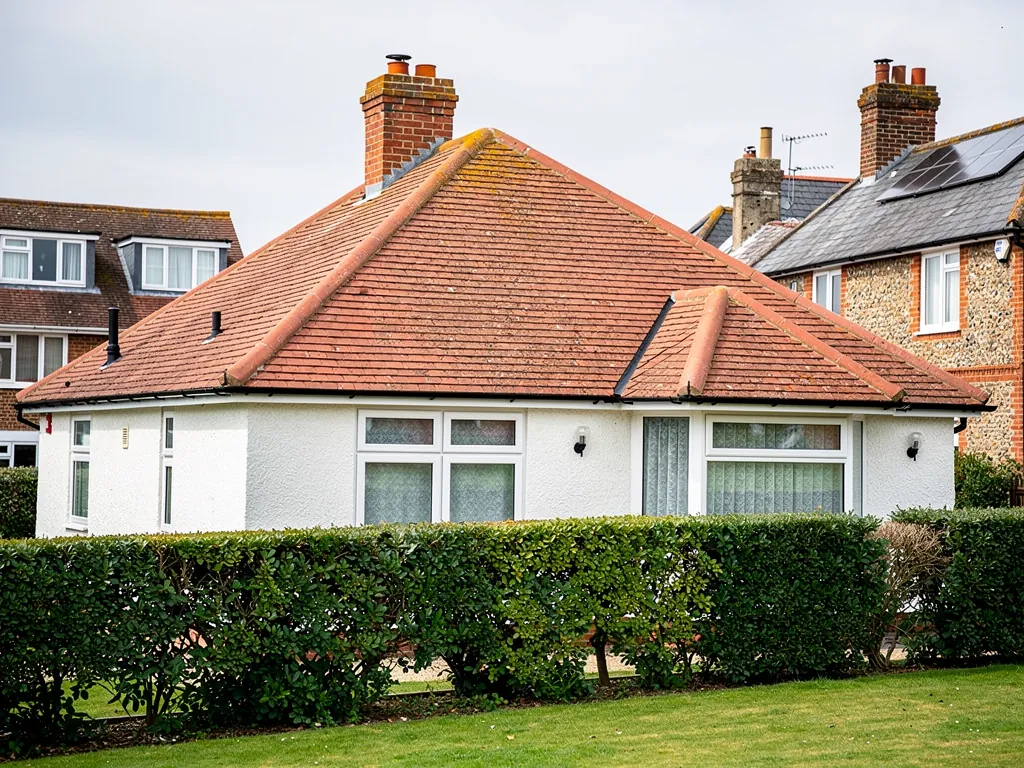
Liss roofs
From Shotterfield Terrace to St Peter's tower
-
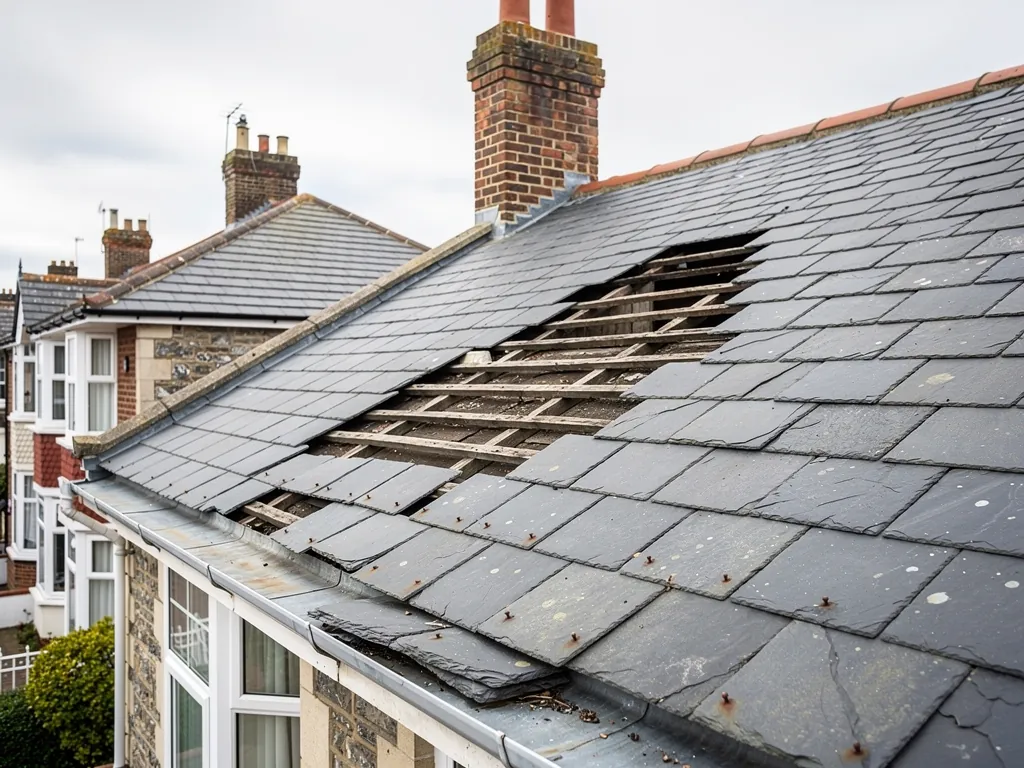
Slate terraces after the railway
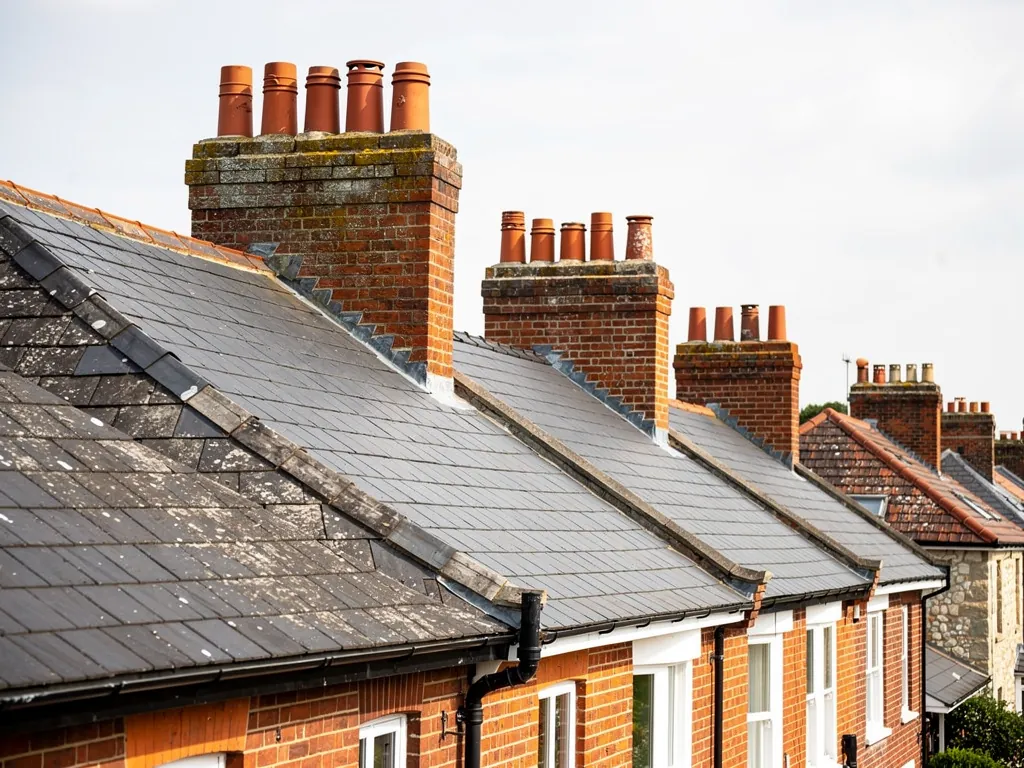
The conservation area leaflet gives Victorian pairs and terraces, built after the railway arrived and into the early 1900s, as the most common building type. Shotterfield Terrace has slate roofs over red and brown brick.
-
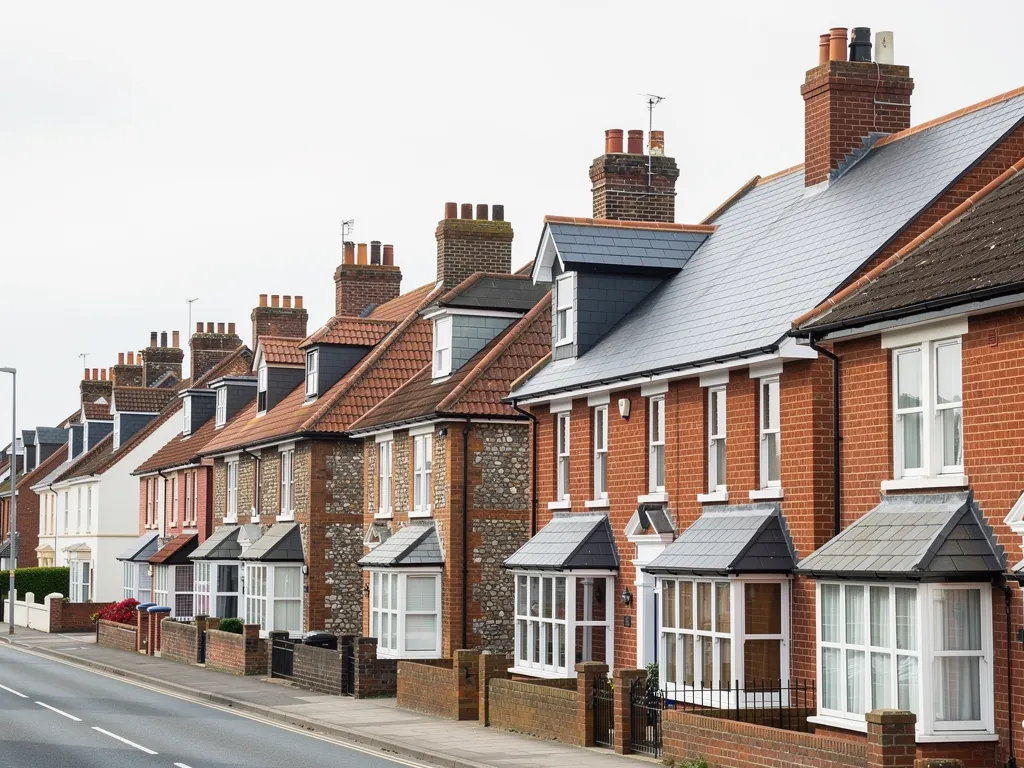
Banded plain tile and soft red brick
The leaflet also lists patterned, banded plain tile roofs among the typical details, beside local soft red brick with stepped quoin dressings, the shaped bricks that mark a wall corner.
-
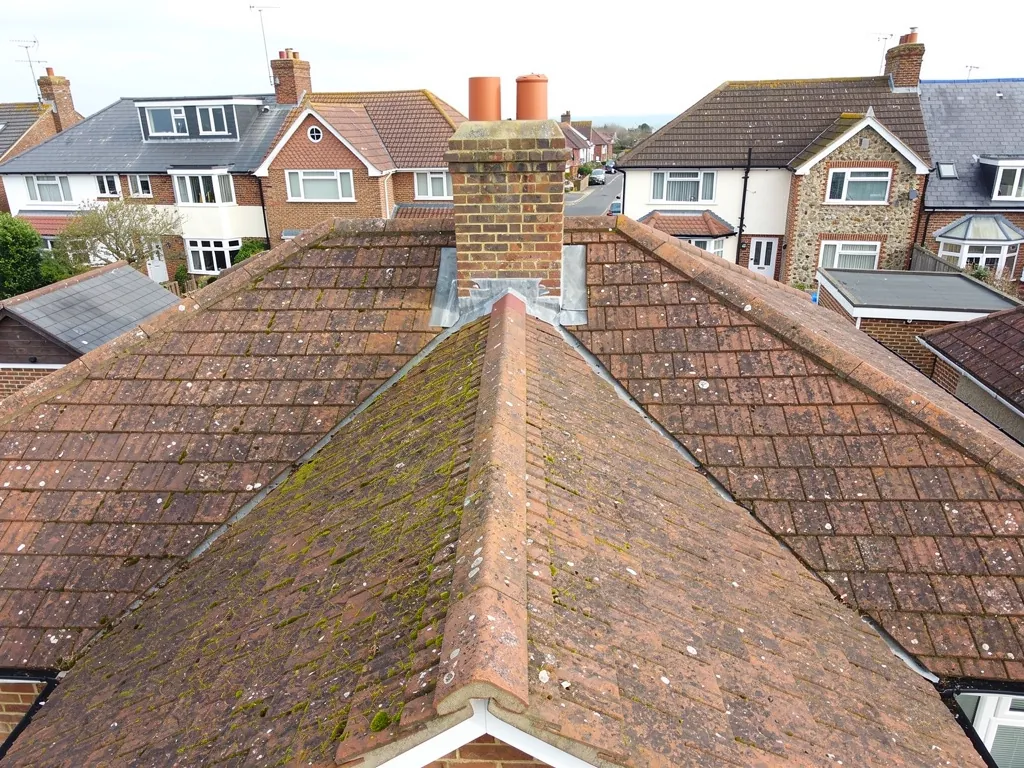
West Liss and its ancient church
Across the River Rother, West Liss has the church of St Peter, whose west tower dates from the first half of the 13th century. The river divides the parish into East Liss and West Liss.
Map of Liss, 25.9 road miles north-west of Bognor Regis, with the nearest towns we also cover.
Liss, West Liss and the Park boundary
- Council
- East Hampshire District Council
- Planning
- South Downs National Park Authority
- County
- Hampshire County Council
- Conservation area
- Liss Conservation Area, designated 1990; West Liss has a separate area, dated 1977 in East Hampshire's table
- Article 4
- East Hampshire's one direction found applies outside the Park and concerns employment buildings; ask about Park-wide directions
- Listed landmark
- Church of St Peter, West Liss, Grade II*, first listed 16 March 1954
- Distance
- 25.9 road miles north-west of Bognor Regis, about 46 minutes by car
Liss notes
Rails, the Rother and the Hangers
Liss divides into railway streets, the older church side of the river and a wooded valley setting, and a roofer has to read all three differently.
Chapter 1: Slate and banded tile on the railway streets2684
Sheet 01 / 03Liss as a trading village is younger than its name suggests. The conservation area leaflet from East Hampshire District Council explains that the railway arrived just as land came free under the Enclosure Act of 1845, and that the shops and business of the place drifted away from the older settlement at West Liss. The new streets were built for the railway age. The leaflet names Victorian pairs or terraces of houses, put up after the line opened and into the very early 1900s, as the commonest type. Liss Conservation Area was designated in 1990. Roofs from the railway decades reward a slow look before anyone lifts a tile.
Before relaying a railway-era roof
- Photograph the band pattern
- Count the slipped slates
- Test the nails across the slope
- Inspect lead at shared stacks
1.1 Slate on Shotterfield Terrace
Shotterfield Terrace is the leaflet's example of slate roofs over red and brown brick. Slate fails in a few predictable ways. The nail rusts through, the slate slides down, and rain blows into the gap. One slate that has slid out of place can be held by a tingle, a small metal strap that hooks over the batten (the timber lath each course hangs from) and turns up over the slate's lower edge, leaving the courses above untouched. Cracked slates are exchanged singly. When the nails have gone across a whole slope, patching wastes your money, and the better answer is to lift the slope, fit new battens and underlay (the membrane beneath the slates), then relay the sound slates plus matching ones. You see that verdict in photographs of your own roof before we talk price.
1.2 Banded plain tile and patterned courses
Patterned banded plain tile roofs sit alongside slate in the leaflet's list of typical details. A band is a stripe of decorative plain tiles, with fish-scale or clipped corners, worked into the ordinary courses. No builders' merchant stocks a ready match, so repairs call for salvaged tiles or a made-to-measure copy in the same shape and colour. We photograph the pattern first and rebuild it in the same order. On the roof's crest, the ridge tiles and the hip tiles at the sloping corners are held by screws or clips as well as the mortar bed, since mortar on its own stopped being relied upon when BS 5534 was revised in 2014. Our pitched roofing service shows what stripping and relaying a slope involves.
1.3 Chimneys and shared walls on a terrace
On a terrace the stacks straddle the party wall, so a failed flashing at one house can show up as a damp patch next door. The lead apron that seals roof to stack is the first thing to check, ahead of the pots and the brickwork.
Chapter 2: West Liss, the Rother and St Peter's2196
Sheet 02 / 03The River Rother runs through the parish and cuts it into East Liss and West Liss, and the two halves tell different stories. West Liss is the older settlement and holds St Peter's. It has a conservation area of its own, kept apart in East Hampshire's table from the one covering the Victorian centre and dated there to 1977. A roof on either side is judged on its own street and its own age, so on any enquiry we first establish which side of the river the address sits on and whether anything is listed.
Two consent routes in West Liss
Listed house
Council listed building consent for anything that changes its character; matching like-for-like repairs usually need none.
Church in use
Exempt from that consent; works go through the Church of England's faculty process instead.
2.1 The church and the faculty route
St Peter's is a Grade II* building, first listed on 16 March 1954, and its west tower goes back to the first half of the 13th century. As a parish church that still holds services, it falls under the ecclesiastical exemption: repairs and alterations pass through the faculty system that the Church of England runs, in place of the council's listed building consent. That exemption does not excuse anyone from planning permission when the exterior is altered by development. The newer church of St Mary in Liss is listed Grade II. Church roofs are for the parish and its inspecting architect, yet the rule teaches something useful about the houses nearby: a listed house answers to the council, a church in use answers to the Church.
2.2 Listed houses and like-for-like repairs
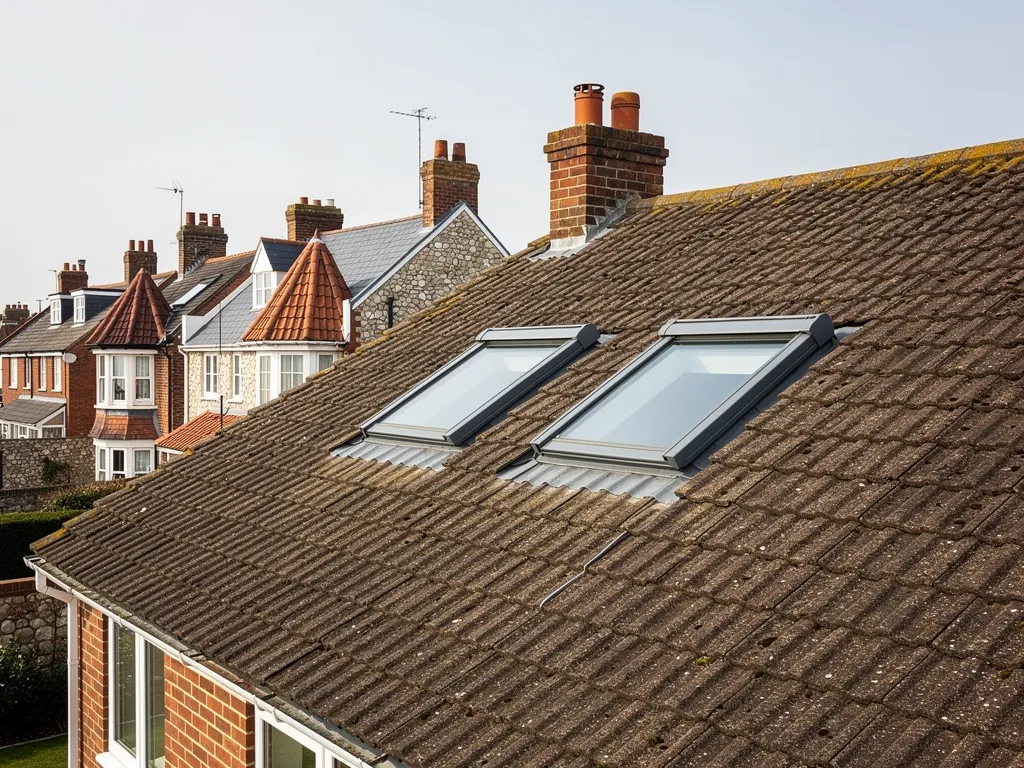
Should your house carry a listing, ask whether the job would change what makes it special. The South Downs National Park Authority's guidance treats routine maintenance and minor jobs that put things back as they were as needing no listed building consent. A different covering, a moved chimney or a new roof window is another matter. Anything beyond a plain repair starts with the entry on the national list, and the slate or tile already on the roof is the one we match. Older roofs often hide lead valleys (the lined channels where two slopes meet) and soakers (small bent lead sheets tucked under each course at a wall), and these wear out long before the main covering does.
2.3 Gutters and downpipes on brick
Soft red brick drinks water, so a gutter that spills down a wall does more harm than the same fault against render. Realigning the run, clearing the outlet and checking the downpipe joints often cures a damp patch that looks like a roof leak, and ruling that out costs far less than a speculative re-roof. Cast-iron gutters on older brick fronts rust at the joints and the bracket fixings, so we check each joint with water rather than guess from the ground.
Chapter 3: Between the Hangers and Hill Brow2013
Sheet 03 / 03Liss lies in the Rother valley between the Hangers and Hill Brow, and the village is inside the South Downs National Park. For a roofing job that matters in two ways. The first is who you ask, and it is easy to guess wrongly, because the Park Authority has its own office and its own planning pages. In this part of the Park, East Hampshire District Council deals with planning applications for the Park Authority, and building control stays with the district council as well. The person to ring about a re-roof, a new roof window or a loft room is therefore at East Hampshire, though the land is in the Park. The second is how closely a change of appearance is watched. Before adding a roof window, read our skylight planning permission guide.
A Liss roof job in four stages
- 1SurveyWe climb up, photograph the slopes and say whether the roof wants a repair, a patch or replacement.
- 2Written quoteYour price comes in writing as one total once the survey is done, alongside what consent your street needs.
- 3Scaffold noticeWhere the highway is involved, the start waits for the Hampshire County Council licence.
- 4FinishRidges, verges and flashings are fixed to current practice and the site is left clear.
3.1 Trees, leaves and shaded slopes
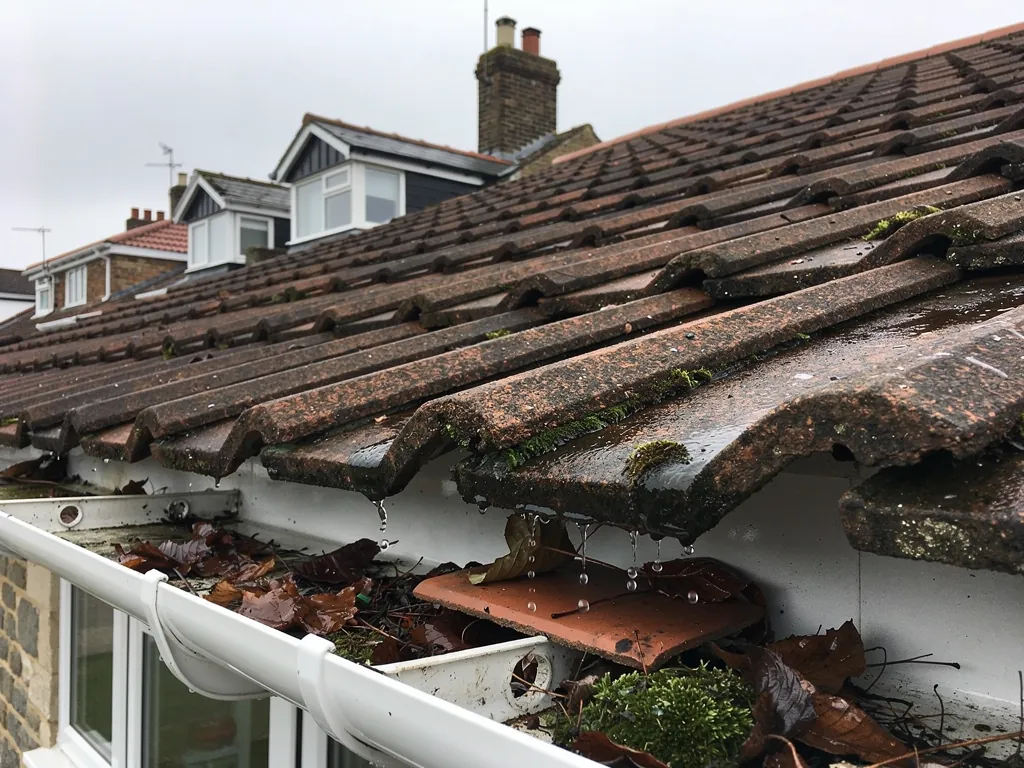
Beneath overhanging trees, gutters and valleys silt up with leaf litter, and moss spreads over slopes that never see much sun. A choked valley spills sideways under the tiles, which is why we look there when a ceiling stain appears under a slope that seems sound from the drive. Photographs taken along the gutter line and into the valley usually settle the question in minutes, and they let you see what we see. Clearing channels and treating moss is the simplest upkeep a roof can have, and our roof cleaning and moss removal service explains how it is done without scarring the covering. When the stain turns out to be a failed flashing or a lost slate, the cure is a small job, and our roof repairs service covers those.
3.2 Scaffold and start dates in Hampshire
Liss is in Hampshire, and the highways there answer to Hampshire County Council. A scaffold that occupies the carriageway or footway needs a Highways Act 1980 licence, which Hampshire County Council issues; its own guidance says the scaffold firm applies for its customers. Hampshire asks that ten clear working days pass between the request and the planned first day on site. The fee is £211.90 for the first two weeks and £72 for each further two weeks, and extensions are not offered, so the scaffold is booked for the whole job rather than in instalments. We plan the programme backwards from that notice. A sound roof gets a start date that suits the weather and the licence, whereas a leak gets stopped before the rest is planned. Whichever applies, one total price is put to you in writing after the survey, and any quote you hold should say whether VAT and scaffolding sit inside it.
Roofing services around Liss
Frequently asked questions
Questions from the railway terraces to West Liss
Can a Shotterfield Terrace style slate roof be mended without lifting the whole slope?
Frequently. Where the slates themselves are in good order and just a handful have cracked or slid, each one is swapped or pinned with a tingle, and the lead at the stacks can be renewed without stripping anything. When the fixings have given up across the entire slope, relaying it on new battens and underlay is the better repair, and you see the photographs that explain why before any price arrives.
Does a banded tile roof in the Liss Conservation Area have to be matched exactly?
In practice, yes. The area's leaflet lists patterned banded plain tile roofs among its typical details, and a repair that copies the existing pattern keeps the street looking as it did. Renewing a covering with the same material is a lighter matter for planning than a new product, since a different tile can change a street's look, so ask East Hampshire District Council's planning team before switching.
Who decides on a new roof window in a Liss house inside the National Park?
In this corner of the Park, East Hampshire District Council takes planning applications on behalf of the South Downs National Park Authority, and building control stays with the district council. Whether you need an application depends on the house, any listing and the conservation area, so put the question to East Hampshire's planning team before ordering a unit.
Do I need listed building consent for a roof repair on a cottage near St Peter's in West Liss?
Only if the cottage is listed and the work would alter its character. Routine upkeep and minor jobs that restore what was there generally escape consent, while a fresh covering or a relocated chimney does not. We read the list entry first. The church of St Peter, still a place of worship, follows the faculty route instead.
Nearby areas
Get a quote
Tell us about your roof
Describe what's happening and we'll call you back.
Loading the enquiry form. You can also call 01243 252373.