
Roofers in Broadbridge Heath
Old common, Edwardian semis, post-war estates
Broadbridge Heath's roofs run from houses that gathered round the common before 1800, through the semi-detached pairs built along the Billingshurst road around 1900, to the estates laid out after the war.

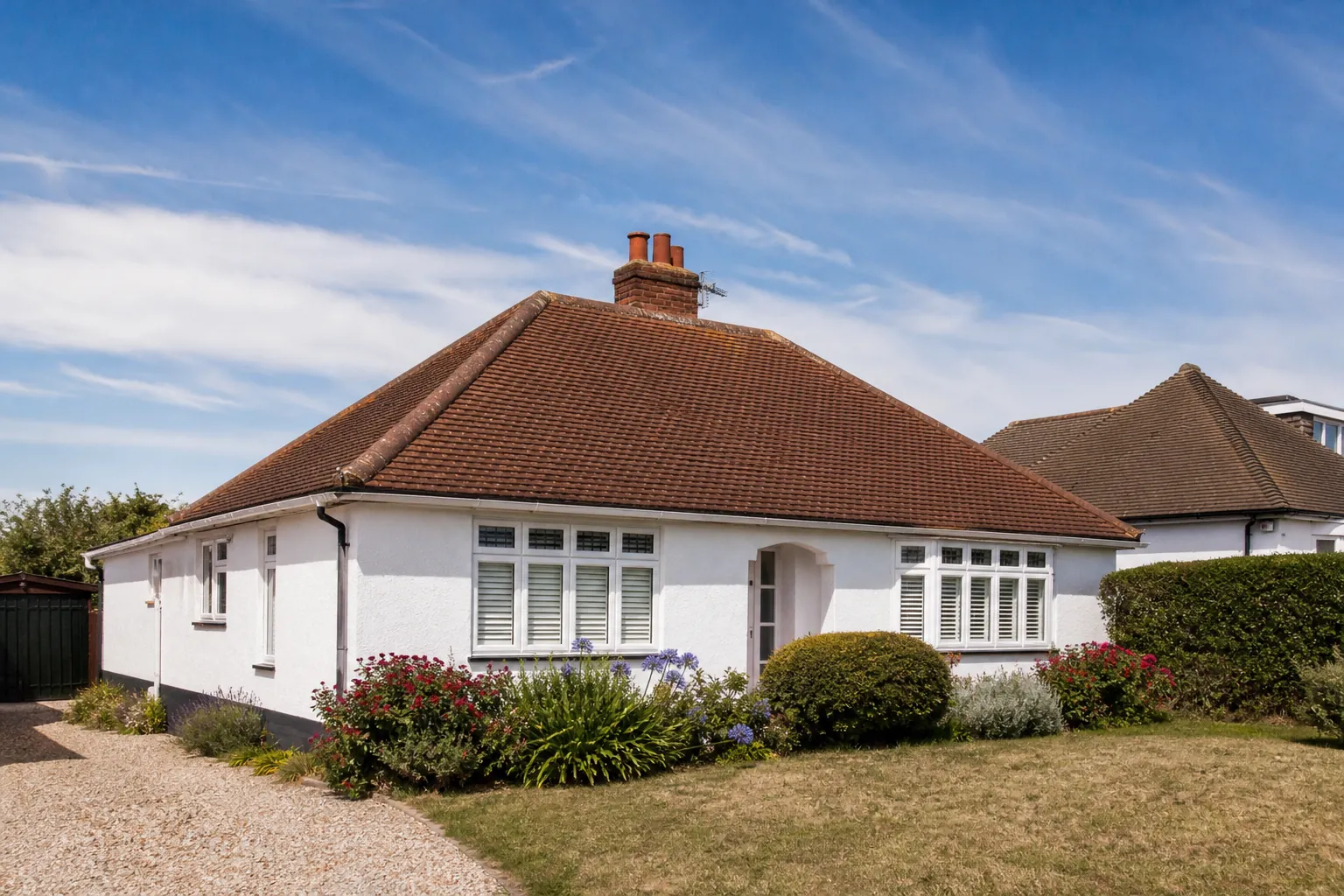
Broadbridge Heath roofs
From the old common to the 1980s estates
-
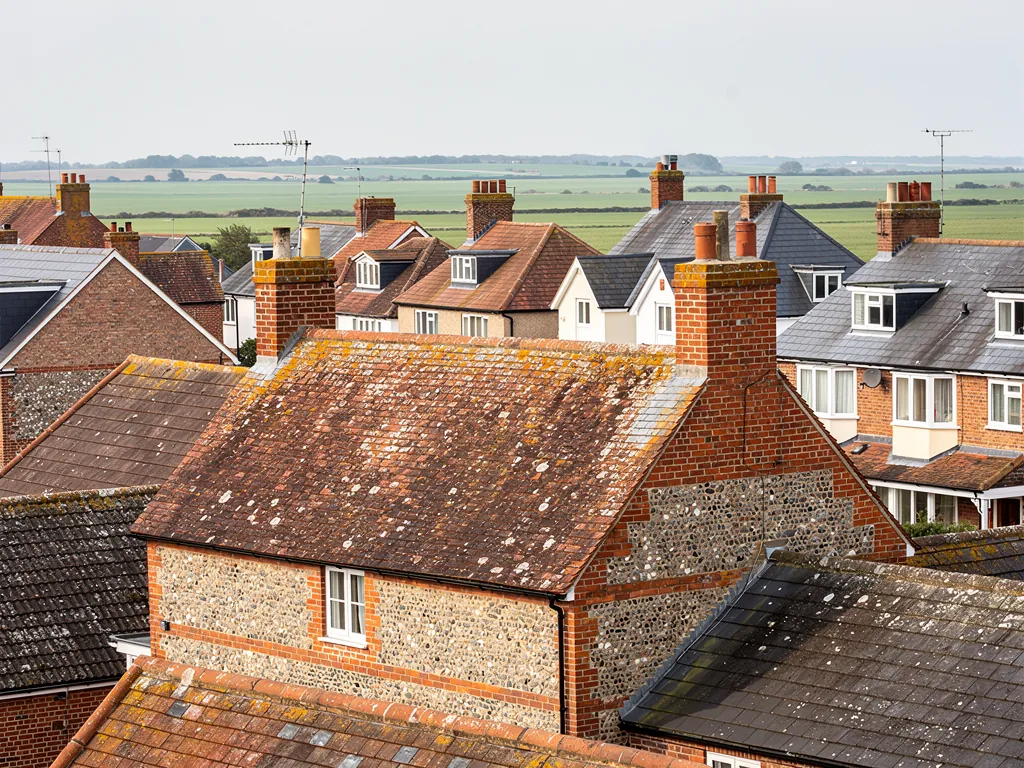
Houses round the common
Houses had gathered around the common before about 1800, and the heath was inclosed in 1858. Buildings that old have usually been altered and extended, so a single roof can hold several ages of timber, flashing and covering.
-
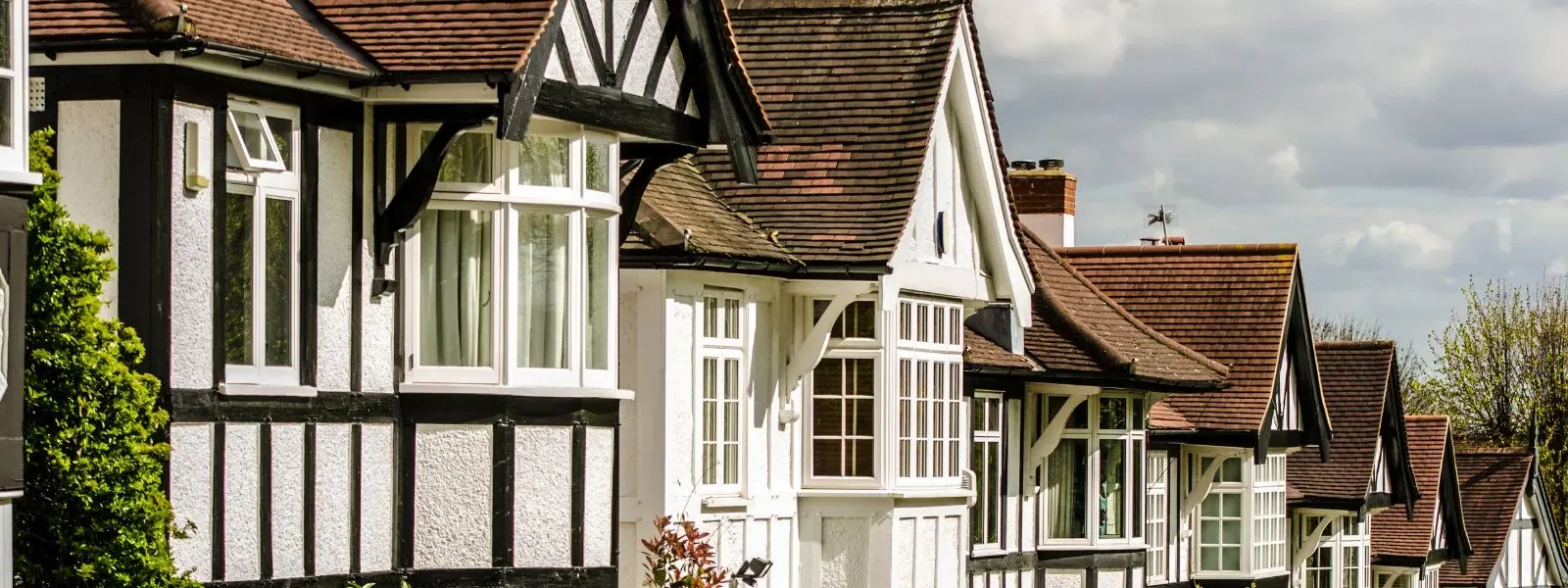
Billingshurst road semis
Rapid building along the Horsham to Billingshurst road between about 1896 and 1909 was mostly semi-detached houses. A pair shares a party wall, a ridge and often a chimney stack, so work on one roof touches its neighbour.
-
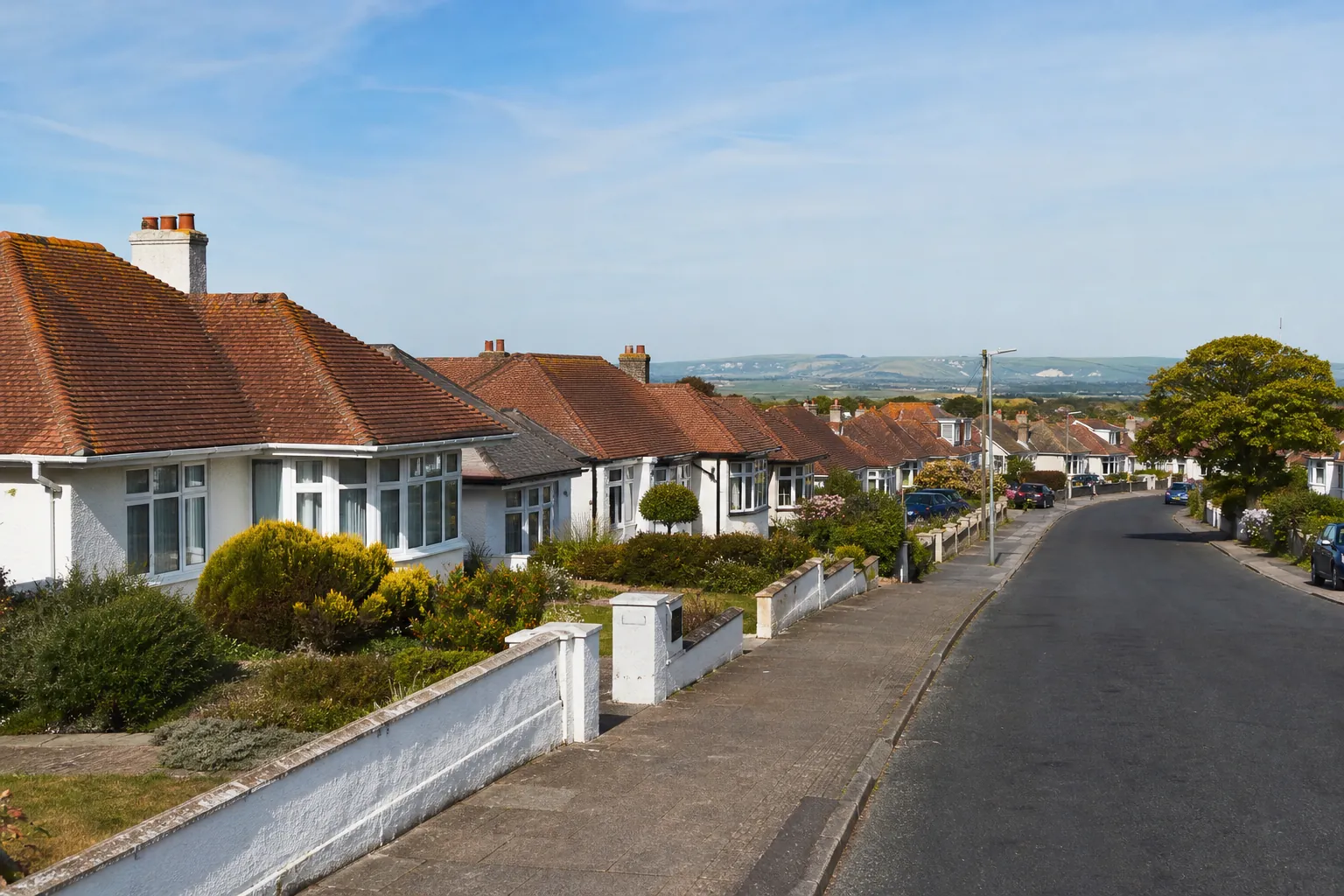
Post-war and later estates
A council estate and a private estate were laid out south of the road after the Second World War, and another large development was under way in 1982. Roofs from those years now sit at very different ages.
Map of Broadbridge Heath, 27.7 road miles north-east of Bognor Regis, with the nearest towns we also cover.
Broadbridge Heath on the Low Weald
- Council
- Horsham District Council
- County
- West Sussex County Council
- Conservation area
- None: the village is not among Horsham District Council's listed conservation areas
- Article 4
- Horsham's planning team can confirm the position for any road
- Church
- St John's church, opened in 1963 to replace an iron chapel
- Distance
- 27.7 road miles north-east of Bognor Regis, about 48 minutes by car
Heath notes
Common, Billingshurst road and bypass
Three layers of Broadbridge Heath's building, and the roof work each is most likely to need.
Chapter 1: The common's edge and the 1858 inclosure2440
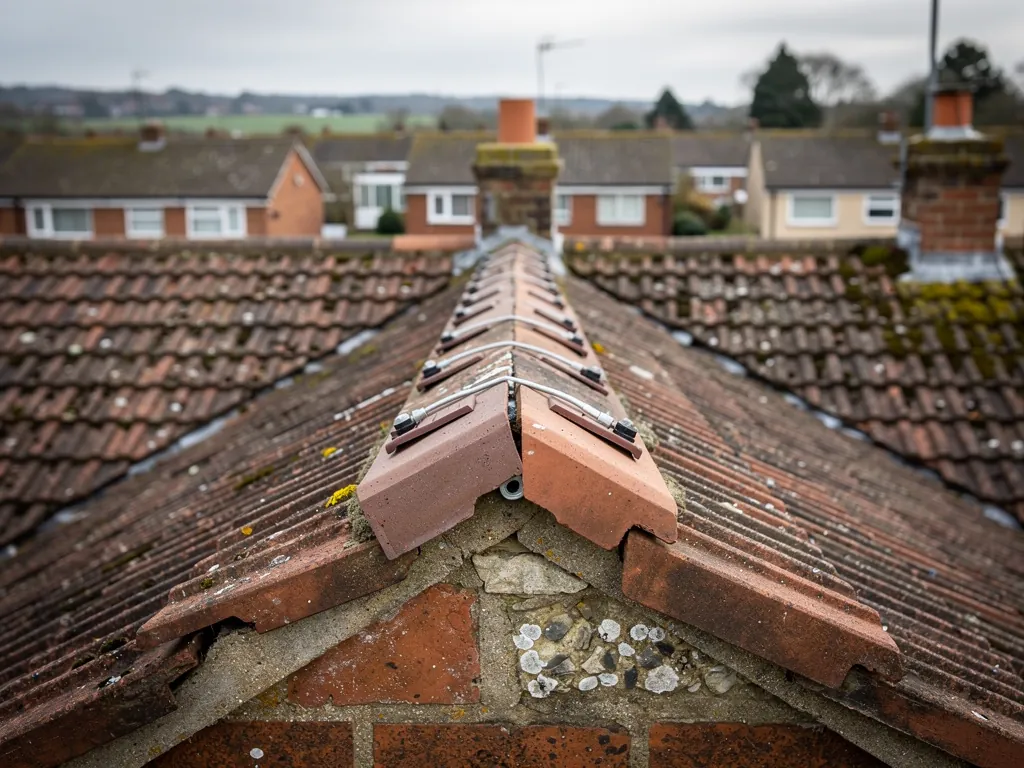
Sheet 01 / 03Broadbridge Heath sits in the Low Weald on the western edge of Horsham, and its oldest houses grew up around the common before about 1800. The heath itself was inclosed in 1858, which turned open ground into fields, plots and a road pattern that still shapes the village. What a house from that period carries on its roof today depends on its own repair history, so we read each one on the roof rather than guessing from its date. A house with this much age behind it has usually been re-covered, extended and patched more than once, and every one of those changes left a joint behind.
What we look at on an older roof
- Joints where old meets new
- Flashings at walls and stacks
- Ridge and verge fixings
- Sag in the roof line
- Daylight through the covering
1.1 Reading an older roof by its joints
Rooms were added, a rear slope was lengthened, a porch was tied into the wall. Each alteration meets the old roof along a line where two pieces of work have to shed water together, and those lines are where an older roof tends to let go first. We begin where one roof meets another and where a roof meets a wall. The metal strip sealing that junction is the flashing. On older work it is often lead, shaped by hand into the brickwork, and when it lifts or splits the water tracks down inside the wall and shows up as a stain on the plaster. Our lead roofing and leadwork page describes how a failed flashing is cut out and renewed.
1.2 Gable edges and the ridge line
Along the top, the ridge caps the meeting of two slopes, and at a gable end the tiles finish over the wall in a verge. On a house that has stood for generations both have often been re-bedded in mortar more than once. BS 5534, as revised in 2014, stopped treating mortar as enough on its own for ridge and hip tiles, so a repaired ridge now takes screws or clips as well. A cracked mortar line along an exposed edge is the kind of fault we photograph close up, so you can see it yourself before anyone mentions a price.
1.3 Small jobs that hold
Plenty of houses like these need a modest job, not a new roof. A handful of slipped tiles, a split flashing or a loose length of ridge can often be dealt with in one visit, and that is what we recommend when the photographs support it. If the battens (the thin timber strips the tiles hang from) or the covering across a whole slope have given up, you hear that as well, with the pictures to back it. Our roof repairs page covers what a repair visit involves. Nothing is priced until the survey is done.
Chapter 2: Semis along the Billingshurst road2074
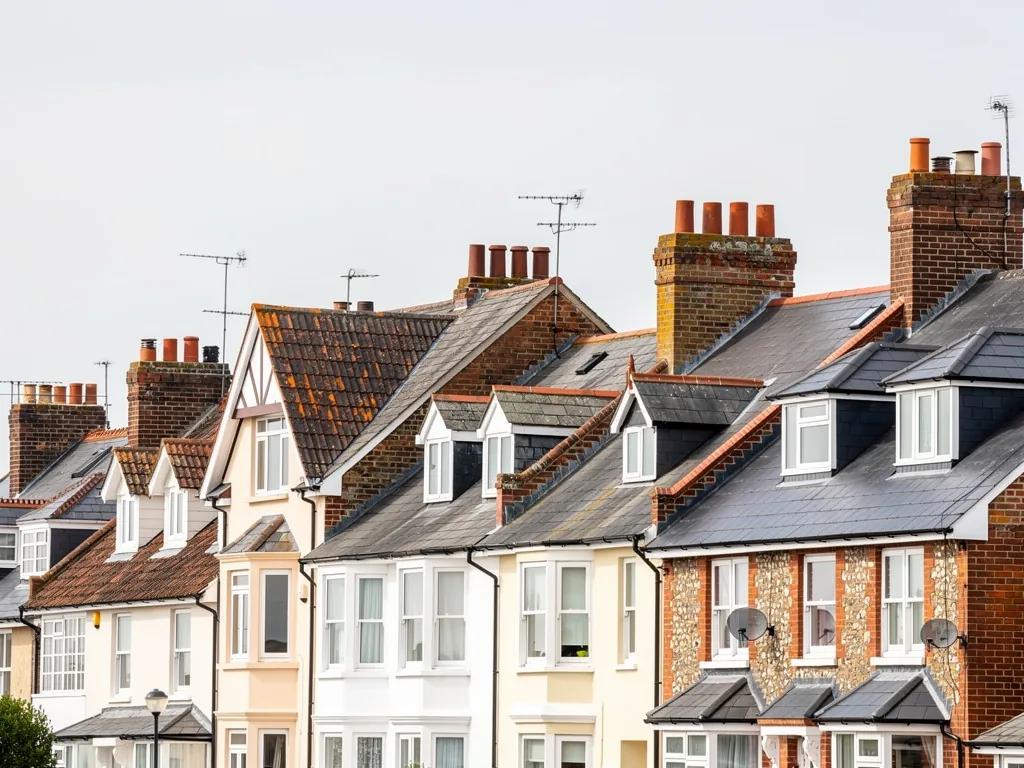
Sheet 02 / 03The next layer gives the village its main road. Building along the Horsham to Billingshurst road ran fast between about 1896 and 1909, and it was mostly semi-detached houses. They went up in pairs, often in runs, and a pair shares more than a wall. It shares a ridge line, usually a chimney stack on the party wall between the two halves, and sometimes a valley gutter or a length of flashing that belongs to neither house alone.
Two halves of one pair
Re-roofed half
New tiles, battens and underlay, with a fresh flashing needed where it meets the old half.
Original half
Older covering that may only need targeted repairs, if the timbers beneath it are sound.
2.1 One half re-roofed, one half not
On a pair of semis built together, the two roofs started out identical. They rarely stay that way. One owner renews the covering in one decade and the neighbour waits, so the pair ends up with two ages of tile meeting at the party wall. That junction is the weak point. The flashing bridging the two halves has to move a little as the roofs settle at different rates, and when the halves were done years apart, the seal is often the first thing to fail. Where a neighbour is involved, we tell you plainly which parts of a job sit on your side and which touch theirs. It is sensible to speak to them before the scaffold goes up, and to ask your building control body if the work touches the party wall itself.
2.2 Chimney stacks that carry the weather
A stack stands up through the roof into the full weather, with a joint on every side. The brickwork wears, the pointing loosens and the lead tray around the base ages. Pointing is the mortar between the bricks, and renewing it is a different job from rebuilding the stack. Because the stack sits on the party wall, a leak at its base can appear on the neighbour's ceiling as readily as your own. We climb up, photograph each joint and tell you whether the answer is repointing, new flashings or, where the brickwork has gone, a partial rebuild. Our chimney repairs page sets out the options.
2.3 Eaves and gutters along a run of houses
Along a street of semis, the lowest edge of the roof gets the most wear and the least attention. The fascia board under the eaves and the gutter it carries take all the runoff. A gutter that has dropped, or a fascia that has softened, lets water behind the board and into the rafter ends. That repair stays small only if it is caught early, which is one reason the survey includes a walk round the outside of the house as well as a climb. Soffits, the boards closing the gap under the overhang, get the same look, since a soft or stained one is often the first sign of a slow leak above it.
Chapter 3: Post-war estates, the bypass and newer building2867
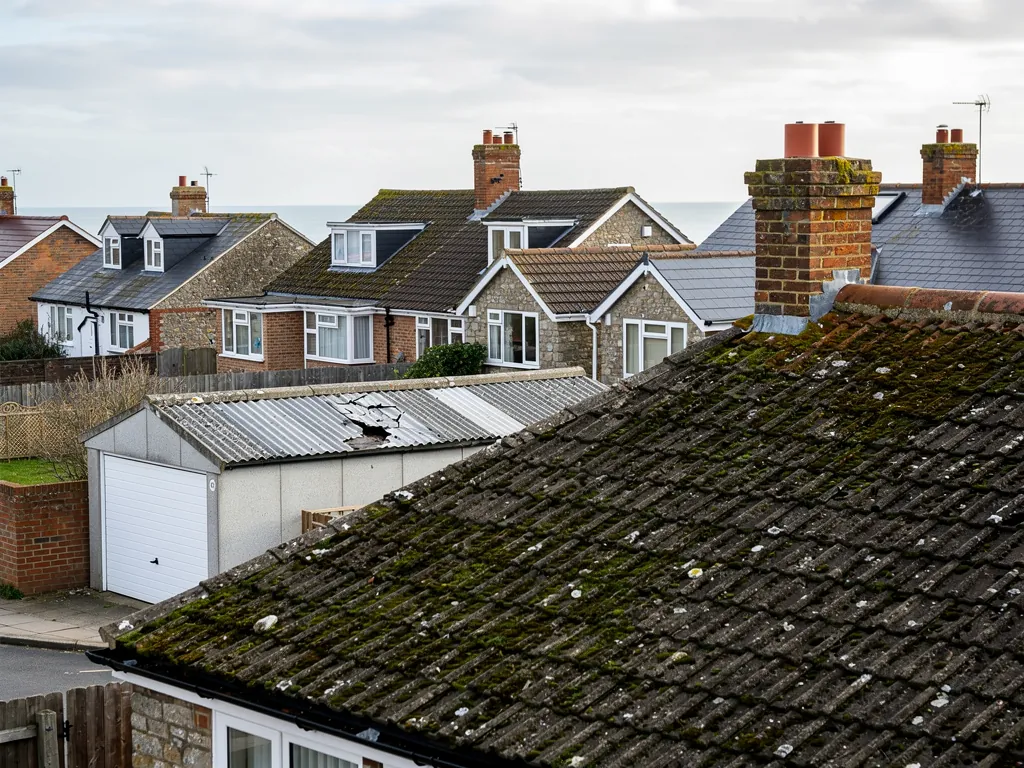
Sheet 03 / 03After the Second World War the village grew again. A council estate and a private estate were laid out on the south side, and the Victoria County History records another large development under way in 1982. A southern bypass opened in 1983, and St John's church opened in 1963 to replace an iron chapel that had served from 1904 until it was demolished as unsafe in 1957. Those dates matter to a roofer because they tell us roughly how old the original tiles, battens and underlay are on a given street. A road built in one burst tends to age in one burst too, so when one house has a fault, the neighbours' roofs are worth a glance from the pavement.
How an estate roof visit runs
- 1LookPhotographs of the slopes, ridge, verges and flashings come before any talk of price.
- 2ExplainPlain advice: fix it, make it do for a while, or replace it, with the reason.
- 3QuoteYou then receive the quote in writing, as a single total.
- 4LeaveScaffold down, site swept, waste taken away.
3.1 What age says about the layers under the tiles
The underlay is the sheet beneath the battens, catching whatever the covering lets through. On a roof laid in the post-war years it may be an older bitumen felt that has turned brittle, and the battens above it may have loosened where they were nailed. A tile can look fine from the pavement and still sit on a failing layer. That is why we go into the loft where we can, and why our roof inspections and surveys include photographs of the underside. Renewing covering, battens and underlay together is a re-roof, and it is recommended only where a repair would not hold.
3.2 Garages, outbuildings and asbestos
Estates from these decades usually come with garages and outbuildings, and some have flat roofs or sheet roofing of their own. Treat any building built or refurbished before 2000 as though it contains asbestos until it has been checked, says the HSE. Asbestos cement sheeting is fragile and must not be walked on. If you have a garage or outbuilding of that age, mention it before any work is priced, and never break up or drill the sheeting yourself.
3.3 Newer houses and the building control question
On roofs from the 1980s onward, the usual question is whether to replace a section or the whole. According to the Planning Portal, you do not normally need to apply to building control if less than 25 per cent of the total building envelope and less than 50 per cent of the roof is affected. Ask Horsham District Council's building control team how that applies to your house, and the quote explains the position in plain words. A heavier replacement covering is a separate question: the Planning Portal gives 15 per cent or more as the point at which building control approval is needed, and a structural check is wise before you choose one.
Roof services near Broadbridge Heath
Frequently asked questions
Questions from the common to the bypass
Why do the Billingshurst road semis often leak where the two roofs meet?
A pair of semis shares a party wall, and the flashing across that junction has to cope with two roofs ageing at different speeds. When one half has been re-covered and the other has not, the seal tends to open first. We check the flashing, the stack and the ridge ends, photograph what we find and say whether a repair at the junction will hold or whether more is needed.
Does a roof on a Broadbridge Heath estate need replacing just because it is old?
No. Years alone settle nothing. A post-war roof may want only refixed tiles and a new ridge, while a neighbour's has failed underlay and loose battens, and you cannot tell which from the road. We survey the slopes and the underside, show you each fault in a photograph and propose only the work that properly cures it.
Can the iron chapel era tell me anything about roofs near St John's church?
Only a little. St John's opened in 1963 and the iron chapel it replaced was demolished in 1957, so houses nearby may date from either side of those years. What matters more is whether a given roof has been re-covered since it was built. We establish that on the roof itself and do not assume a material from the street's date.
Is Broadbridge Heath in a conservation area, and does that change roof work?
The village is not among the conservation areas Horsham District Council lists, so the extra controls that come with one do not apply by default. A listed building is different and needs listed building consent for work that changes its character. Ask Horsham's planning officers about anything beyond like-for-like repair, and read our skylight planning permission guide if roof windows are on your mind.
Nearby areas
Get a quote
Tell us about your roof
Describe what's happening and we'll call you back.
Loading the enquiry form. You can also call 01243 252373.