
Roofers in Horsham
Horsham Stone, pantile and Victorian terraces
Horsham's roofs run from the Horsham Stone slabs of the old town centre, through clay tile and pantile, to the Victorian terraces and planned estates that followed the railway in 1848.

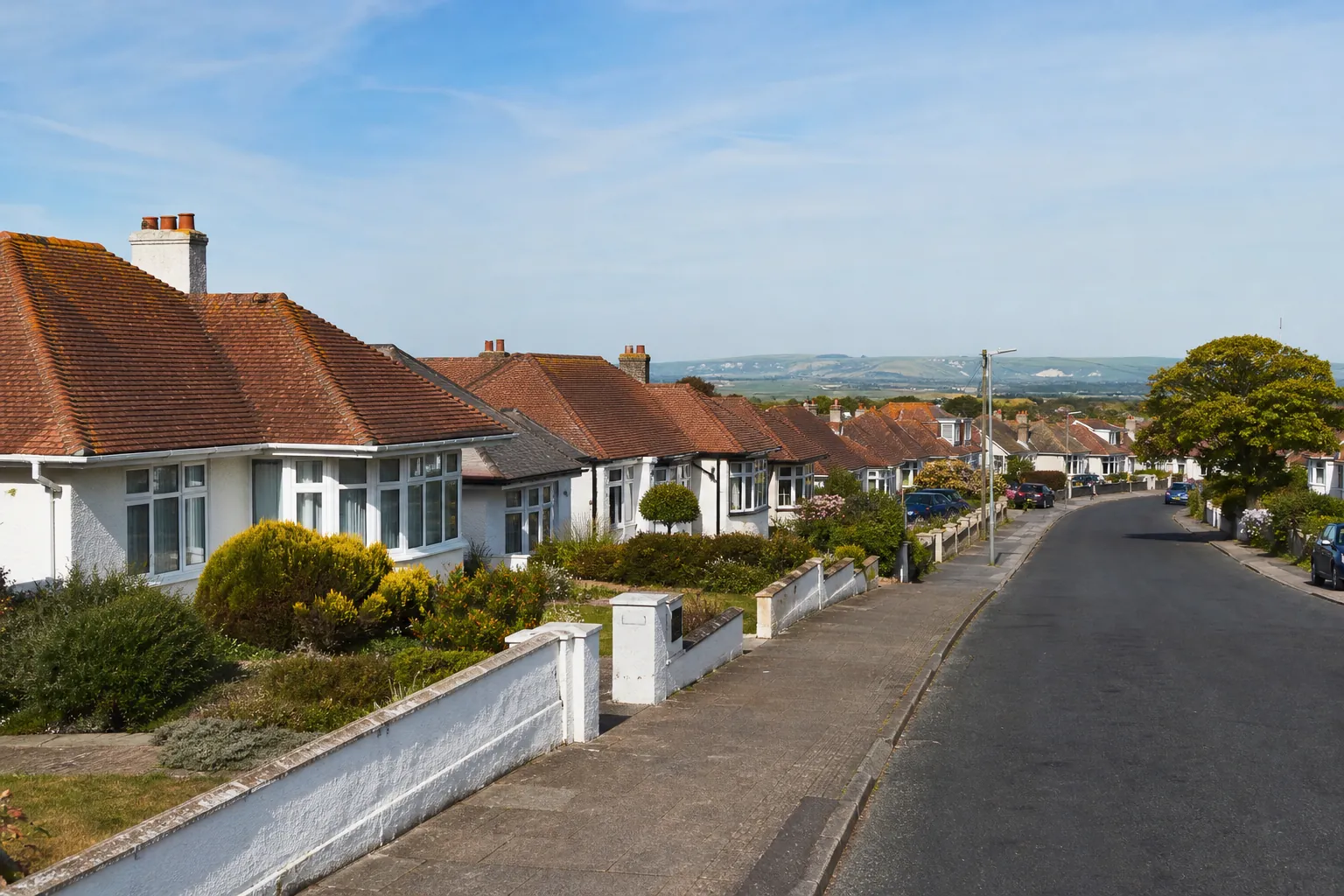
Horsham roofs
From the Causeway to the railway terraces
-
Horsham Stone in the town centre
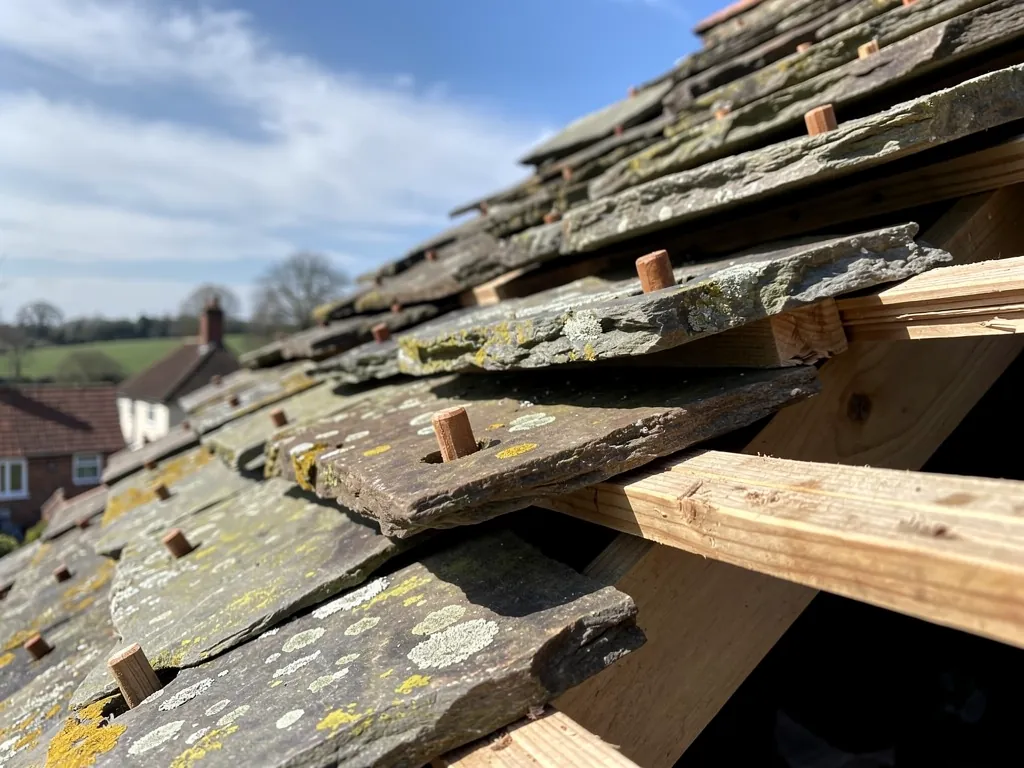
The council's appraisal calls Horsham Stone roofs a distinctive traditional feature of the locality, and says a number of hipped and half-hipped stone roofs remain in the town centre. St Mary's church carries one too.
-
Clay tile, pantile and slate
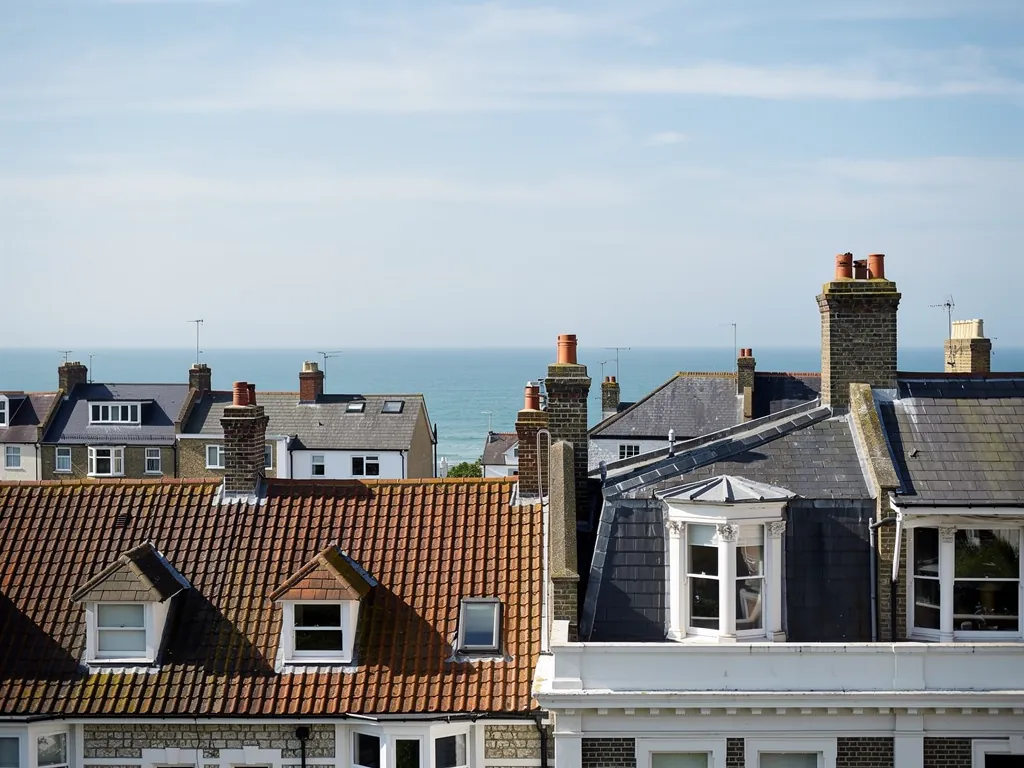
The appraisal finds traditional clay tiles and pantiles, the S-shaped clay tiles that overlap along their sides, prominent in the centre, with slate arriving later. Manor House in the Causeway dates from 1704.
-
Victorian terraces along the line
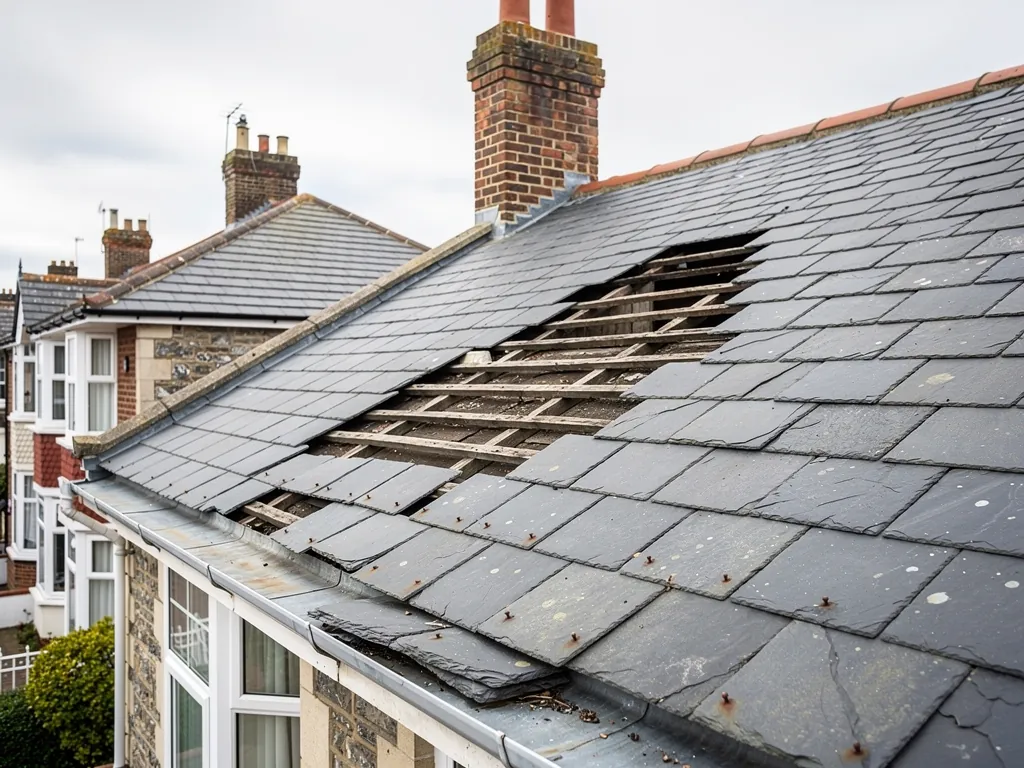
The railway reached Horsham in 1848, and Victorian terraces and planned estates then spread the town out along it. Roofs from that era are now well over a century old and may carry a mix of repairs.
Map of Horsham, 32.7 road miles north-east of Bognor Regis, with the nearest towns we also cover.
The town centre conservation area of 1974
- Council
- Horsham District Council
- County
- West Sussex County Council
- Conservation area
- Horsham Town Centre Conservation Area, designated 1974; London Road, Richmond Road and Park Terrace Gardens have their own
- Article 4
- 11, 13, 15 and 19 Denne Road: tile-hanging, terracotta and windows, not roofs
- Church
- St Mary's, local sandstone with a Horsham Stone roof and a shingled spire
- Distance
- 32.7 road miles north-east of Bognor Regis, about 46 minutes by car
Horsham notes
Stone slabs, pantiles and railway streets
Three layers of Horsham's building stock, and the questions each one raises on the roof itself.
Chapter 1: Horsham Stone and the roofs of the old centre2745
Sheet 01 / 03Horsham sits at the River Arun crossing in the Weald, on Upper Tunbridge Wells Sand, and the stone quarried close to the town gave its name to a roofing material. The Horsham District Council conservation area appraisal says that Horsham Stone found near the town was the source of Horsham Stone roofing, and calls those roofs a distinctive traditional feature of the locality. The parish church of St Mary is built of local sandstone and has a Horsham Stone roof and a shingled spire, while its large tower survives from the Norman period. The town was called a borough in 1235 and may have been a planned new town founded by the Braose family around a market place. Old roofs in a centre of that age may have been patched more than once, and the patches do not always match.
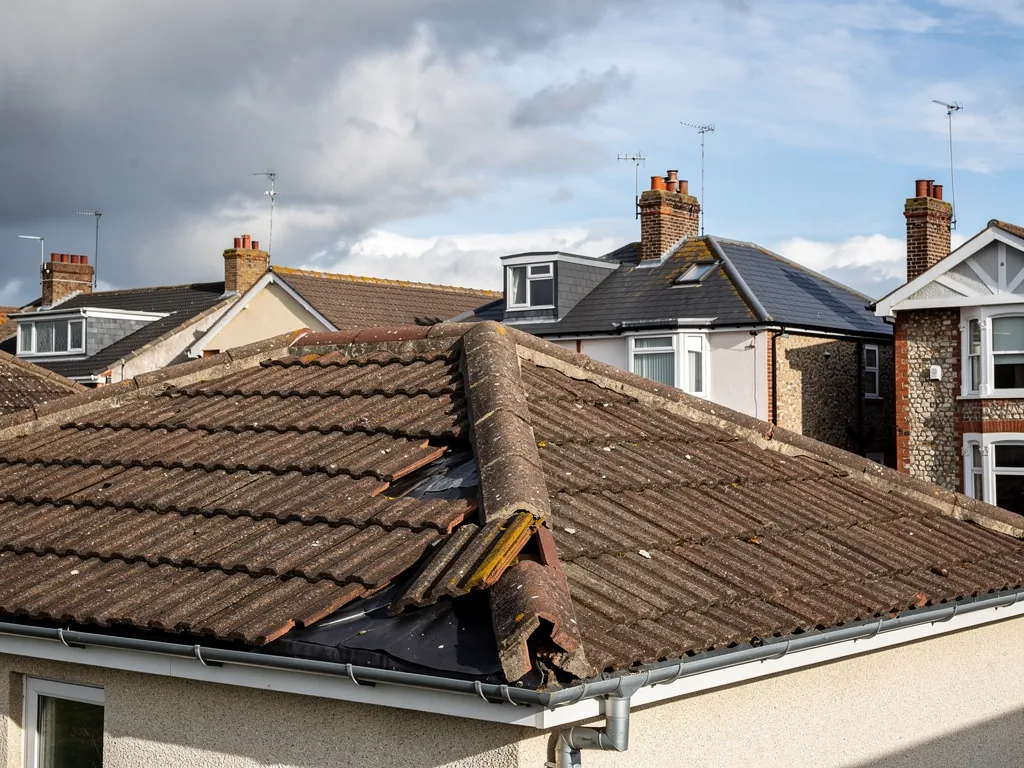
Three calls on an old stone roof
- RehangSlipped slabs refixed with new pegs or nails, the course pattern kept.
- RelaySlope stripped, sound slabs sorted and reused, battens and underlay renewed.
- MatchStone replaced only where a slab has failed, sourced to suit the roof.
1.1 Hipped and half-hipped stone roofs
The appraisal records that a number of hipped and half-hipped Horsham Stone roofs remain in the town centre conservation area. Hips are the sloping lines at the corners of a roof; a half-hip is clipped short, leaving a small gable at the top. Stone slabs are laid in diminishing courses, which means the courses get smaller as they climb. That pattern is part of the look, and it is why a stone roof is repaired by someone who knows how it goes together rather than by anyone with a ladder. We carry out Horsham Stone repairs and re-roofs; our Horsham Stone roofing page explains the work in detail.
1.2 What a stone roof asks of its owner
The weak points on a stone roof are the same as on any other: the hips, the valleys where two slopes meet, and the flashings at chimneys and abutments. When a stone slab slips, it is usually because the peg or nail that held it has failed, not because the slab itself has. Slabs are salvaged and reused wherever they are sound, since new stone is hard to match for colour and texture. Our survey records each fault in photographs, and you get a plain call on whether a repair, a partial relay or a full strip is needed. One total price, in writing, comes after the survey.
The slabs themselves decide how far a relay can go. Sound ones are set aside as the slope is stripped, cracked ones are rejected, and the roof can only be relaid from what is good, topped up where necessary. Where stone meets a chimney or a gable wall, lead flashings and soakers do the sealing, worked into the courses so the pattern of the roof is not broken. Those are the details that make a repair look as if it was always there.
St Mary's is an Anglican parish church. While it stays in use, the ecclesiastical exemption applies, so its repairs follow the church's own faculty system rather than a listed building consent application, although development that changes the exterior still needs planning permission. The houses around it follow the ordinary listed building rules.
Chapter 2: Pantile, clay tile and the Causeway houses2562
Sheet 02 / 03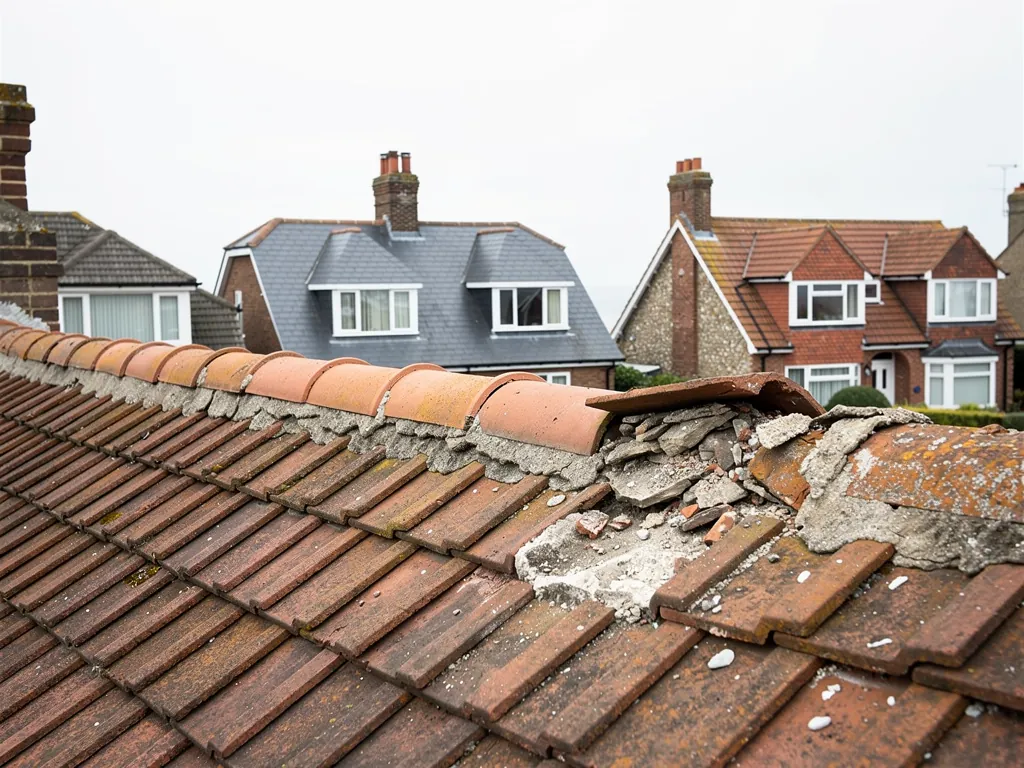
Away from the stone, the town centre appraisal says traditional clay tiles and pantiles are prominent, and slate arrived later in the town's history. Manor House in the Causeway dates from 1704, and by 1770 an avenue of lime trees had been planted along the same street. A house that has stood for three centuries is likely to have had its covering renewed, perhaps more than once, in the materials of the day. Look closely at an old roof and you may see a patchwork: a slope of clay tile, a run of later slate, a flat-roofed rear extension added in another century.
Two fixes for a failing run of pantiles
Spot repair
Broken tiles replaced and channels cleared where the battens beneath are sound.
Relay the slope
Tiles lifted, battens and underlay renewed, sound tiles reused.
2.1 Pantiles and their fixings
Pantiles are wavy clay tiles whose curves interlock side to side, so rain runs down the troughs. Pantiles are laid on battens, the timber laths fixed across the rafters, and they rely on those battens being sound. Broken pantiles and moss-packed channels are easy to see from the street. Rotted battens are not, which is why the loft gets inspected alongside the slope outside. A section of rotted batten with new tiles on top is a repair that fails in the next gale, so we flag it before we quote. Minimum pitch depends on the tile, so we check the maker's data sheet before any pantile is relaid.
2.2 Ridges, flashings and the Denne Road direction
Ridges on old roofs often rest on a bed of mortar alone. Since BS 5534 was revised in 2014, a mortar bed on its own no longer counts as enough to hold the top courses; a clip or a screw goes in beside it. Tiles along the verge, where the roof ends at a gable wall, get the same treatment. Horsham has an Article 4 direction at 11, 13, 15 and 19 Denne Road, but it deals with terracotta detailing, decorative tile hanging and windows, not roofs. The town centre conservation area was designated in 1974, and London Road, Richmond Road and Park Terrace Gardens each have a conservation area of their own, so it is worth checking which boundary your street falls inside. For roof windows in the conservation area, read our guide to skylight planning permission first. Our slate roofing page covers the later slate roofs.
Chapter 3: Railway-era streets and their century-old roofs2867
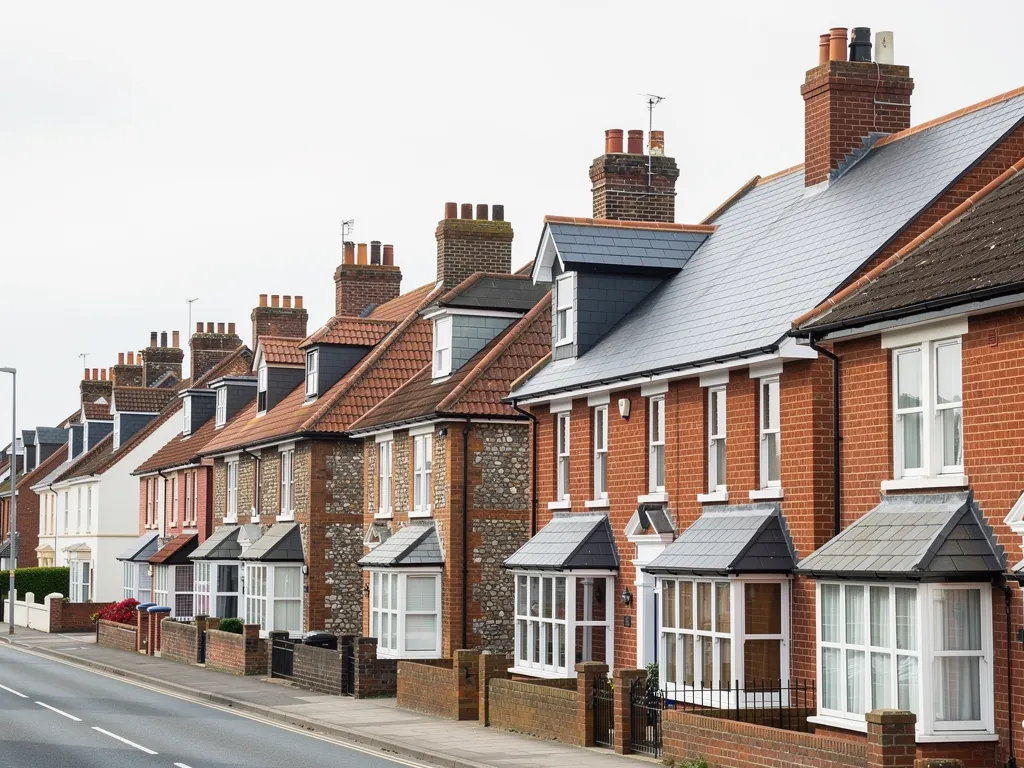
Sheet 03 / 03When the railway arrived in 1848, Horsham started to grow along its line. The appraisal records Victorian terraces and planned estates that expanded the town in that direction. A terraced roof of that era is a series of long shared slopes and party walls, and a leak at one house can run along the roof timbers into the next. So the survey takes in more than the one house. We look at the gutters, the chimney flashings, the party wall upstands and the valley gutters between rear extensions, and photograph each in place so you can see them yourself.
Terraced Horsham
A leak that shows in one house can start in the shared roof next door, so the survey follows the water back to where it begins.
3.1 Party walls and shared roofs
On a terrace, the line where one house's roof meets the next is a shared structure. A cracked flashing or a slipped slate at that junction is usually your problem and your neighbour's at the same time. Chimney breasts on a party wall are covered by Building Regulations, and removing one on a party wall also calls for a party wall notice. We explain what each job involves before starting, and tell you when it is worth speaking to the neighbours first.
3.2 Valleys, soakers and old slates
A valley, the inside corner where two slopes run together, collects the runoff of both and so carries more water than any other part of the roof. Where a Victorian roof turns a corner, the lead or the tile arrangement in the valley has to be sound. Soakers are small lead sheets tucked in beside each course where the roof butts a wall or stack. When those wear through, damp shows up in the corner of an upstairs room long before anything is visible outside. Our roof repairs page sets out how we trace and cure these leaks without stripping more than we need to.
Gutters deserve a mention on a terrace too. A shared run of gutter and a downpipe that serves two houses can overflow onto the wall below and cause damp that looks like a roof leak. Checking the outlets and the joints is a quick job, and it sometimes means the roof itself is not the problem at all, which is a result worth having.
The work we take on in Horsham
Frequently asked questions
Questions from the Causeway to the railway streets
Can a slipped Horsham Stone slab be put back rather than the roof being stripped?
Often, yes. A slab usually slips because its fixing has failed, so the slab is lifted, the fixing renewed and the slab replaced in its course. We look at the battens and the slabs either side to be sure the fault is local. If many slabs are loose across a slope, a partial relay with the sound stone reused is the better repair, and the photographs show why.
Does the Denne Road Article 4 direction stop me replacing a roof in Horsham?
The Denne Road direction covers 11, 13, 15 and 19 Denne Road and removes permitted development rights for things like the terracotta detailing, the decorative tile hanging and window changes. It does not take away roof rights, so it is not a roof rule. Check with Horsham District Council before you start work; it can confirm what applies to your address, and whether your street sits inside the town centre conservation area or one of the others.
Do the Victorian railway terraces need their roof valleys checked as they age?
Valleys come near the top of our checklist. Valleys carry more water than the open slopes, and the lead or tiling in them can wear thin or lift. Damp in the corner of an upstairs room is a common sign. We inspect the valley, the soakers and the chimney flashings together, photograph them, and give you a repair-or-replace verdict with a written quote. Often the answer is a new section of lead and a few refixed tiles, and nothing more.
Are pantiles on an old Horsham house worth saving rather than replacing?
Often they are. Clay pantiles can be taken up, graded and refixed over new battens and underlay, with the broken ones replaced by matching tiles. The roof keeps its character, and the job can cost less than new tile. If the clay has spalled, meaning the faces have flaked off, or the slope is too gentle for that tile, we explain the alternatives and what each would involve.
Nearby areas
Get a quote
Tell us about your roof
Describe what's happening and we'll call you back.
Loading the enquiry form. You can also call 01243 252373.