
Roofers in Horndean
Clay tile, slate and tile hanging
Horndean's conservation area roofs are plain clay tile and natural slate according to the council's appraisal, with tile hanging on some first floors, in a village where the London-Portsmouth road meets the Havant road.


Horndean roofs
From the Red Lion to the brewery
-
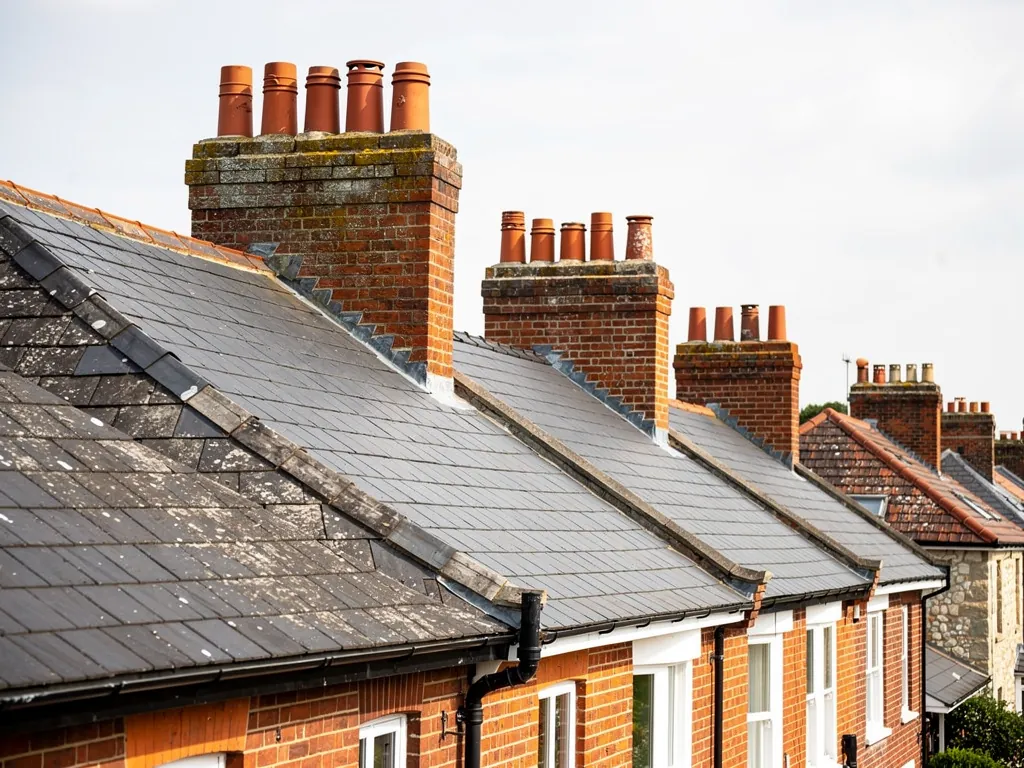
Plain clay tiles and natural slate
East Hampshire's appraisal names plain clay tiles and natural slate as the roofing materials in the conservation area. Both reward careful matching when a repair is needed, and each calls for its own fixings and skills.
-
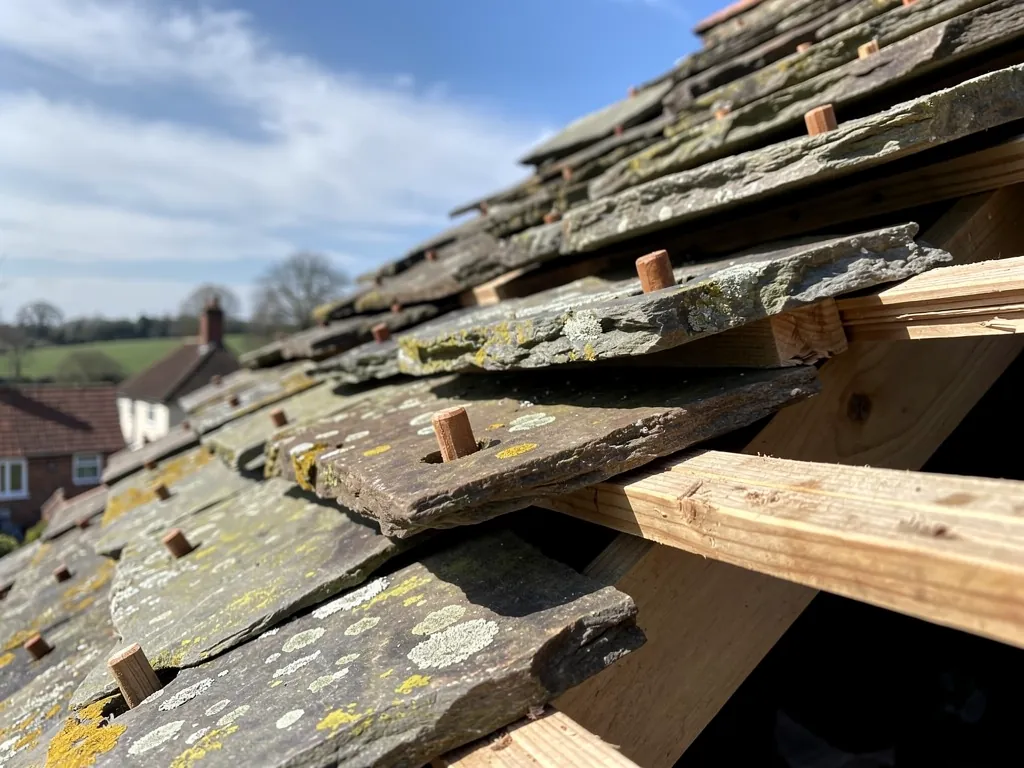
Tile hanging on first floors
Some buildings in the area have tile hanging at first-floor level: small clay tiles fixed to the wall face. Where a roof abuts one, the junction needs lead tucked in behind the hung tiles.
-
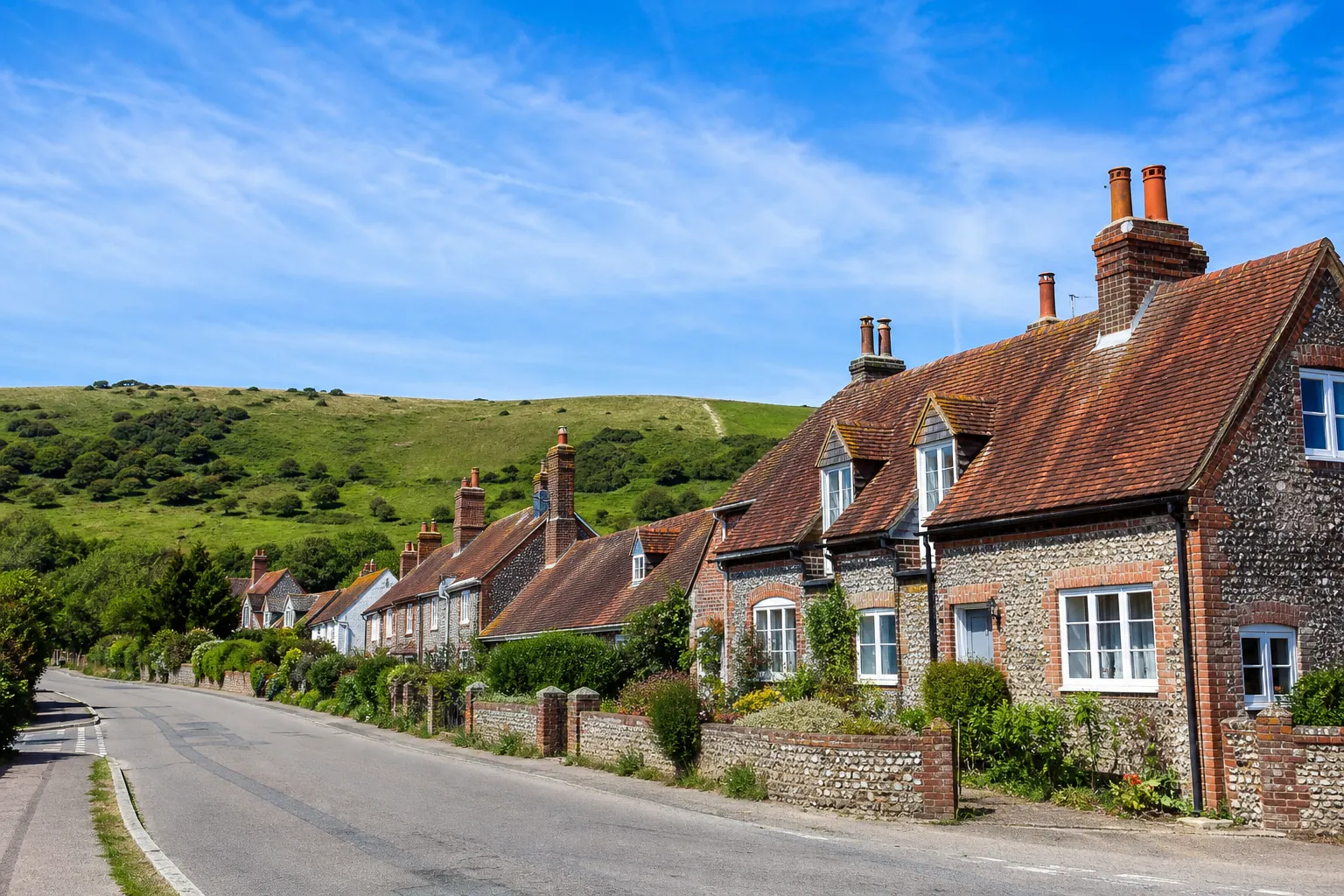
A brewery village on the main road
Horndean grew where the London-Portsmouth road meets the road from Havant. The Gale family's brewery, its best-known landmark, burned in March 1869, and a larger one was running within the same year.
Map of Horndean, 23.1 road miles north-west of Bognor Regis, with the nearest towns we also cover.
Horndean and its 1977 boundary
- Council
- East Hampshire District Council
- County
- Hampshire County Council
- Conservation area
- Horndean Conservation Area, first designated 12 April 1977; boundary re-designated 13 March 2007
- Article 4
- East Hampshire's employment-to-residential direction removes no roof rights
- Listed landmark
- Red Lion public house, Grade II, the only listed building in the conservation area
- Distance
- 23.1 road miles north-west of Bognor Regis, about 31 minutes by car
Horndean notes
Clay, slate and a fast-growing village
Three strands of Horndean's story, from the materials on its roofs to the road, the railway and the brewery that made it busy.
Chapter 1: Clay, slate and tile hanging on the old road2684
Sheet 01 / 03Horndean's conservation area was first designated on 12 April 1977, and its boundary was re-drawn and re-designated on 13 March 2007. East Hampshire District Council's character appraisal says the roofing materials inside it are plain clay tiles and natural slate, with tile hanging at first-floor level on some buildings. That is a useful and specific description, and it belongs to the conservation area only; beyond the boundary a street may look different. The appraisal also records the Red Lion public house, listed Grade II, as the only listed building in the area. Most of the buildings along the old road are therefore unlisted, which keeps many repairs simple. Unlisted does not mean unprotected, though, because the conservation area still shapes what is acceptable when a covering changes.
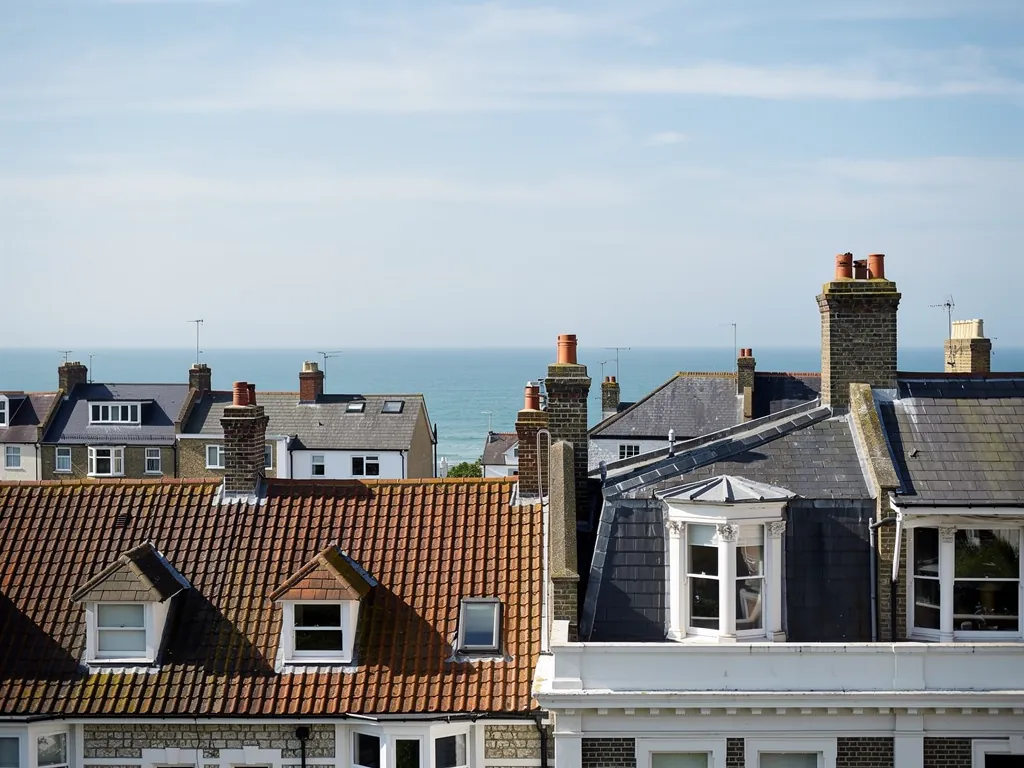
Three outcomes for a clay or slate roof
- RefixSlipped tiles or slates secured again and the roof left otherwise alone.
- RelayThe slope stripped, sound material kept and the fixings and battens renewed.
- Re-coverA whole new covering when the old one has run out of years.
1.1 Plain clay tiles: refix, re-hang or replace
Plain tiles are small clay tiles with a gentle curve, hooked over battens (thin timber strips fixed across the rafters) and laid in overlapping courses. With so many tiles on a slope, a leak is usually traced to one that has cracked, one that has slipped or a batten that has rotted. A minimum life of 60 years is the figure Marley gives for clay tile; treat it as typical, never as a promise. A sound roof can often be mended tile by tile, while one that has lost many fixings or many battens needs stripping and relaying, which our pitched roofing page describes slope by slope. Where a hung-tile wall rises beside a roof, a strip of lead is turned in behind the wall tiles and folded over the roof covering. If it has lifted, water enters behind the wall face and the first sign may be a stain well inside the house, far from the real fault. Tile hanging also needs its own care at the ends and corners of the wall, where tiles are cut to fit, and where a loose one lets wind-driven rain behind the rest.
1.2 Slate: refix before you replace
A slipped slate is often a sign that its fixing has gone, so the slates around it need checking too. If the slates themselves are sound, they can be refixed, or lifted and relaid on new fixings, and only the cracked ones are changed. Checkatrade's slate roofing guide, in a table updated September 2026, gives £160 to £210 per m² as a typical UK range, and the written quote follows our survey with one total price. Our slate roofing page covers the choices between Welsh, Spanish and reclaimed slate, and what each means for the look of a street.
Chapter 2: Brewery, railway and a fast-growing village2623
Sheet 02 / 03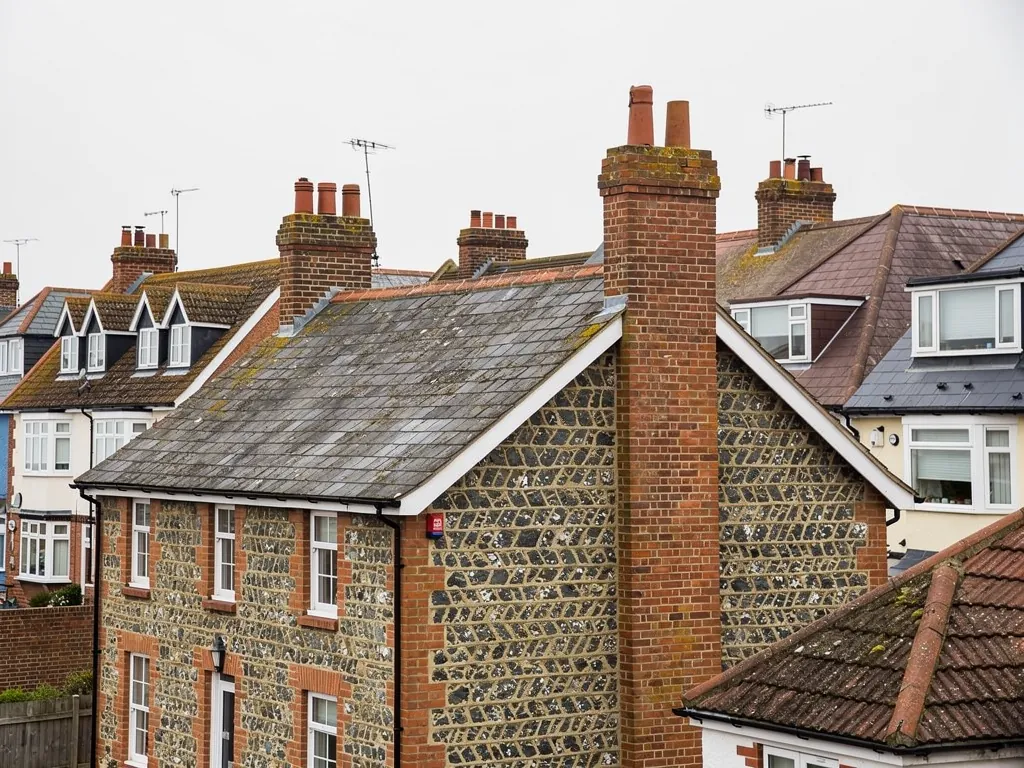
The appraisal calls the Gale family's brewery Horndean's best-known landmark. It was largely destroyed by fire on 6 March 1869, and a larger brewery was built and running within the same year. The Victoria County History of 1908 describes Horndean as the most populous and fastest-growing part of Catherington parish, at the point where the London-Portsmouth road meets the road from Havant, and it records that the Portsdown and Horndean Light Railway, opened in 1903, started from Horndean. Two houses in the same street can differ by decades, and so can the extensions built on behind them, so we date each roof from its own evidence.
What the loft survey looks for
- Daylight showing at the eaves
- Brittle or torn underlay
- Rusted nails and sagging battens
- Damp staining on timbers
- Flashings that have lifted
2.1 Reading the age of a roof
We cannot tell a roof's age from the road, and we do not guess. The survey looks at the battens and the underlay, the membrane beneath the covering, which is where age shows first. Brittle felt, rusted nail heads, daylight at the eaves and sagging battens each point to a roof coming to its last years, and a tidy surface can hide every one of them. Photographs taken in the loft and on the slope turn that into a plain verdict you can see for yourself, with the faults circled on the pictures we send. Nothing is carried out without your say-so, and a smaller job is recommended whenever a smaller job will do. Sometimes the answer is reassuring: a roof that looks weary from the pavement can turn out to need only a ridge refixed and a few tiles replaced, and we tell you plainly when that is the situation.
2.2 Planning, building control and Article 4
Horndean lies outside the South Downs National Park, which leaves East Hampshire District Council both deciding planning applications and running building control. East Hampshire's employment-to-residential Article 4 direction, in effect from 31 March 2019, removes no roof rights. A conservation area still matters for planning. For most houses a repair in the same material is not a planning matter, and no building control application is normally needed if less than 25 per cent of the building envelope and less than 50 per cent of the roof is affected. Heavier coverings change that: the Planning Portal says to treat an increase of 15 per cent or more in weight as a trigger. Ask the council if you are unsure, and take our photographs and description of the roof to help it answer quickly.
Chapter 3: Holy Trinity, the Red Lion and the junction2623
Sheet 03 / 03The Church of the Holy Trinity in Horndean was listed at Grade II on 12 March 1986. Like the Red Lion, the only listed building in the conservation area, it is a listed landmark of the village. Alterations that touch a listed building's character need listed building consent from the council, though a church in use by an exempt denomination follows its own faculty or denominational route instead, and a pub roof is a matter for its owner and the council. For a house or cottage nearby, the lesson is simpler. Check whether your building has a list entry before any job, and ask the council about the conservation area before you change a covering. That costs a phone call, whereas a covering put on without checking can mean taking it off again.
How a Horndean survey runs
- 1Check the fileWe look up the conservation area and any list entry for your address.
- 2Walk the slopesEvery slope, flashing and gutter is checked and photographed.
- 3Enter the loftBattens, underlay and timbers show what the roof really looks like.
- 4Send the quoteA written quote follows: one total price, with the pictures.
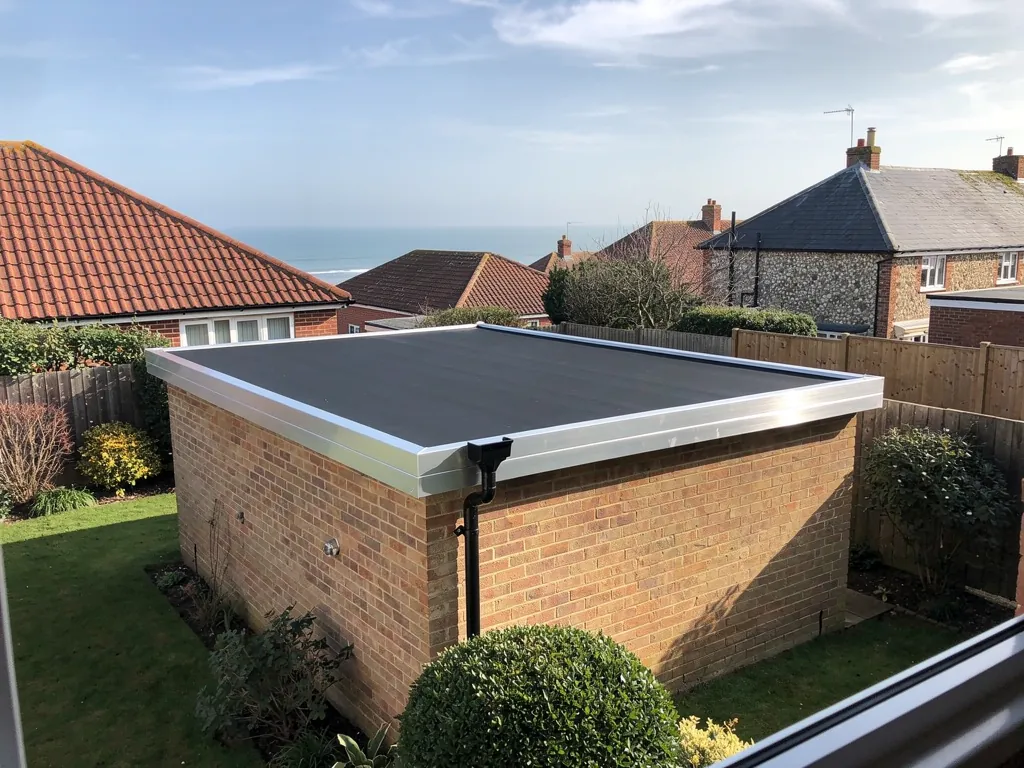
3.1 Flat roofs on extensions and garages
An older property will often have gained a flat-topped extension, porch or garage over the years, and each is a different problem from the pitched roof beside it. These are the roofs that gather standing water, take the knocks from ladders and branches and show their age first. A flat roof is laid to fall towards a gutter or outlet. BS 6229:2025, which replaced the 2018 edition in December 2025, sets a minimum finished fall of 1:80, and roofers design steeper, around 1:40, so the finished roof still drains. Ponding water, a lifting edge trim and blistered felt are the usual signs of a tired covering, and a flat roof repaired again and again is often better replaced, laid to a proper fall on a sound deck. Our flat roofing page compares felt, EPDM (a rubber sheet) and GRP (glass-reinforced plastic).
3.2 Scaffold on a busy through road
Where a house fronts a busy road, scaffold may have to stand on the highway. Hampshire County Council grants the licence once the scaffold firm has applied. The council needs ten clear working days before anything goes up, charges £211.90 for the first fortnight and £72 for every fortnight after, and gives no extensions, so we sequence the work around that. Once the roof is finished the rubbish goes with us, and the pavement outside is left clear for people walking past. Neighbours are told early, which avoids awkward surprises on the day, and the scaffold is checked before we climb it. A tidy site also matters on a road where people pass close to the work, so materials are stored out of the way and the ladder stays footed.
What we can do for Horndean roofs
Frequently asked questions
Questions from the Red Lion to the Havant road
Can Horndean's plain clay tile and slate roofs be repaired instead of replaced?
Often, yes. Single cracked or slipped tiles and slates can come out and be replaced, and a slipped slate usually means its neighbours need checking too. Where battens or fixings are failing right across a slope, relaying it with the sound material reused is the sounder repair. We photograph the slope and give you the verdict before any quote is written.
What does the 1977 conservation area, re-drawn in 2007, mean for a re-roof?
It means the covering is judged by how it looks as well as how it performs. The appraisal names plain clay tiles and natural slate, so matching them is the safe course. Ask East Hampshire District Council before swapping materials, and check whether your own building has a list entry. A matching repair is generally straightforward.
Is there an Article 4 direction on roofs in Horndean?
East Hampshire's employment-to-residential direction, made on 31 January 2018 and in effect from 31 March 2019, removes no roof rights. Check with East Hampshire District Council before touching a conservation area roof. A listed building follows its own consent route, which is separate from any Article 4 direction. Our survey photographs can go with your question, so the council sees the roof as it is.
How does tile hanging affect repairs to a roof beside it?
The seal between a roof and a wall of hanging tiles is a lead strip turned in behind those wall tiles and folded over the covering. When it lifts or splits, rain runs in behind the wall face and the stain turns up later, often far from the fault. We examine the upstand and the tiles above it and renew the lead where it has failed.
Nearby areas
Get a quote
Tell us about your roof
Describe what's happening and we'll call you back.
Loading the enquiry form. You can also call 01243 252373.