
Roofers in Hambledon, Hampshire
Flint-faced cottages in a Downland valley
Hambledon sits in a small valley among low hills north of Portsdown, where timber-framed cottages were refaced in brick or flint and the village lies inside the South Downs National Park.
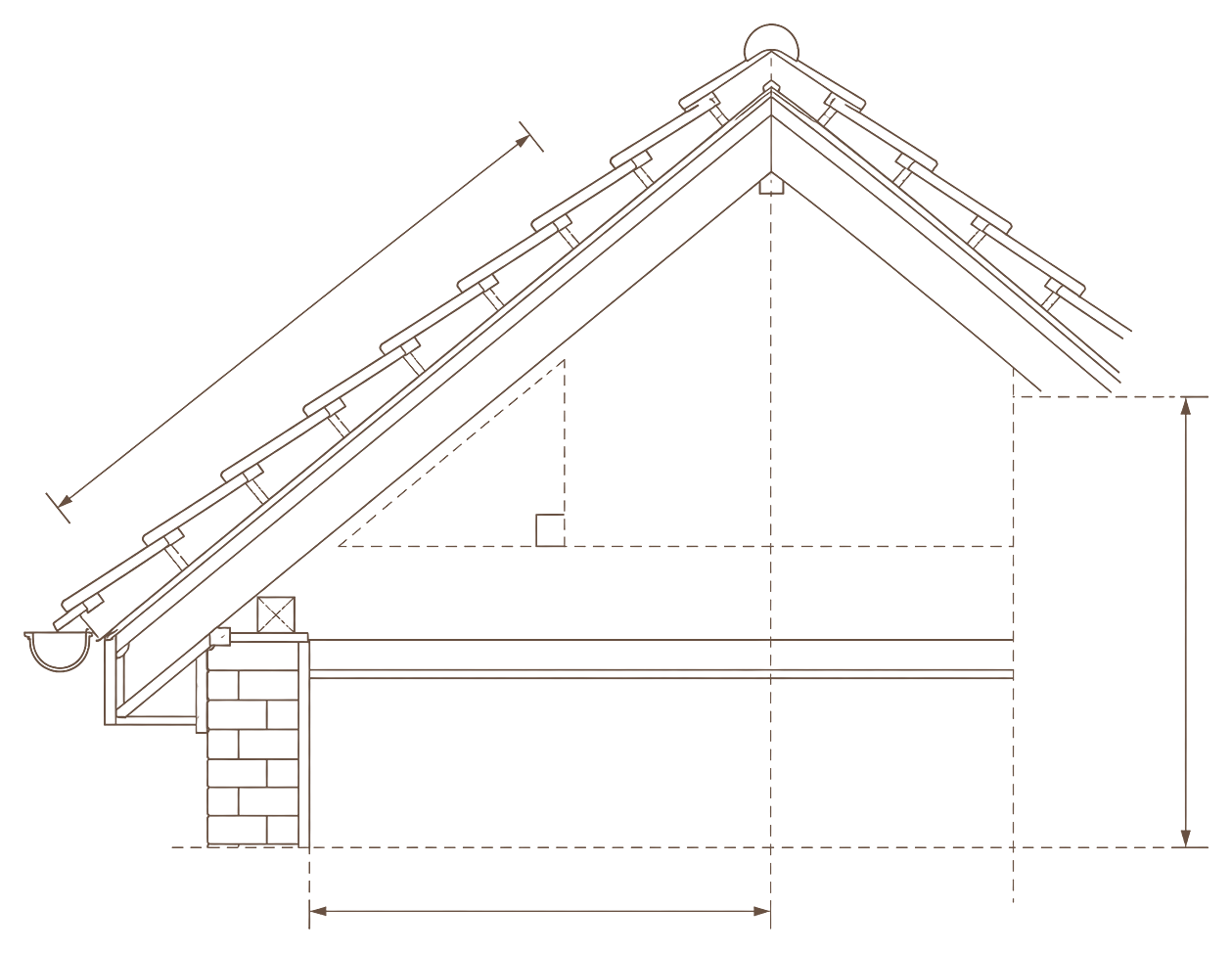
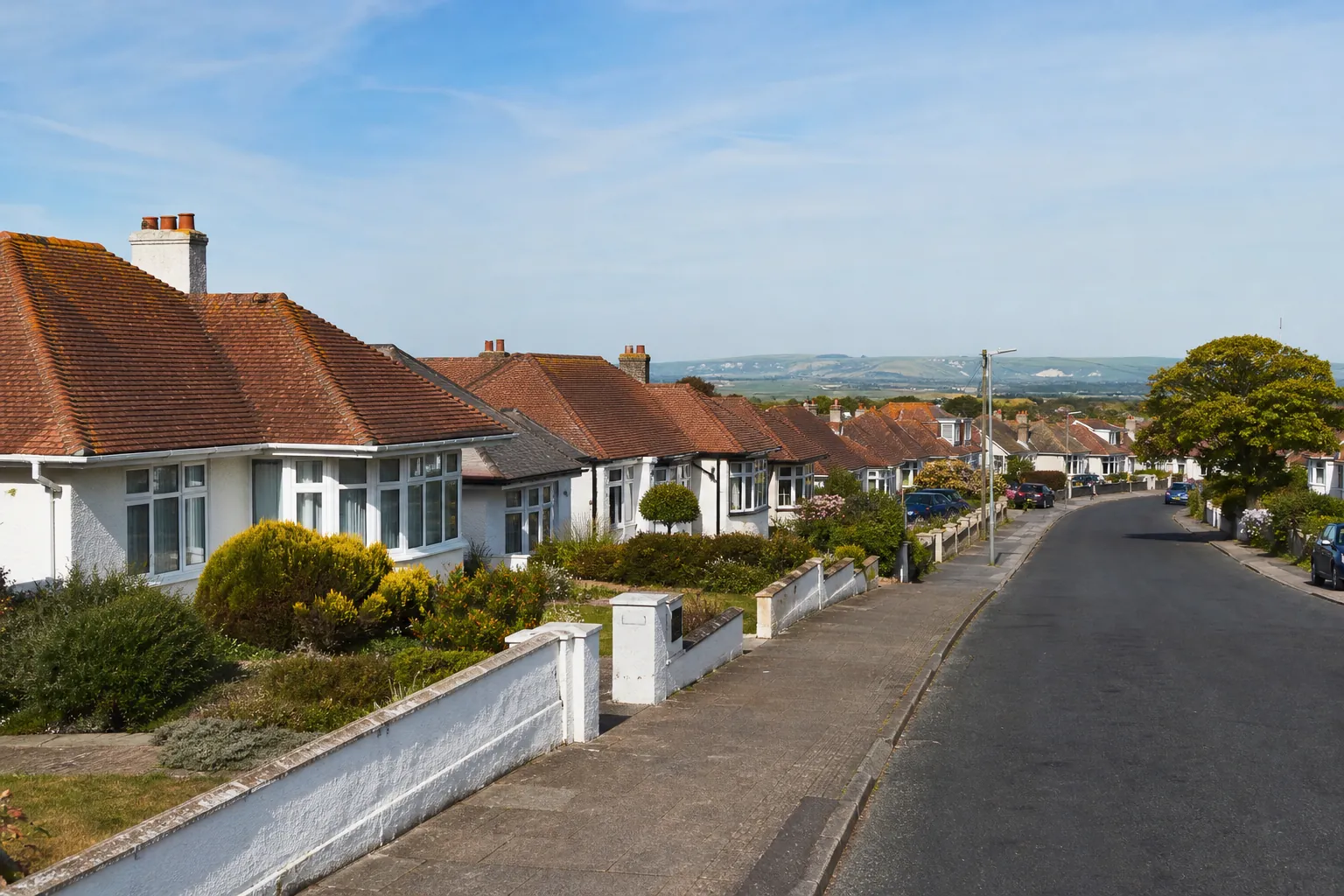
Hambledon, Hampshire roofs
From the High Street cottages to Manor Farmhouse
-
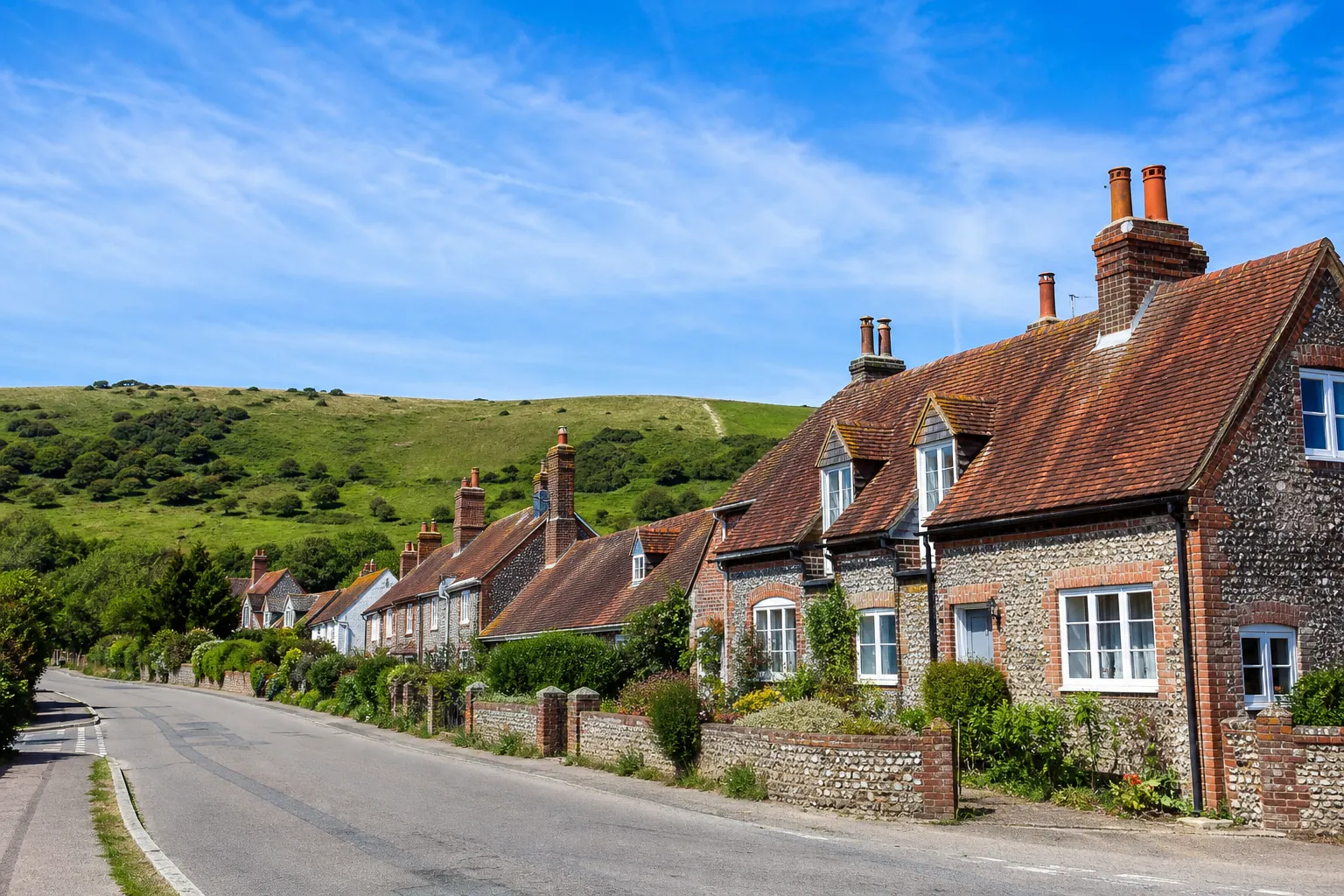
Refaced High Street cottages
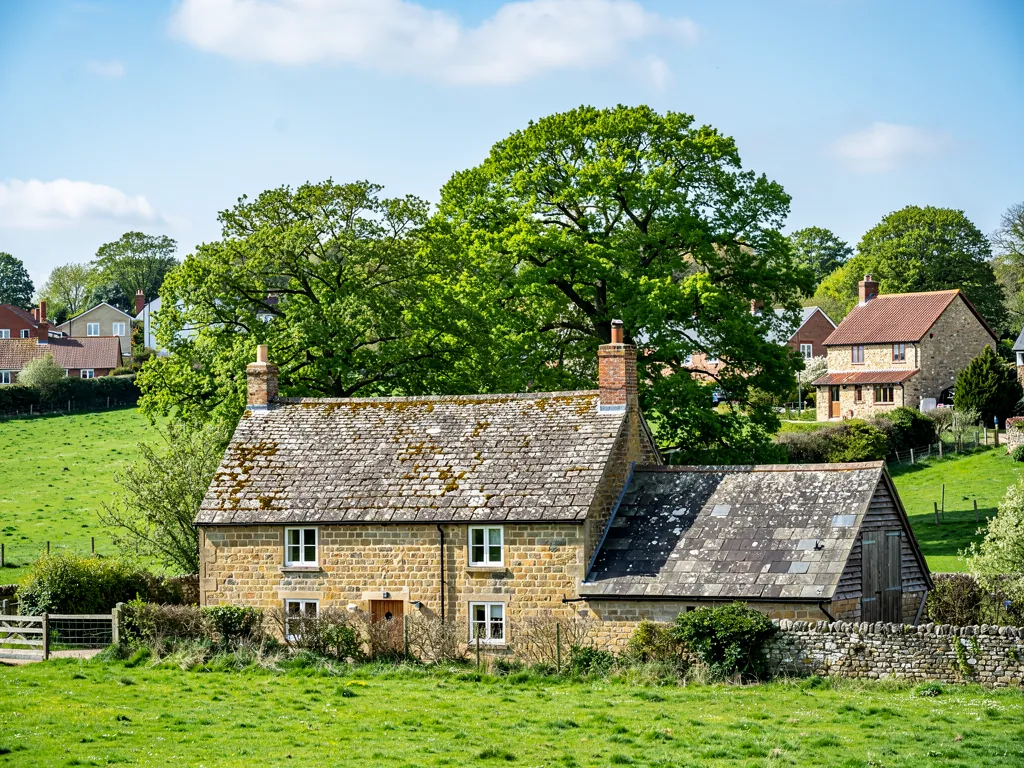
Several High Street cottages near the church began as timber buildings, then were refaced in brick or flint and extended in the 18th or 19th centuries. Their roofs sit on frames older than the walls you see.
-
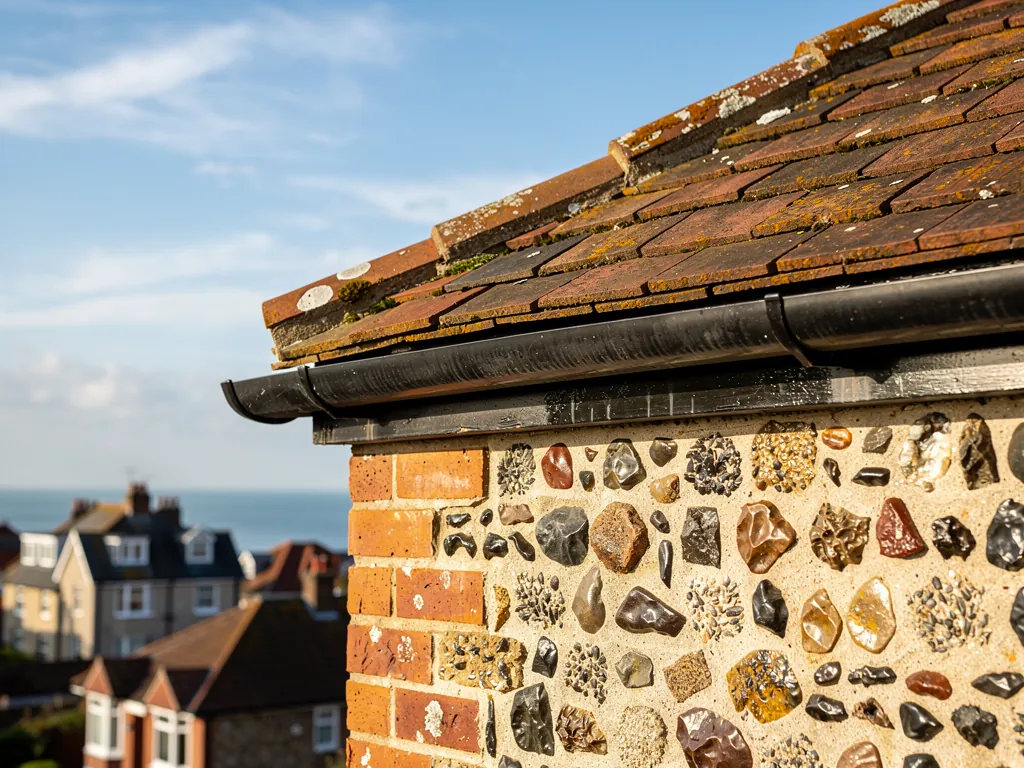
Flint walls beside the roof
The conservation area appraisal records historic flint boundary walls in and around the village. Where a roof ends against one of those walls, the flashing is dressed into old, uneven masonry.
-
A Grade II* farmhouse and a Grade I church
Manor Farmhouse is Grade II* listed, and the church of Saints Peter and Paul is Grade I. Roof work near either begins with their list entries and the question of who gives consent.
Map of Hambledon, Hampshire, 29.6 road miles north-west of Bognor Regis, with the nearest towns we also cover.
Hambledon, conservation area and National Park
- Council
- Winchester City Council
- Planning
- South Downs National Park Authority
- County
- Hampshire County Council
- Conservation area
- Hambledon Conservation Area, designated in 1970
- National Park
- Inside the South Downs National Park; Winchester City Council handles applications on the Authority's behalf
- Listed landmarks
- Manor Farmhouse, Grade II*; the parish church, Grade I
- Distance
- 29.6 road miles north-west of Bognor Regis, about 40 minutes by car
Hambledon notes
Flint, brick and timber beneath the tiles
Three things that govern roof work in Hambledon, from hidden frames to National Park rules, and what each one changes.
Chapter 1: Refaced cottages with older frames2074
Sheet 01 / 03Winchester City Council's conservation area appraisal describes several High Street cottages near the church as buildings first put up using timber, then refaced in brick or flint and extended in the 18th or 19th centuries. For a roofer that is a useful warning. What looks like a brick cottage may carry an older frame, and the roof, the newer walls and the old timbers have been tied together over the years in ways that nobody drew on a plan. Each generation of owners altered the building to suit its own needs, and the roof records every one of those alterations as a seam.
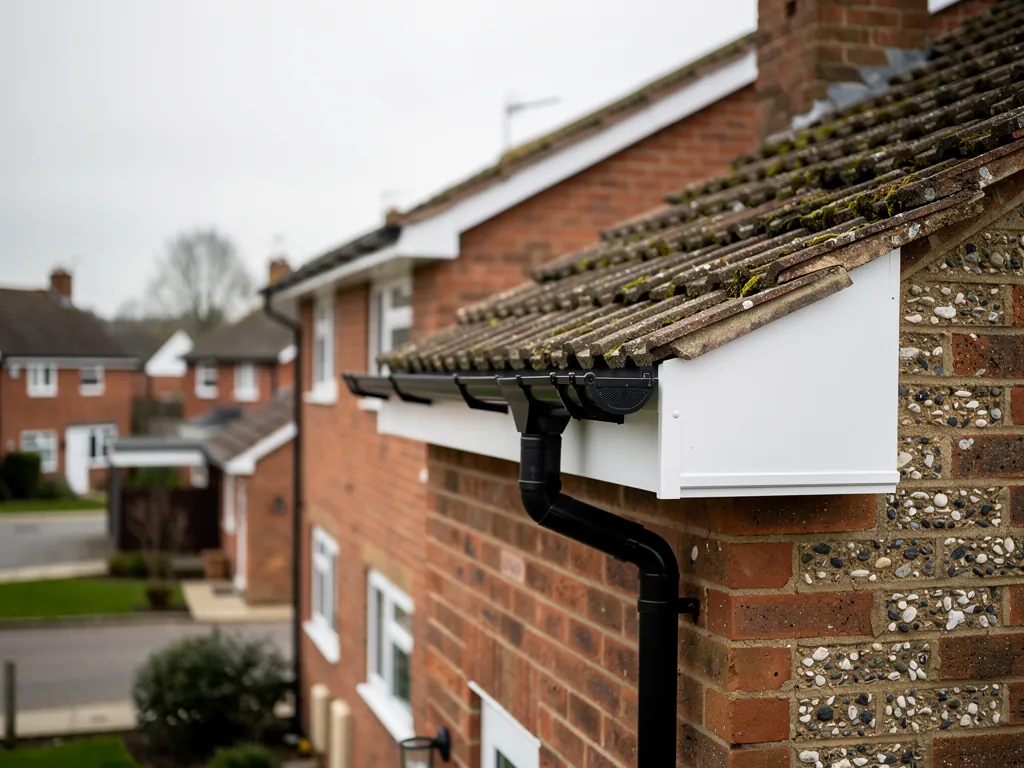
Three calls on an extended cottage roof
- Re-dressLead at a join lifted and dressed again, with the tiles left alone.
- Patch inA section of tiles and battens renewed where an old extension meets the main roof.
- Re-roofThe whole covering renewed once the frame has been checked and found sound.
1.1 Where extensions meet the old roof
Every extension leaves a join, and a join is where rain looks for a way through. A lean-to added in the 1800s against an older gable, a fresh ridge butting onto an old one, a chimney that has been built round: these are the junctions we study on a Hambledon survey. Valley gutters, the lead-lined troughs running between two roofs, turn up at such joins, and they fail quietly because the ground gives no view of them. We go up, photograph the lead close to, and check the falls before a word about price is spoken. A trough that holds a puddle is a trough that will eventually leak, and it is a modest repair when found early.
1.2 Frames that cannot be seen from below
An old frame hidden behind newer facing means the first signs of a roof fault are often the least obvious. A damp patch on an upstairs wall, a doorframe that has begun to stick, a smell in a cupboard: all of these can trace back to water getting past the roof edge. We check the roof, the gutter and the wall head together. If the tiles are sound and the fault is a split downpipe or a lifted flashing, that is the advice you receive and the job priced accordingly. Our lead roofing and leadwork page explains how valleys, flashings and soakers are cut and dressed.
1.3 Mending without losing the look
On a cottage that has been altered several times, the best repair is usually the least disturbing one. We lift only the tiles that have to move, keep the sound ones, and match any replacements for colour and size so the roof reads as one surface from the lane. Where a patch is all the roof needs, a patch is all you are quoted for. Where the survey shows the battens have rotted along a whole slope, the photographs go in front of you with the reasoning, so the bigger job is never a surprise.
Chapter 2: The church tower of 1794 and flint boundaries2745
Sheet 02 / 03Hambledon's parish church, dedicated to Saints Peter and Paul, keeps a Saxon aisleless nave, and the upper stage of its tower is flint with red-brick dressings, dating from 1794. It is listed Grade I, and it anchors the village as a tall landmark: you see it from the lanes, and the roofs around it are read against it. Flint is the village's wider theme. Winchester's appraisal notes that historic flint boundary walls survive in and around the conservation area, and those walls are as much a part of the roofscape as the tiles above them.
Flint and lead together
Lead flashings in a flint wall are cut into the mortar line and wedged, never just stuck on with sealant, so the join survives the weather.
2.1 Flint and flashings
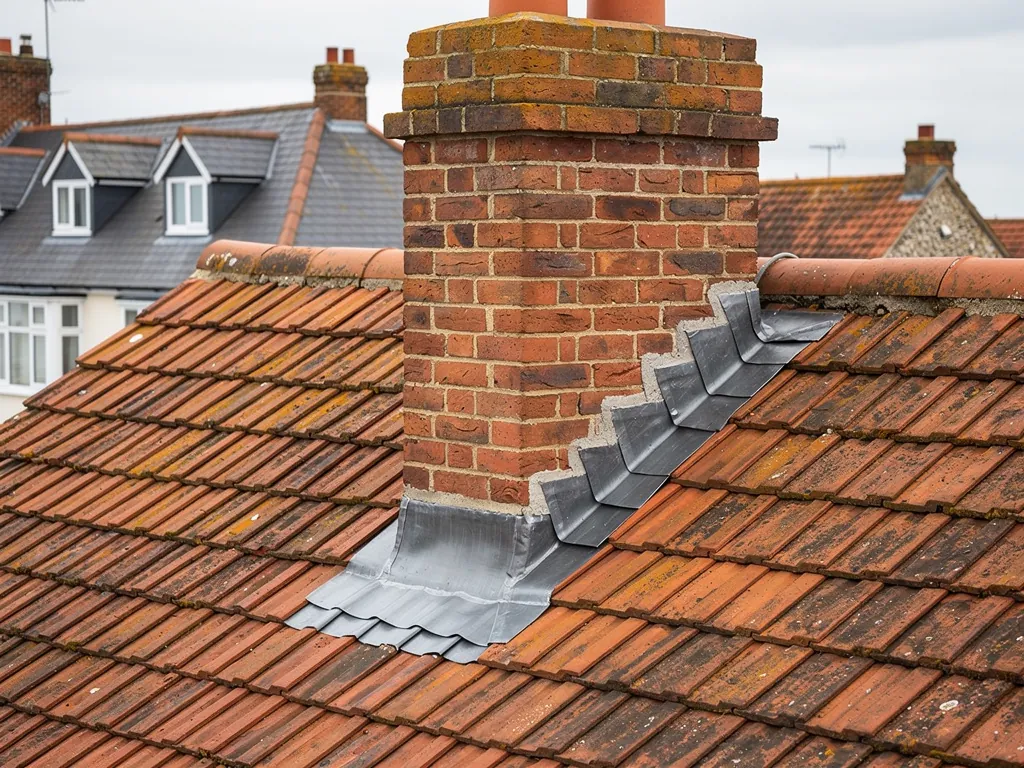
Where a roof butts against a wall, a strip of lead called a flashing is dressed over the join, and in a flint wall it has to be fitted into joints that are anything but straight, because flint is knobbly and set in lime. The usual method is to rake out a groove (a chase) along a mortar line, tuck the lead into it, wedge it, and point over the top with a suitable mortar. A bead of modern sealant is a short-term cover-up, and it lets go of flint faster than it does of brick. Chimney stacks in flint or brick need the same careful lead dressing, which is why a chimney repair and a lead repair are so often one visit.
2.2 Which route a church roof takes
The church is Anglican and still holds services, so its roof work follows the diocese's faculty process, with the council's planning team consulted over anything that changes how the outside looks. We would never start on a church until both approvals were in hand. A neighbouring house is a separate case, and one that depends on whether it appears on the National Heritage List. Manor Farmhouse, listed Grade II* since 7 February 1952, is a reminder that some old houses here are protected to a high level, and consent applies to alterations that affect their character.
2.3 Chimneys on an old roof
Our chimney repairs page sets out what we look at on a stack, from the pointing to the flaunching (the mortar crown that throws rain clear of the flue) and the pots. On a listed or protected house we match the original brick or flint rather than rebuilding the stack in something of lesser quality. A stack that leans, drops brick dust into the loft or shows white staining on the brickwork is telling you that damp has been working into the masonry, and it is worth a survey before the next winter arrives.
Chapter 3: A National Park village with the council handling applications3782
Sheet 03 / 03Hambledon lies inside the South Downs National Park. The planning authority is the National Park Authority, but in this part of the Park, which falls in the Winchester area, Winchester City Council handles planning applications on the Authority's behalf. Building control is a different matter, and it stays with the district council whatever the planning arrangements are. So a roof job here can involve the council for both planning questions and building control, and the first phone call is to Winchester City Council.
Questions to settle before a Hambledon re-roof
- Is the house listed
- Is it in the conservation area
- Does the covering change
- Who confirms building control
3.1 The 1970 designation and the roofs inside it
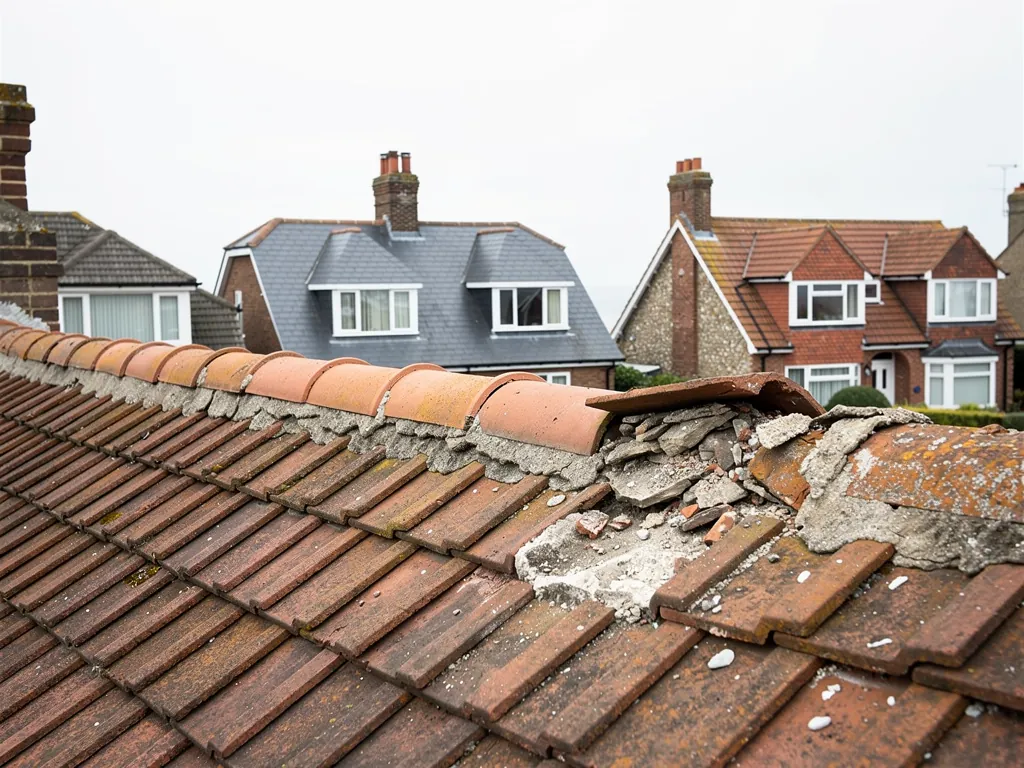
Hambledon Conservation Area was designated by Hampshire County Council in 1970, and Winchester's appraisal of March 2009 records how the village looks and why it matters. Conservation area status does not ban re-roofing, but it does change what can be done without an application, and the National Park adds a second layer. Anything that alters the roof's shape or adds openings in it needs a closer look, and our skylight planning permission guide sets out how roof windows are treated here. For everything else, the safe rule is to ask before ordering materials, and to keep the answer in writing.
3.2 Village life and a village roof
Hambledon is known for its cricket. The club is believed to have been founded around 1750 and played on Broadhalfpenny Down, with its last recorded game at Lord's in 1793. A village with that kind of history takes pride in how it looks, and many owners want repairs that blend in rather than shout. We match the covering and keep the roof line as it was, because a repair that people notice from the lane has not been done properly. Photographs of the roof before and after go to the owner, which helps when a house is sold and a buyer's surveyor asks what was done.
3.3 Re-roofing and Building Regulations
The Planning Portal sets a two-part test for skipping a building control application: less than 25 per cent of the total building envelope, and less than 50 per cent of the roof, affected by the work. A heavier covering or structural work changes that answer, and so does swapping one covering for another of a different weight. Winchester City Council's building control team can confirm what applies to your job, and the paperwork for notifiable work is ours to handle. It is a good idea to raise the question at the quote stage, not once scaffold is already up, because a late discovery costs time that nobody has planned for.
Hambledon roofing: what we cover
Frequently asked questions
Questions from the High Street to Broadhalfpenny Down
How do you repair the roof of a flint-faced Hambledon cottage without harming the wall?
We lift only the tiles that have to move and leave the sound ones alone. Any flashing is cut into the mortar line of the flint, tucked in, wedged and pointed, rather than stuck on with sealant. Replacement tiles are matched for colour and size. You see photographs of the faults first and hear a plain verdict, and then our written quote gives a single total.
Who decides roof work in Hambledon, the Park Authority or Winchester City Council?
The South Downs National Park Authority is the planning authority, but in this part of the Park Winchester City Council handles applications on its behalf. Building control stays with Winchester City Council. If a house is listed, the listed building route applies too. Ring the council's planning team before work that changes the covering, and keep the reply on file.
Do the flint boundary walls matter when I re-roof a house near the High Street?
They do. Roofs that finish against a flint wall rely on lead flashings fitted into the mortar line. On a re-roof we renew or re-dress those flashings so the join stays tight, and we take care not to knock the old wall. Where the wall is part of a protected setting, ask the council whether any work to the wall itself needs consent.
Is the church's faculty process the same as the council's consent?
No. An Anglican church in use follows the faculty process run through the diocese, and the council may still look at exterior changes. A listed private house uses the council's listed building consent route instead. If you are unsure which route applies to a building in the village, ask Winchester City Council's planning team before booking any roofer.
Nearby areas
Get a quote
Tell us about your roof
Describe what's happening and we'll call you back.
Loading the enquiry form. You can also call 01243 252373.