
Roofers in Emsworth
Quayside slate, mill ponds, Victorian terraces
Emsworth's roofs belong to an old harbour-head town of oyster boats, mill ponds and a Victorian market, where slate terraces on North Street and Havant Road have partly given way to concrete tile.

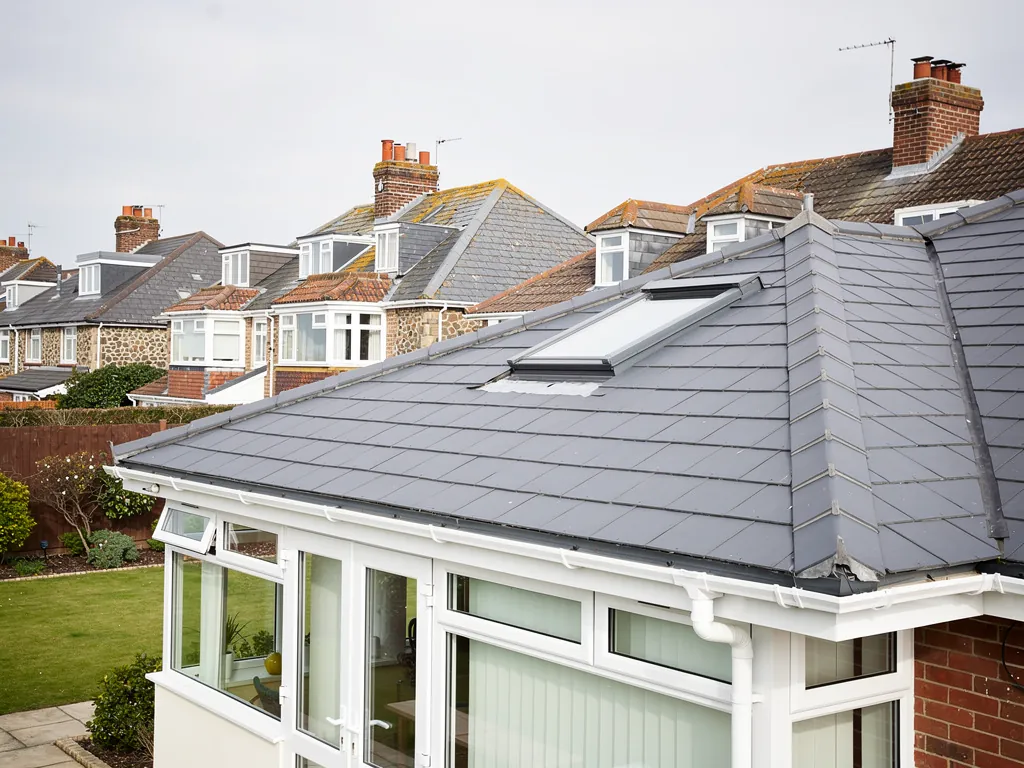
Emsworth roofs
From the tide mill quay to the Havant Road cottages
-
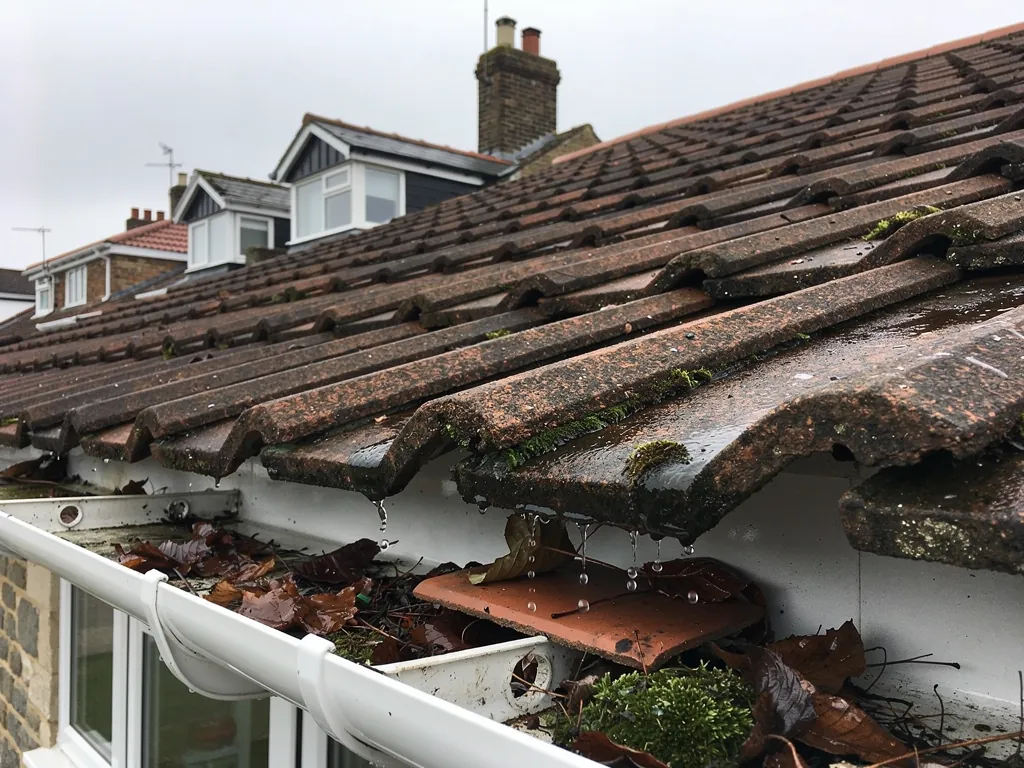
The quay and Lumley Mill
The older town south of the A259 sits between two mill ponds, with the quayside dominated by the former tide mill. Lumley Mill is listed Grade II*, so roofs close to it call for care and a look at the list entry.
-
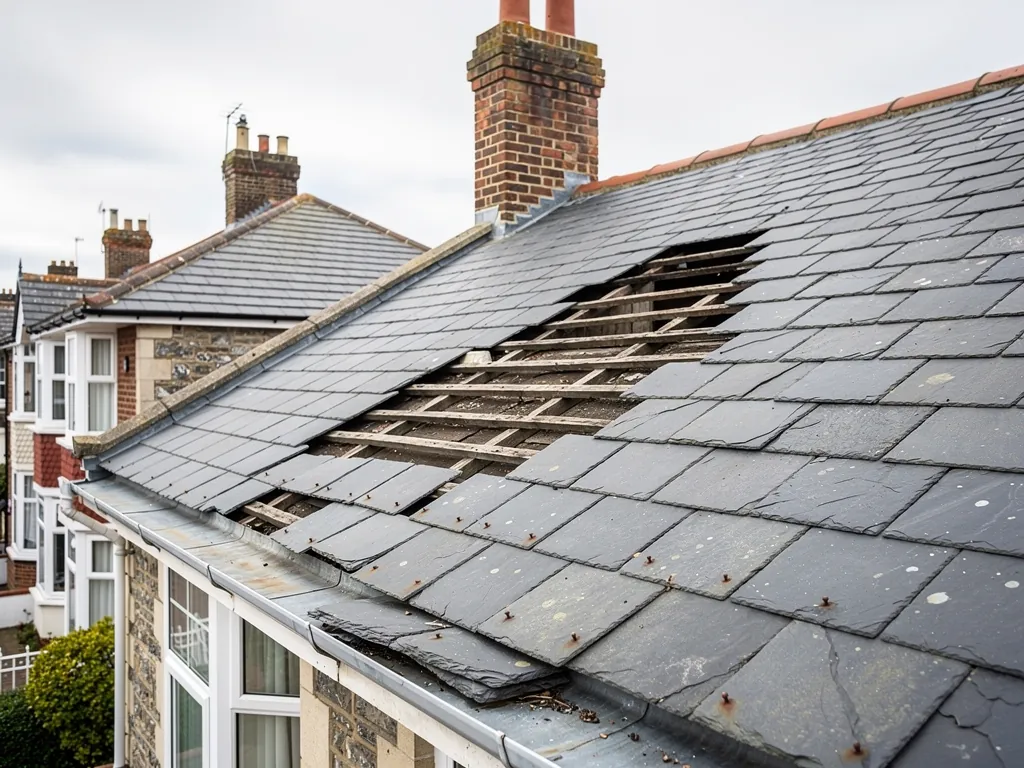
North Street and its lost slate
Havant Borough Council's appraisal records the loss of slate roofs on North Street. Where slate survives it can be repaired slate by slate, and where it has gone, a repair is the moment to choose the covering carefully.
-
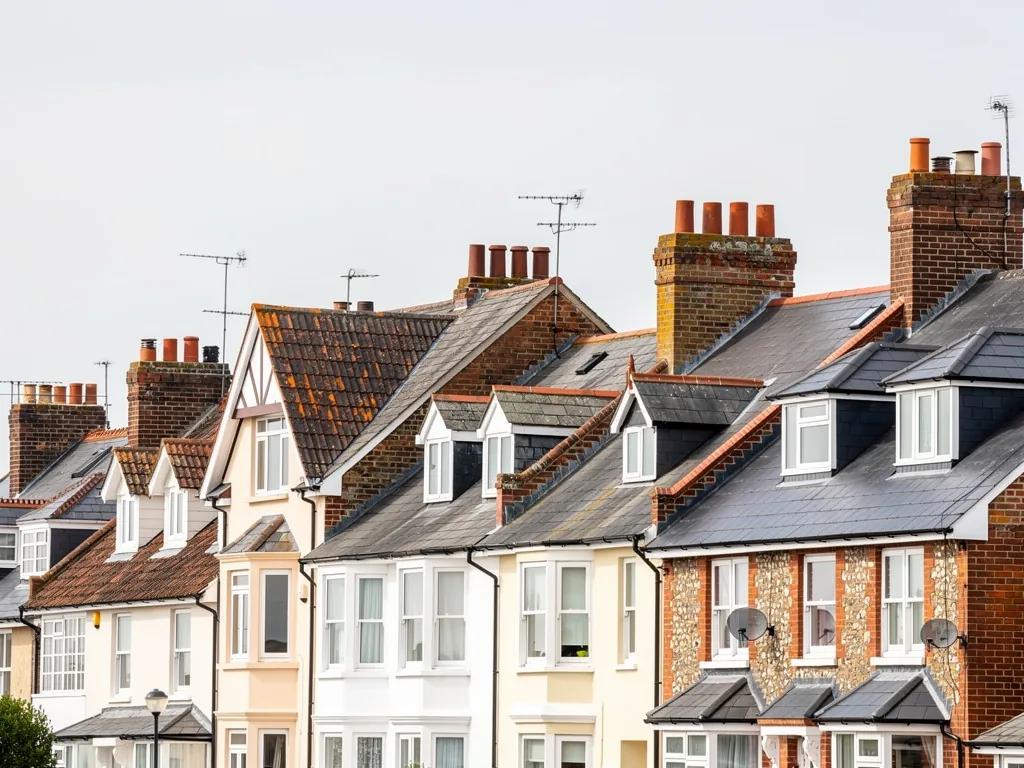
Nine Victorian cottages on Havant Road
A row of nine Victorian cottages on Havant Road has lost its original slate roofs to concrete tiles, according to the same appraisal. It shows how one street can carry two coverings with very different weights and ageing.
Map of Emsworth, 16.7 road miles west of Bognor Regis, with the nearest towns we also cover.
The conservation area at the head of the harbour
- Council
- Havant Borough Council
- County
- Hampshire County Council
- Conservation area
- Emsworth Conservation Area, the older waterside town south of the A259
- Article 4
- None covers Emsworth on Havant's Article 4 page
- Listed landmarks
- Lumley Mill, Grade II*; Church of St James, Grade II
- Distance
- 16.7 road miles west of Bognor Regis, about 24 minutes by car
Emsworth notes
Oyster quay, slate rows and the harbour edge
Three parts of Emsworth's roofing story, from the mill ponds to the lost slate of North Street.
Chapter 1: Lumley Mill, the quay and the mill ponds2440
Sheet 01 / 03Emsworth sits at the head of the western arm of Chichester Harbour, and up to the 19th century it was famous for its oyster fishing fleet. Havant Borough Council's character appraisal describes a conservation area covering the older waterside town south of the A259, between the two historic mill ponds, with the quayside dominated by the former tide mill. The same appraisal records the slate roofs lost on North Street and Havant Road, which come up again below. Living in a conservation area does not freeze your roof. It means the council looks harder at changes to how a street reads, and a roof is the largest single part of that view. A new covering that differs in colour, texture or profile from the old one is the change most likely to draw questions, so before suggesting what goes back we ask what is up there now and what the neighbours have.
Before work near the quay
- Look up any list entry
- Check the conservation area map
- Photograph the roof as it stands
- Ask Havant's planning team
1.1 Lumley Mill and the church of St James
Lumley Mill carries a Grade II* listing dating from 10 May 1973, and the Church of St James has a Grade II listing. Listing sits on top of the conservation area as a second layer. The 1990 Act on listed buildings bars unauthorised alterations that would affect a building's special character, so a plain like-for-like repair is a different matter from a changed covering, a new roof window or a rebuilt stack. A church in use for worship may fall under the ecclesiastical exemption instead, with the denomination's own approval process in place of council consent. Whichever route applies, we study the list entry before pricing anything beyond a simple mend, and we suggest an early word with Havant Borough Council's planning team. An answer in writing costs far less than a stalled job, and it gives the scaffold firm and the tile supplier something firm to work from.
1.2 Chimneys and lead on the older roofs
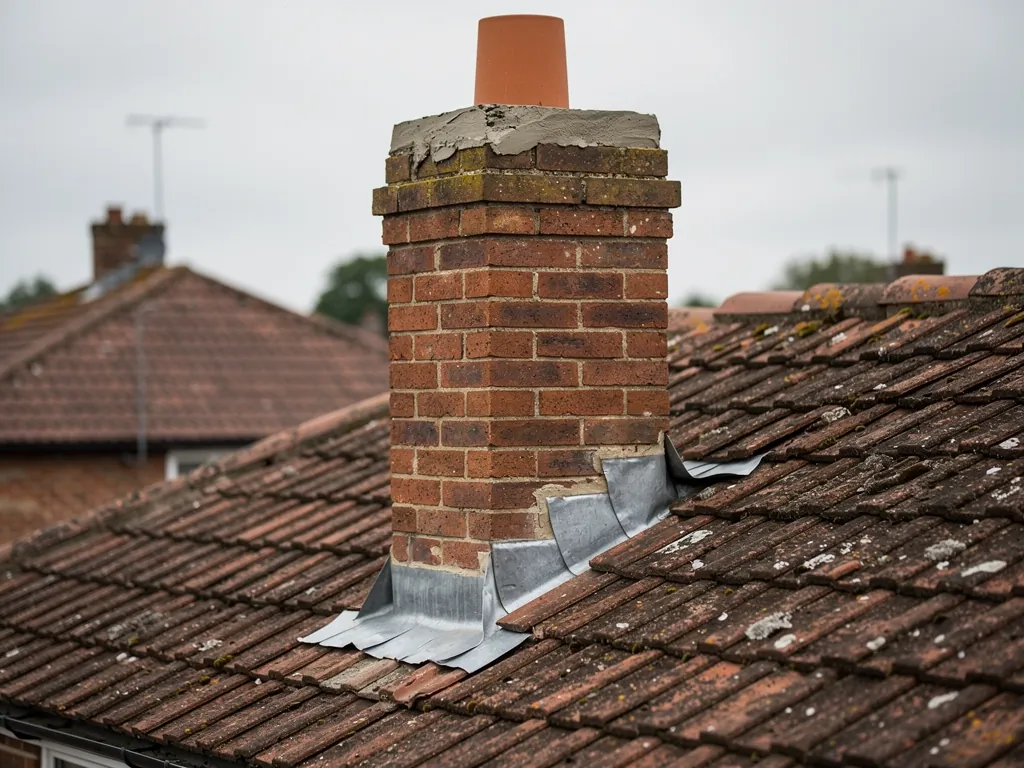
Older roofs often carry plenty of junctions: stacks, party walls shared with a neighbour, small valleys where two slopes meet. Each needs a metal flashing that bridges the roof and the wall. Lead is the usual choice for traditional work and is sold by code. According to Royston Lead's brochure, code 4 at 1.80 mm suits soakers, flashings, pitched valleys and dormers, and code 5 at 2.24 mm adds box gutters. Soakers are the little folded pieces threaded between courses where a roof runs into a wall. A brown stain on a ceiling or chimney breast is the usual sign that one of these joints is tired. Our lead roofing and leadwork page explains what we renew and how it is dressed.
Chapter 2: Boatyards, rope walks and Victorian roofs2501
Sheet 02 / 03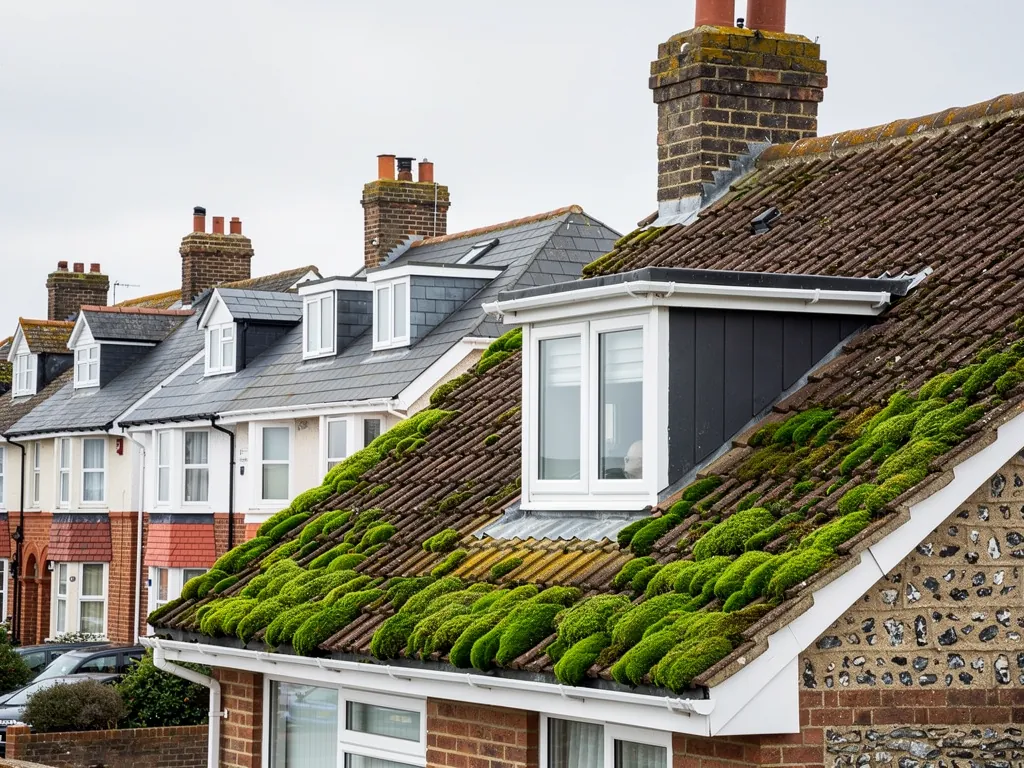
By the 19th century Emsworth was a respectable market town, sustained by ship and boat building, rope and sail making, the timber trade and fishing. Keep that era in mind when you look up at an older roof here. If yours dates from then, it is well past a hundred years old, and plenty can have happened since: a section re-slated after a gale, a stack rebuilt, a lean-to added at the back. Two houses on one street can need entirely different work, one needing a handful of slates refixed and the next a full strip, which is why we climb up and look rather than quote from the pavement. A survey on a roof like this usually covers the main slopes, the hidden gutters behind parapets and chimneys, the loft timbers where they can be reached, and the state of the nails and battens, the thin timber strips the covering hangs from.
Two coverings on one Emsworth street
Original natural slate
Thin, light and long-lived, with failures that usually start in the fixings rather than the slate.
Later concrete tile
Heavier, with a typical life of around 60 years and a different look from the street.
2.1 North Street and the slate that has gone
The appraisal records the loss of slate roofs on North Street. Natural slate is a long-lived covering: one trade guide says well-maintained slate can last more than 100 years. When a slate roof fails, the fixings usually go before the stone does. Nails corrode, and slates start to slide. Frequently the slates themselves are sound and can be pinned back one at a time using a tingle, a hidden metal strap that grips the lower edge without disturbing the course above. Where slate has already vanished from a street, putting the correct covering back matters for more than appearance, because the street reads as a whole. Our slate roofing page sets out how a slate slope is stripped and relaid.
2.2 The nine cottages on Havant Road
On Havant Road a row of nine Victorian cottages has had its original slate roofs replaced by concrete tiles, as the appraisal notes. Marley, a tile maker, puts concrete tile life at around 60 years, adding that this is no guarantee. A concrete roof laid some time ago may be nearing that figure, and an owner could be weighing a like-for-like replacement against a return to slate. A return changes the weight and the look. The Planning Portal says to consult an engineer or surveyor when a new covering differs markedly in weight from the old one, and adds that approval is needed when a material adds 15 per cent or more to the weight. Our guide to changing roof tiles in a conservation area lists the questions to settle first, before you choose a covering.
Chapter 3: The harbour edge and working beside it2318
Sheet 03 / 03Emsworth lies inside Chichester Harbour National Landscape, a protected landscape designated on 4 February 1964 and given its present name in 2023. The harbour setting does not stop roofing, but it draws more attention to bigger changes such as dormers, which is a planning question for the council rather than a roofing one. On the water's edge, weather is simply part of the job: gales, driving rain and salt air. A fixing schedule is drawn up site by site, with location and local wind exposure both counted, so we set ours from what the survey shows and not from a rule of thumb. We also look at how water leaves the roof, because a blocked gutter at the quay does as much harm as a slipped tile. Leaves, moss and silt build up quickly beside the mill ponds, and an overflowing gutter soaks the wall, the fascia and eventually the ceiling inside.
How a harbour-side re-roof runs
- 1SurveyWe go up on the roof, take pictures of every fault and say plainly whether to repair or replace.
- 2ConsentsWe set out what the quay, the conservation area or a list entry may require.
- 3ScaffoldHampshire County Council's page names the scaffolder as applicant for the licence, which allows ten clear working days.
- 4FinishRidges and verges are mechanically fixed, flashings dressed in lead, and the site cleared.
3.1 Ridges, hips and gable edges beside the harbour
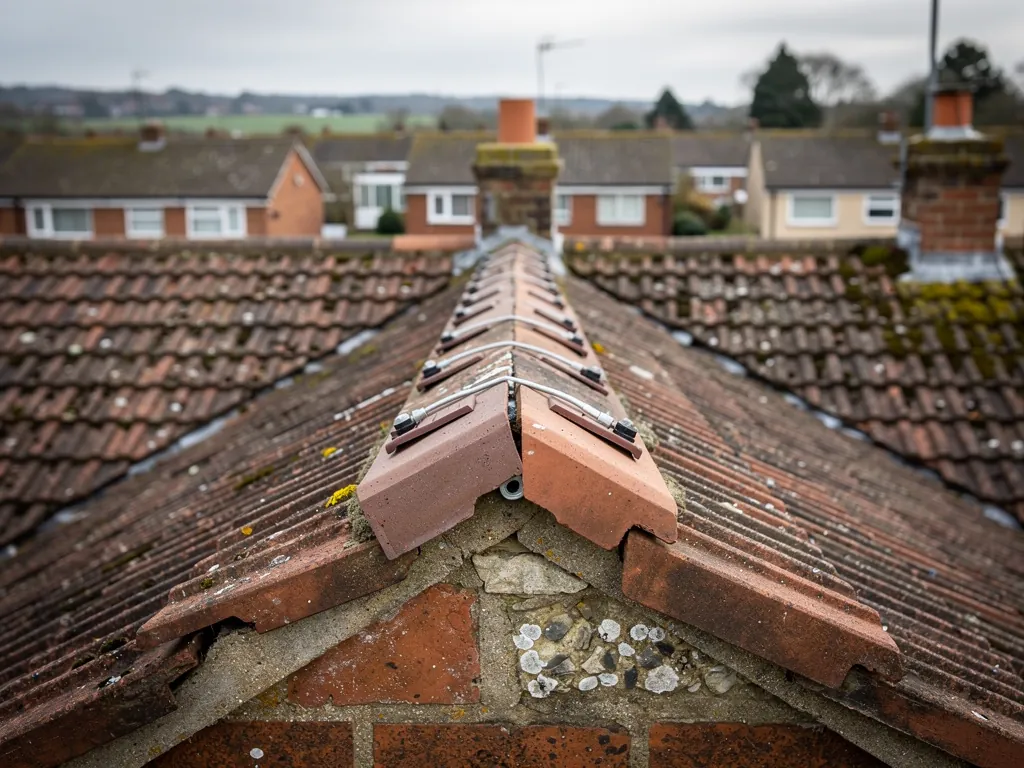
Along the very top of a pitched roof runs the ridge. A hip is a sloping outer corner, and the verge is the tiled edge above a gable wall. Wind gets under all three first. Since BS 5534 was revised in 2014, mortar is no longer the only thing holding the capping on; mechanical fixings share the load. An older ridge sitting only on a bed of mortar is something we find often. Refixing it with clips or screws, plus a fresh bed, is a modest job when caught early and a far bigger one once a gale has stripped the capping. The same goes for the gable edge, where a verge that has lost its mortar lets rain run straight into the wall below. Our roof repairs page covers the smaller jobs of this kind.
3.2 Scaffold licences, bats and nesting birds
Many Emsworth roofs need scaffold. If it stands on or across the road or pavement, the highway authority must grant a licence, and for Emsworth that is Hampshire County Council. Its page asks for ten clear working days between application and start date, and lists £211.90 for the first two weeks. Hampshire County Council states that scaffold companies apply for their customers, so the wait goes into the plan on day one. Bats and nesting birds are both protected by law, so if either turns up under the tiles, we pause and rework the plan. On any job, the survey comes first and a single total price follows in writing.
The work we take on in Emsworth
Frequently asked questions
Questions from North Street to the quay
Can a Havant Road cottage that lost its slate go back to slate?
Often it can, but not by a simple swap. Slate and concrete tile differ in weight, so the structure is checked first, and Havant Borough Council's building control team can say whether an application is needed. Because the council's conservation area appraisal names the row, asking the planning team is sensible too. We take pictures of the existing roof and send one written total.
Does Lumley Mill's Grade II* listing reach the roofs next door?
The listing protects the mill itself, not every roof beside it. Neighbouring houses answer to the conservation area instead, and any that are separately listed have their own entries. Because each protection has its own boundary, we pull up the list entry and the council's map for your address before recommending anything other than a plain repair.
Is there an Article 4 direction removing roof rights in Emsworth?
Havant Borough Council's Article 4 page lists directions for the Langstone conservation area, for Homewell in Havant and for three land-use matters on Hayling Island. None covers Emsworth. Listed buildings still need consent for alterations that touch their character, and rules can change, so put the question to Havant Borough Council's planners before you alter a roof.
Do roofs at the head of Chichester Harbour need different fixings from a house inland?
Fixing schedules are worked out per site, from location, height and wind exposure, so the answer comes from the survey. On an open harbour-side house we pay close attention to ridges, verges and the edge of the roof, since wind lifts those first. Mechanical fixings to BS 5534 are how we work wherever the roof stands.
Nearby areas
Get a quote
Tell us about your roof
Describe what's happening and we'll call you back.
Loading the enquiry form. You can also call 01243 252373.