
Roofers in Nutbourne, near Chichester
Flint, thatch and slate by the brook
Nutbourne's older roofs include hipped thatch and slate over flint and red brick, in a village whose core grew up where the A259 crosses the Ham Brook, close to Chichester Harbour.

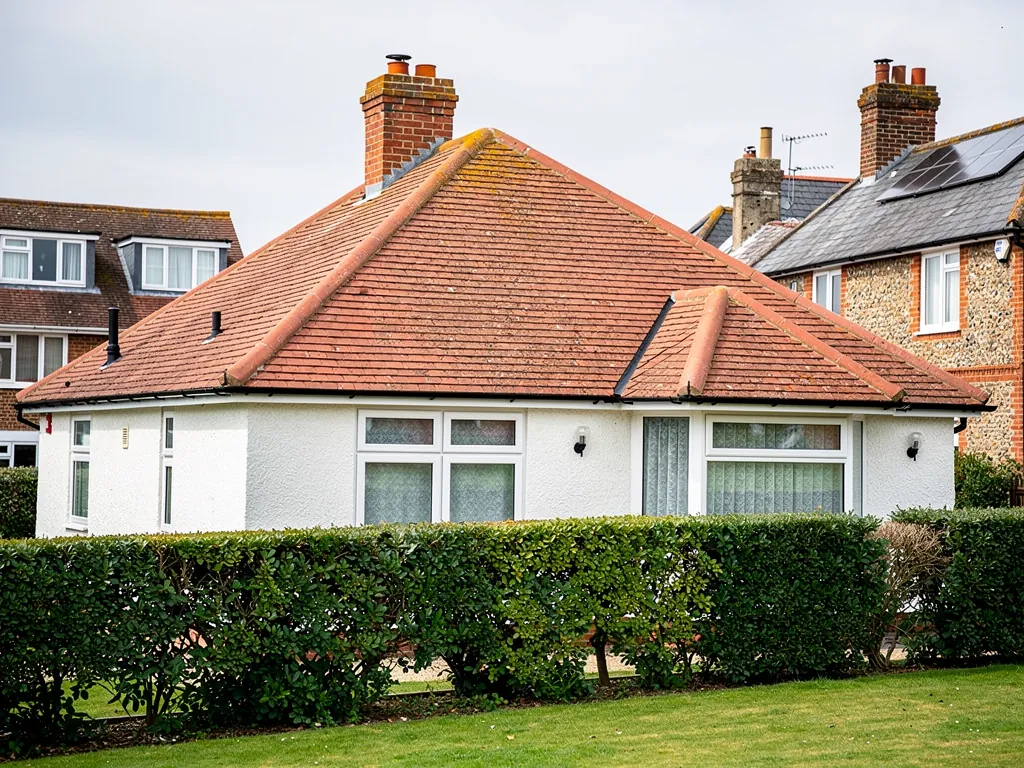
Nutbourne, near Chichester roofs
From Inlands Lane thatch to the Ham Brook crossing
-
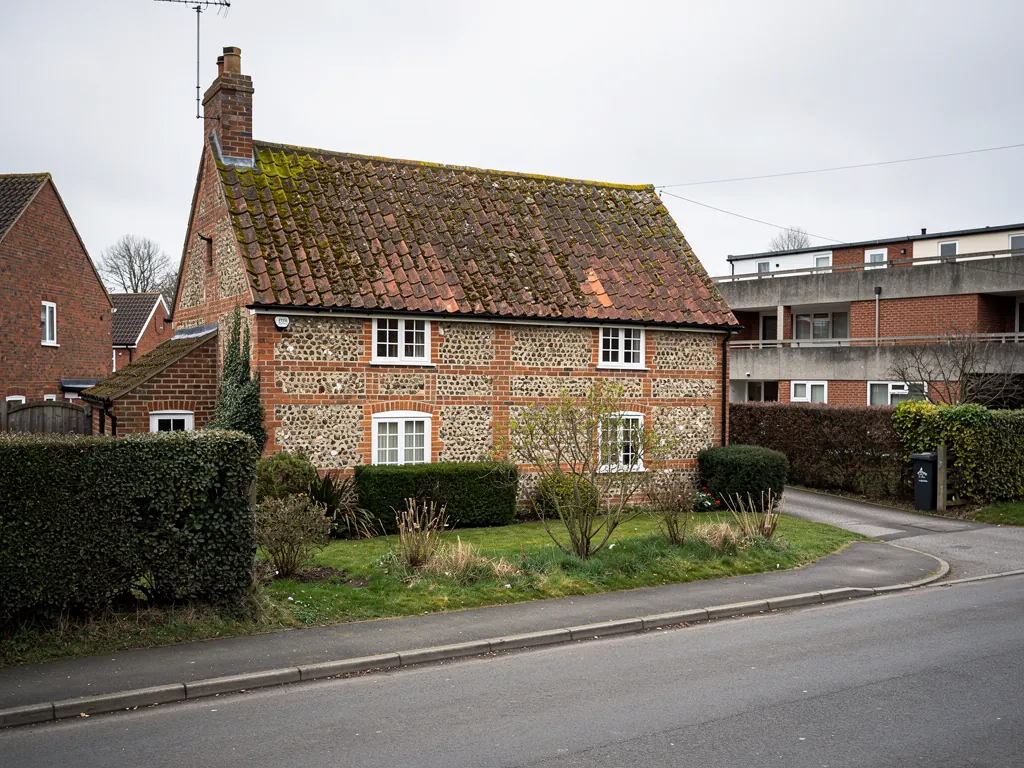
Flint and thatch on Inlands Lane
Thatchways, an 18th-century house faced in flint with red brick dressings, sits under a hipped thatched roof and is one of seven grade II entries in Nutbourne West. A hip is the sloping corner where two roof planes meet.
-
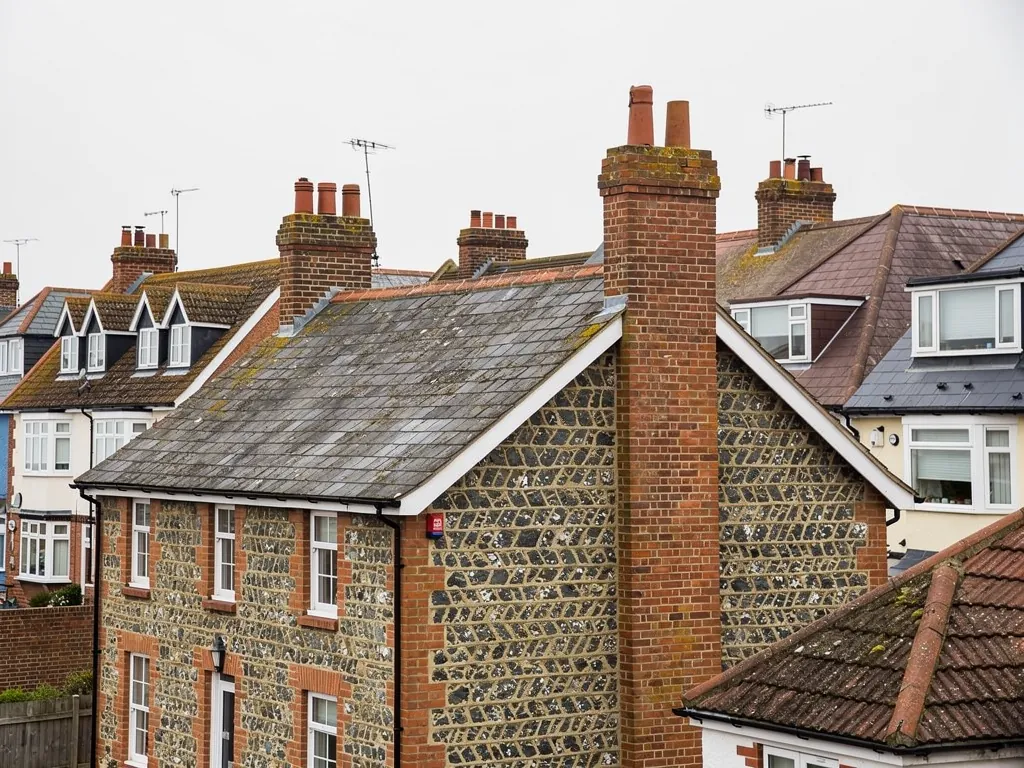
Slate where thatch once lay
Old Timbers, a 16th-century timber-framed pair of cottages, was formerly thatched and now wears slates. A roof frame that once carried thatch is worth a careful look before anyone strips or relays the covering.
-
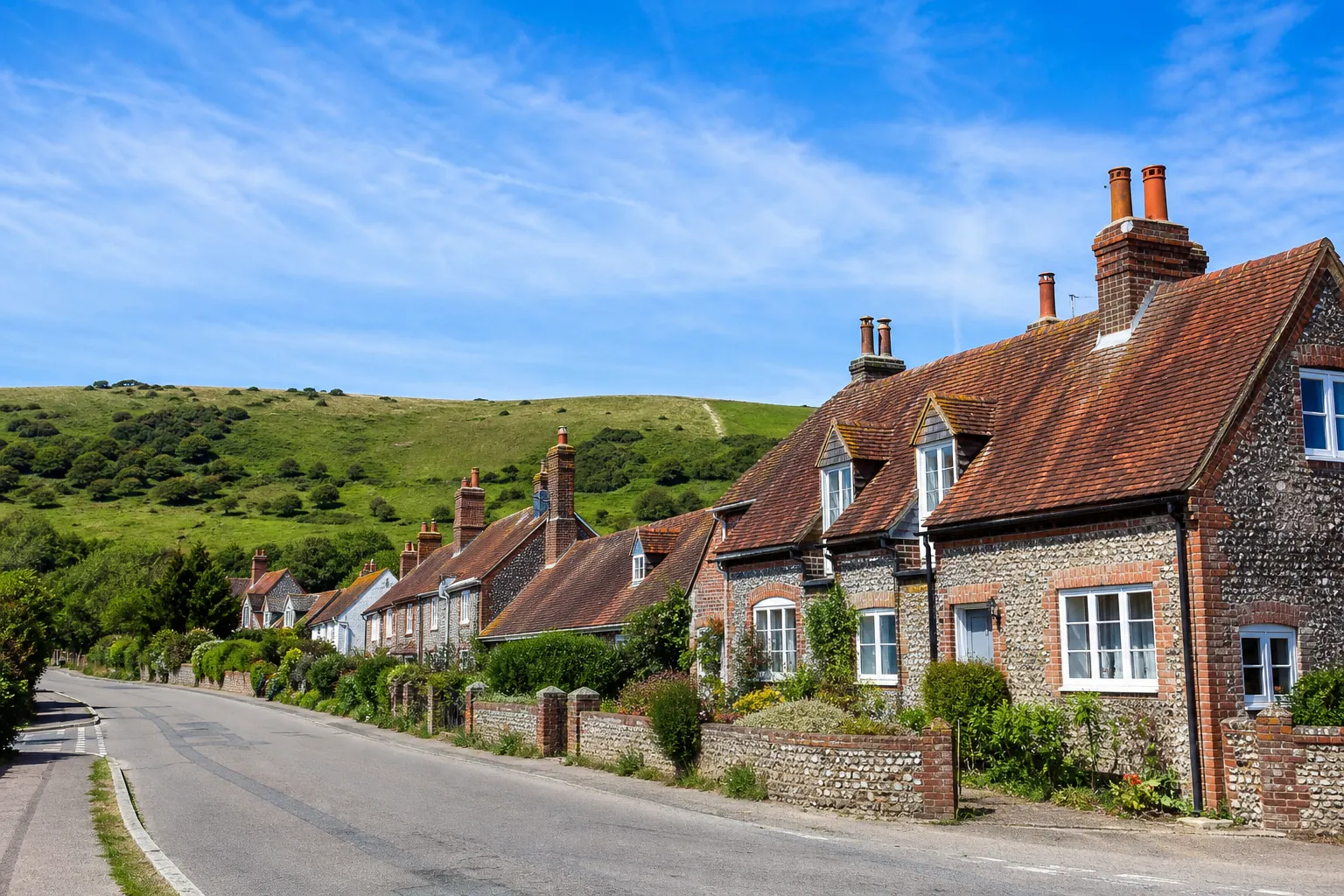
Cottages at the A259 crossing
The village core grew up where the A259 crosses the Ham Brook, and a chapel is recorded outside the manor gate in 1312. Seven centuries of building leave roofs of very different ages, each wanting its own kind of repair.
Map of Nutbourne, near Chichester, 11.8 road miles north-west of Bognor Regis, with the nearest towns we also cover.
Ham Brook, Inlands Lane and the marshes
- Council
- Chichester District Council
- County
- West Sussex County Council
- Conservation area
- No Nutbourne conservation area appears in Chichester District Council's appraisal list
- Listed landmark
- Thatchways, Inlands Lane, grade II
- Setting
- Where the Ham Brook enters Chichester Harbour, on the A259 coastal plain
- Distance
- 11.8 road miles north-west of Bognor Regis, about 21 minutes by car
Nutbourne notes
Thatch, slate and the brook's marshes
Three sides of Nutbourne, from the listed lanes in the west to the mudflats on the shore, and what each asks of a roofer.
Chapter 1: Thatchways and the seven Nutbourne West listings2928
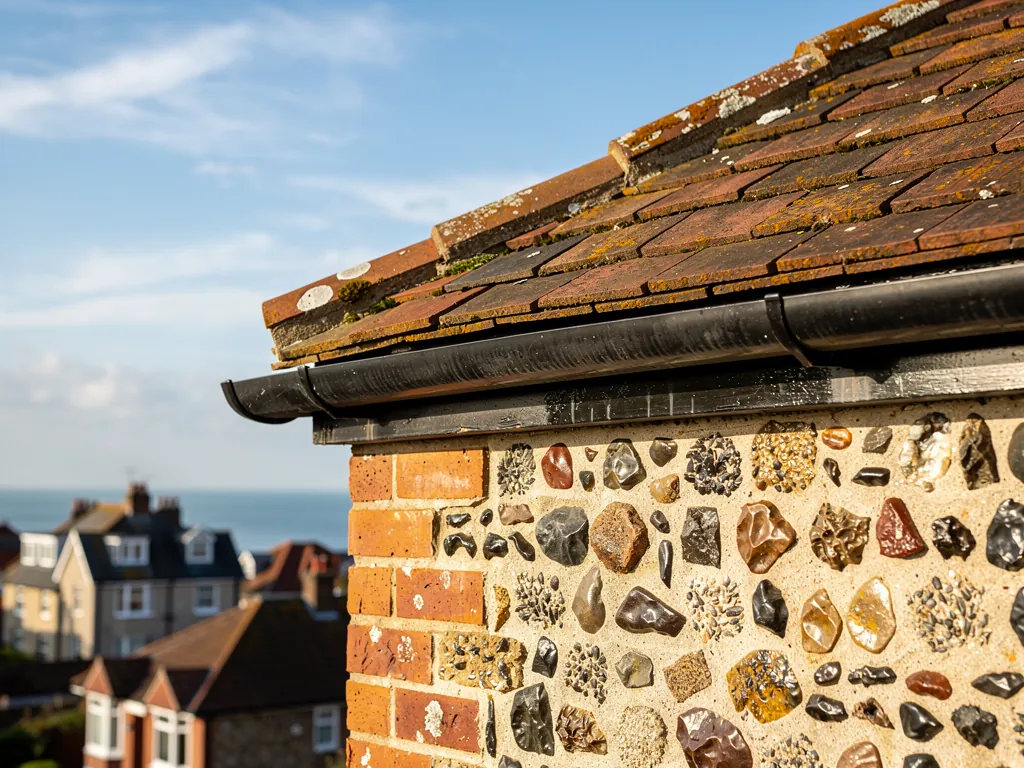
Sheet 01 / 03Nutbourne West is the western part of the village, and the character appraisal behind the Southbourne Parish Neighbourhood Plan (September 2022) is the best guide to how it was put together. It records seven grade II listed entries here. The palette it describes is short: flint with red brick dressings, coursed sandstone, thatch, and slate where the thatch has gone. On a roof that short list matters, because each material has to meet another somewhere. Thatch butts against a brick stack. A slate slope ends at a flint gable. A lead flashing, which is lead pushed into a groove in the masonry and folded down over the roof to throw rain clear of the joint, must be worked into rough flint courses and not a flat brick face. Every one of those junctions is shaped by hand to fit what is already standing, and a template never fits.
Before work on a listed Nutbourne roof
- Read the list entry
- Photograph every junction
- Match slate or clay tile
- Ask Chichester District Council
1.1 Reading a listed roof before anyone touches it
Thatchways in Inlands Lane is the clearest case: an 18th-century house faced in flint with red brick dressings, under a hipped thatched roof. Thatching is a trade apart, and what we bring to a house like that is the work around the thatch. That means chimney stacks, the lead where a stack or wall rises through the roof, the gutters, and any tiled or slated outbuilding in the garden. Because Thatchways is a listed house, any alteration touching its special character calls for listed building consent, so the first step is to read the list entry and then speak to Chichester District Council. Patching with the same material is a smaller question than changing the covering, and the council can tell you which side of that line your job sits on.
1.2 Slate over a frame built for thatch
Old Timbers is a 16th-century timber-framed pair of cottages whose roof was formerly thatched and is now covered with slates. A roof with that history earns a slow survey. We look at the rafters and the battens, the thin timber laths the slates hang from, for sag or rot. We check whether the slates are sound but sitting on tired nails, and we study the lead around the stacks. A single slipped slate can usually be held with a tingle, a little metal strap that holds the slate up from underneath and leaves its neighbours undisturbed. If the old nails are shot along an entire slope, the sounder repair is normally to lift the slates, fit new fixings and lay them again, keeping every good slate. Our pitched roofing page explains how slopes are stripped and relaid, and our lead roofing and leadwork page covers flashings and stacks. You see photographs of your own roof before you see a price.
Chapter 2: Mudflats, mill and the harbour edge2135
Sheet 02 / 03Nutbourne sits where the Ham Brook, a chalk stream, runs south across the coastal plain into Chichester Harbour. The shore here is open ground. The Nutbourne Marshes, 380 hectares of tidal mudflats, were designated a Local Nature Reserve in 1975, and a tidal mill on the foreshore is documented as far back as 1086. What it means for the roof is exposure. Any house near that shoreline looks out over open water and mud instead of a wall of other roofs, so gales and driving rain reach it with little shelter. The edges of the roof, the verges, the ridge and the roofline are where that weather lands first, and they are the parts we study hardest at survey.
Roofline outcomes near the shore
- Clear outBlocked gutters and outlets cleaned before anything is replaced.
- RefixLoose boards and sagging gutter runs fixed back square and level.
- RenewRotten timber and cracked plastic replaced where refixing will not hold.
2.1 Gutters, fascias and soffits near the shore
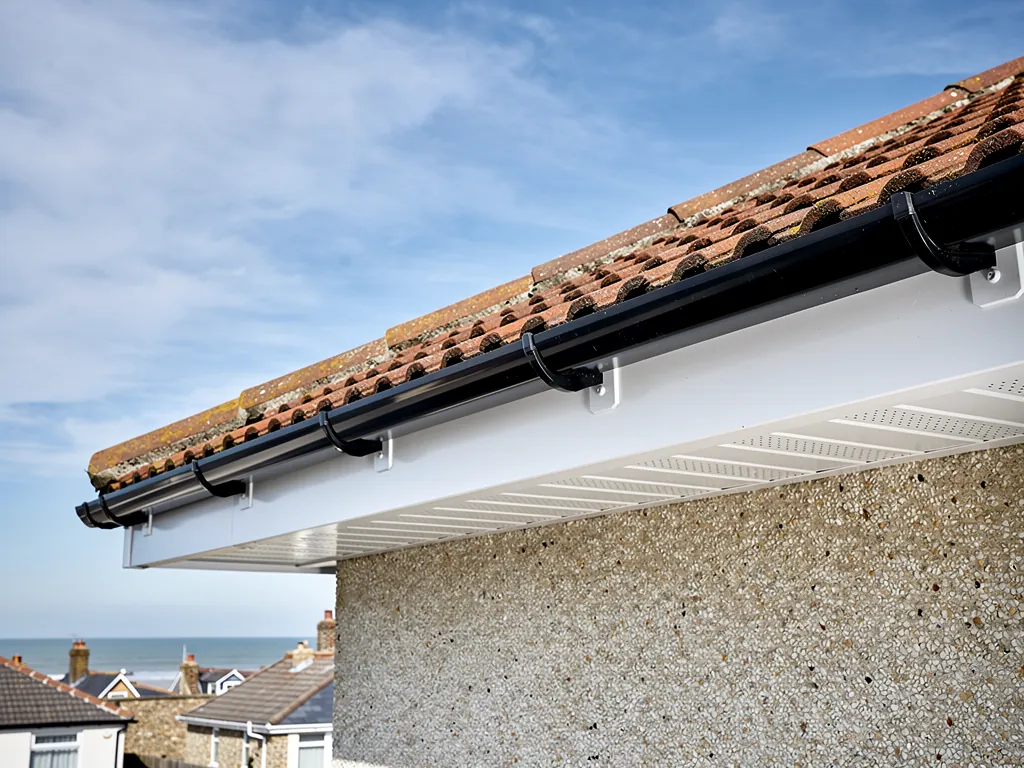
The roofline shows the strain early. The fascia is the face board that the gutter is screwed to, and the soffit is the panel tucked beneath the overhang to close the gap back to the wall. When a gutter leaks at a joint or an outlet clogs, water runs behind the gutter, down the fascia and into the soffit, and the first sign indoors can be a damp stain on a bedroom ceiling a long way from the fault. We work along the roof edge checking falls, brackets, joints and the timber behind them before suggesting a replacement. Often clearing the run and refixing it is all it needs, and nothing has to be bought. Where boards have rotted through, new fascia, soffit and guttering are fitted square and level, with the edge trimmed neatly so the house looks right from the lane. Our guttering, soffits and fascias page sets out the choices.
2.2 Birds and bats in the eaves
A shore like this draws plenty of birds, and eaves, soffits and roof voids are places they nest and roost. Bats and nesting birds are legally protected, so if we spot signs of either under the tiles or behind a board, that section of work waits while we agree timing with you. A short delay costs far less than a disturbed nest or a roost.
2.3 Flat roofs on the garage and the porch
Where an older cottage has gained a flat-topped garage, porch or rear extension, we read that roof on its own terms, apart from the pitched roofs, since a flat covering lets go at its edges and seams before the middle gives up. An hour on the roof, with photographs of each corner and upstand, tells us whether a patch will hold.
Chapter 3: Two parishes, one council for roofs2135
Sheet 03 / 03Nutbourne is split between two parishes, Southbourne and Chidham and Hambrook, but for roofs the question of who decides is simpler than the boundary. Nutbourne sits beyond the South Downs National Park boundary, which makes Chichester District Council the planning authority and also the body for building control. The council's appraisal list shows no Nutbourne conservation area, which leaves the listed-building question as the main consent point on the older houses. Anything else is a matter of asking the planning team before the work starts.
From first call to written quote
- 1Ring or messageTell us the lane, the roof type and any stain or slipped tile you have spotted.
- 2SurveyWe climb up and photograph every fault on your roof.
- 3VerdictYou hear plainly whether the roof wants repairing, patching or replacing.
- 4Written quoteOne total price in writing, with scaffolding and VAT stated.
3.1 What a re-roof triggers and what it doesn't
Putting back the same kind of covering seldom needs planning permission, with the listed-building caveat above. Building Regulations are a separate test. On the Planning Portal's test, a job normally stays outside building control when less than 25 per cent of the total building envelope and less than 50 per cent of the roof is touched. Approval is needed, the Planning Portal adds, where a new covering weighs 15 per cent or more above the old. A change between very different coverings, such as thatch to slate, alters the load on the frame, and the Planning Portal advises a structural engineer's or surveyor's check before such work starts. We explain which route your job takes and look after the notification when the work is notifiable.
3.2 Scaffold on a village road
Scaffolding that blocks part of a road or pavement is licensed under section 169 of the Highways Act, and West Sussex County Council issues the licence for Nutbourne. Ask your roofer who makes the application. The council asks for at least 10 working days from application until the poles go up, and its fee for one month on the highway is £266. Because of that wait, a job on a narrow lane is planned around the licence and no start date is promised before it is granted. Our written quote follows once the survey is finished, and whichever quote you hold, ask whether scaffolding and VAT sit inside the price.
3.3 Waste and a clear site at the end
Old slates, battens and rotten fascia boards are waste, and we take it away when the job is done. The gate, the drive and the garden are left clear. On a narrow lane that matters as much as the roof does, because a skip, a stack of slates or a van left across a gateway is what neighbours remember. We tell you before the first day where the skip will stand, which slates are being kept for reuse, and when the lead and the last of the trims are due to be finished.
Roofing for Nutbourne homes
Frequently asked questions
Questions from Inlands Lane to the Ham Brook shore
Can a slate roof laid where thatch once lay be repaired without stripping it?
Frequently, if the slates themselves are sound. Individual cracked slates can be exchanged and clipped back with tingles, and worn lead around a chimney can be renewed with the rest of the slope left alone. First we examine the rafters and battens, because a frame that once carried thatch may be spaced for a different covering. Where fixings have failed across the slope, relaying the good slates on new fixings is the better answer.
Would mending the roof of a listed flint house such as Thatchways need consent?
Work that would alter a listed building's character needs listed building consent, so the answer turns on the job. Replacing a covering with a different material is a bigger step than patching with the same one. Before we price anything bigger than a simple repair we read the list entry, and we suggest you also speak to Chichester District Council's planning team before work begins.
Do roofs and gutters near the Nutbourne Marshes need extra care?
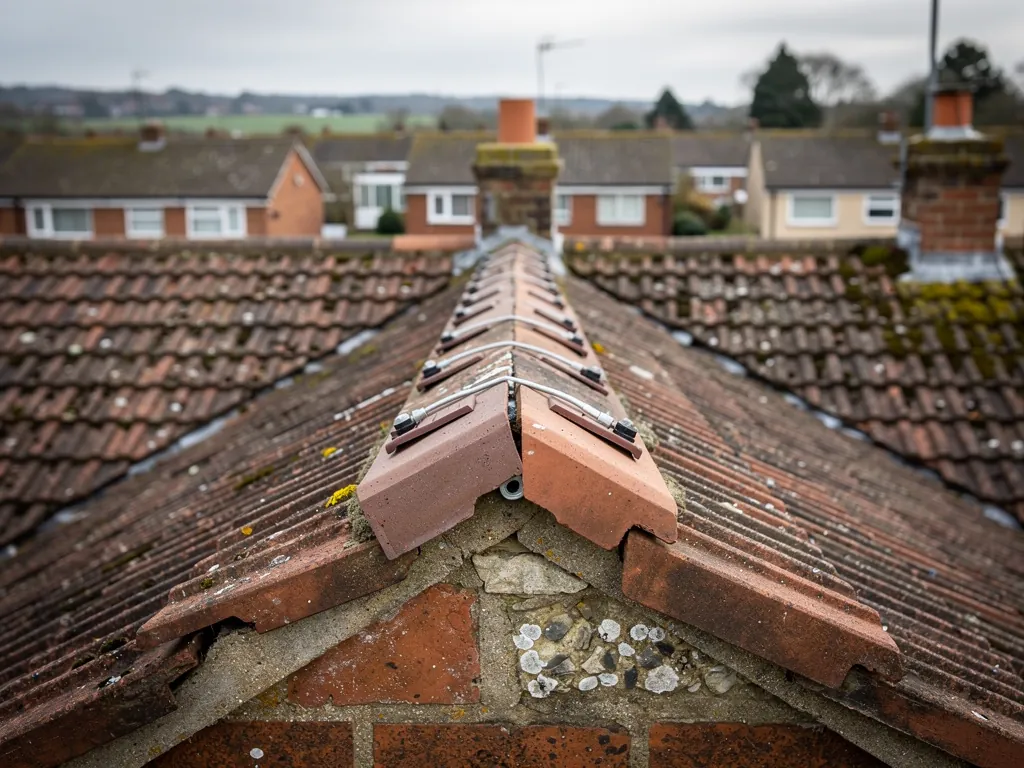
Anything close to the shore meets gales and driving rain with little shelter, so we look hard at roof edges, verges and the roofline. Blocked or leaking gutters send water into fascias and soffits, so those get checked first. Ridges and verges are mechanically fixed to BS 5534, lead is dressed properly and edge trims are finished neatly here, as on every job.
What should I check on a flat roof built onto an old Nutbourne cottage?
Look at the join where the flat covering meets the old wall, because that junction takes the most movement. Water must run off: BS 6229:2025 sets a minimum finished fall of 1:80, and roofers design steeper so water leaves the finished surface. Standing puddles, blisters and cracks at the upstand tell us whether a repair will hold or a new covering is the sounder job, and photographs of each one go with the quote.
Nearby areas
Get a quote
Tell us about your roof
Describe what's happening and we'll call you back.
Loading the enquiry form. You can also call 01243 252373.