
Roofers in Westbourne
Flint, brick and timber frames by the Ems
Westbourne's older houses are flint and brick with timber framing, and the county history of 1953 noted many thatched roofs, all set where the River Ems meets the Hampshire border.
Westbourne roofs
From Norman House to the River Ems
-
Flint, brick and timber frames
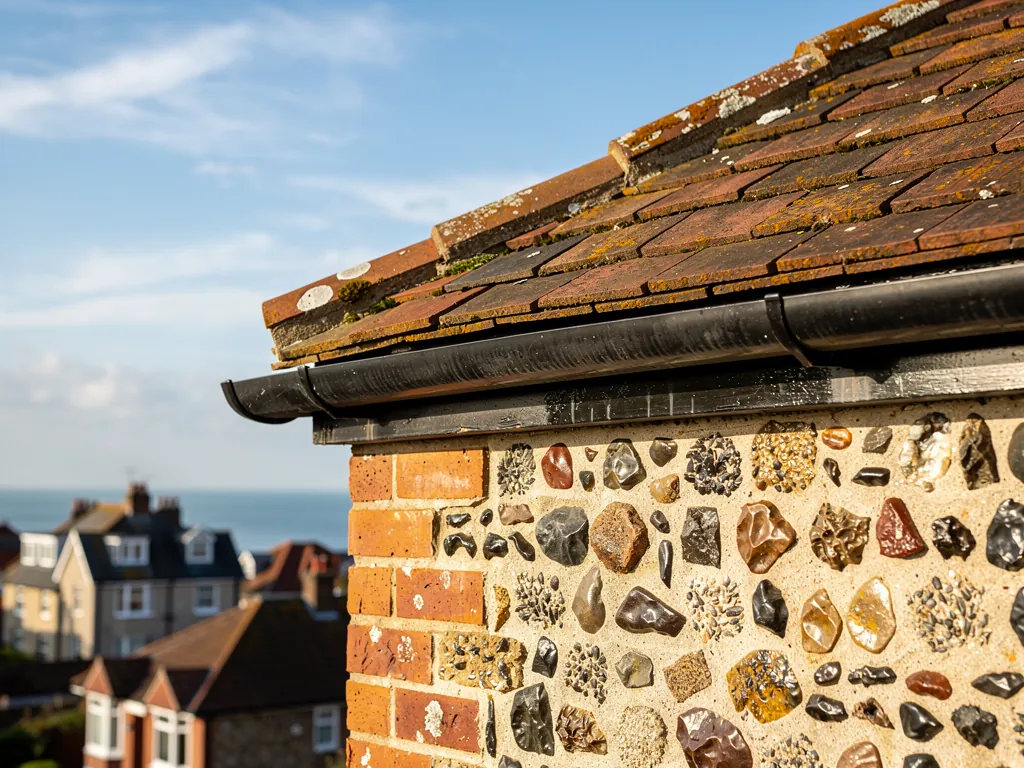
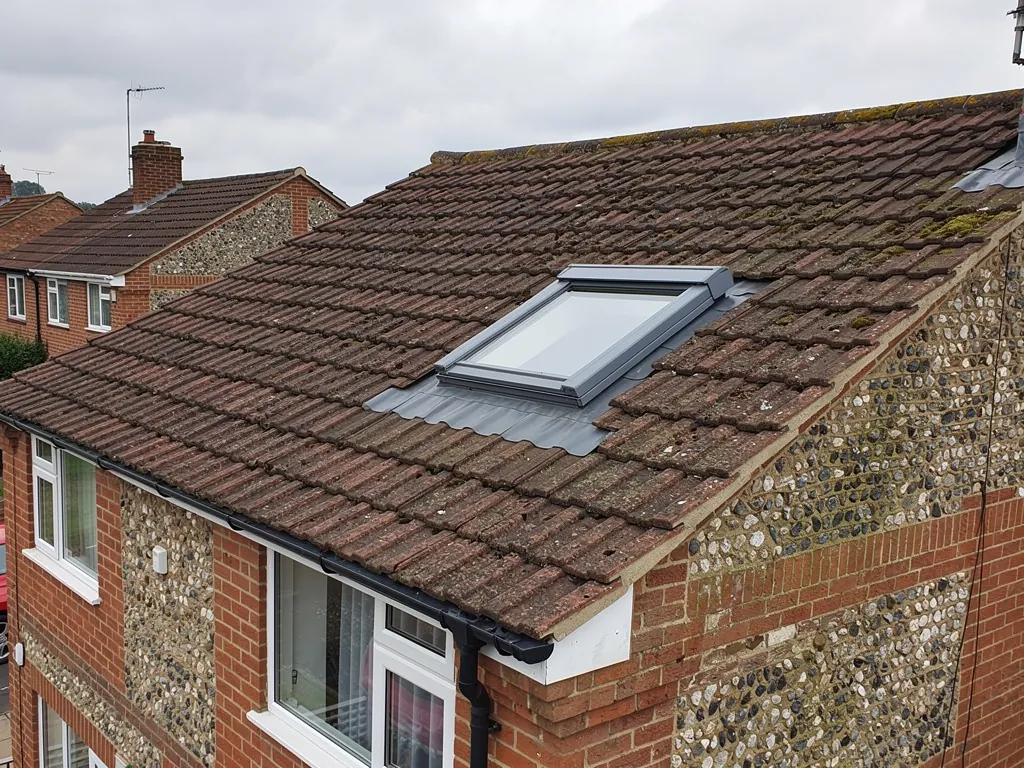
The county history describes Westbourne's houses as flint and brick, with timber framing and flint infill. A roof on a frame like that sits on old timbers, so the wall plate and the rafter feet get checked early.
-
A seventeenth-century core
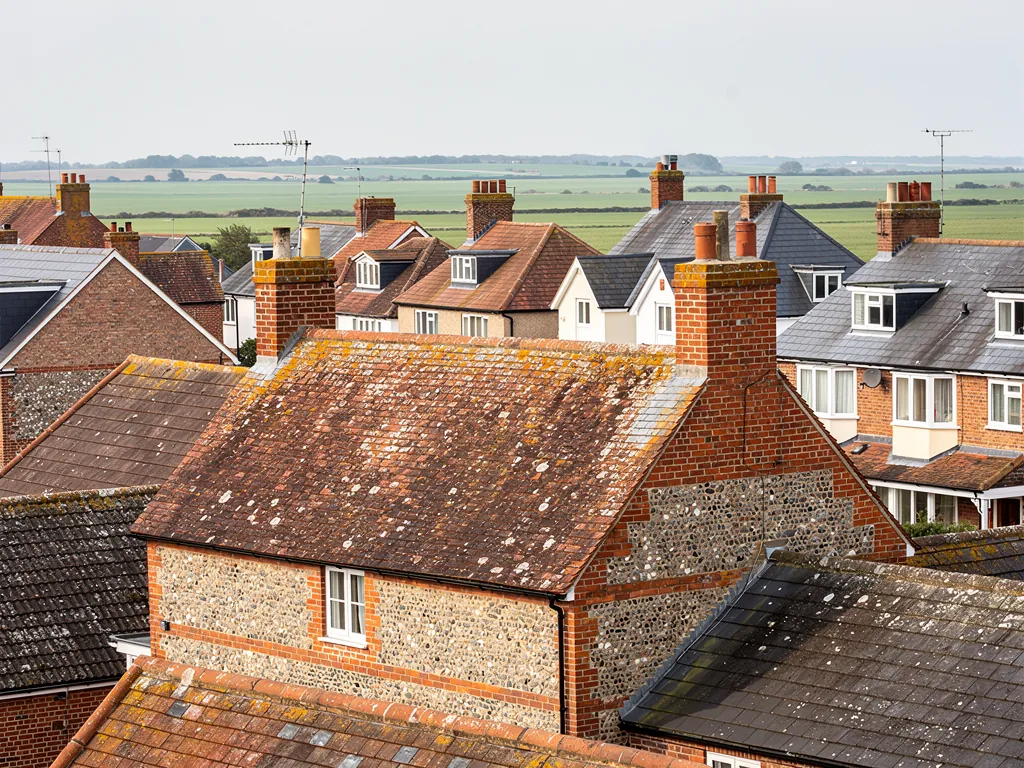
Several 17th-century houses survive in the village, and Norman House has a beam dated 1639. Over a frame that old, a slipped tile is mended in place, and nobody strips the whole slope on the first sign of trouble.
-
A church in flint rubble
St John the Baptist church goes back to the 13th century, built of rubble flint with dressed stone trim, and its spire is of 1770. Lead and rainwater goods on a building like that depend on regular clearing and a close look.
Map of Westbourne, 14.4 road miles north-west of Bognor Regis, with the nearest towns we also cover.
Westbourne on the county line
- Council
- Chichester District Council
- County
- West Sussex County Council
- Conservation area
- Westbourne Conservation Area, with a 2022 character appraisal from Chichester District Council
- Parish church
- Church of England, St John the Baptist, 13th century
- Setting
- River Ems to the west, tidal creeks to the south
- Distance
- 14.4 road miles north-west of Bognor Regis, about 27 minutes by car
Westbourne notes
Frames, flint and the mill streams
Old timber frames, damp ground beside the water and a county boundary a short walk away each change how a Westbourne roof job is planned.
Chapter 1: Timber frames, flint infill and thatched neighbours3111
Sheet 01 / 03When the Victoria County History surveyed Westbourne in the early 1950s, it found houses of flint and brick, timber-framed in places with flint filling the gaps, and many roofed in thatch. That description is seventy years old, and roofs get replaced, so we never assume what a particular house carries. Only a look inside the roof space and at the slopes settles it. What the account does tell you is the kind of building underneath: timber frames and flint walls. Where a frame is old and its walls were laid in lime, a roof put on top has to suit that, or the frame pays for it, which is why a quote for an old Westbourne house starts with the timbers and not the tiles. The same history records a weekly market and an annual fair in 1302, though the market had died out by the late 18th century. With that much history, the village has roofs of every age, and you cannot assume that two neighbours need the same repair.
Two roofs on one lane
Tiled cottage
Repaired by refixing tiles, renewing lead and checking the frame beneath.
Thatched neighbour
Left to a thatcher, while we deal with the stack, lead and gutters beside it.
1.1 Old frames, read from the roof space
With a timber-framed cottage we begin by climbing into the roof space to look. We check the wall plate (the horizontal beam along the top of the wall, which the rafters bear on), the rafter feet where a blocked gutter may have soaked them, and any patches of newer softwood that show where someone has repaired before. If the timbers are sound, the covering can be repaired or relaid and the frame left alone. If a rafter foot has gone soft, we show you the photograph and explain what splicing in new timber involves before any tile comes off. Our aim is a repair sized to the fault, never a bigger job than the roof needs.
1.2 Thatch next door, and what is ours to touch
Thatch is a craft with its own tradesmen, and we leave it to them. Our work beside a thatched cottage is whatever touches it: the lead flashing at the point a tiled extension meets a thatched wall, the chimney stack, a shared gutter, the slope of the house on the other side of a boundary. A chimney repair on an old stack often means repointing in a lime-compatible mortar and renewing the lead around the base, and both are done from a scaffold or ladder platform that keeps clear of the thatch. When a party wall is involved, the neighbour is told in good time. Scaffold boards and ladders are padded where they touch old render or flint, and photographs are taken before and after, giving you a record of the roof as it was handed back. Where the survey shows a roof is sound apart from the chimney or the lead, that is what the written quote covers, and nothing more.
Chapter 2: Mill streams, creeks and roofs under trees2562
Sheet 02 / 03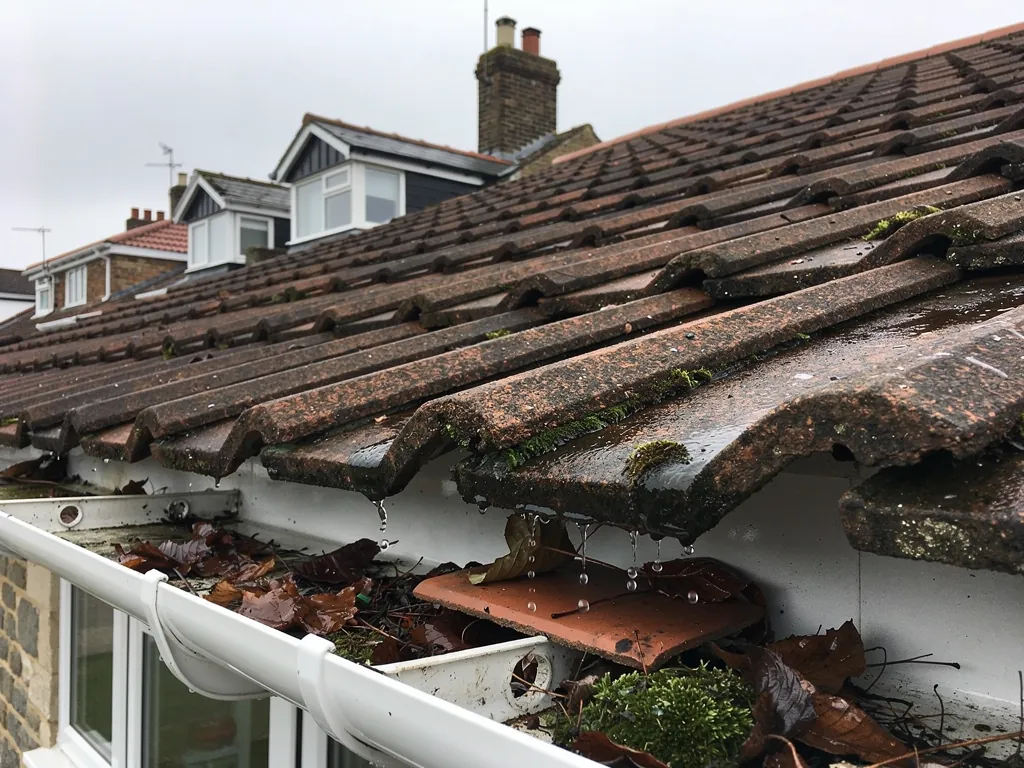
Water made Westbourne. The River Ems forms the parish's western boundary, a tidal creek called Great Deep separates it from Thorney Island to the south, and four water-mills were recorded in the village in 1086. In 1802 Lumley Mill was bought to run a large bakery supplying the Navy. Where a house sits near that water among trees, hedges and damp ground, what happens to its roof is simple to describe: shade keeps slopes wet, wet slopes grow moss, and leaves find their way into every gutter. Overhanging branches also scrape tiles and drop twigs into valleys, and trimming them is the owner's decision, which we raise at the survey if we see a problem. A roost or an active nest changes the order of work, because both are protected.
A damp-ground roof survey
- Moss depth on the north slopes
- Valleys clear of leaves
- Gutter brackets and falls
- Soft fascias and rafter ends
2.1 Moss, leaf fall and what to do about them
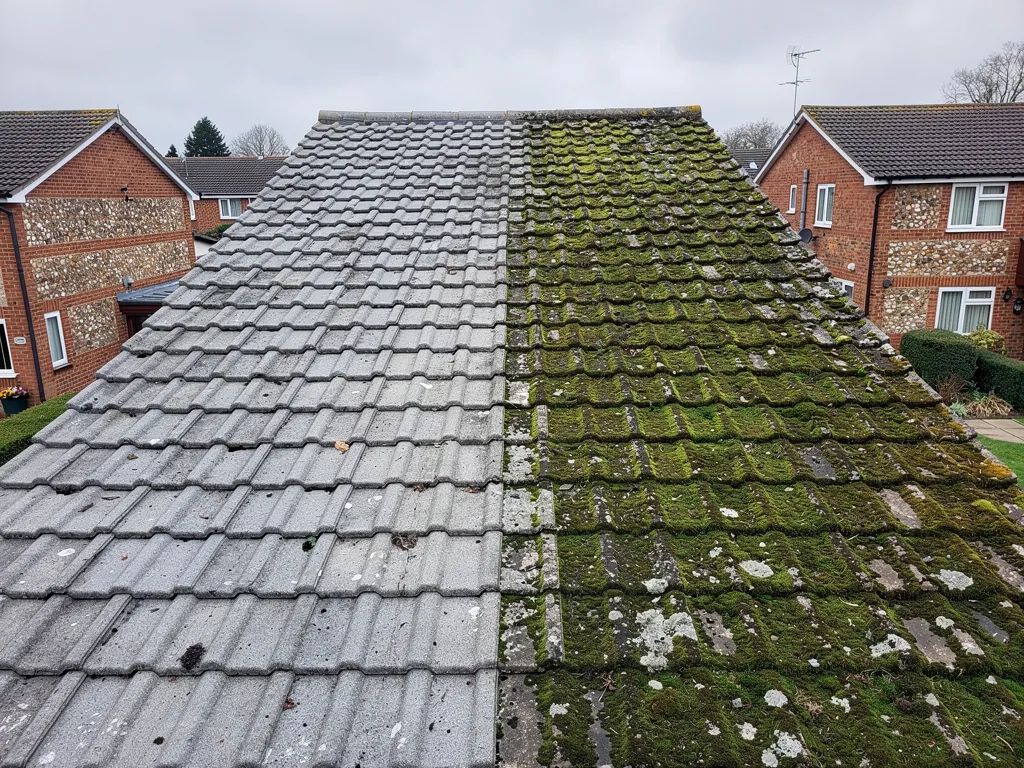
Moss on a tiled roof is not always a reason to replace it. A thin growth can be brushed or washed off, the tiles checked, and the roof left to carry on. Thick moss that has lifted tiles, blocked the valleys (the channels where two slopes meet) or kept the battens wet for years tells a different story, and we show you the photographs so you can see which one you have. Hard pressure washing is not the answer for every roof, because it can drive water under the laps and strip the surface of old clay, so the method is chosen after the survey, and a roof with cracked or flaking tiles may be better left alone than washed. Our roof cleaning and moss removal page explains the options.
2.2 Gutters that keep up with the trees
When a gutter spills over, the fascia gets wet first and then the rafter ends behind it, which is how an old frame ends up with rot at the eaves. Brett Martin's guidance puts gutter brackets no more than 900mm apart and sets the fall at about 1mm for every 600mm, and a sagging run is often a bracket problem, not a gutter problem. Plastic runs that have bent can sometimes be refitted rather than replaced. Where the fascia boards have gone soft, they are renewed first, and then the gutter goes back on a straight board. Leaf guards help under trees, but a gutter still needs looking at, so ask when it was last cleared. Our guttering, soffits and fascias page sets out the options.
Chapter 3: The conservation area, the church and the border2928
Sheet 03 / 03Westbourne has its own conservation area, and Chichester District Council published a character appraisal for it in 2022. Westbourne sits beyond the boundary of the South Downs National Park, so the same district council deals with planning applications and with building control. Most roof work here is routine and needs nothing more than a sensible quote. That said, a village with a 13th-century church, itself listed Grade I, and houses from the 1600s has listed buildings in it, and a few minutes with the list entry saves a lot of grief later. The questions below matter when a house is listed, when the material is changing or when the job is big enough to bring in the Building Regulations.
Three ways a Westbourne roof job can go
- Mend itLoose tiles and tired flashings put right while the frame and covering stay.
- Relay itGood tiles lifted and stacked, battens and underlay renewed, tiles laid again.
- Check firstListed houses and new materials go to the council before any scaffold.
3.1 Planning, building control and the church
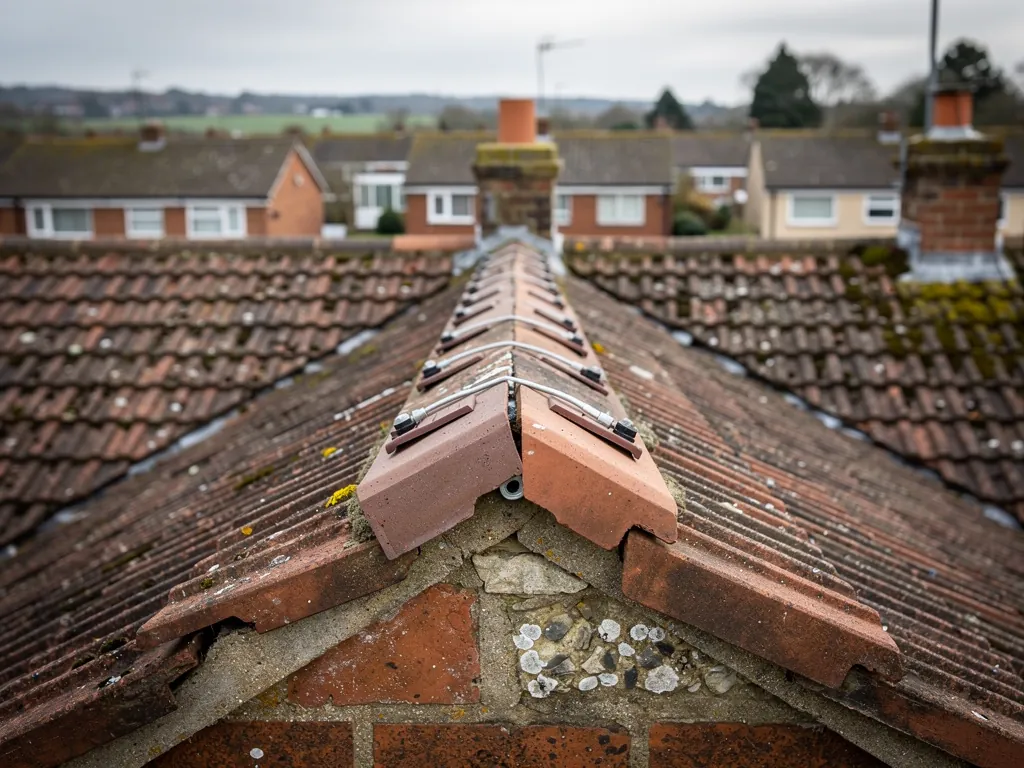
On re-roofing, the Planning Portal says building control normally needs no application where less than 25 per cent of the total building envelope and less than 50 per cent of the roof is affected. Beyond either limit, or with a covering that is heavier, you need the council's building control team or a registered building control approver (the private route, regulated since April 2024), and we explain which applies before work starts. Approved Document L also asks for the roof's insulation to be upgraded where more than 50 per cent of its surface is renovated. Planning permission is not normally needed for a like-for-like covering, with caveats for listed buildings and for any Article 4 direction, so confirm with Chichester District Council's planning team rather than trusting a rule of thumb. St John the Baptist is an Anglican parish church, and listed works on a church in use go through the faculty route instead of the council's listed building consent.
3.2 When the job is over the county line
Westbourne sits close to Hampshire, and the highway authority changes at the border. On the West Sussex side the licence is the county council's to grant, and it wants at least 10 working days' notice and charges £266 for a one-month licence. Over the county boundary, Hampshire County Council has its own terms: a ten clear working day lead time before the start, £211.90 for the opening fortnight, and no extensions. Neither fee is ours, and both depend on the scaffold standing on or over the road. Thinking of a roof window inside the conservation area? Our skylight planning permission guide comes first. For a plain repair-or-replace opinion, we look over the roof, take pictures of each fault and write the verdict down.
A roofer for Westbourne
Frequently asked questions
Questions from Westbourne's lanes and creeks
Can the tiles next to a thatched Westbourne cottage be mended without disturbing the thatch?
Usually, yes. Most of the work is at the junction: renewing the lead flashing, repointing the stack, refixing tiles on the other side of the boundary. We work from a platform that stays clear of the thatch, and we photograph the junction before and after. If a repair would need the thatch lifted, we stop and tell you that is for a thatcher.
Will moss from the shade by the Ems mean my roof needs replacing?
Not on moss alone. A thin growth can usually be removed and the tiles left to carry on. We look for lifted tiles, blocked valleys, cracked tiles and battens that have stayed wet, and we show the photographs. If the roof is sound underneath, cleaning and a gutter clear-out cost far less than a new covering.
Is Westbourne inside the National Park, and who decides on roof planning?
Westbourne lies outside the South Downs National Park, so planning and building control both sit with Chichester District Council. The village has a conservation area, which matters for listed buildings and any change of material. A plain like-for-like repair rarely needs an application, but ask the council before you alter how the roof looks.
Does scaffolding cost more if my Westbourne house is near the Hampshire border?
What you pay turns on the highway authority for the road in question, and a fee arises only where the scaffold occupies or overhangs the road. In West Sussex the licence is £266 for a month; in Hampshire it is £211.90 for the first two weeks. Hampshire County Council expects the scaffolding contractor to submit the application for each customer. Ask each firm whether VAT and the scaffolding are in its price.
Nearby areas
Get a quote
Tell us about your roof
Describe what's happening and we'll call you back.
Loading the enquiry form. You can also call 01243 252373.