
Roofers in Warblington
Church, castle site and harbour shore
Warblington's roofs belong to a small shoreline village: a Grade I church with a pre-Conquest tower, the castle gateway, a crossroads on the old Chichester road, and the harbour edge just beyond.

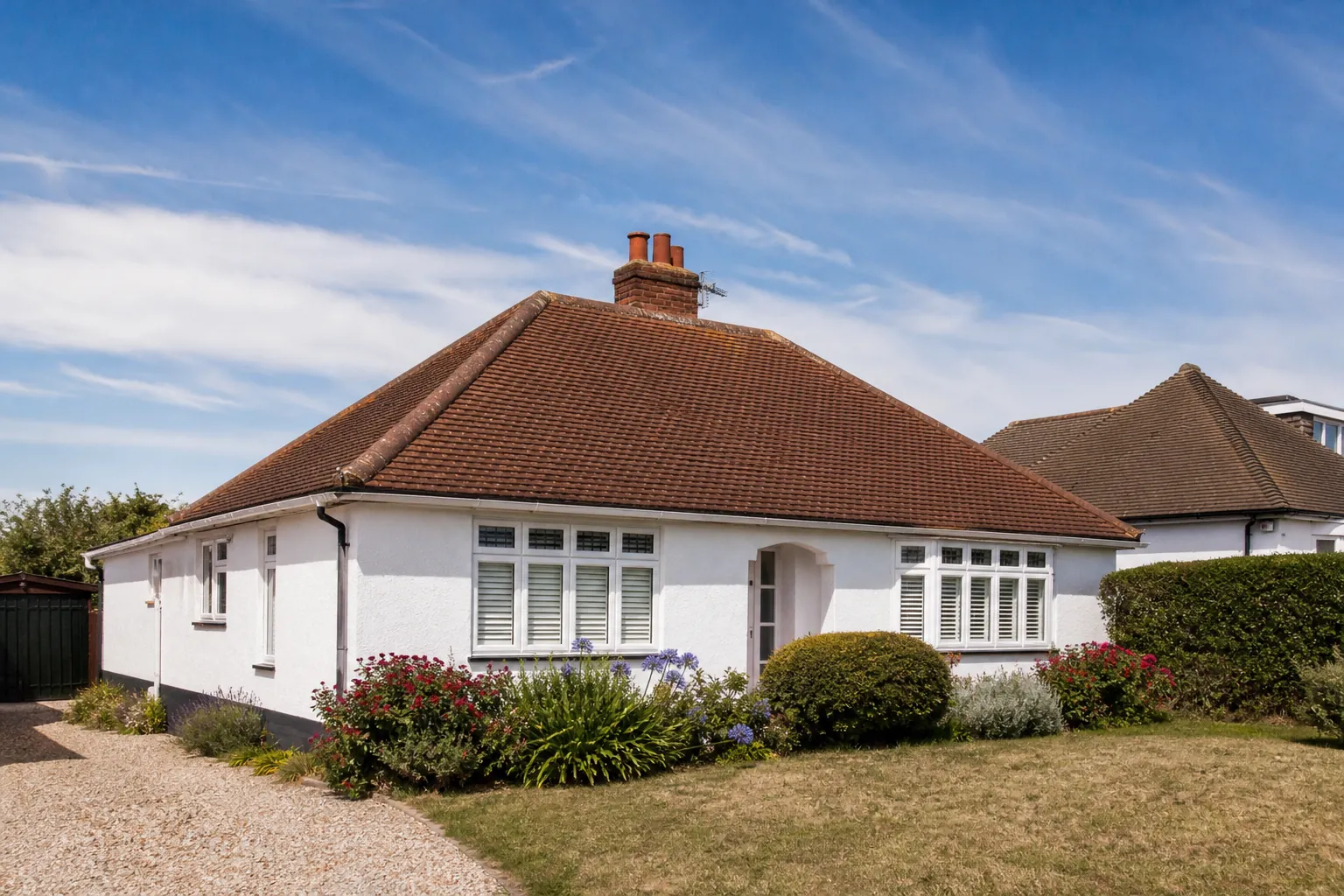
Warblington roofs
Church, castle gateway and crossroads on the harbour shore
-
A Grade I church with an early tower
Part of the tower of St Thomas of Canterbury church is of pre-Conquest date, and the south arcade has Purbeck marble detail. The church is listed Grade I and, being in Church of England use, its roof work follows the faculty route, the Church's own approval system.
-
The castle gateway and its courtyard house
Only a tall 16th-century gateway stands today. Havant's appraisal says Margaret Pole, Countess of Salisbury, had a large courtyard house built here between 1514 and 1526, and the castle is listed Grade II*.
-
A crossroads hamlet by the shore
The county history describes a few houses clustered about a crossroads on the Southampton to Chichester road, with a lane running south to the church, on the shore of Chichester Harbour between Havant and Emsworth.
Map of Warblington, 16 road miles west of Bognor Regis, with the nearest towns we also cover.
Warblington's conservation area and harbour edge
- Council
- Havant Borough Council
- County
- Hampshire County Council
- Conservation area
- Warblington Conservation Area, centred on the church and the castle remains
- Article 4
- None: Havant's directions cover Langstone, Homewell and Hayling Island land uses, not Warblington
- Listed landmarks
- Warblington Castle, Grade II*; St Thomas a Becket church, Grade I
- Distance
- 16 road miles west of Bognor Regis, about 23 minutes by car
Warblington notes
Church, castle and creek on the harbour
Warblington's roof questions come from three directions: a Grade I church and its small listed huts, a castle site, and a shore with its own weather.
Chapter 1: St Thomas a Becket and the churchyard huts2562
Sheet 01 / 03At the end of the lane running south from the crossroads stands St Thomas a Becket, the parish church the county history calls St Thomas of Canterbury. It is listed Grade I, and its entry has been on the national list since 16 May 1952. Part of the tower is of pre-Conquest date, and the south arcade has Purbeck marble detail. Havant Borough Council's conservation area appraisal is built around the church and the castle remains. In the churchyard stand two Grade II gravewatcher's huts, small enough to pass for garden sheds, and as protected as any larger building. Whoever owns a roof here, big or small, starts by finding out what status it holds. The churchyard lies at the end of a lane, away from passing traffic, which helps when materials need to be carried in or a ladder has to stand near a boundary.
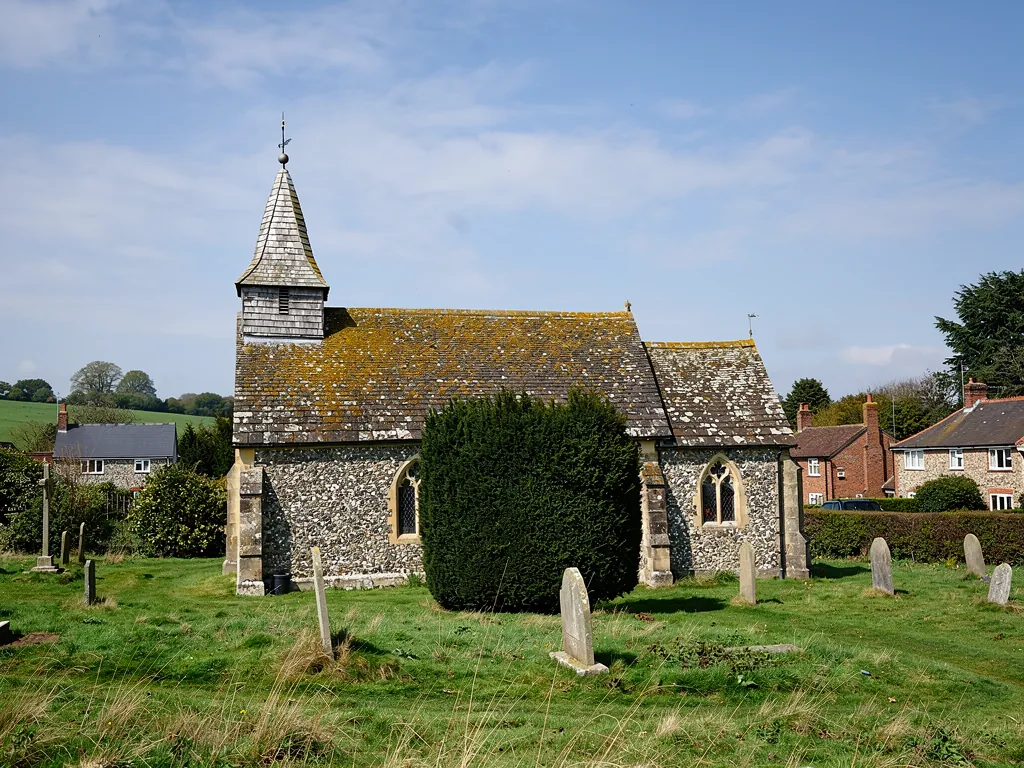
Before roof work near the churchyard
- Read the list entry
- Photograph all sides first
- Match the existing covering
- Confirm the consent route
1.1 Who approves the work on a church roof
St Thomas a Becket remains in Church of England use, which puts it outside listed building consent. Works go through the faculty jurisdiction instead, a church-law permission, and any development that affects the exterior still needs planning permission from the local authority. That consent route is the parochial church council's to follow, with its own professional advisers. Where we come in is on the houses and outbuildings around it, and we work out for each address whether the route is faculty, listed building consent or neither. Our guttering, soffits and fascias page covers a job that matters beside old masonry, because a gutter that keeps overflowing wets the masonry beneath it long before a stain appears indoors.
1.2 Small listed structures with small roofs
A listed hut with a roof the size of a double bed still needs its covering handled with care. Listing covers the whole structure, not just the grand parts. Works that would alter its character need listed building consent, and the safest route is a repair using matching material laid in the original pattern. We photograph the roof from every side, record the fixings and the lap of the covering before anything moves, and keep the pictures with the quote. If a tile or slate has to be replaced, we say what we propose to use and why it matches, and you or the owner can show that record to the council's conservation officer. Even the smallest repair to a listed structure is better done once and documented than done twice, and the photographs make a second visit from the council far less likely to be needed.
Chapter 2: The castle site and its Grade II* listing2501
Sheet 02 / 03Warblington Castle is conspicuous today for the ruins of a tall 16th-century gateway. Havant's appraisal records that Margaret Pole, Countess of Salisbury, had a large courtyard house built on the site between 1514 and 1526. The castle carries a Grade II* listing, dated 16 May 1952. None of that is a roof we will be asked to repair, and nobody should read a long history as a promise about any one slope, but the scale of the original house is a reminder of how the village began, and it shapes the conservation area that surrounds the ruins and the church. Houses inside that boundary have to be handled with some care for how they look from the lane, and a roofer working there should expect to be asked what the new covering will look like beside the old one.
Three answers for an older village roof
- RepairRefit loose coverings and renew a failed lead joint, in matching material.
- PatchMake one defective area weathertight while the wider roof is monitored.
- ReplaceStrip and recover once battens and fixings are beyond saving.
2.1 What a conservation area changes for a roof
Inside a conservation area, a repair in matching materials is routine, while a change of covering, a new rooflight on the front slope or a different ridge detail may need the planning team to be consulted. Havant Borough Council's Article 4 page lists directions only for Langstone Conservation Area, Homewell in Havant and three Hayling Island land uses, and none of them covers Warblington. So there is no extra direction here removing roof rights. That does not remove the conservation area itself, or the listing on the castle and church. Roof windows have their own rules, so see our skylight planning permission guide first.
2.2 Lead, valleys and the long runs of an older house
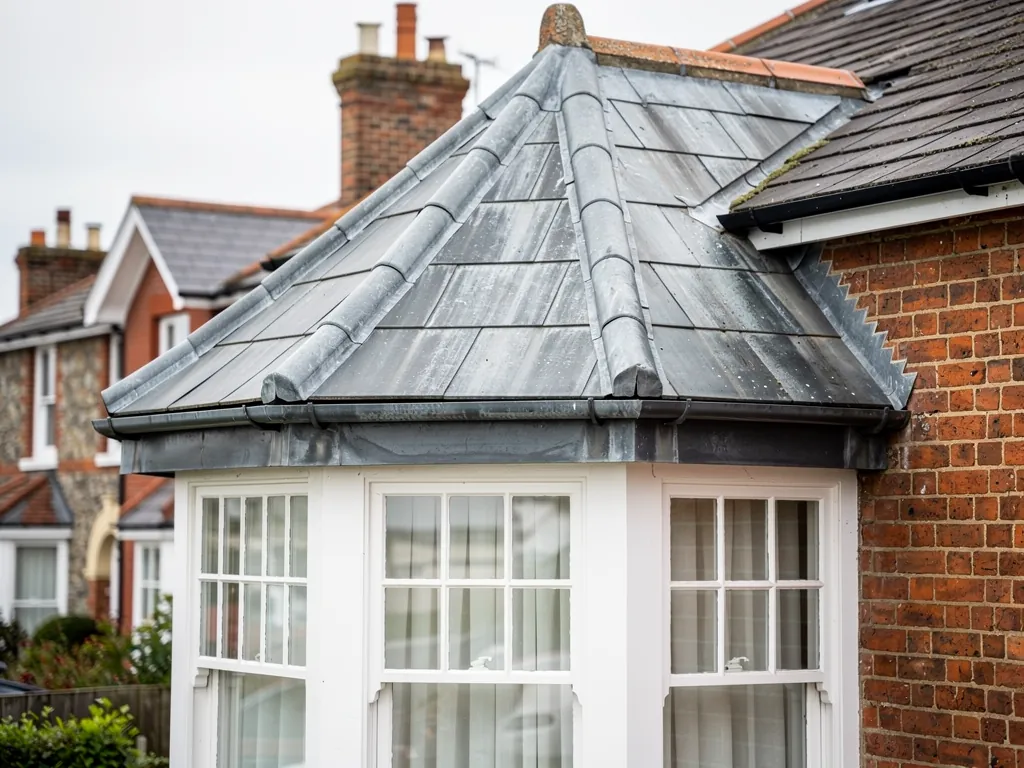
Large old houses, like the courtyard house that once stood here, have long roofs with many junctions: chimneys, parapets (low walls at the roof edge), valleys and dormer cheeks. The same junctions turn up in miniature on a village cottage with a rear wing. Each one is a place where water is directed by lead, and each is where we look first on a survey. Our lead roofing and leadwork page explains the lead codes (the thickness grades) and how much overlap a joint needs, so you can follow the reasons behind a specification on a quote. A roof that has stood for a long time rarely fails everywhere at once; it fails at its details, and a sound survey separates the details that need work from the broad slopes that do not.
Chapter 3: The harbour edge, the creek and the crossroads2806
Sheet 03 / 03Warblington stands on the shore of Chichester Harbour between Havant and Emsworth. Havant's appraisal says the creek here became too shallow for boats at most stages of the tide after a fall in sea level in the 12th century, which contributed to the village's decline as Emsworth grew. That history explains why Warblington is small today: a crossroads, a church lane and a few houses, with a harbour shore that has been a working edge for a very long time. The shallow creek and the sea-level change belong to history, not to a hazard rating for any roof here, so we judge every house by what we find on it. Houses near open water take sea weather, meaning gales, driving rain and salt air, and we allow for it when we look at how a roof sheds water and holds its trims.
Plan the scaffold early
Hampshire's scaffold licence needs 10 clear working days, so any start date we give allows for that notice.
3.1 Edges, trims and flat roofs beside open water
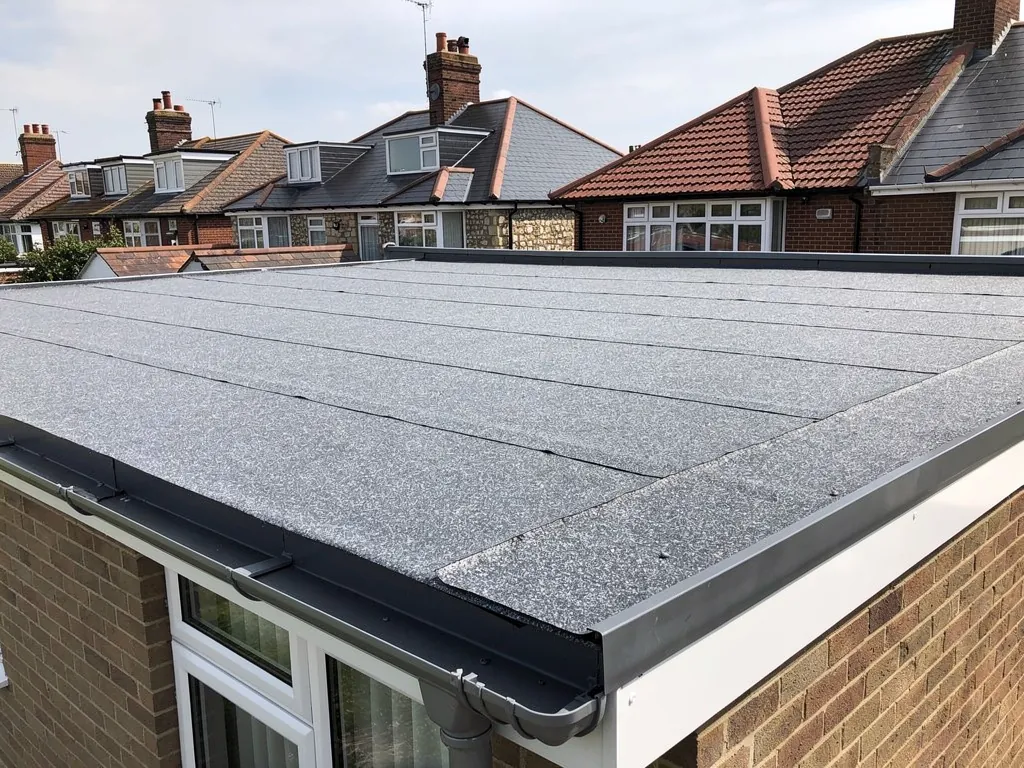
The weak points on a roof near the shore are the places where one material meets another or the roof simply stops. Gales lift what is loose, and driving rain finds any gap behind it. The usual suspects are the verge, which is the tiled edge at a gable, the eaves, the cappings on a flat-roofed garage or porch, and the trims along a flat roof. A flat roof has to slope enough for water to leave it instead of pooling. BS 6229:2025 sets a minimum finished fall of 1:80, and we lay to a steeper design figure than that, so that the surface really clears once the roof has settled. Our roof repairs page sets out how we find a leak, make the roof safe first and then fix the cause.
Ridges and hips take the brunt in a blow. BS 5534, as revised in 2014, treats a mortar bed as insufficient by itself, so we also fix ridge and hip tiles mechanically, and we trim every edge so it looks right from the street.
3.2 Scaffold on a Hampshire road
Warblington is in Hampshire, so scaffolding set up on the carriageway or footway needs a licence from Hampshire County Council. The contractor puts in that application on the customer's behalf. Hampshire County Council expects 10 clear working days before the planned start, charges £211.90 for the opening fortnight and £72 for each fortnight after, and does not grant extensions. A fault reachable by ladder may not need scaffold at all, whereas a re-roof usually does, so that waiting time goes into the plan from the start. Building control for the borough rests with Havant Borough Council, and we handle the notification where work is notifiable.
Roofing services for Warblington and the harbour shore
Frequently asked questions
Questions from the churchyard lane to the creek
What must happen before work starts on a listed roof beside Warblington's churchyard?
Find out the consent route first. An Anglican church holding regular services is dealt with under the faculty system. A listed house needs consent for alterations that change its character, and the safe route there is a repair in the original material. We photograph the roof before anything moves, so the owner has a record to show the council's conservation officer.
Does Warblington's conservation area come with an Article 4 direction on roofs?
Not according to Havant Borough Council's list, which names Langstone Conservation Area, Homewell in Havant and three Hayling Island land uses, none covering Warblington. The conservation area itself still applies, and so does any listing. Before you change a covering, ask Havant's planning team, and pass their reply to us so that the written quote reflects it.
Who applies for the highway scaffold licence on a Warblington roof?
The scaffold contractor does, because Hampshire County Council expects scaffolding companies to apply for their customers. The council wants 10 clear working days ahead of the start, charges £211.90 for the first two weeks and £72 for each further two, and grants no extensions. That waiting time is why a start date is agreed once the quote is accepted, not on the day of the survey.
How does sea weather near the harbour change the way you finish a flat roof edge?
We look harder at the edges. Gales and driving rain test trims, cappings and the junction where the covering climbs a wall, so each is fixed neatly, sealed, and checked for fall. BS 6229:2025 sets a minimum finished fall of 1:80, and we plan more than that so water clears the surface. A tidy edge, seen from the lane or the garden, is part of the job, and so is leaving the site clear when we go.
Nearby areas
Get a quote
Tell us about your roof
Describe what's happening and we'll call you back.
Loading the enquiry form. You can also call 01243 252373.